


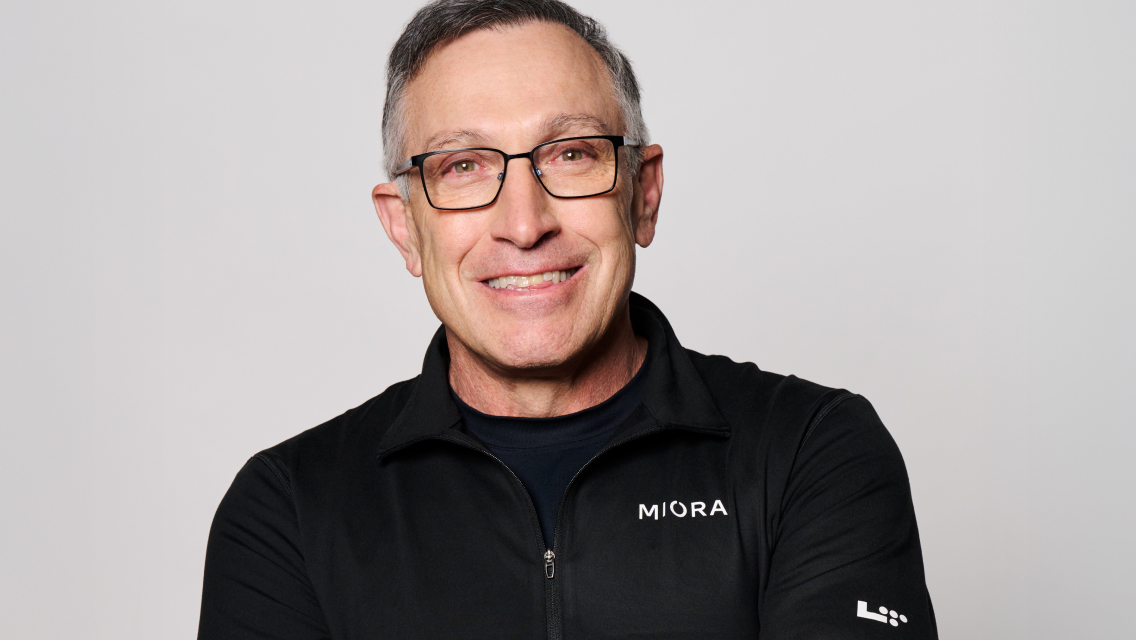
In the spring of 2024, Life Time appointed clinical pharmacist Jim LaValle, RPh, CCN, as its Chief Science Officer. LaValle is supporting the scientific direction of MIORA, shaping its evidence-based approach to help people look, feel, perform, and age at their best.
An internationally recognized author, board-certified clinical nutritionist, and educator for precision health, LaValle is the cochair of the American Academy of Anti-Aging Medicine and the chair of the International Peptide Society and was awarded clinician of the year nationally for furthering integrative care.
He is also the creator of the Metabolic Code, a proprietary health assessment tool. He brings more than 40 years of experience working in metabolic health issues, antiaging research, and advanced proactive patient care management.
We spoke with LaValle to learn more about the work he’s doing with Life Time, his experience in the longevity space, and his own healthy-living habits.
Life Time | What has your relationship been with Life Time over the years and how did it lead to your role now as Chief Science Officer? Why did you want to come on to support MIORA?
Jim LaValle | Back in the mid-2000s, I had an institute in Ohio where we were working on precision health and integrative care, and a few Life Time executives came to visit. They had read my book, Cracking the Metabolic Code, and they came in to talk about involving me in some of their upcoming weight-loss programming for members.
That turned into a three-year gig where I traveled around to various Life Time locations and trained personal trainers and nutrition staff on uncovering the metabolic roadblocks that affect people’s ability to lose weight. We developed a very successful program.
A few years later, when Life Time expressed interest in getting more involved in the longevity and performance health space, they asked me to consult. That quicky evolved into a more prominent role overseeing performance and longevity at Life Time and they asked me to consider the Chief Science Officer position. It’s great to be back in this culture of really promoting all aspects of what keeps people healthy. It’s been a fantastic opportunity.
LT | Tell us about your experience in and passion for longevity and preventative health.
JL | I’m more than 40 years into doing this work in precision healthcare. I started working on it, studying it, and applying it in clinical settings in 1984 and have been doing that full-time ever since.
I taught at the University of Cincinnati College of Medicine and Pharmacy on natural medicine and how it applies in prevention and health, and I then went on to teach at the American Academy of Anti-Aging Medicine. I worked with the Pro Football Hall of Fame as their clinical director for its health program for several years.
I’ve written 26 books and five databases and have published approximately 200 articles all around natural and integrative care. I was also the course director in systems biology and a clinical lecturer at George Washington University School of Medicine and Health Sciences.
It’s a never-ending passion. I find a great deal of excitement in finding out about a new compound, like a new herb, a new nutrient or a new therapy, that’s influencing the way people end up feeling better. It’s one thing to talk about longevity, but I really like to focus on how we make people feel the best they can.
It’s not just about increasing your lifespan, but also your health span within it. When people feel their best, their labs are improved, and they’re free of symptoms, they’re going to have a better health span and by default, live longer with more resiliency.
I use the same principle whether it is working with U.S. special forces, professional teams, or people struggling with their everyday health issues.
“Longevity” is a popular term right now as people have become more focused on living longer, but I’ve been in it for decades researching and practicing at one of the largest facilities in the country.
I still wake up every morning excited about where I’ve landed with the ability to teach thousands of healthcare providers every year, to be able to work with clients in a clinic, and then to be able to come to Life Time and create a program that I think is impassioning and empowering the providers. I hope it gets members excited about the opportunity to get solid information about their health that puts them safely on the leading edge to helping their longevity.
LT | How does it feel to have four decades of experience in the longevity space and now see it become a more and more popular health topic?
JL | It’s been interesting. For a long time, my institute was in Cincinnati, Ohio, so we’re squarely in the Midwest. I still remember my partners having some skepticism about natural medicine and all that integrative care entails. I was teaching about topics like vitamins, minerals, botanicals, or drug-induced nutrient depletion, and other professors were skeptical. There wasn’t a lot of acceptance early on, so it’s really gratifying to see the growth and evolution of people now being interested in this space.
I think good information eventually becomes part of mainstream. I’ve always grounded myself in looking at research and understanding other cultures, whether it was Chinese medicine or Ayurvedic medicine, and it turns out that there’s a lot of wisdom in all those forms of medicine. it’s been a great journey and I’m not done.
LT | How did you develop the Metabolic Code, and why?
JL | When I was working at my institute in Cincinnati, we were seeing 300 people a week, sometimes more, all doing personalized evaluations. And I kept seeing similar clusters or patterns of the issues that men and women were coming in for. I realized it was possible to scale precision and personalized care.
We developed a comprehensive questionnaire and combined that with biometrics and comprehensive lab testing. If people answered the questionnaire truthfully — your blood never lies — we could look at all the systems in the body and how they interact.
It’s important to understand that your body works as a system of systems, and if one system or organ is off, it can disrupt the rest of the way your body is functioning.
The Metabolic Code, through its 40,000-decision algorithm, uses the combination of these two tools (symptomology and biometric questionnaire and lab test) to quickly identify where your biggest metabolic roadblocks are and what system or network in your body aren’t functioning properly. If you focus on removing the biggest roadblocks, it could have a dramatic impact on how you feel and optimize your lab biomarkers.
With traditional care at a physician’s office, they’re often looking for a “disease state” in order to provide treatment. By integrating the Metabolic Code for MIORA at Life Time, we’re looking at the actual state of your health and where your health is trending, then aiming to get out ahead of any issues before you develop a condition, gain weight, experience reduced physical performance, or just feel poorly.
LT | What are some of the habits you personally do to support your longevity and vitality?
JL | One of the most important things that I’ve done is learn how to manage stress as well as my body’s response to stress. You only get so many hours in a day where you’re effective, and you need off time. I’ve started to create boundaries around when I stop work and spend time with my family or have fun. Time management and making sure you have time for yourself and to unwind from the day are crucial.
The other habit I try to prioritize is getting good sleep. It’s hard because I travel a lot, but I try to make sure I get that sleep in.
I also make sure to exercise regularly. At 65, I still train pretty hard, but I haven’t torn my body down. It took a lot of effort in understanding that the recovery side is as important as the training side, especially with aging.
And of course, nutrition, including food and supplements. I think of food as a lifestyle and focus on eating quality foods that I know are good for me — and I make sure it’s enjoyable! My father was a world-famous chef, so I grew up on good food. My wife is also dietitian, and she’s been my partner in practice for 26 years now.
Then there is using appropriate peptides and bioidentical hormones based on my labs. I believe this is an important part of successful aging when managed responsibly.
Other healthy habits I try to incorporate are hopping into the sauna and the steam room when I can. I also track my health data with wearable technology, like my Whoop and Apple watch. Sometimes I wear a Morpheus heart-rate strap, and I’ve tried the Ultrahuman ring. I’ve found that I like knowing what’s going on in my body, and these devices can be helpful and yet they all provide different value.