



Many of us start a new year reflecting on what we want to do or accomplish. But what if, instead, we asked ourselves, What’s possible? The difference between these thought processes is subtle but powerful: One is a to-do list, the other opens a door.
This simple reframe can invite more creativity when it comes to self-growth, according to Barbara Powell, MA, a holistic performance coach for Life Time Mind. “I pose this question often to my clients, especially when they’re stepping into their first session with me and they want some sort of shift to happen in their lives,” she says.
“Asking the question, ‘What’s possible?’ invites them into a territory of imaginative thought and playfulness — where there aren’t any reservations and judgment around what could be created.”
Forming a Realistic “What’s Possible?” Goal
So how can we ensure that we’re striving for growth while not being overly lofty when we’re developing new goals? “This is the line I love to toe in coaching,” says Powell. “We all deserve to ask ourselves, ‘What’s possible?’ so we can open up this level of dreaming — but we also need to be grounded in the present moment.”
Powell suggests having a strong understanding of your basic needs. For instance, Powell is a passionate runner who’s accomplished the Leadville 100-mile race twice and finished in under 30 hours both times. But right now, she is navigating a knee injury.
“If I asked myself what’s possible for next week with my running, it’s not going to be running a marathon, right?” she says. “Instead, what’s realistic is more rehab, walking, and gentle movement. But when I ask myself what’s possible for next year, I can envision a marathon. I then rewind to this present moment of knowing what’s needed right now to get me to my goal of a marathon. It’s key to have one foot grounded in your vision for the future and the other foot in the here and now — that’s what creates alignment.”
How to Overcome Barriers and Turn Possibilities Into Realities
Perhaps you’ve crafted your “what’s possible” goal but then doubt starts to creep into your mind: I can’t accomplish it; it’s not realistic; it’s too difficult. “As we start playing with the idea of what’s possible or who we could become, it can get squashed by our own thoughts and misperceptions,” says Powell.
This is when leaning on your support system and network can be helpful, she adds. “When you have someone who can give you unconditional positive regard, they’re holding onto that goal with you and being nonjudgmental about the process. They’re acting as a support and facilitator for how you want to grow.”
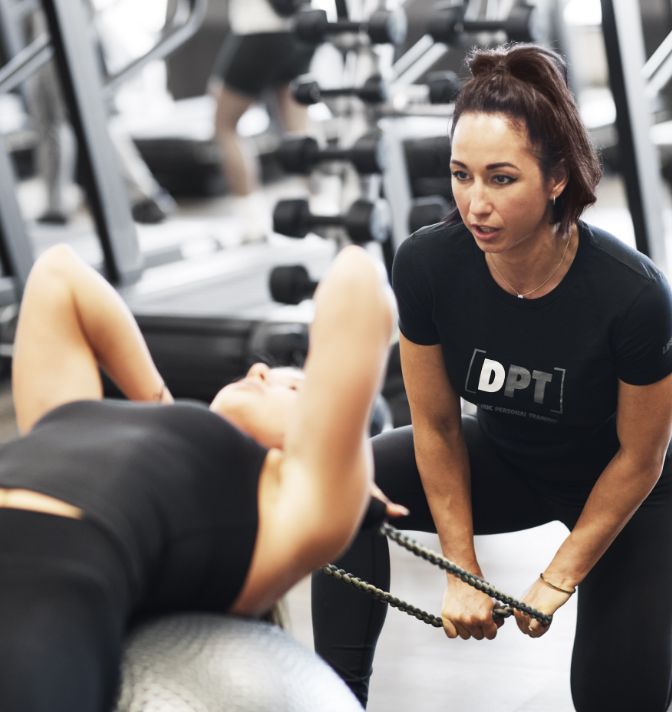
This can be a partner or a friend, or perhaps a therapist or coach. “A coach can help you shift your perspective and ask questions you’ve never been asked before, which can reinforce that creative thought process,” Powell notes. “When we have someone in our lives who supports our goals, it can help us put the pedal to the metal.”
Powell also suggests a follow-up question: “What if everything went my way?”
“We tend to ask ourselves, ‘What if everything goes wrong?’ but when we invert that, it can be an eye-opening and wonderful thought experiment to help you envision your ideal self and values.”
Obstacles are sure to arise, but instead of avoiding them, Powell suggests forecasting them. “I guide clients through predicting some of the challenges that might surface as they’re pursuing their goals,” she says. “For example, if they’re attempting to hike a ‘14er’ (a 14,000-foot or taller mountain) in Colorado, what challenges might they face in preparation as well as during the hike itself? When you identify the challenges, you can identify the solutions.”
7 Healthy-Living Experts Share What’s Possible for Them
To further inspire your goal setting, we asked seven healthy-living experts what goals they’re reaching for in 2026 and how they’re planning to accomplish them.
David Freeman, CPT, CCP, PES, senior director of signature coach excellence and cohost of the Life Time Talks podcast
What’s possible? That’s such an amazing mental framework to have in life, let alone in a new year. For me, possibilities in the new year are about expansion through alignment and living fully in purpose, passion, and pouring into others. In my role as senior director of signature coach excellence for Life Time, my objective is to bridge more lives to their potential by continuing to elevate how we move, think, and connect as a community through strength.
In 2026, I’m specifically focusing on building platforms that amplify coach impact and human connection. In my vision, this means curating mentorship programs that expose Life Time leaders to new performance experiences, which can then empower everyday athletes to see what they’re truly capable of.
Personally, I’m training for longevity and legacy, sharpening my physical, mental, and spiritual edges so that my energy creates ripples for my family, my team, and the next generation of changemakers.
To get there, I’m doubling down on structure and simplicity with intentional training, deep recovery, and disciplined reflection. Because when your mind is right, your body follows, and anything becomes possible.
Danica Osborn, CPT, on-demand performer in the Life Time app and group fitness instructor at Life Time in Warrenville, Ill.
As we consider what could be possible for ourselves in 2026, I believe habits are the biggest determiner of success. Fruitful outcomes aren’t a result of simply setting goals. What will set you up for success is creating habits that get you to your goal — maintainable, repeatable, compoundable habits.
If you want to push yourself outside your comfort zone and achieve something you never have before, don’t just set a goal for 2026. Instead, build habits you can sustain for the whole year in order to reach your goal.
One of the personal habits I’m looking forward to adding in 2026 is doing at least one hour of yoga per week. I know my body can benefit from the mobility, stretching, and different modalities of movement that it provides. I also know that my mind and spirit can benefit from the practice as well. Focusing on just one hour a week makes this goal specific, measurable, achievable, realistic, and timely — in other words, a “SMART” habit I can stick with heading into 2026.
Bradford Stevens, group instructor and coach at Life Time High Performance in New York City and on-demand performer in the Life Time app
For me, what’s possible in the new year is learning to stay steady, even when life isn’t. I’ve been through enough to know that things don’t always work out how you hope, but you can still show up, rebuild, and find your rhythm again. That’s the kind of strength I’m chasing now.
This year for me isn’t about chasing perfection or new milestones — it’s about doing the simple things that keep me grounded, like exercising to clear my head instead of training to prove something. It also looks like taking care of my body so my mind can breathe.
I’m not trying to be unshakable; I just want to meet whatever comes my way with more peace than I had before. That’s what feels possible right now.
Shelby Hicks, CEP, 500hr E-RYT, yoga instructor at Life Time High Performance in New York City
My specific goal for next year is doing a press handstand. I’ve been working on my handstand for years, and it’s been such a fun process to explore my body, notice my strength limitations, and experience breakthroughs, all while incorporating play into my weekly yoga routine.
The press handstand adds a new layer: It requires refined shoulder mobility and stability, deep core integration, and fluid hamstring flexibility. From a physiological standpoint, it’s a beautiful example of neuromuscular coordination and balance.
To get there, I’m focusing on specific drills: scapular stability and serratus activation for my shoulders, compression and hollow-body work for my core, and controlled flexibility for my hips and hamstrings. My approach blends yoga and strength-training principles: building awareness and control through mindful, breath-centered movement.
I love setting a physical goal because it creates intentional time to connect with my body. The process itself becomes a moving meditation; each attempt teaches me something new about balance, focus, and resilience.
I also understand that this goal may take more than one year, and I give myself grace because I know it’s about the process itself at the end of the day!
Kenny Ferrer, high performance coach, mind and body trainer, and yoga and meditation teacher at Life Time High Performance in New York City
This year, I intend on creating a habit of reading fiction books as a way of mindfully winding down at the end of the day.
Personally, I think and learn best in metaphors and through stories, rather than informational bullet points. Good fiction books stimulate my imagination and help me connect to the human experience through the lens of the characters. I’m consistent about reading nonfiction books, but it’s time to expand!
I’ll break the goal down into a nightly habit of at least 10 minutes of reading with no distractions. If 10 minutes is too much to start, I’ll scale it back to 5 minutes. Once I get a streak going, I’ll increase my time threshold. My goal-setting philosophy is that it should be uncomfortable enough to notice a change, yet comfortable enough to reach.
Jessie Syfko, senior vice president of Life Time Digital and creator of MB360 at Life Time
I’m a busy mom of a young son, who gives my all in everything I do. With that, I don’t always give myself the time I need to recharge. What’s possible for me in 2026 is implementing “me” time. I am going to prioritize sauna and breathwork into my weekly ritual as a way of slowing down and giving myself the time I need to relax and rest my nervous system.
What becomes possible with this ritual is a more peaceful and joyful me — the version I hope to be for myself, my family, and the world.
Nick Davis, group instructor at Life Time Sky (Manhattan) in New York City and on-demand performer in the Life Time app
In 2026, my “what’s possible” goal is to complete a full Ironman, which is a triathlon totaling 140.6 miles of swimming, biking, and running. I finished my first half Ironman (a triathlon totaling 70.3 miles) in 2025. It was something I once believed was completely out of reach and it completely changed what I thought I was capable of.
Right now, I’m building the foundation to accomplish the full Ironman race by increasing my endurance volume, prioritizing recovery, and training myself to stay present in the hardest moments. I didn’t set this goal because I know I can do it — I set it because, for the first time, I believe I can do it.