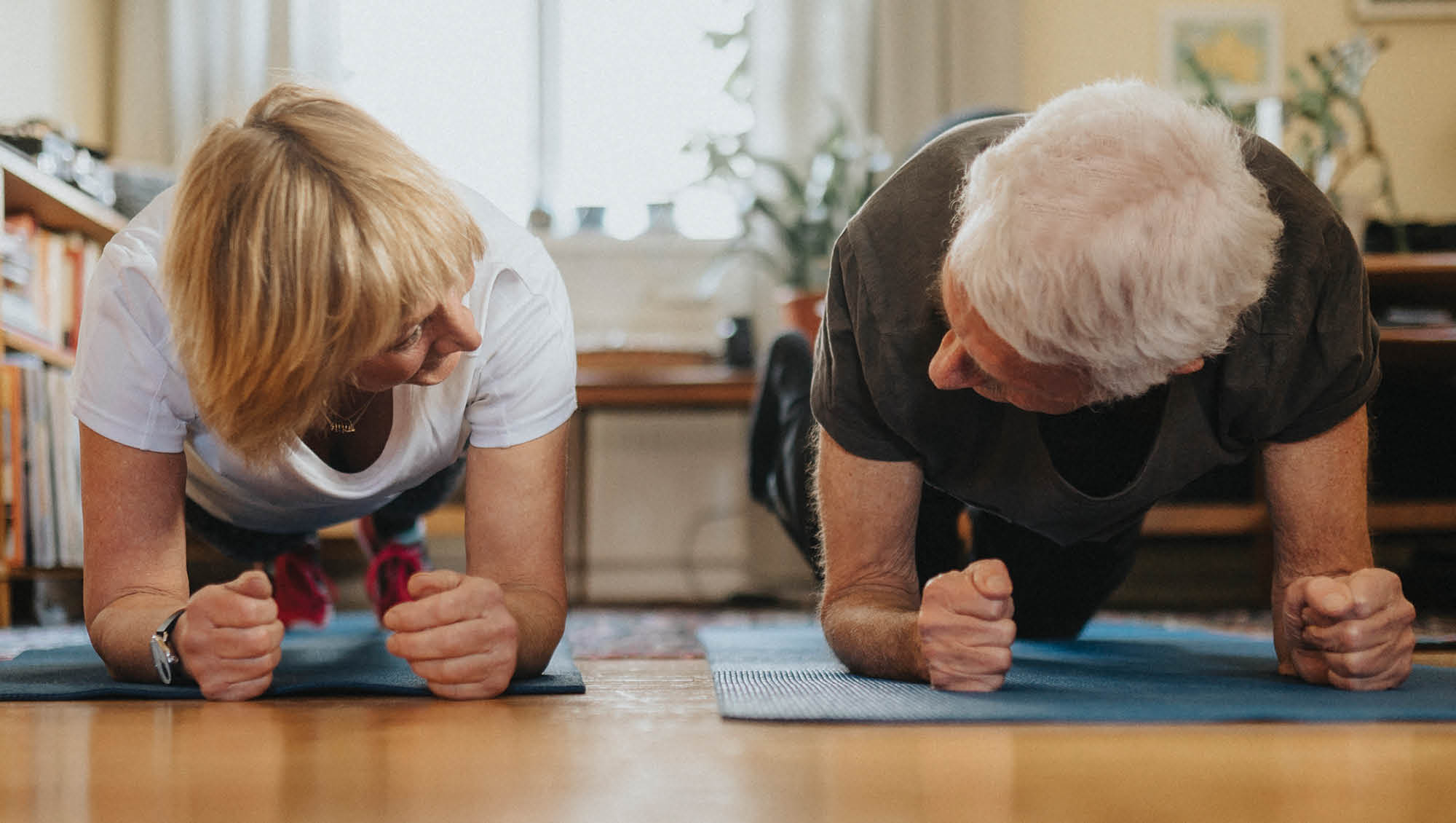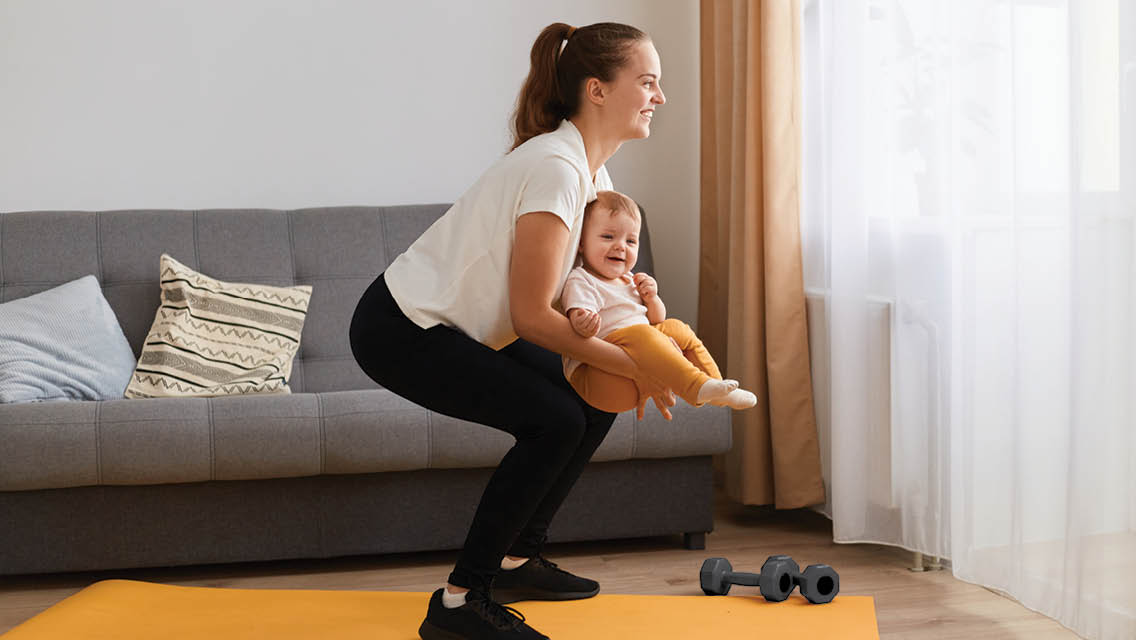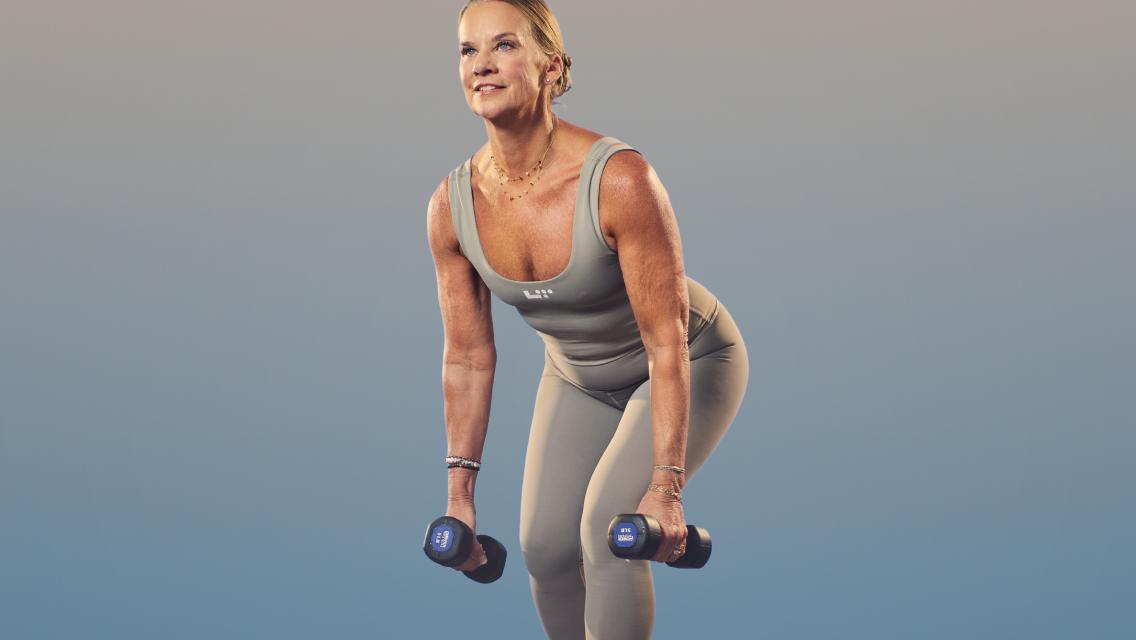



Strength training combined with balance work is one of the best things we can do for maintaining health, independence, and quality of life as we age, according to experts. Muscle mass and our sense of equilibrium often naturally decline in adulthood, with the rate tending to accelerate in later years. But with intentional strength and balance training, we can stimulate muscle growth and move with more confidence through all our years.
The critical need for these two training modalities in a healthy-aging plan is what inspired the development of Life Time’s newest ARORA class offering, ARORA Balance + Strength.
“We are constantly developing new programs to benefit our ARORA (active, older adults) community, and we realized there was an opportunity to provide the combined benefits of balance work and strength training all in one class,” says Annie Kragness, cofounder of ARORA at Life Time. “Balance training enhances our neuromuscular coordination and postural control while strength training helps us maintain muscle for daily activities, both of which are essential for safe movement and fall prevention. ARORA Balance + Strength takes a comprehensive approach with these two modalities to address the interconnected physical systems that are critical to keeping us moving.”
To learn more about the ARORA Balance + Strength class, we asked Kragness to tell us all about the format.
Life Time | What can members expect when they join an ARORA Balance + Strength class?
Annie Kragness | ARORA Balance + Strength is a 45- to 60-minute class designed for those looking to improve their balance, build strength, and feel more confident in daily life. The simple, functional movements and light resistance training will translate into helping you stay steady and strong. The class emphasizes proper form and gradual progression in a supportive, encouraging environment. Your instructor will guide you with clear cueing and directions, offering multiple options for movement modifications.
Each class features six sections:
1. Warm up
2. Strength Block 1: Lower Body – Functional: Lower-body strength movements targeting the quads, glutes, hamstrings, calves, and hip stabilizers.
3. Strength Block 2: Upper Body and Core – Postural: Strength and core movements targeting the lats, rhomboids, delts, and deep-core stabilizer muscles.
4. Balance Challenge: Static and dynamic balance exercises to improve reaction times and build stability.
5. Strength Block 3: Functional Integration: Real-world movement patterns combining strength and balance.
6. Mobility and Recovery: Stretching and relaxation exercises to promote post-workout recovery.
A variety of equipment is used in class to support balance and stability as well as promote strength, including a yoga mat, weighted body bar, light hand weights, stability ball, resistance bands, and yoga block.
LT | Can you explain more about the benefits of balance work and strength training? Why are these types of exercise important as we age?
AK | Balance work and strength training have several benefits for our overall health as well as for preventing injury and preserving independence, including:
Enhancing mobility and preventing falls: Resistance training improves functional movement, balance, and reaction times, directly translating to greater independence in daily activities. Research shows that balance and strength programs can reduce fall risk by up to 40 percent, providing protection against injury and loss of autonomy.
Improving muscle mass and bone health: After the age of 30, adults lose 3 to 8 percent of muscle mass per decade and bone density declines 1 to 2 percent annually. Strength training is the only intervention that can reverse muscle loss and stimulate bone formation.
Supporting mental and cognitive health: Strength training has been shown to effectively combat depression by triggering the release of beneficial neurotransmitters.
Additionally, resistance exercises can stimulate brain-derived neurotrophic factor production, supporting cognitive function, memory, and potentially reducing risk of dementia.
Building a foundation for lifelong independence: Strength training and balance training create a comprehensive defense against functional decline, enabling participants to maintain the physical and mental capacity required for autonomous living and an active lifestyle well into advanced years.
LT | Who is the ARORA Balance + Strength class designed for?
AK | While everyone is welcome, ARORA Balance + Strength is specifically designed for a general aging population who want to work on maintaining strength and balance. This class is also great for those with limited mobility, those with stability concerns or fears, those recovering from injury, or those dealing with physical limitations.
LT | How often do you recommend including ARORA Balance + Strength classes in your routine — and how does it fit in with other ARORA class offerings?
AK | Our bodies thrive on variety. A well-rounded fitness routine includes strength, cardio, mobility, and balance because they work together to keep you strong, steady, and independent.
Strength supports your balance by building the muscles that stabilize your body. Balance helps prevent falls and boosts your confidence in everyday movements — like walking, climbing stairs, or even dancing. Cardio builds endurance and keeps your heart healthy, helping you stay active longer.
To get the most benefit: Aim for balance training at least three times per week. Include strength training at least two times per week, ideally on nonconsecutive days to allow your body time to recover.
Adding the ARORA Balance + Strength class once per week to your routine is a smart and convenient way to work on both areas, helping you stay strong, steady, and ready for whatever life brings.
LT | I’m ready to try this class! How do I participate at my Life Time club?
AK | ARORA Balance + Strength will be available on select club schedules starting in November 2025. You can reserve your spot in the Life Time app.