


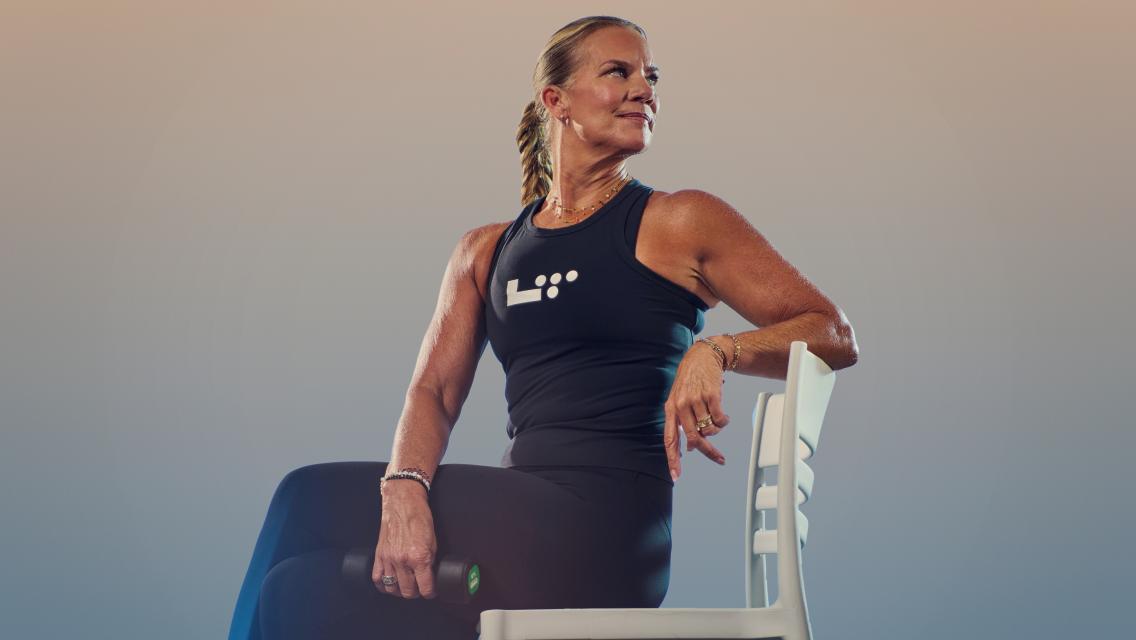
With age, it’s common to notice changes in our strength, mobility, and endurance. Muscle mass, flexibility, and stamina tend to decline naturally in adulthood, making it difficult to do certain movements, including everyday ones like getting out of bed or carrying in and putting away groceries.
But with intentional training that includes functional movements, it’s possible to move with more confidence through all our years. “Functional fitness is all about doing exercises that mimic the movements you do in everyday life, like standing up from a chair or carrying a grandchild,” explains Jayme Zylstra, group fitness instructor and brand specialist for ARORA and executive producer for digital fitness content at Life Time. “The point is to keep you from being sore from everyday movements and help you maintain independence as you age. The movement may look different from how it did in your younger years, but functional training can allow you to keep moving and doing the activities you love.”
We asked Zylstra to put together a workout to help with real-life movement scenarios, so you can train to maintain confidence and autonomy well into your later years.
If you’re just getting started with exercise, Zylstra recommends easing in and being gentle with yourself. “Start slow by doing a functional workout two or three times a week,” she advises. “And if you need to take a modified approach, don’t judge yourself!”
1. Sit to Stand
“Getting up from a seated position on a chair or bed requires leg strength, hip power, and core control,” says Zylstra. “Practicing this movement can strengthen the quads and glutes while supporting balance for fall prevention.”
Equipment needed: Sturdy chair or bench
- Sit tall on a chair or bench with your feet hip width apart and flat on the ground.
- Lean slightly forward while bracing your core.
- Drive through your heels to stand; avoid using your hands, if possible.
- Lower with control back to the seat.
- Repeat for two to three sets of 8 to 12 reps.
Make it easier: Lightly push on your thighs (or the chair’s arm rests, if available) for more support as you stand.
Make it harder: Hold a dumbbell with both hands at your chest and add slow tempo: Rise up off the chair in three counts, hold for one count at the top, then slowly lower back down into a seated position in three counts.
2. Farmer’s Carry
“Carrying heavy bags requires grip strength, shoulder stability, core endurance, and a steady gait,” says Zylstra. “This exercise can help build strength while training you to keep your posture upright while carrying a load. It can also help improve your stability when walking on uneven surfaces.”
Equipment needed: Dumbbells or kettlebells
- Choose a pair of dumbbells or kettlebells at a weight that feels challenging for you. Stand tall with one weight in each hand, arms by your sides.
- Roll your shoulders down and back and engage your core.
- Walk slowly forward for either 20 to 30 seconds or 20 to 30 yards, keeping your spine and torso upright. Avoid leaning or swaying.
- Turn slowly and walk back to where you started. Set the weights down with control.
- Repeat three to four times, resting for 30 to 45 seconds between reps.
Make it easier: Use lighter weights and walk for a shorter distance or less time.
Make it harder: Choose heavier weights or go for a longer distance or more time. You can also try a single-arm carry to challenge your lateral stability.
3. Step-Ups
“Walking up or down the stairs requires leg strength, balance, and joint control under fatigue, especially if the stairs are steep or long,” says Zylstra. “Step-ups directly mimic stair climbing to help strengthen quads and glutes and improve balance when stepping up or down. This move can also help support safer stair use while carrying items.”
Equipment needed: Low step or box; dumbbells are optional
- Facing a step, bench, or box, raise one foot and place it entirely on the step.
- Press through the heel of your raised foot to step up and bring your trail foot to meet your front one.
- Step back down with control, one foot at a time.
- Repeat for two to three sets of 8 to 12 reps per leg.
Make it easier: Lower the step height or place a hand lightly on a bar or wall for balance.
Make it harder: Use a higher step and hold a dumbbell in each hand for resistance.
4. Dumbbell Overhead Press
“Reaching a high cabinet to put something away requires shoulder strength, mobility, and trunk stability,” says Zylstra. “This exercise helps build shoulder and upper-back strength. It also reinforces an upright posture to reduce lower-back arching, while improving overhead control and comfort.”
Equipment needed: Dumbbells
- Standing with your feet hip width apart, start with your elbows at shoulder height, wrists in a neutral position, and a dumbbell in each hand. Choose a pair of dumbbells at a light weight.
- Brace your core and keep your ribs down as you press the dumbbells overhead until both your arms are straight but not locked.
- Lower the dumbbells back to shoulder height with control.
- Repeat for two to three sets of 8 to 10 reps.
Make it easier: Use a lighter weight and perform the exercise seated.
Make it harder: Increase the weight or try a single-arm press with a slow tempo: Raise the weight over your head for three counts, hold for one count at the top, then slowly lower the weight back to your shoulder in three counts.
5. Dumbbell Deadlift
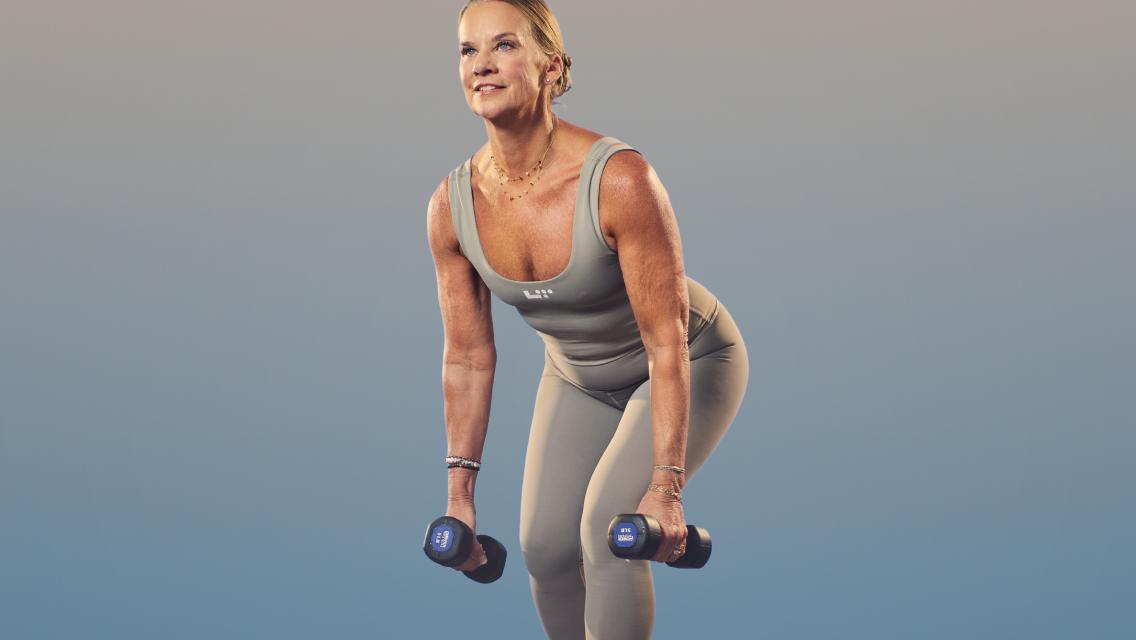
“Bending down and picking something up off the floor can become more challenging as we age,” says Zylstra. “Safe floor pick-up requires you to hinge at the hips instead of rounding your spine. It also requires leg strength for power to pick up the item. Deadlifts help strengthen the glutes and hamstrings while also training the hip-hinge movement to protect your back from rounding.”
Equipment needed: Dumbbells or kettlebells
- Stand with your feet hip width apart and hold a weight in each hand while keeping them close to your thighs. Choose a pair of dumbbells or kettlebells at a light weight.
- Push your hips back while keeping your spine long; let the weights slide down your legs as you hinge from your hips to lower to a comfortable depth without rounding your back.
- Press through the heels as you squeeze your glutes to stand tall.
- Repeat for two to three sets of 10 to 12 reps.
Make it easier: Instead of dumbbells or kettlebells, use your body weight and keep your hands on a chair for balance. Keep a shorter range of motion as you perform the movement.
Make it harder: Increase the weight or try a single-leg deadlift for a balance challenge.
6. Wall Sit
“Standing for longer periods of time requires leg strength and endurance, postural strength, and ankle stability,” says Zylstra. “The wall sit builds quad and glute endurance for standing and helps improve joint stability at the knees, hips, and ankles. This exercise also engages the core to help reduce low-back fatigue.”
Equipment needed: Open wall space
- With your back against the wall, step your feet 12 to 18 inches away from the wall.
- Slide down to a comfortable knee bend, aiming for a 90-degree angle at the knees.
- Keep your back flat and core engaged as you breathe steadily and hold for 20 to 40 seconds.
- Press through your heels to stand.
Make it easier: Maintain a higher sitting position (don’t bend your knees all the way) or hold for shorter periods.
Make it harder: Hold your arms overhead or hold light weights. Build up to holding for 60 seconds.
7. Goblet Squat
“Carrying a child or pet is a front-loaded carry that challenges full-body strength, posture, and core stability,” says Zylstra. “A goblet squat can help strengthen the legs and core to protect your back when lifting items for comfort and endurance.”
Equipment needed: Dumbbell or kettlebell
- Hold the weight close to your chest with both hands while keeping your elbows in toward your ribs. Choose a light pair of dumbbells or kettlebells before progressing to a more challenging weight.
- Engage your core as you squat down, keeping your hips back and chest tall. Be sure to keep your knees tracking over your toes.
- Hold for one second at the bottom before driving through your heels to stand.
- Repeat for two to three sets of 8 to 12 reps.
Make it easier: Use a lighter weight or reduce your squat depth. You can also perform the movement on a bench or chair.
Make it harder: Increase the weight or add a longer pause at the bottom of the squat.
(Make the most out of your goblet squat with these three expert form refinements.)