


The change in season to fall often brings a change in routine, with many of us working to get back into a regular exercise regimen. Whether you’re returning from a free-for-all summer or are simply looking to reset after a busy few months, easing back into exercise often requires more than simply lacing up your sneakers. Your body needs extra flexibility and recovery support, especially after some time off, and that starts with stretching.
“Getting back into a workout routine and increasing your activity may come with a little extra tightness or soreness,” says Bailey Winters, CPT, Dynamic Personal Trainer and Dynamic Stretch Specialist at Life Time in Denver, Colo. “To improve recovery, reduce soreness, and increase mobility, I always recommend saving 10 minutes at the end of your workout to do some basic stretches that, with consistency, can make a big difference in how your body moves and feels.”
Winters demonstrates a few stretches you can easily tack on to the end of your workout to support the movement efforts of your new fitness routine. “These stretches are intended to hit muscles that are often used in exercise and commonly very tight,” she says.
1. Standing Toe Touch
“This classic stretch mainly targets the muscles along the backside of your legs, including your hamstrings,” says Winters. “Hamstring flexibility is especially important for preventing injury when you’re getting back into an exercise routine because a lot of movements involve them. Varying this stretch by turning your toes out and in can help target different parts of the hamstring.”
- From standing, bend forward at the hips, reaching your arms toward your toes while keeping your legs straight.
- Hang for 30 seconds with your toes straight forward.
- Return to standing.
- Turn your toes out and repeat the movement.
- Return to standing.
- Turn your toes in and repeat the movement once more.
2. Standing Calf Stretch
“This simple yet effective stretch targets the muscles in the lower leg, mainly the gastrocnemius and soleus,” says Winters. “These muscles are essential for walking, running, jumping, and maintaining balance, so keeping them flexible and strong is really important for daily movement. You’ll do a few variations to hit different muscles in this part of the leg.”
- Facing a wall, place your hands against the wall and step one leg back.
- Keep your back leg straight (your front leg will bend) and toes pointed toward the wall as you press your hands into the wall and your back heel into the ground. Hold for 30 seconds.
- Lift the heel of your back foot off the ground and bend your back leg slightly to press the balls of that foot into the ground. Hold for 30 seconds.
- Turn your back foot out away from your body and repeat the stretch, driving your heel toward the ground. Hold for 30 seconds.
- Turn the toes of your back foot inward and repeat the stretch, driving your heel toward the ground. Hold for 30 seconds.
- Repeat series on opposite leg.
3. Glute Bridge
“This is a great stretch for tight hip flexors, which can happen if you sit for prolonged periods,” Winters says. “These muscles allow us to lift our knees and bend at the waist, and if they’re in a tight, shortened position, it may limit glute function and lead to knee and back pain.”
- Lie on your back with your knees bent and your feet flat on the floor.
- Place your arms by your side, palms down.
- Squeeze your glutes and raise your hips toward the ceiling. Avoid arching your back as you do this.
- Lower back down with control.
- Repeat 10 to 15 times.
4. Lumbar Rotation
“This gentle spinal twist targets the lower back (lumbar spine) and surrounding muscles,” says Winters. “It’s great for relieving stiffness in the lower back.”
- Lie on your back with your knees bent, feet flat on the ground, and arms out to the side with your palms toward the floor.
- Without lifting your arms, rotate your knees slowly side to side.
- Repeat 10 times on each side.
Optional: Hold your legs on either side for about 30 seconds to feel an even deeper stretch.
5. Chest Opener
“This restorative stretch targets the pectoral muscles, which are often tight or shortened from prolonged sitting or hunching forward,” says Winters. “This is a good stretch to help enhance the range of motion in your upper body, which can reduce your risk of injury when getting back in a workout routine.”
- Place a bolster, foam roller, or block on the floor or on a mat.
- Lie with the bolster/foam roller/block under the middle of your back.
- Keep your feet flat on the floor and open your arms out to the side with your palms up.
- Hold for one to two minutes.
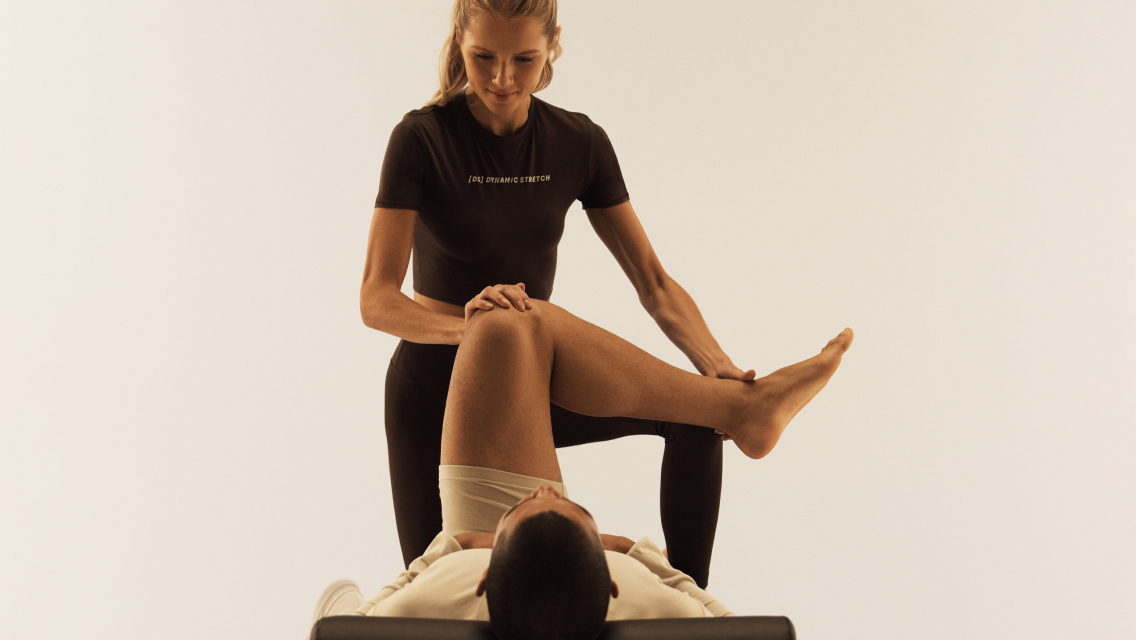
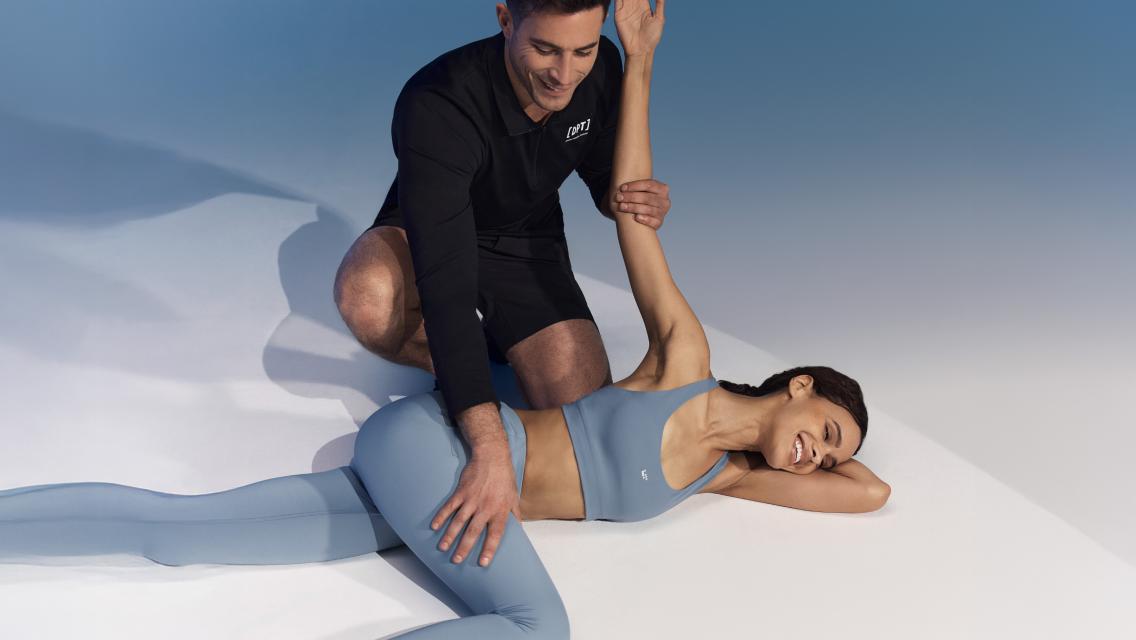
If you’re feeling the benefits of stretching and want to take it to the next level, Winters recommends booking a Dynamic Stretch session with a certified stretch specialist.
“As a stretch specialist, I use PNF [proprioceptive neuromuscular facilitation] stretching techniques to help my clients with several goals, including pain relief, injury prevention, and longevity,” Winters explains. “Working with a Dynamic Stretch specialist can help your body fully relax so you get a deeper stretch, as well as get into positions you might not be able to do on your own. PNF stretching works with your neuromuscular connection to create new muscle memory in your body that will help improve movement patterns, prevent injury, and increase quality of life with greater mobility.” (Learn more: “What Is Dynamic Stretch?”)