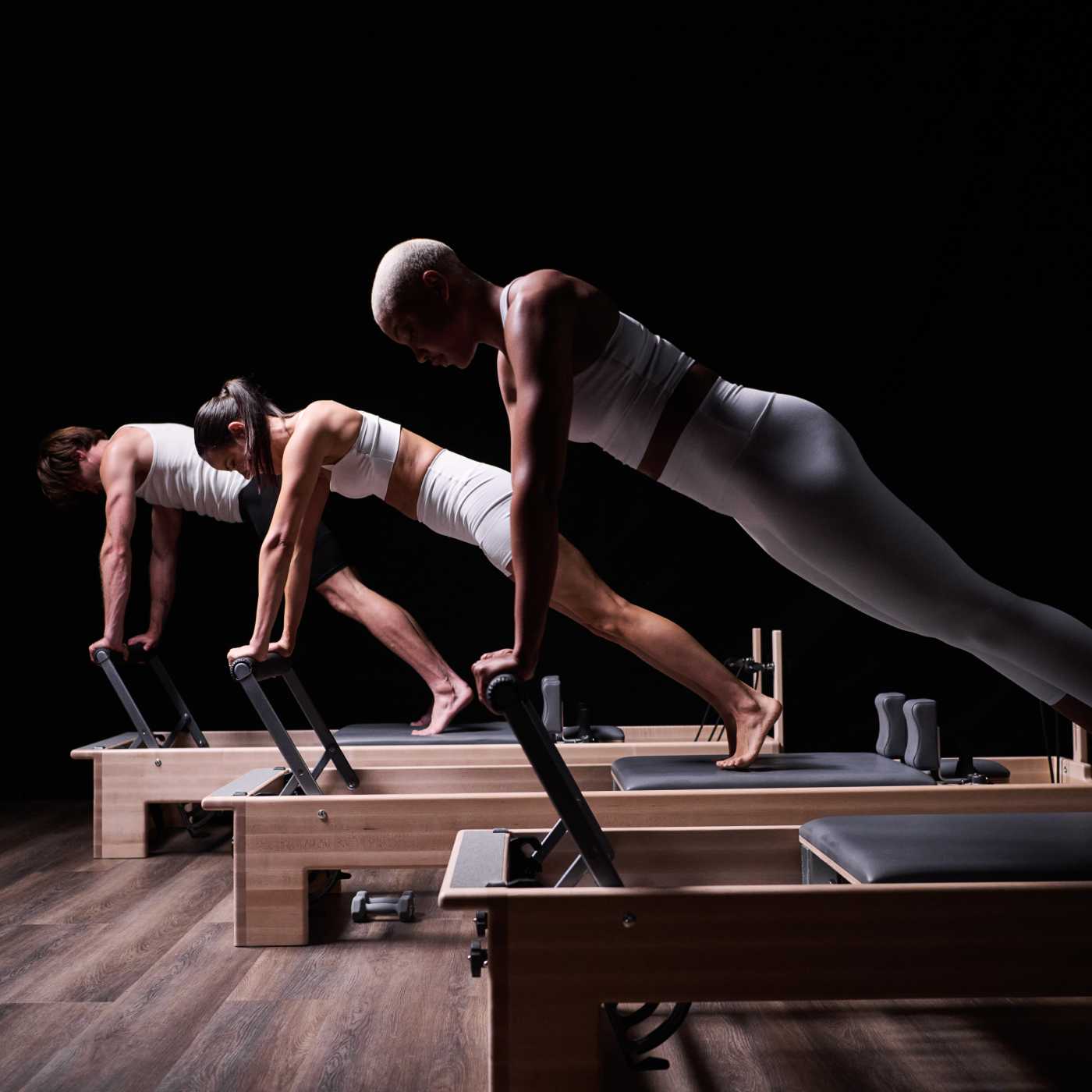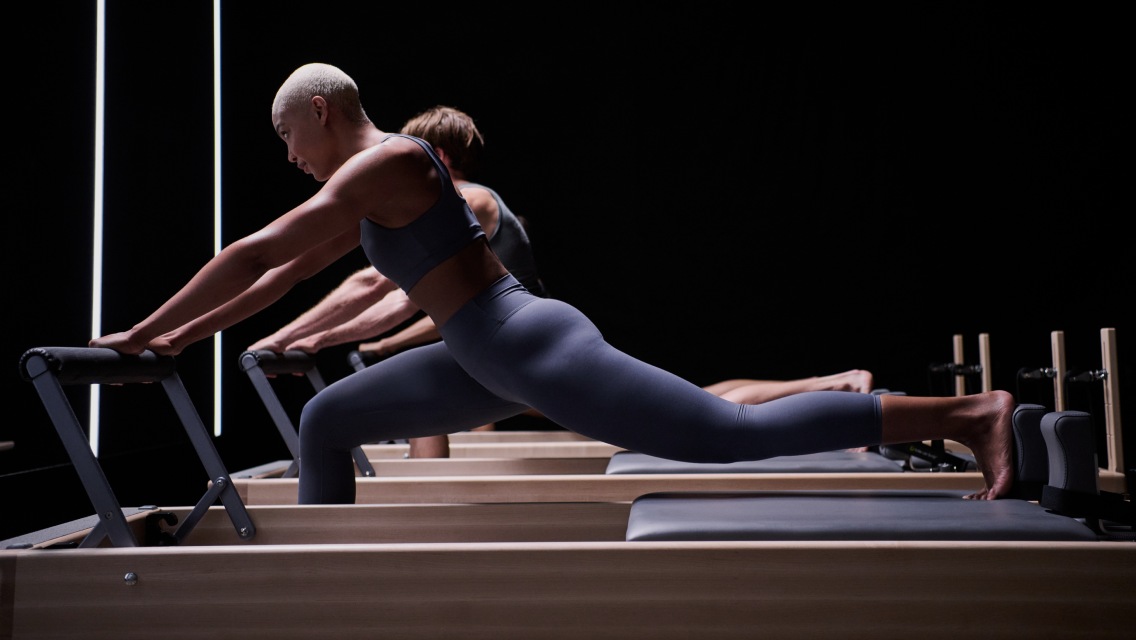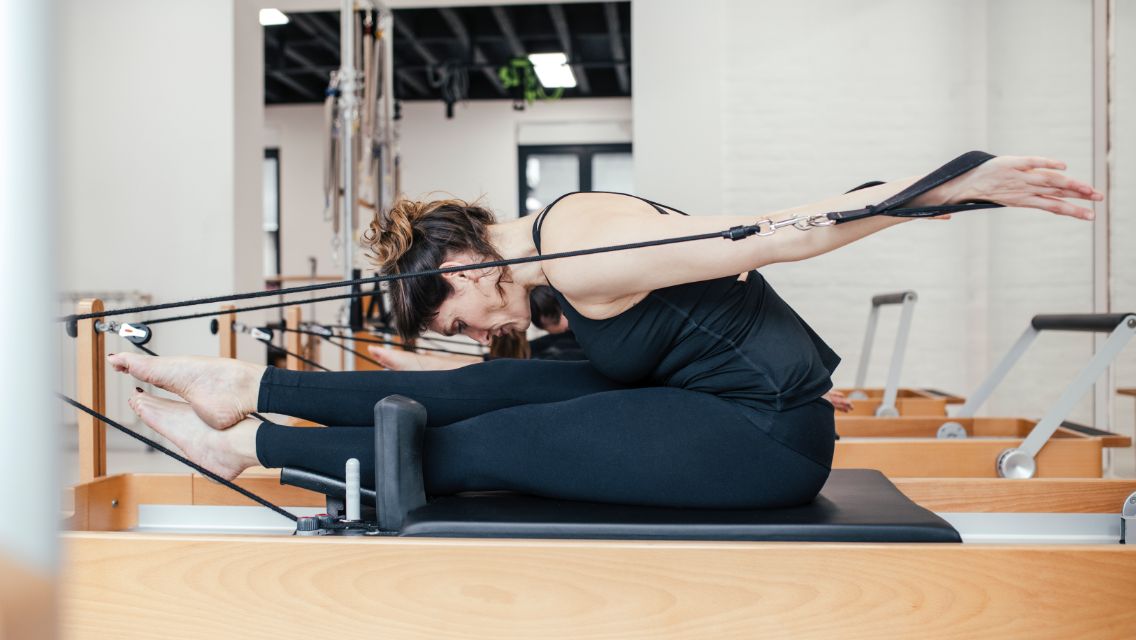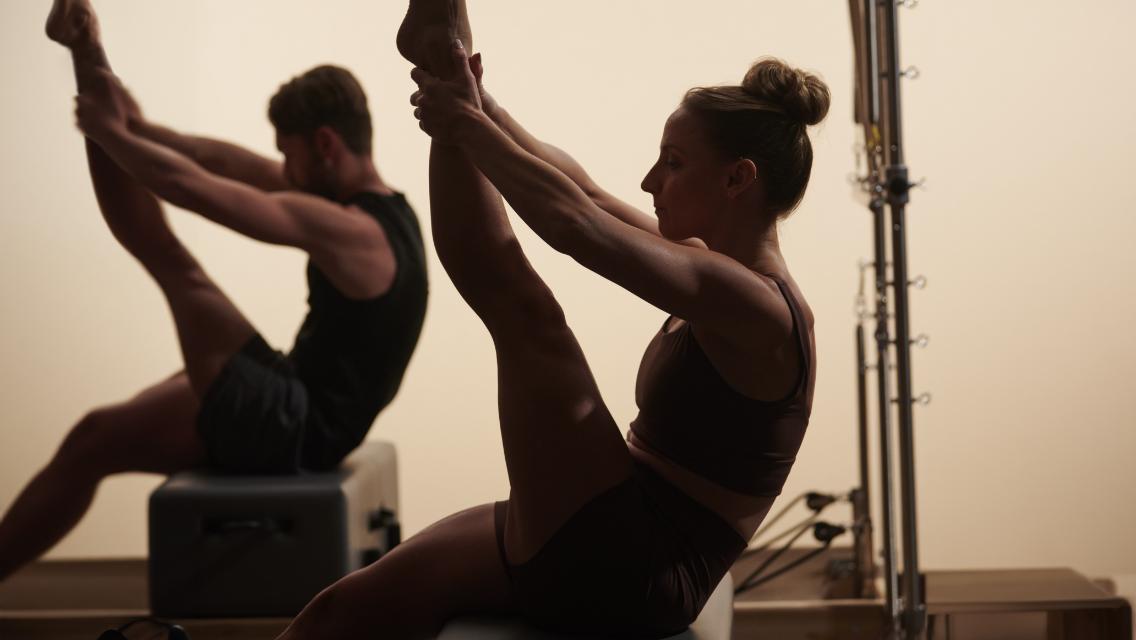



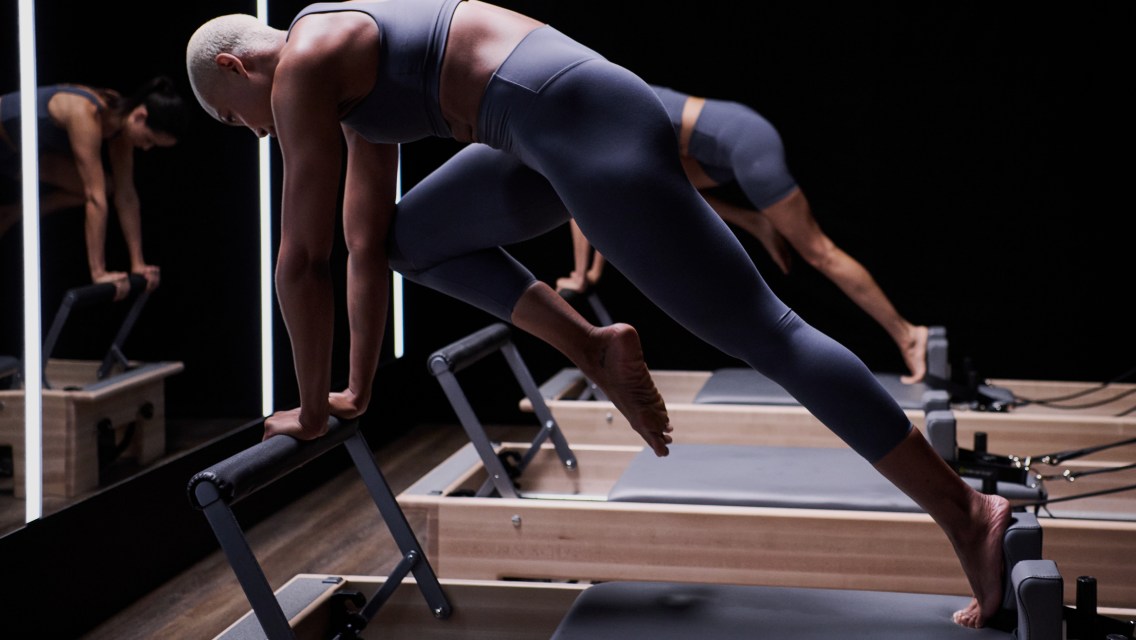
CTR (Core Tone Reform) is Life Time’s newest signature group training format that’s reformer-based and designed to transform both your strength and your body.
“CTR delivers an unparalleled experience for both body and mind,” says Rob Glick, senior director of programming and innovation for Life Time. “Using the power of the Pilates reformer (without the tower) the exercises are designed to help cultivate strength, flexibility, mobility, and total-body control through deliberate, purposeful movement. The reformer’s structure and resistance system allows for a wide variety of strength-building exercises while also enhancing core strength, posture, and body awareness.” (Learn more: “Core, Tone, Reform: What Is CTR at Life Time?“)
To get a sense of the types of moves featured in this class, Glick explains how to perform a handful of common CTR moves; Kristin Osborn, five-star ELI group fitness instructor at Life Time in Irvine, Calif., shows them in action.
1. Side Splits
“This exercise focuses on lower-body strength, hip stability, core control, and balance,” says Glick. “Keep your legs straight and distribute your weight evenly as you slowly open and close them with control using the carriage on the reformer.
2. Lateral Lunges
“This dynamic lower-body exercise targets your glutes, quads, hamstrings, and thighs while also challenging your balance, core control, and hip mobility,” Glick explains. “Facing sideways, place your standing foot on the platform and your other foot on the carriage. Slowly glide your lunging leg to the side making sure to keep your chest lifted and hips square.”
3. Rear Lunges
“This is another lunge variation to challenge your balance and stability,” says Glick. “We’re mimicking traditional reverse lunges, but on the reformer. The moving carriage adds resistance and instability to deepen muscle engagement and control. Start with your front foot on the platform and back foot on the carriage. Then, slowly bend the front knee as the back leg glides backward. Press through your front heel to return the carriage to its starting place.”
4. Side-Facing Sequence
“This is an example of a sequence of moves you might see in our side-facing series,” Glick says. “We flow through a series of movements working the core and upper body, including torso rotation, a high elbow pull, triceps extension, bicep curl, and chest fly.”
5. Flying Lunge Sequence
“This is a slightly more advanced variation of lunges that challenge your control, balance, and coordination,” Glick explains. “With one foot on the floor and one on the carriage, you’ll lower down into a lunging position and come back up into a jumping or floating motion. In this video, we show some additional options for this move, including bringing the knee into both elbows and adding a pushup in between lunges.”