


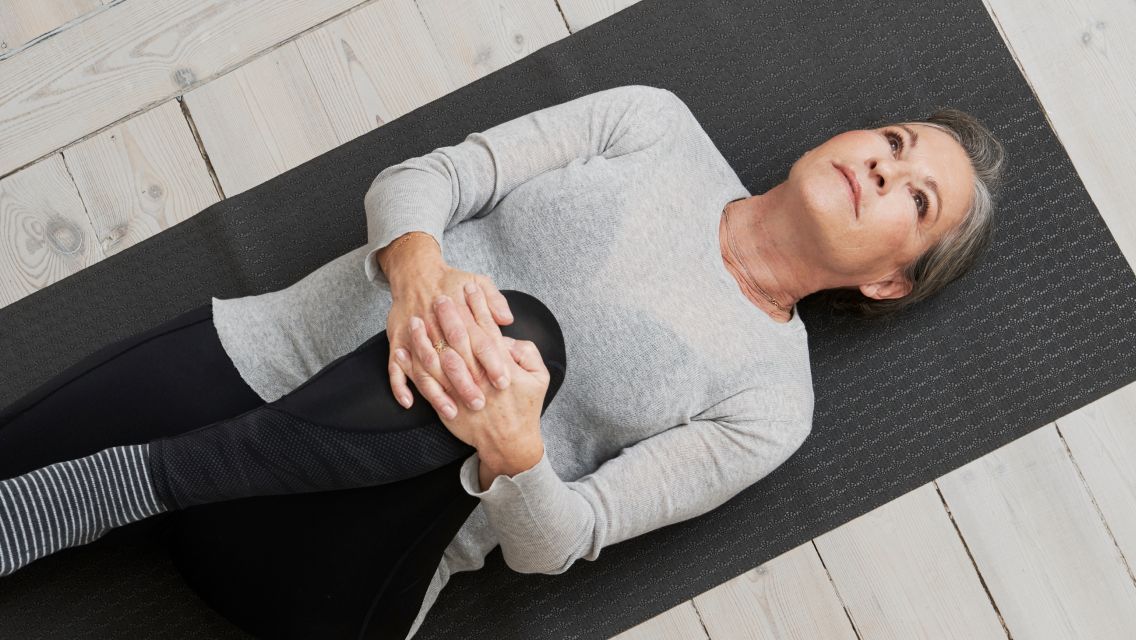
With aging comes a wealth of wisdom and experience, but as the years go by, our mobility can naturally decline, making everyday movements feel more challenging. The key to combatting or slowing this process is to keep moving your body.
Regularly exercising and stretching can help maintain our ability to move freely. Even just a few simple stretches each day can make a difference. The goal is to preserve your independence and to be able to move through your day with comfort and ease.
To help you establish a daily stretching routine, I put together some of my top-recommended stretches to support aging bodies. Here, Jayme Zylstra, group fitness instructor and brand specialist for ARORA classes at Life Time in Chanhassen, Minn., demonstrates each stretch.
1. Thoracic Extension
As we age, the thoracic spine tends to stiffen and round forward, especially with prolonged sitting. This can limit breathing, reduce shoulder mobility, and contribute to neck and back pain. Maintaining extension helps preserve posture, overhead movement, and overall spinal health, with this stretch helping to improve upper back mobility and breathing mechanics. It can also reduce neck and shoulder strain and support upright posture with age. You can do this stretch on the floor or in a chair.
- Lying on your back, place a foam roller horizontally behind your upper back. Reach your arms out wide at your sides and gently extend your upper back.
- Slowly bring your head back toward the ground.
- Keep your core engaged and avoid arching your lower back.
- Repeat for 6 to 8 slow reps, holding each stretch for 2 to 3 seconds
Optional modification:
- Sit in a chair and place a towel behind your mid-back. Fold your hands behind your head.
- Gently extend your upper back over the towel as you look up toward the ceiling.
2. Hip Flexor Stretch
Our hip flexors often become shortened from prolonged sitting or reduced activity. Over time, this can pull the pelvis forward, contribute to low-back discomfort, and limit stride length when walking. Stretching the hip flexors daily can help keep them mobile and support posture, balance, and more efficient movement.
- Step into a half-kneeling position on a mat, gently placing your hands on top of your front thigh.
- Gently tuck your pelvis and shift your weight forward (while keeping your torso tall) until you feel a stretch in the front of your back hip.
- Hold for 20 to 30 seconds before switching to the other side
Optional modifications:
- Place a foam pad, cushion, or towel under your back knee for comfort.
- Hold onto a chair or wall for balance if needed.
3. Hamstring Stretch With Sciatic Nerve Floss
Hamstrings and the surrounding neural tissues can become less mobile over time, especially with decreased activity. When this happens, it can increase tension in the lower back as the muscles tighten to compensate for instability in the hamstrings. This can affect or limit our bending, walking, and reaching abilities. Maintaining both muscle and nerve mobility helps keep movement smooth and reduces discomfort.
This hamstring stretch with sciatic nerve floss can help improve flexibility in the back of the legs while also promoting healthy nerve mobility, which can reduce tension and discomfort in the lower body.
- Sit on a mat with your right leg stretched out in front of you and your left leg bent in toward you.
- Place your hands on the shin of your left leg.
- From this position, gently bend and straighten your right knee while moving your ankle up and down (toes toward you, then away) to create a light “flossing” motion through the leg.
- Repeat for 8 to 10 controlled reps per side.
Optional modification:
- Perform this stretch seated in a chair.
4. Chest Opener
Over time, it’s common to develop a more forward-rounded posture due to muscle imbalances, posture issues, or gravity pulling the body forward. This can limit shoulder mobility, affect breathing, and place stress on the neck. Opening the chest with this daily stretch helps restore alignment, improve lung capacity, and support healthier movement patterns.
- Stand tall with your feet hip width apart. Keep your shoulders relaxed and your back straight.
- Clasp your hands behind your back. If you can’t clasp your hands, hold a towel or resistance band with both hands.
- Straighten your arms and gently pull your hands downward and slightly away from your back as you lift your chest up and squeeze your shoulder blades together.
- Keep your neck neutral and avoid tilting your head back.
- Slowly bring your hands back to the starting position and relax your shoulders.
- Repeat for 2 to 3 rounds of 20 to 30 seconds.
Optional modification:
- Perform this stretch seated in a chair.
5. Ankle Mobility Stretch
Ankle mobility can naturally decline with age as muscles in the area stiffen or weaken; this can affect balance, walking mechanics, and stability. Limited dorsiflexion is also linked to a higher risk of falls. However, working to maintain ankle mobility through movement and stretching can help preserve independence and confidence in everyday movement.
- Stand facing the back of a chair or wall, placing your hands on it for balance.
- Keep your heels down as you gently drive your knees forward over your toes toward the chair or wall.
- Repeat for 8 to 10 controlled reps.
Assisted Stretching for Healthy Aging
Performing these stretches on your own is incredibly valuable, and I recommend including them as part of a consistent daily routine to maintain mobility, reduce stiffness, and keep your body moving well.
If you’re feeling the benefits of stretching and want to take it to the next level, booking a Dynamic Stretch session with a certified stretch specialist can help you go further in your goals.
In a personalized stretch session, a specialist can help improve your range of motion more efficiently by targeting the specific restrictions that are unique to your body. They can also help bridge the gap between mobility and strength by assessing the root of your movement issues — they may be due to a lack of mobility, or they may stem from a lack of muscle strength.
Overall, a combination of independent stretching and guided sessions can significantly improve full-body mobility, reduce injury risk, and enhance quality of life long term. (Learn more: “What Is Dynamic Stretch?”)