


Many people enjoy moving their bodies in challenging ways. High-intensity workouts provide beneficial stress and play an important role in fitness routines. But it’s equally vital to include activities that promote recovery. These types of movements help us stay active while lowering cortisol levels to baseline and allowing our bodies to recoup from intense sessions.
Cortisol — often called the “stress hormone” — is produced by the adrenal glands and can spike following vigorous exercise. While this spike isn’t necessarily bad, lowering your cortisol to healthy levels is key to an effective recovery from those sessions.
When your cortisol is regulated, your parasympathetic (rest-and-digest) nervous system becomes more active. This state supports muscle protein synthesis, tissue repair, immune function, and sleep quality — allowing you to properly adapt to training. Without this return to baseline levels, your body can remain in a prolonged stress state, which may impair recovery, increase fatigue, and heighten pain sensitivity.
Although there are a number of factors that influence your cortisol status, you can modify your exercise plan to support healthy regulation of the hormone by including gentle movement.
Here are four effective options Life Time offers that are perfect for an active recovery day. They allow you to stay active while supporting hormonal balance, tissue repair, and long-term performance.
1. Dynamic Stretch Session With Breathwork
I recommend engaging in a Dynamic Stretch session for guided mobility work. A specialist will guide you through controlled, low-load movements that are specifically tailored to what your body needs most to recover. This will reduce sympathetic (fight-or-flight) nervous system activation, improve circulation, and promote relaxation.
Throughout these sessions, I suggest including some intentional diaphragmatic breathing — often called belly breathing. This breathwork component enhances the activation of your parasympathetic nervous system, helping to lower cortisol to baseline levels.
2. Light Treadmill Walk
Walk on a treadmill at an incline of 3 to 7 and pace of 2.5 to 3.5 mph for 20 to 30 minutes. This pace should feel comfortable enough to engage in a conversation.
Performing this rhythmic movement at a low intensity (staying in zone 1 or 2) encourages steady breathing and gentle circulation, which supports nutrient delivery to tissues without significantly elevating stress hormones.
3. SURRENDER YIN or ROOT HATHA Yoga Class
These slower, grounding yoga formats pair gentle movement with deep breathing. SURRENDER YIN emphasizes long-hold poses, while ROOT HATHA focuses on controlled foundational movements. (Learn more: “3 Moves You’ll See in SURRENDER Yoga” and “5 Moves You’ll See in ROOT HATHA Yoga.”)
This combination of movement and breathwork reduces nervous system load, decreases muscular tension, and supports cortisol regulation through parasympathetic activation. These classes are ideal for full-body restoration between intense training sessions.
4. Reformer Pilates Class
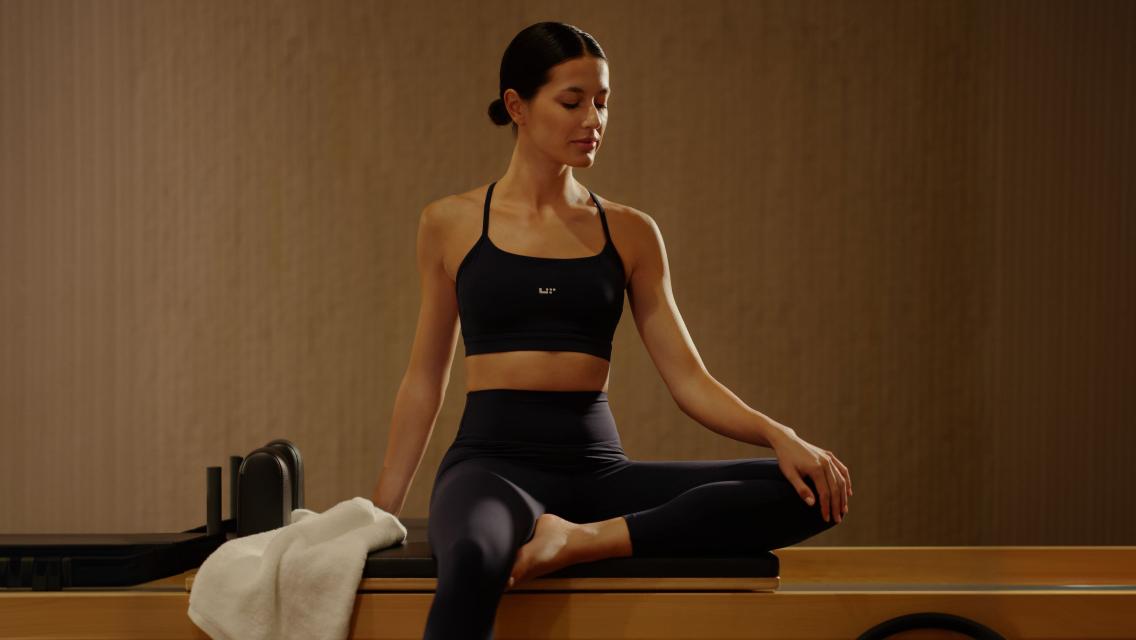
Reformer Pilates provides controlled resistance while emphasizing alignment, core stability, and breath-coordinated movement. Because the movements are intentional and low-impact, it stimulates circulation and neuromuscular engagement without high cardiovascular stress, making it a beneficial low-cortisol exercise option. (Learn more: “Everything to Know About Pilates at Life Time.”)