


It seems every year, trends and technology evolve faster than you can blink — and 2026 is poised to be no different. We asked experts from across Life Time to share their predictions for what they see taking the spotlight (or continuing to stay relevant) in 2026.
Check out their top anticipated trends for the categories of health and wellness, fitness, nutrition, cooking and food culture, mental wellness, beauty, and decorating and home design.
Sections in this article:
Health and Wellness ⋅ Fitness ⋅ Nutrition ⋅ Cooking and Food Culture ⋅ Mental Wellness ⋅ Beauty ⋅ Decorating and Home Design
Health and Wellness
Our expert: Courtney Helgoe, executive editor at Experience Life magazine
1. Trend: We’ll see more visible menopausal support.
While talking about “the change” used to be taboo (and is still a little uncomfortable, depending on who’s in the conversation), we’re seeing a growing number of supportive resources for people experiencing the transition through perimenopause and menopause. There’s been a big appetite for all the coverage Experience Life has done in this area, which focuses on decoding challenging symptoms and the variety of available options for addressing them. These insights seem to be taking their rightful place among other discussions about aging and hormonal health, which suggests a promising trend toward a reality-based understanding of aging as a natural process.
2. Trend: An increased craving for health literacy
Separating signal from noise has long been a challenge when it comes to health news. The last year has only amplified the noise. As trusted institutions like the Centers for Disease Control and the National Institutes of Health are being defunded and research grants are being ended or suspended, health reporters (including those of us at Experience Life) and consumers alike are having to make new decisions about where to get trustworthy guidance for everything from vaccines to flu outbreaks.
Some states have addressed the issue by forming regional alliances, such as the West Coast Health Alliance and Northeast Public Health Collaborative, which offer their own research-based guidance. Other health educators, such as Jessica Knurick, RD, PhD, are making it their mission to provide clear, evidence-based guidance on nutrition and other health matters wherever they can.
I think we’ll see more of these coalitions and efforts in 2026, with an increased number of us turning to them for reliable information and guidance.
Fitness
Our expert: Shannon Jarvis, director of MB360 at Life Time
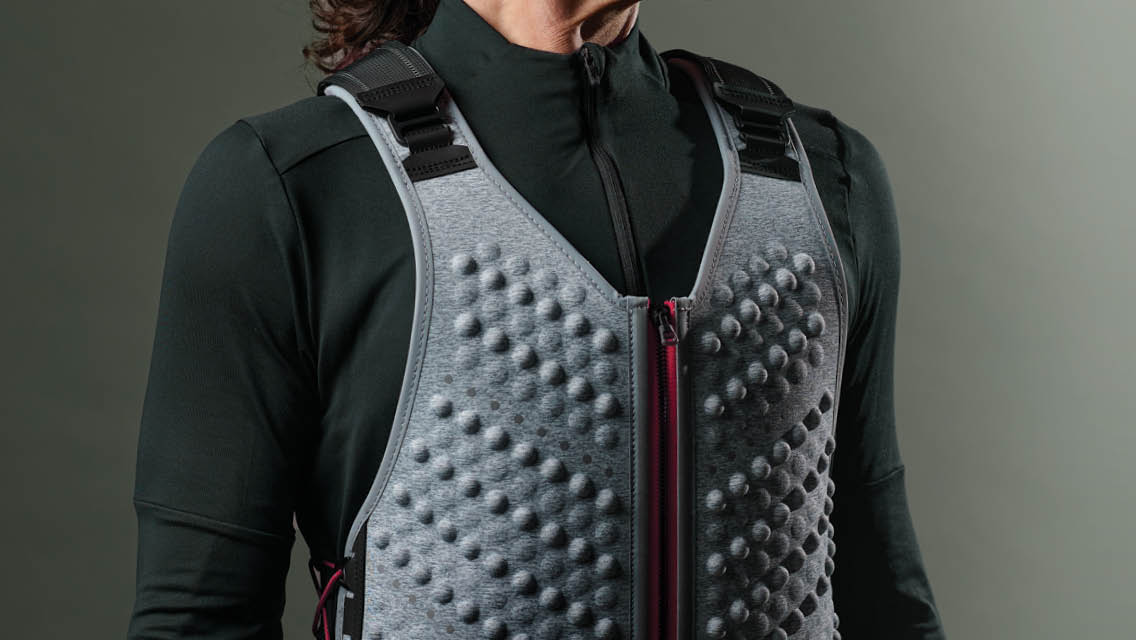
3. Trend: Even more people wearing weighted vests.
Fitness programs have been incorporating weighted vests strategically in their training plans, using them during strength phases to enhance mechanical load without compromising movement quality. This approach amplifies muscle activation across multiple planes of motion — sagittal, frontal, and transverse — while maintaining emphasis on mobility and functional movement patterns.
4. Trend: Practicing intuitive intensity.
Many progressive fitness philosophies teach practitioners to “build intensity on integrity.” This means, instead of going all out throughout your entire workout, you’re moving through deliberate phases: isometric (establishing awareness), eccentric (breathing through movement), and dynamic (purposeful execution).
The goal isn’t to work the hardest but to master the ability to reach elevated states with minimal unnecessary effort. This trains exercisers to listen to their bodies’ signals, like energy levels, recovery status, and daily readiness, rather than following rigid, prescriptive workouts or fitness plans.
Our expert: Wesley Robertson, senior classes operations manager at Life Time
5. Trend: Hybrid fitness
Hybrid fitness is built on the idea that athletes don’t have to choose between strength or endurance training. Instead, we can be doing both — lifting heavy and moving fast. This trains the body to be resilient across a wide range of demands. Competitions like LT Games, HYROX, DEKA, and other functional fitness competitions have been more visible thanks to social media. These competitions are proving that the most capable athletes are those who can transition seamlessly between modalities.
Hybrid fitness isn’t about being “pretty good” at everything — it’s about becoming exceptionally well-rounded. That means developing a strong engine, proficient muscles, efficient movement patterns, and the ability to hold intensity, even when you’re tired. It trains the athlete to squat under fatigue, run with elevated heart rates, and maintain form while moving weight through space.
The goal is versatility: preparing the body to meet whatever physical challenge someone wants to take on next.
Nutrition
Our expert: Laura Hamann, RD, LD, Life Time
6. Trend: Clear labels, minimal processing, and transparency in supplements.
Consumers are becoming more aware of what they are putting in their bodies, and they want to make sure it’s something with transparent ingredients. Consumers want fewer artificial additives, simpler ingredients, and less processing. They’re looking for foods and supplements with recognizable ingredient lists, while being more skeptical of buzzwords when looking at sourcing and processing.
This is not a trend for Life Time’s nutritional line, LTH, but we’re glad to see the awareness and demand becoming more mainstream. For example, for decades, LTH has prioritized quality in every step of the process, including ingredient sourcing and product formulation, manufacturing and testing, and storage and delivery for every offering. Additionally, products are both internally and third-party tested, including by NSF, whose test reports are available to consumers on LT Shop. The team also regulates storage and transport to ensure supplements are at their highest quality when they get to the consumer.
7. Trend: Protein in nearly every bite.
I’ve coached thousands of Life Time members, and getting enough protein can be a struggle for so many of them. People are busier than ever, so they want simple and easy ways to boost intake. So many food companies are starting to market “high-protein” snacks, but I often advise clients to make sure they read the full ingredient list and also stick to some of those tried-and-true high-protein snacks, like a high-quality beef stick, high-quality protein powder (easy to add to your everyday coffee or favorite smoothie), or a high-quality protein bar.
Cooking and Food Culture
Our expert: Kaelyn Riley, editorial director of food and nutrition at Experience Life magazine
8. Trend: Filling fiber
Protein has been enjoying time in the spotlight as everyone’s favorite macronutrient, but as gut health and digestive wellness continue to trend, I think we might see more consumers and food brands turn their focus toward fiber. Many food manufacturers have been adding fiber to their products for a while now — think high-fiber breakfast cereals and yogurt cups — but lately I’ve been noticing a wider variety of fiber-boosted foodstuffs on the market, like prebiotic sodas and enriched pastas.
Most Americans don’t get enough fiber, so this is a trend a lot of us could stand to get behind. Any extra fiber is a plus for most diets, but I prefer to skip the more processed products and double down on whole-food sources: beans and legumes, nuts and seeds, and my personal favorite, lots of kiwi fruit.
9. Trend: Even more mocktails!
We’ve been writing about the “sober curious” trend for years at Experience Life, and it’s been so interesting to see how continued interest in alcohol-free options has changed the beverage industry.
It seems to me that not long ago, if you wanted a nonalcoholic beer, your best and only option was the classic O’Douls. These days, you have hundreds of NA beers to choose from — lots of major brands have gotten into the NA game, with innovative brewing techniques that make for more complex, delicious zero-percent brews. Bars and restaurants are also expanding their booze-free offerings, including creative mocktails with artisanal ingredients that still feel special and celebratory sans liquor.
I’ve found it very exciting to watch this trend take hold, because the more normalized it is — the more we see those options on the shelves or on menus — the easier it is for all of us to make more mindful choices for ourselves.
Mental Wellness
Our expert: Barbara Powell, MA, NBC-HWC, Life Time mind coach
10. Trend: Cycling back to human connection.
Mental well-being will continue to be not just a nice-to-have, but a must-have for resiliency in a potentially tumultuous year. With the ongoing integration of AI across platforms, technology will continue to be pervasive across many areas of our lives. However, human-to-human interactions will maintain as a gold standard for true mental well-being support. Humans are — and will always be — wired to connect.
Going analog, digital detoxing, and separation from technology will become more common. This will allow people to deepen relationships with nature, community, and other people to help release mental pressures. Leading the way with this trend are folks who opt for flip phones over smart ones, choose books over scrolling, set out for no-service weekends on the trails, and have a hands-on way of interacting with the world on the daily. Those who do will certainly notice and reap the benefits!
Beauty
Our expert: Chrysta Bowe, hairstylist at LifeSpa at Life Time in Brookfield, Wis.
11. Trend: Loose hair textures and effortless styles.
While working backstage at New York Fashion Week for the spring and summer 2025 shows, I noticed a strong trend toward looser hairstyles and lived-in texture. The updos looked as if they’d been casually swept up, creating fun, organic shapes with a few pieces left to rest on the shoulders. At one show, we focused on longer hairstyles with undone, airy texture — either enhancing the models’ natural waves or adding soft bends with a heat tool for that effortless, everyday-chic feel.
What I love about these looks is how easy they are for anyone to achieve while still feeling current. They let you embrace your hair’s natural shape and movement — so you can spend less time styling and more time living.
Our expert: Kristen Shoemaker, esthetician at LifeSpa in at Life Time in Bridgewater, N.J.
12. Trend: Simpler skincare routines
Hybrid products — products with more than one benefit — are becoming one of the biggest trends in skincare, and I think they’ll truly take off in 2026. We’re all trying to simplify our routines — and that includes skincare. No longer do clients want a five- or six-step regimen; many are asking for simpler routines that still deliver maximum results.
Personally, iS Clinical is my go-to brand for helping clients streamline their routines while achieving their skincare goals. I’m loving the Super Serum Advanced+, which brightens, lightens, and tightens the skin — all in one step. The iS Clinical Daily Dynamic Hydrator is another favorite. This 3-in-1 formula helps treat visible signs of aging, defends against daily environmental stressors, and delivers deep, long-lasting hydration for refreshed, healthy-looking skin.
Decorating and Home Design
Our expert: Mary McNally, interior designer for Life Time
13. Trend: Softened corners and curves
Softened elements will continue to redefine traditional square-corner designs in 2026 with a focus on comfort, safety, and warmth. This trend moves away from stark linear environments and embraces organic shapes that invite relaxation and ease.
If you want to introduce this into your space, try to incorporate furniture with rounded corners and edges along with arched architectural elements to create spaces that feel softer and more inviting. As an added benefit, these soft forms can help reduce injury risks, especially in family-friendly environments. Ultimately, softened corners and curves are more than a style — they’re a sensory experience that fosters calm and connection.
14. Trend: Health in the home
Design trends in 2026 are deeply intertwined with healthy living, emphasizing spaces that nurture both the body and mind. Wellness-driven design is a lifestyle standard that prioritizes biophilic elements, natural materials, and restorative environments.
Altogether, these trends reflect a shift toward environments that promote resilience, sustainability, and holistic wellness. Creating a space in your environment that feels personal and allows you to tuck away and recharge both mentally and physically are critical to overall well-being. For example, do you love to read? Consider creating a cozy library in an unused nook in your home.
15. Trend: Thoughtful layered patterns
Layering patterns allows for bold expression and thoughtful contrast. In this up-and-coming trend, we see the use of mixed motifs to create dynamic, textured spaces.
Large nonpatterned pieces ground the design and balance the pattern variety. Each layered motif visually connects to the others through a shared palette. It is important to vary your pattern choices by scale to avoid same-size patterns visually conflicting.
Consider using a variety of prints layered across textiles, walls, and furnishings to bring richness and personality to your space.