



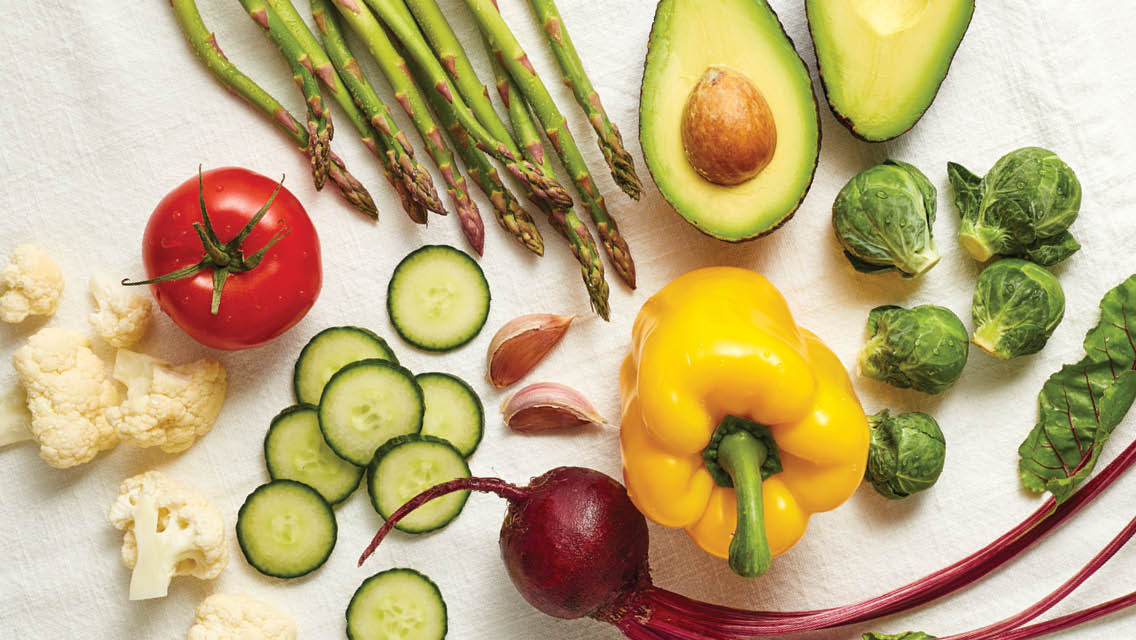
Although the required amount of veggies varies by individual, the U.S. Department of Agriculture generally recommends that adults eat 2 to 4 cups each day. Functional-medicine experts say that’s too few, and suggest 9 cups, measured raw.
The 9-cup recommendation sounds like a lot, but it’s more manageable than you might think. Functional-medicine practitioner Terry Wahls, MD, clinical professor of medicine at the University of Iowa Carver College of Medicine and author of The Wahls Protocol Cooking for Life, offers the following examples of what counts as a cup.
What Counts as 1 Cup of Veggies?
| 1 avocado8–10 asparagus spears
1 beet 1 large bell pepper 4–5 large Brussels sprouts ⅙ head of cabbage 1 large carrot ¼ head of cauliflower |
2 ribs of celery ⅓ large cucumber 2 cloves of garlic* 4 large lettuce leaves 1 large tomato ⅓ large yam or sweet potato |
* Wahls gives garlic extra credit for its nutrient density.
More Inspiration to Eat Your Veggies

4 Easy and Effective Strategies to Eat More Veggies
Eating “mostly plants,” as Pollan suggests, doesn’t have to be hard. We asked our experts how to make it easier.

9 Cruciferous Veggies — and How to Enjoy Them
There are a wide variety of brassicas and many delicious ways to prepare them.

10 Habits of Successful Vegetable Eaters
Looking for a game-changing way to boost your health? Eat (way!) more veggies, says functional-medicine pioneer Frank Lipman, MD.

5 Plant-Based Comfort Food Recipes
With a few easy substitutions, your favorite dishes can still be cozy, satisfying — and nutritious.

What Are Supergreens and How to Incorporate More into Your Diet
Once a niche market for health fanatics, supergreens have gained a wider audience. Here’s what they are, how to get them and what they can do for you.

How to Cook With Fresh Herbs
Think beyond the garnish! Fresh herbs can add big flavor — and nutrition — to your favorite dishes.
One Healthy Habit
For more inspiration and other challenges, please visit One Healthy Habit.





Comments (0)