



Skip to content

Get Experience Life delivered to your door

Experience Life
Delivered every two months

Real Health. No Hype.

More than 600,000 subscribers trust us to keep them informed, inspired, and authentically healthy. Join them.

3 Yoga Poses For Recovery

These three basic poses provide an entry point for beginning yogis and athletes seeking recovery.

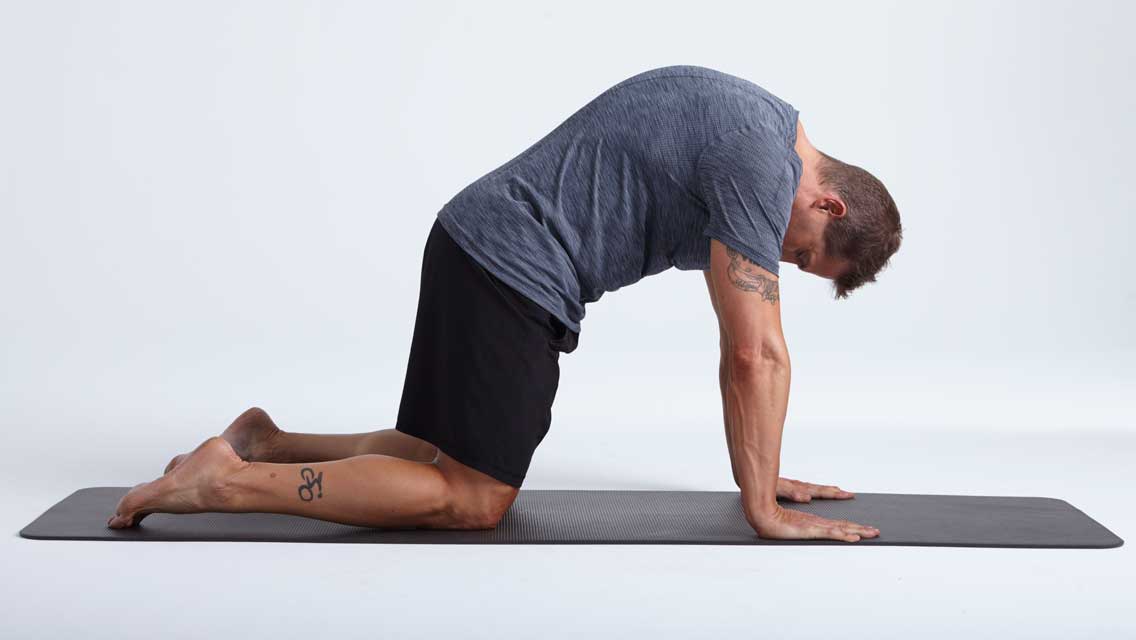
yoga cat pose

A low-intensity yoga flow can be an ideal post-workout antidote for high-intensity cardio and strength sessions. It can also relieve all manner of malaises: Sore back? Tight hamstrings? Anxiety? Adding yoga into your routine could benefit your body and mind.

Research shows that a consistent practice can improve strength, flexibility, and balance, while also reducing stress and refining mental focus. But it can be tough for beginners to know where to start, says Life Time’s Jan Johnson, studio manager and instructor of LifePower and Yin teacher training in St. Paul, Minn.

The following foundational yoga poses offer the essence of the practice. Done correctly, they will engage your core, stretch your spine, and challenge your balance.

Perform these restorative poses individually to target specific needs, or do them consecutively to create a gentle active-recovery or postworkout flow.

Child’s Pose
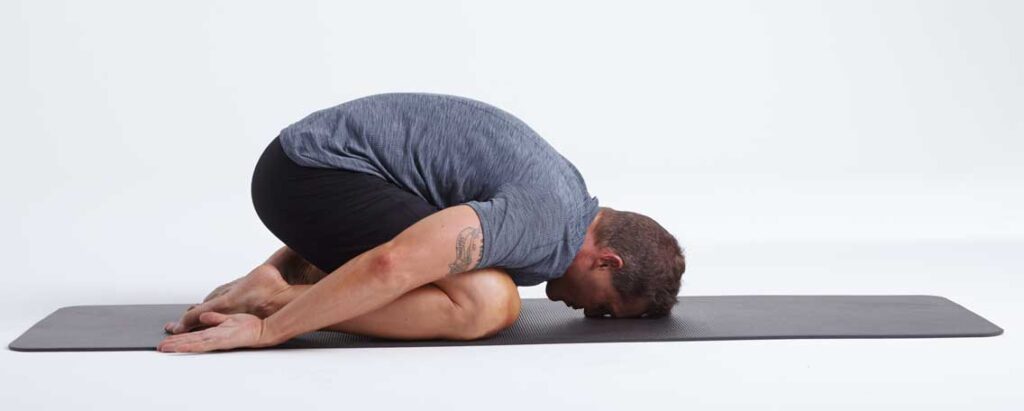
yoga child's pose

Why: This pose is the ultimate stretch for your lower body — hips, lower back, thighs, knees, and ankles. It also helps release tension in the spine, shoulders, and neck.

How: Begin by kneeling on your mat. Separate your knees hip width apart and keep your big toes together. Lower your seat onto your heels and your torso toward the floor, resting your forehead on the mat. Hold for five breaths.

Dial it down: Place a block beneath your seat.

Dial it up: Extend arms forward and press your palms firmly into the mat for a more active stretch.

Cat-Cow
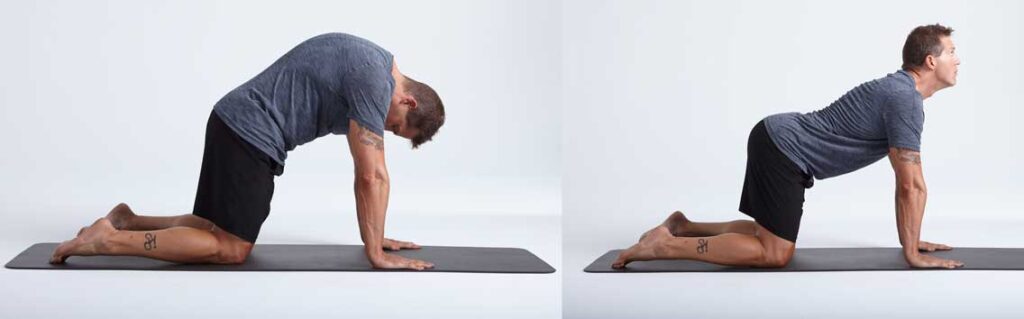
cat cow

Why: “Back pain affects almost everyone at some point, and lack of activity can worsen the condition,” says Johnson. This pose will stretch and strengthen core and back muscles; the steady breath will quiet your nervous system and promote relaxation.

How: From child’s pose, transition into table pose: shoulders over wrists and hips over knees. Inhale, and on your exhale round your back upward, tucking your chin to your chest and reaching your midback toward the ceiling; this is cat pose. On your next inhale, slowly arch your spine, lowering your belly and lifting your tailbone, shoulders, and head. Look up slightly, creating a gentle stretch in your neck; this is cow pose. Repeat five times, synchronizing breath with movement.

Dial it down: While gazing upward, hold cow for five breaths; then round down into cat and hold for five breaths.

Dial it up: Point your fingers toward your knees to create a greater stretch in your wrists.

Downward Dog
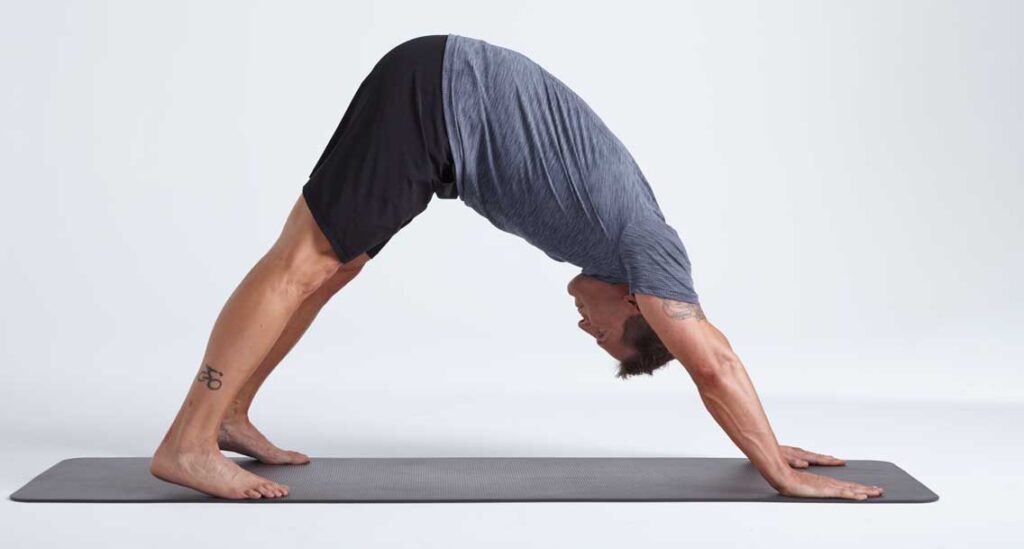
down dog

Why: This is the home-base pose for many styles of yoga, Johnson explains. The rejuvenating full-body stretch lengthens the spine, which can help relieve back pain. The gentle inversion also aids the circulatory and lymphatic systems.

How: From cat–cow, neutralize your spine to return to table pose. Then curl your toes under and lift your hips up. Keep your spine flat and lower your heels toward the mat, as far as your hamstrings allow. Separate your fingers wide and look toward your feet. Hold for five breaths.

Dial it down: Raise your heels slightly to ease the sensation.

Dial it up: Gently bend and straighten your knees to feel a greater hamstring stretch.

This originally appeared as “The Workout: Restorative Flow” in the March 2018 print issue of Experience Life.

Photography by: Ted Catanzaro; Fitness Model: Alex Isaly
Share

Discover more from Life Time

A low-intensity yoga flow can be an ideal post-workout antidote for high-intensity cardio and strength sessions. It can also relieve all manner of malaises: Sore back? Tight hamstrings? Anxiety? Adding yoga into your routine could benefit your body and mind.

Research shows that a consistent practice can improve strength, flexibility, and balance, while also reducing stress and refining mental focus. But it can be tough for beginners to know where to start, says Life Time’s Jan Johnson, studio manager and instructor of LifePower and Yin teacher training in St. Paul, Minn.

The following foundational yoga poses offer the essence of the practice. Done correctly, they will engage your core, stretch your spine, and challenge your balance.

Perform these restorative poses individually to target specific needs, or do them consecutively to create a gentle active-recovery or postworkout flow.

Child’s Pose

yoga child's pose

Why: This pose is the ultimate stretch for your lower body — hips, lower back, thighs, knees, and ankles. It also helps release tension in the spine, shoulders, and neck.

How: Begin by kneeling on your mat. Separate your knees hip width apart and keep your big toes together. Lower your seat onto your heels and your torso toward the floor, resting your forehead on the mat. Hold for five breaths.

Dial it down: Place a block beneath your seat.

Dial it up: Extend arms forward and press your palms firmly into the mat for a more active stretch.

Cat-Cow

cat cow

Why: “Back pain affects almost everyone at some point, and lack of activity can worsen the condition,” says Johnson. This pose will stretch and strengthen core and back muscles; the steady breath will quiet your nervous system and promote relaxation.

How: From child’s pose, transition into table pose: shoulders over wrists and hips over knees. Inhale, and on your exhale round your back upward, tucking your chin to your chest and reaching your midback toward the ceiling; this is cat pose. On your next inhale, slowly arch your spine, lowering your belly and lifting your tailbone, shoulders, and head. Look up slightly, creating a gentle stretch in your neck; this is cow pose. Repeat five times, synchronizing breath with movement.

Dial it down: While gazing upward, hold cow for five breaths; then round down into cat and hold for five breaths.

Dial it up: Point your fingers toward your knees to create a greater stretch in your wrists.

Downward Dog

down dog

Why: This is the home-base pose for many styles of yoga, Johnson explains. The rejuvenating full-body stretch lengthens the spine, which can help relieve back pain. The gentle inversion also aids the circulatory and lymphatic systems.

How: From cat–cow, neutralize your spine to return to table pose. Then curl your toes under and lift your hips up. Keep your spine flat and lower your heels toward the mat, as far as your hamstrings allow. Separate your fingers wide and look toward your feet. Hold for five breaths.

Dial it down: Raise your heels slightly to ease the sensation.

Dial it up: Gently bend and straighten your knees to feel a greater hamstring stretch.

This originally appeared as “The Workout: Restorative Flow” in the March 2018 print issue of Experience Life.
More like this

Share a thought

5 CommentsClose comments

Comments (5)

  1. Although I appreciate the article, and hope to incorporate stretching into my post workout routine, I am a visual learner and it would have been more helpful to actually see the poses since I had any experience with Yoga.

  2. Thanks for the article, but I can’t believe that this would be published without accompanying photos of the poses mentioned.

Leave a Reply

Your email address will not be published. Required fields are marked *

Keep the conversation going

Leave a comment, ask a question, or see what others are talking about in the Life Time Health Facebook group.

Facebook Group

Advertisement

Back To Top