



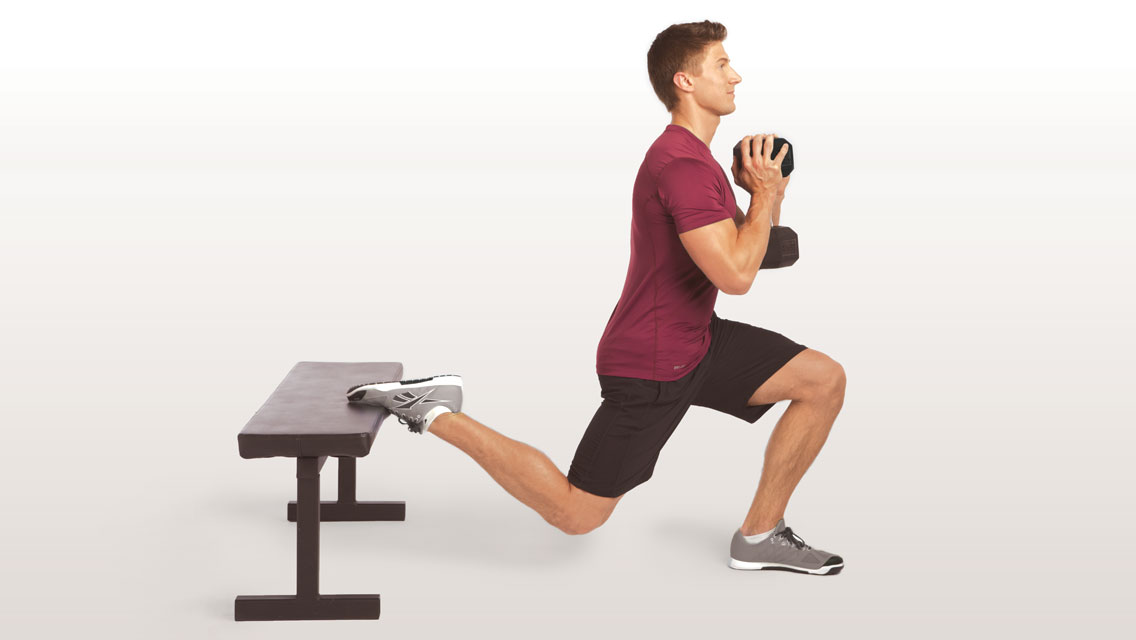
The Bulgarian split squat, also known as the rear-foot-elevated split squat, is a unilateral lift that improves strength, balance, hip mobility, and general athleticism. By focusing on one side of your body at a time, you can work its asymmetries to build strength and resilience while warding off aches, pains, and injuries.
This challenging move emphasizes glute and thigh strength, lumbo-pelvic stability, knee and ankle alignment, hip mobility, and foot strength. Additionally, it recruits the deep musculature of your core as well as the proprioceptive abilities of your nervous system.
For all the good this move does, it’s also an exercise that is easy to mess up. Positioning is everything, and it takes some trial and error to find your footing — in both the front and rear leg.
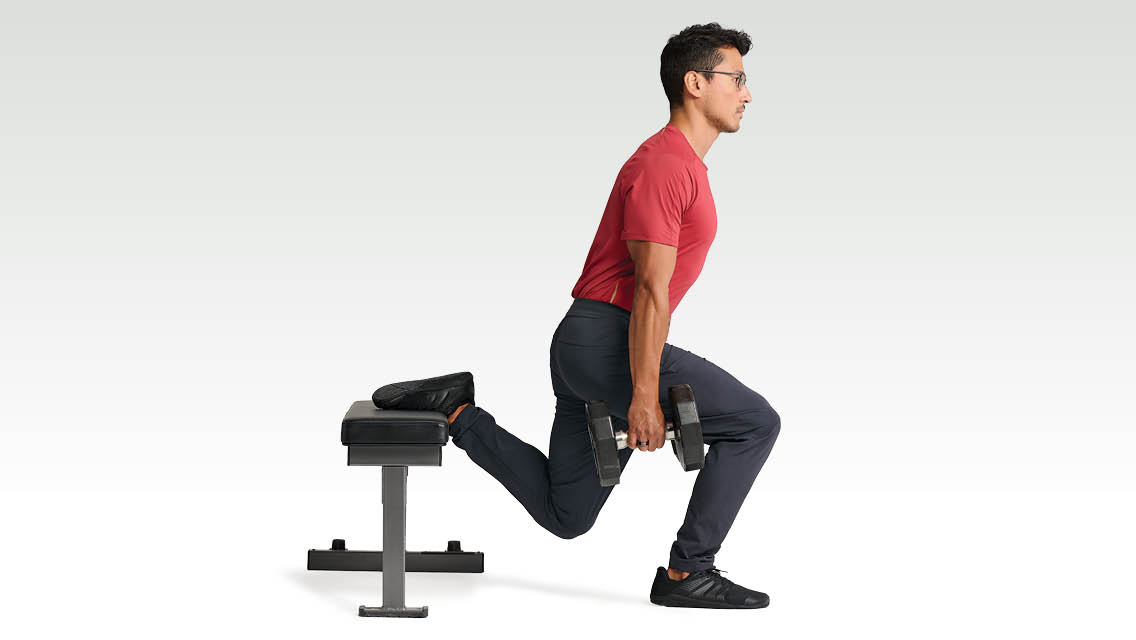
1. Stand 2 to 3 feet in front of a knee-high platform. Extend your right leg behind you and rest your toes on the bench. Toes can be flat or tucked, according to personal preference. Square your hips and shoulders.
2. Keeping your torso upright, slowly lower your right knee toward the floor. Your front knee will form approximately a 90-degree angle (it may go farther, depending on your mobility; just make sure your knee doesn’t cave inward).
Tip: Maintain evenly distributed weight in your whole foot. Don’t shift forward on the toes or exaggerate pushing through the heel.
3. Reverse the move and return to the starting position.
Tip: Squeeze your rear glute at the top of the movement.
5 Common Missteps to Avoid
- Using a too-high platform for the rear foot. Find a step, box, or bench that is knee height.
- Taking a too-short or too-long stride. Start by standing 2 to 3 feet from your platform and position your feet so your back knee is not fully extended and has room to travel straight down as you lower into a lunge.
- Placing your front foot directly in front of your rear foot in the starting position, as if you’re walking a tightrope. Instead, position your feet on either side of an imaginary line.
- Stressing about the placement of your toes on the bench. Try both the tucked and flat positions and use the one that feels more stable.
- Shifting your weight forward on the descent. Don’t lean forward and push into your front knee; instead, lower your body straight down, keeping the front knee stacked over the front foot and shoulders stacked over your hips. In a stacked position, you’ll feel the rear glute engage along with the front leg.
How to Progress Your Bulgarian Split Squats
The Bulgarian split squat is deceptively difficult and begging to be pregressed.
Begin by mastering a split-squat position with both feet on the floor, and don’t worry about overloading the weight before you get your elevated positioning down.
Once you’ve got your bearings, you can load the move by:
- Holding a single weight (dumbbell, kettlebell, sandbag) at chest height.
- Holding one or two weights in a front-rack position.
- Holding one or two weights at your side.
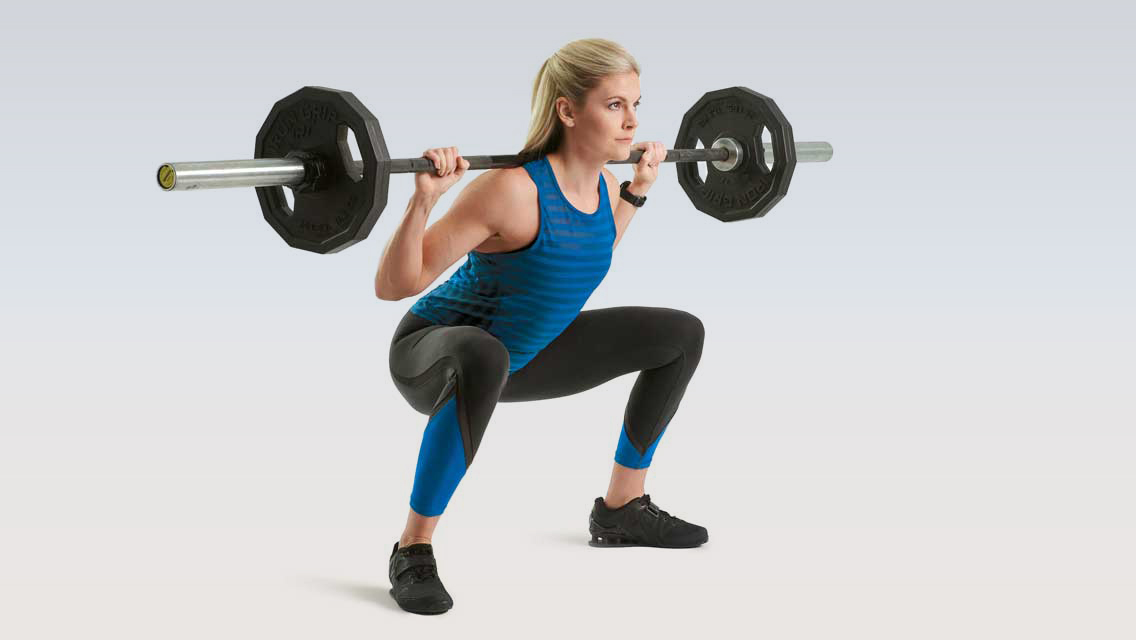
- Holding a barbell or sandbag on your back, in a front-rack position or a zercher position in the crook of your elbows.


Comments (0)