

Explore this Article
Goals have a way of getting us to do hard things. They light a match under us when we’re stuck — or simply don’t know what to do next.
“Everybody’s definition of ‘hard’ is going to be different,” says professional adventurer Michael Lanza, creator of The Big Outside, an online platform of resources for backpackers and hikers. “But whatever the thing is that’s challenging becomes immensely satisfying when you push yourself to a realistic goal. … It’s an indescribable feeling of accomplishment. You think, If I can do this, then I can try the next thing I never thought I’d do.”
You can pursue fitness goals outdoors, in a health club or gym, or in your own home. These goals can involve improving your current skills or learning something new. You can aspire to lift more weight, move faster, or go farther than you’ve gone before.
“Having a clear goal almost acts as a GPS and turns your random effort into intentional action,” says David Freeman, senior director of coach excellence for Life Time. “So when you start to know what you’re going after, you wake up differently, you have a sense of urgency, you move with more focus, and you start stacking up small daily wins. Then goals bring back the momentum that’s needed for you to get out of a funk.”
We asked experts in a variety of fields for their best goal-setting inspiration. Perhaps one or more of these goals could spark your next fitness endeavor.
Learn a New Skill
Training for a new sport or skill expands your body’s physical abilities and creates new neural pathways in your brain. The more complex the activity, the more you engage and challenge your brain.
“You hit a focused mindset where you block everything else out,” says Lanza. “It’s a rare experience to be singularly focused on one thing to the point where we don’t realize how much time has gone by.”
Tackling a new skill can also foster continued learning and broaden your potential as an athlete. For example, if you learn to rock climb in a gym, you’ll be more prepared to try climbing in nature. If you work with a coach to learn Olympic lifts, your improved explosiveness can help your performance in other sports.
Sample Goals:
- Rock climbing
- Stand-up paddleboarding
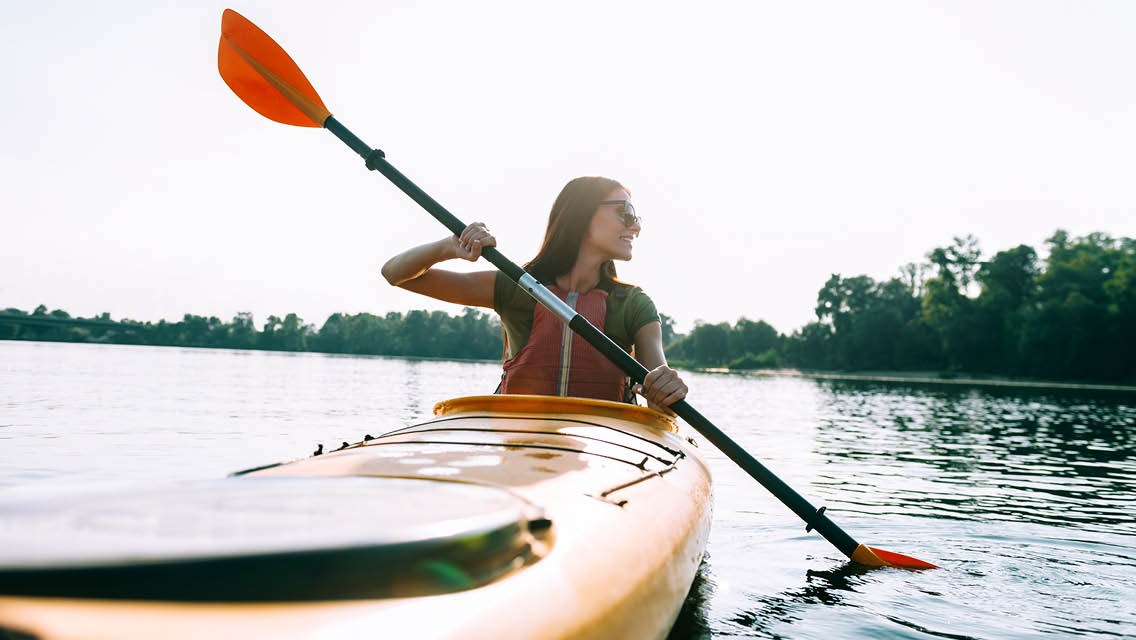
- Kayaking
- Mountain biking
- Surfing
- Skateboarding
- Skiing (alpine, Nordic, backcountry, water)
- Ice skating
- Snowshoeing
- Olympic lifting: snatch and clean and jerk
- Kettlebell or mace swinging
- Boxing or kickboxing
- Martial arts
- Dance
- Any new sport, such as tennis, pickleball, or golf
Improve Your Healthspan
Your “healthspan” is the period of life you spend in good health, free from chronic disease and disabilities associated with aging.
One way to set goals around healthspan is by looking at fitness indicators for longevity. For example, grip strength correlates with your risk of falling and your risk of chronic disease, says Jennifer Miller, PhD, CSCS, an assistant professor of kinesiology at St. Olaf College and a Life Time Alpha and GTX instructor.
While these fitness indicators are commonly associated with aging, it’s never too early to start paying attention to them.
“What you’re doing in your 20s and 30s really [becomes what you build upon] when you’re 55 and 65,” Miller says. “We start to see changes every 10 years or so as we get older, so who you want to be in 10 years really depends on what you’re doing in the years prior.”
Grip-Strength Goal:
At age 65 and older, men need around 60 to 70 pounds of grip strength (the standard associated with lower mortality risk); women need about 35 to 45 pounds. Improve your grip strength with the farmer’s hold and carry.
- Baseline goal: Hold two kettlebells totaling 28 kilograms or about 60 pounds (men) or 17 kg or about 35 pounds (women) for 30 to 60 seconds.
- Advanced goal: Walk with two kettlebells totaling 50 to 100 percent of your body weight for 30 to 60 seconds.
Muscular-Endurance Goal:
For functional independence, older adults need enough strength and endurance to sit down and stand up from a chair 11 or 12 times in 30 seconds.
- Baseline goal: Sit and stand 18 times in one minute.
- Advanced goal: Sit and stand 33 times in 30 seconds.
Speed-Walking Goal:
Research shows that gait-movement patterns — such as a step length greater than 25 inches — predict lower chances of injury and better longevity outcomes in older adults. VO₂ max is associated with longevity and lower mortality risk. Speed walking can help improve both markers.
- Baseline goal: Run or speed walk one mile without stopping.
- Advanced goal: Speed walk a mile in under 13 minutes. Miller notes that it should take no more than three minutes for your heart rate to return to within 20 to 30 beats of your resting heart rate.
Lower-Body Strength and Balance Goal:
This compound exercise helps keep you mobile: Go from sitting to standing, then walk or run a short distance and return to your starting position.
- Baseline goal: Get up from a chair, walk 10 feet, and come back in 13.5 seconds.
- Advanced goal: Get up from the ground without using your knees, hands, or anything else for support, run 25 yards and back, and return to seated. Bonus: Do this while wearing a weighted vest (see “The Benefits of Adding a Weighted Vest to Your Fitness Routine” for more).
Lift More Weight
Resistance training — tackling a heavier weight or doing more repetitions or sets, say — draws on the principle of progressive overload. By gradually increasing the challenge to your body, you continue to build strength, muscle, and endurance.
Start by making sure you have good technique around a specific movement, such as a squat (see “How to Do the Squat” for technique tips and cues). Then, add intensity — and don’t be afraid to make it a challenge, says Lindsay Ogden, CPT, a Life Time personal trainer and Alpha Strength coach.
“Many times, participants will say something like, ‘This is hard!’ And I say, ‘Good, because you didn’t come for easy!’” Ogden says. “If you’re not a little uncomfortable or nervous, then you’re likely not truly exploring what all your body and mind are capable of. Invite and welcome those feelings in — they mean you’re onto something great.”
It’s common to aim for a specific strength-training benchmark like bench pressing your body weight or deadlifting 300 pounds. Alternatively, consider strength tests that gauge your improvement over time.
Sample Goals:
- Increase your one-rep max for a major lift by 10 percent.
- Increase your load for a major lift by 10 percent for a set of five or 10 reps.
- Increase your maximum number of reps for a body-weight exercise such as pushups, dips, or pull-ups.
- Hold a plank or wall sit for a minute or longer.
Master a New Move
It’s gratifying to be able to add more weight to the bar, but it can be even more satisfying to nail a move you didn’t think was possible.
“Getting a chin-up for the first time, when people have never done it in their life, gets them thinking more of exercise for getting stronger than for losing weight. It changes their perspective of why they’re doing it,” says Scott Schutte, fitness coach and cofounder of Evolved Personal Training.
A new movement can be intimidating for many reasons. Maybe, for example, you think it’s too complex or requires more strength and mobility than you have. “As humans we wish a lot. We fear what we don’t understand because we think we can’t do something,” says Ryan Hurst, cofounder of GMB Fitness, who specializes in teaching gymnastics movements, such as handstands, cartwheels, and rolling variations.
But Hurst says taking the time to understand and tackle a movement that seems scary or difficult not only makes us better movers but gives us the opportunity to play. “When we use incremental progressions and work toward overcoming that fear, it opens up a new world. And this world is exploration — and this is where play comes in.”
Sample Goals:
- Handstand
- Cartwheel
- Kakasana (crow pose), pincha mayurasana (forearm stand), or other challenging-for-you yoga poses
- Pistol squat
- Forward or backward shoulder roll
- Backbend
- Monkey bars traverse
- Chin-up or pull-up
- Muscle-up
Go Faster
Whether you’re doing track intervals or boot-camp plyometrics, training at a high speed or intensity has numerous benefits, including elevating your metabolic rate, improving your ability to transition from burning fat to burning carbs during workouts, boosting your anaerobic function, improving your insulin sensitivity and blood-sugar stability, enhancing your mood and cognition, increasing your VO₂ max, and improving your cardiovascular health.
“When you do interval training, this causes your heart wall to get thicker so your heart can literally pump harder,” says Mike Thomson, CSCS, Life Time coach and endurance athlete.
You don’t need to be in your prime to set speed or intensity goals. Challenge yourself with a cardiovascular activity that allows you to safely and confidently work at your maximum effort.
“Let’s say I’ve got a 69-year-old athlete who cannot run because it hurts his knees,” says Thomson. “Well, what can he do? He can still get on the air bike and do a 20-minute time trial.”
For the following ideas, first find your baseline and then use it to set goals relevant to your current fitness level.
Sample Goals:
- Improve your mile or 800-meter run time.
- Improve your mile walking pace on an inclined treadmill.
- Increase your distance covered in a 20-minute air-bike time trial.
- Improve your 2K row time.
- Improve your 25- or 50-meter freestyle-swim time.
Conquer Consistency
Process goals are focused on a habit you want to develop or a result you want to achieve, such as walking more or increasing your one-rep max in the gym. But instead of fixating on the outcome, you focus on the process, knowing that your actions likely will lead you to positive results. For example, if you lift heavy three days a week, you’ll eventually be able to increase the amount of weight on the bar.
“A lot of us get caught up in the results. Consistency is not going to come from chasing PRs or big audacious objectives,” says Freeman. “It comes from committing to small habits, and that starts to compound over time. (See “3 Tips to Build a Consistent Fitness Routine” for “cheat codes” that may help you create consistency with your fitness.)
“Process goals teach you discipline, bring about confidence through repetition, and keep you progressing week after week. And then even when the results haven’t shown up yet, you still understand that you’re becoming a better version of yourself.”
The following process goals span multiple fitness categories. Choose one or more of these to build health-supportive habits, or come up with your own.
Sample Goals:
- Complete no fewer than three strength workouts a week.
- Run a mile at least twice a week.
- Be active in nature for an hour or more every day.
- Take an average of 7,000 steps every day.
- Do at least one walking errand per day.
- Attend a Pilates/barre/yoga class once every week.
- Take a weekly Zumba/ballet/swing- or aerial-dance class.
- Foam roll and stretch every morning.
- Do a meditation and breathing practice every evening (try this “5-Minute Meditation to Prepare for Sleep“.)
Go the Distance
Since ancient times, endurance activities have challenged human potential. Feats like the dolichos Olympic race in ancient Greece, the inaugural long-distance bicycle race in France, and the first crossing of the English Channel by a swimmer — and their modern adaptations — are achievements of grit, perseverance, and discipline.
The discipline you practice while training for a marathon or other endurance event can apply elsewhere in life, too.
“In the world of fitness, when you say you’re going to be at run group at 5:30 a.m., the more you do this, the easier it gets,” says Thomson. “The more you do the things you say you’re going to do, the easier it is to do the things you say you’re going to do. That’s not just with working out.”
Physiologically, endurance training may lower all-cause mortality by improving blood flow.
“Once you start doing cardiovascular activity — specifically zone 2 — your left ventricle gets larger in size and your capillaries get larger in diameter so your blood can be transported to the rest of your body better,” Thomson says. “The better your plumbing — your heart, veins, and capillaries — the longer you’re capable of living, and the less likely you are to die of a cardiovascular disease.”
Sample Goals:
- Run/bike/row/ski continuously for 30 to 60 minutes.
- Complete your first 5K or 10K.
- Complete a triathlon of any distance: super-sprint, sprint, Olympic, half-Ironman, or Ironman.
- Complete a half-marathon, marathon, or ultramarathon.
- Complete a century or other long-distance bike ride.
- Complete an open-water swimming race.
- Set a PR in an endurance event.
Become a Hybrid Athlete
Foot races and triathlons have long been a gold standard for establishing grit as an endurance athlete. But since the debut of obstacle-course and fitness-racing events, endurance sports have evolved to test both cardiovascular fitness and muscular endurance.
These events combine several functional-strength challenges with short- to moderate-distance running or other endurance efforts. “Physically, you’re training with more intention and intensity,” Freeman says. “Your conditioning improves because you’re pushing into heart-rate zones you don’t normally reach. It’s a more well-rounded approach when it comes to strength and mobility.”
Signing up for a competitive event also challenges you to perform under pressure, something that you might not experience in your regular workouts.
“When you’re under that pressure in this environment that is challenging and stressful, how do you yield to that stress? Do you end up overcoming it? I think it’s always a learning experience, and you build resilience through adversity,” Freeman adds. “Competition allows you to tap into a version of yourself that everyday training doesn’t reach.”
Sample Goals:
- APEX
- DEKA
- GORUCK
- HYROX
- LT Games
- Spartan
- Tough Mudder
Take It Outside
Combining nature and movement makes for some of the most meaningful fitness adventures. “Backpacking, rock climbing, trail running, skiing — there are all these dimensions that people already into fitness can discover when they expand their horizons,” says Lanza.
Goals related to these activities can be as simple as walking or biking on local trails, or as intense as completing an immersive wilderness expedition.
For Ogden, it meant attempting the rim-to-rim-to-rim challenge, which involves hiking across the Grand Canyon twice in one day. She and her fiancé set off before sunrise in May 2024. Then, just 30 minutes in, she twisted her ankle — badly. She completed one crossing, from the canyon’s South Rim to its North Rim (itself a feat known as the rim-to-rim challenge), but was unable to make the return trip.
“At that moment, I was so upset over it,” Ogden recalls. At first, all she could think was All that hard work for nothing.
But falling short of her original goal illuminated an important lesson: “It’s about the journey and who you become in the process of that adventure. The finish lines are fleeting, but the training and the experience itself, especially when shared with others, is what stays with you.”
Sample Goals:
- Walk, run, or bike the entirety of a local trail system (over several weeks, months, etc.).
- Attain a specific elevation gain or distance, or aim to reach a named summit.
- Visit all the national parks or all your state parks.
- Participate in a trail-running event.
- Do a guided hiking or biking trip.
- Tackle an epic multiday hike, like Camino de Santiago or the Great Norse Run.
- Commit to a multiday bike ride.
- Attend a surf camp or a seaside breathwork and yoga retreat.
WITH SO MANY POSSIBLITIES, choosing just one goal might feel like a goal in itself. “A lot of people come in with so many things they want to accomplish,” says Schutte. But pushing your limits doesn’t mean doing everything all at once.
You don’t have to set out to run a marathon and PR your deadlift and improve your bone density. Often, the behaviors required to achieve a single goal can result in crossover benefits. And keeping your focus on one overarching goal can help make the journey more sustainable and enjoyable.
Whatever goal you choose next, no matter how simple or audacious, remember to make it meaningful to you. Consider what exactly you want to accomplish — and why it matters. Backing your goal with personal meaning and passion sparks motivation and improves consistency, increasing your chances of amazing yourself with what you’re capable of.
SET YOUR GOALS
Discover six principles for developing an effective fitness plan at “You Inc.: A Practical Guide for Setting Fitness Goals.”
This article originally appeared as “What’s Your Next Adventure?” in the July/August 2026 issue of Experience Life.





Comments (0)