



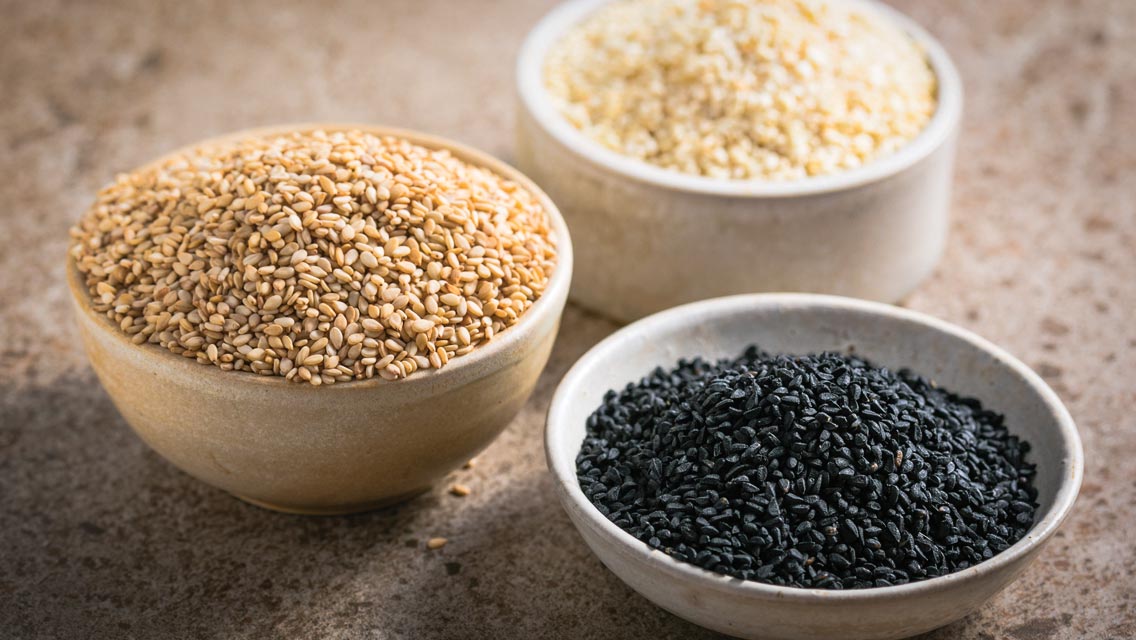
Sesame seeds come in a variety of colors, including black, white, and yellow, and the seeds’ oil and nutritional properties can vary depending on their color. For example, black sesame is slightly higher in protein, vitamin E, and lignans, notes Gabrielle Kishner, MS, RD, CDN, a registered dietitian and founder of Nutrition by Gabrielle in New York.
Lignans are a polyphenol, a plant compound with antioxidant properties that help protect cells from damage caused by free radicals. In general, darker seeds contain more polyphenols and show stronger antioxidant activity. And compared with other popular seeds like chia or flax, black sesame seeds provide slightly more calcium and iron, Kishner notes.
Black sesame seeds also deliver healthy fats, B vitamins, and minerals like magnesium, copper, zinc, and phosphorus. In fact, their mineral density is one reason that researchers have examined their role in supporting bone, heart, skin, and digestive health. Calcium, magnesium, zinc, and phosphorus all help maintain bone strength; that may be especially relevant for postmenopausal women looking to slow bone loss and support healthy hormone balance.
Healthy fats, polyphenols, and vitamin E also support heart health, Kishner explains, which could be why sesame has been shown to help keep blood pressure, blood sugar, and blood lipids steady.
Fiber is great for your digestion, too — and with about 1 gram per tablespoon, black sesame seeds can support gut health, she adds.
“Sesame seeds are highly nutritious, but too much can lead to digestive discomfort,” she notes. They also contain antinutrients, such as oxalic and phytic acids, which in excess can reduce the absorption of certain minerals. For this reason, Kishner suggests limiting your intake to about 1 to 2 tablespoons per day. Talk to your doctor first if you have any health issues or if you take medication. (Learn more at “All About Antinutrients.”)
Black Sesame Seeds
Traditional Chinese Medicine has long prized this tiny black seed for nourishing the liver and kidneys. Learn how to cook with black sesame seeds — and try our recipe for nutrient-dense sesame bars — at “The Healing Power of Black Sesame Seeds,” from which this article was excerpted.




Comments (0)