



The Ambiguous Middle
Middle age is more than a number, in part because there’s no universal “middle” to our lives. This is especially true as humans tend to live longer, healthier lives than we once did.
“If we’re being honest, you divide by two when you die, and that’s middle age,” notes Yeager. Despite his reservations about putting societal parameters around the human experience, he is willing to ballpark middle age as ranging from 40 to 60 years.
Sari Botton, founder of the Substack newsletter Oldster Magazine, prefers a more open-ended definition. “I think if you don’t know how long you’re living, it’s really hard to say where the middle of your life is and what you’re supposed to be doing then.”
The ambiguity of middle age can be further amplified by our cultural milieu. “We were parentified and latchkey kids, like no generation prior,” Botton says, referring to her Gen-X cohort. “There was this confusion about Am I a grownup or a kid? I’m doing a lot of things my parents should be doing, but I also don’t have a driver’s license.”
She says Oldster is for and about “all people who are having the experience of getting older. And who are the oldest they’ve ever been.”
Botton experienced her first bout with age-related grief on her 10th birthday, when an uncle mentioned that she’d never be a single digit again. “It hadn’t occurred to me at 10 that I was on this life timeline passing through milestones, and I can’t go back the other way,” she recalls. “What if I didn’t pay attention to what it meant to be one digit? What if I forgot to look? . . . I have had this lifelong anxiety I’m doing everything on the wrong schedule.”
Ah, bingo: the idea we’re doing it wrong, the sense that we’re not following the script. We’ve missed a call time. And then the unsettling feeling that our life’s plot has sort of petered out.
It makes sense. For infants and toddlers, developmental stages can be matched nearly to the month: object permanence, walking, talking. In our teen and early-adult years, the goal becomes to finish school, followed by the slightly more nebulous discovery of both personal and professional passions. (The early to mid-20s also often bring on the Gen-X–coined term “quarterlife crisis.”) Maybe the script also includes building a family or buying a home.
All these straightforward markers of success can be found on a timeline. But when 35 or 40 rolls around, the flow chart branches out indefinitely — and it’s hard to know what we’re “supposed” to be doing. The conventional script disappears, forcing us to improvise.
And that brings uncertainty, which is a tough feeling to navigate. But when we embrace the absence of predictable milestones as a chance to chart our own course, this uncertainty can become a passageway to greater confidence and wisdom.
How to Find the Freedom of Midlife
Middle age is a time to “reassess our truths,” Yeager says. This process might reveal that certain values no longer work for us as they did during our first 40 or 50 years. Or maybe they never did, and we now have the clarity and courage to admit it.
“Moving in the direction of your truth is the work we have to do in middle age,” he says. “I often ask people: ‘Who knows you best?’ Many answer a best friend, a spouse, a parent. But it’s you.”
The recognition of middle age as a time of truth telling is becoming more visible in our culture. Middle-aged Melani Sanders’s viral social media movement, the We Do Not Care Club, celebrates the freedoms of menopause and midlife more generally. With humor and unflinching honesty, Sanders embraces the pleasure of not worrying so much about what others think. She also celebrates her solidarity with women in middle age and encourages appreciation for the human each of us has become.
In other words, her work reveals the hidden potential of middle age: Knowledge and confidence are power. If this reframing appeals to you, follow these steps to cultivate more of the freedom that middle age can bring.
1. Own Your Terms
 Despite the negative cultural messages that most of us have internalized, we do have choices about what middle age means to us. “The midlife transition is not really a crisis; it’s an upgrade,” explains Yeager. “We need to reframe this thinking.”
Any major life change eventually asks you to rewrite your identity, he adds. We do this every time we hit a milestone: going to college, graduating, finding a job or life partner, having kids. Redefining ourselves in middle age is no different; there are just fewer guideposts to help us along the way.
There’s freedom here, especially when you tune in to some less-explored parts of yourself to decide how you want to move forward. Yeager’s book, How Am I Doing? 40 Conversations to Have With Yourself, offers questions for investigating what makes you tick and how you want to change. Such questions can be a good starting point for designing your own midlife road map.
2. Expand Your Horizons
Clinging to old patterns and familiar identities can be tempting, but holding on to them prevents us from discovering what else we can be during this new stage.
 “Get comfortable with ambiguity,” suggests Yeager, noting that this can be challenging. “We want a clear-cut ‘Tell me what’s next and what to expect.’ Midlife is not any of that. It’s a scary time in our lives, because we don’t know what our future will look like.”
By the time we reach our 40s and 50s, many of our relationships will have shifted. Our kids may have moved on. We might be rethinking our careers. And we get our first glimpse of ageism in an older context, which usually comes as a surprise.
Yet our options remain wide open in middle age; in many ways, our horizon is broader than ever. We may have more confidence, wisdom, and resources.
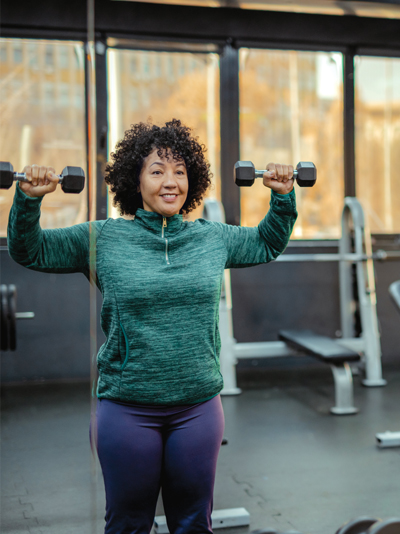
Tema Esberg, for instance, became a personal trainer after building a life as a lawyer. If someone had told her that she’d make that change in midlife, “it wouldn’t have tracked,” she says. Esberg didn’t do a pull-up until she was 50.
Still, after focusing on her career and her kids, she was ready for a second act. The same is true for most of her clients, who are mainly middle-aged women looking to increase their strength and mobility during perimenopause and menopause. And they, too, tend to surprise themselves with their abilities and be surprised by the downstream effects of their newfound strength: clarity, enthusiasm, ambition, community.
3. Choose Optimism
There are solid scientific reasons to be optimistic about mid- and later life, says Becca Levy, PhD, professor of epidemiology and psychology at Yale University. Levy’s research shows that the cultural attitudes about aging that we absorb can make a significant difference in how well we age — both physically and mentally. Our beliefs about aging are effectively a lifestyle factor, one over which we have some control.
“It’s good to question the negative age beliefs and reinforce the positive age beliefs,” says Levy, author of Breaking the Age Code: How Your Beliefs About Aging Determine How Long and Well You Live. “Middle age is a great time to question your direction or where you want to go in the future. It’s a particularly powerful time to think about strengthening positive beliefs about getting older and aging. Age beliefs are malleable and can change at any stage of our life.”
Botton has seen lots of real-life examples of how a positive attitude toward aging makes a difference, even personally. Even though she’d successfully navigated several big career changes that challenged her identity, she found herself staring down the big 6-0 with trepidation.
“I felt 60 was a number that could not possibly be associated with me,” she recalls. Having lived her life on a “slightly alternative path” — one without kids or even retirement on a distant horizon — made the prospect jarring.
So Botton turned to her community of Oldster readers for support. “So many of my readers would comment telling me their lives took off after 60,” she says. “They hit their stride, they felt like they knew who they were, they were at the top of the game professionally or changed careers and found the right one, left the marriage that wasn’t working, even found the right partner after 70 or 75.”
Most helpfully, they told her not to freak out. Instead, she remembers hearing, “You don’t know what’s ahead. If you’re doing your work and tending to your life, it’s very possible it will all be good.”
They were right, Botton says. She now describes her life after 60 as “the best surprise.”
4. Embrace New Challenges
 Levy’s research shows that strengthening positive beliefs about aging allows you to do more than stave off decline. Clearing away negative assumptions makes it easier to improve and develop new skills in mid- to late life.
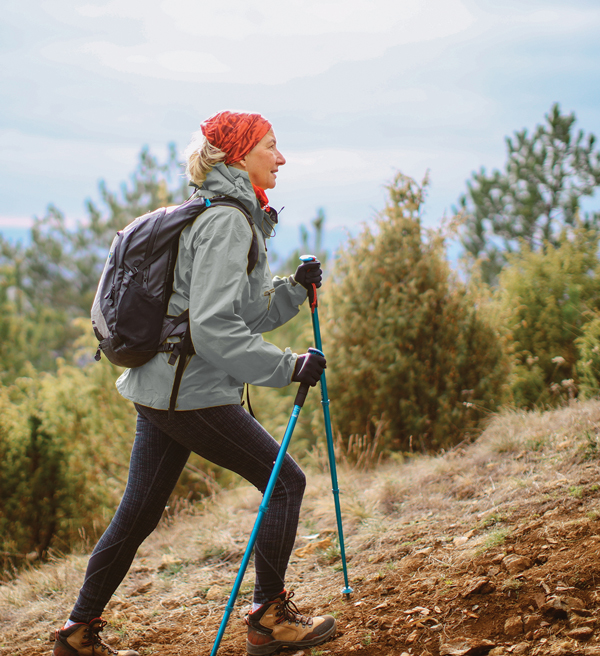
This approach can be especially empowering in the fitness arena. Stacey Miller, a midlifer who coaches endurance athletes in Philadelphia, says setting a goal for something that excites and challenges you is one of the best things you can do for yourself. (Need inspiration? See “What’s Your Next Fitness Adventure?” to find a fresh path forward.)
She recently got a call from an almost 80-year-old looking to train for a marathon “before he gets old.”
“It doesn’t have to be a marathon,” she says. “There’s a guy in Norway who is cross-country skiing from town to town pulling a sled. But pick something that’s scary, because then you need to train and hold the goal close.”
If an activity exceeds your current strength and skill level, so much the better. Even if you were a Division I athlete in college, you probably won’t run at your DI speed anymore. But you might well be able to run farther, having gained in endurance what you may have lost in speed. Or you might discover you can lift more or be a more supportive member of a team.
Once you’ve lived to middle age, you’ve probably overcome some hardships. This resilience is a great resource when learning new skills and facing new challenges.
5. Slow Down
Take your time exploring the ideas, feelings, and relationships that are central to your experience, Yeager advises. It won’t help to fixate on what went wrong in the past or what could go wrong in the future. Ground yourself in the present — there is no rush to arrive anywhere. Get to know what you really want and need now, as you are.
“Anytime we’re ruminating about things that have happened in the past, we’re closer to being depressed,” he explains. “And when we are projecting onto the future, we’re closer to anxiety.”
Yet we always have the current moment, right here in the middle — between the past and the future. This is when we can chart our own new course, if we choose to do so.
“There is wisdom in the midst of midlife,” he says. “Our mistakes are not our weaknesses, but they are our curriculum, so use them to move forward.”
As for the feeling that your best days are behind you, Yeager offers this quote, often attributed to Nelson Mandela: “I never lose. I either win or learn.”
Overcoming Ageism
To help reduce the power of ageist messages and strengthen a more positive understanding of aging, Yale researcher Becca Levy, PhD, developed the ABC method, which she shares in her book, Breaking the Age Code: How Your Beliefs About Aging Determine How Long and Well You Live.
A: Raise awareness. Most people don’t realize they are being exposed to so many ageist messages. “It’s so omnipresent in advertising and different sources, and people don’t recognize they’re being exposed,” she says. “It’s not always easy to notice them.”
Start paying attention to how aging is presented in the shows you watch, the advertising you encounter, even in conversations with friends and family. Notice when aging is presented as something shameful or silly, and consider whether there’s a more positive way to frame it.
B: Place blame where it’s due. This step involves recognizing the negative impact of ageism. “When an older person encounters challenges, it’s not always due to aging itself but due to societal ageism that is creating barriers,” Levy says. “Recognizing the source of challenges is really important.”
So, if you want to do something but feel like you’re too old — or if you judge someone else as too old to be doing what they’re doing — where is that feeling coming from? Who and what is telling you that?
C: Challenge the popular narrative. Find ways to reframe negative age beliefs. We can do this for ourselves and for our communities. Consider whether your words are contributing to positive or negative messages about aging. Start telling people they look great instead of young. Question your friends when they say they’re too old for something. Seek out stories that celebrate the wisdom of elders rather than the comedy of decline.
“One of the things I’ve advocated for is an age-liberation movement where we are working together to overcome society’s ageism,” Levy says. “Until that happens, it’s good to think about the individual skills to help us identify and question negative age beliefs.”
(For more advice on responding to ageism, see “What to Do When You’re Confronted by Ageism.”)






Comments (0)