



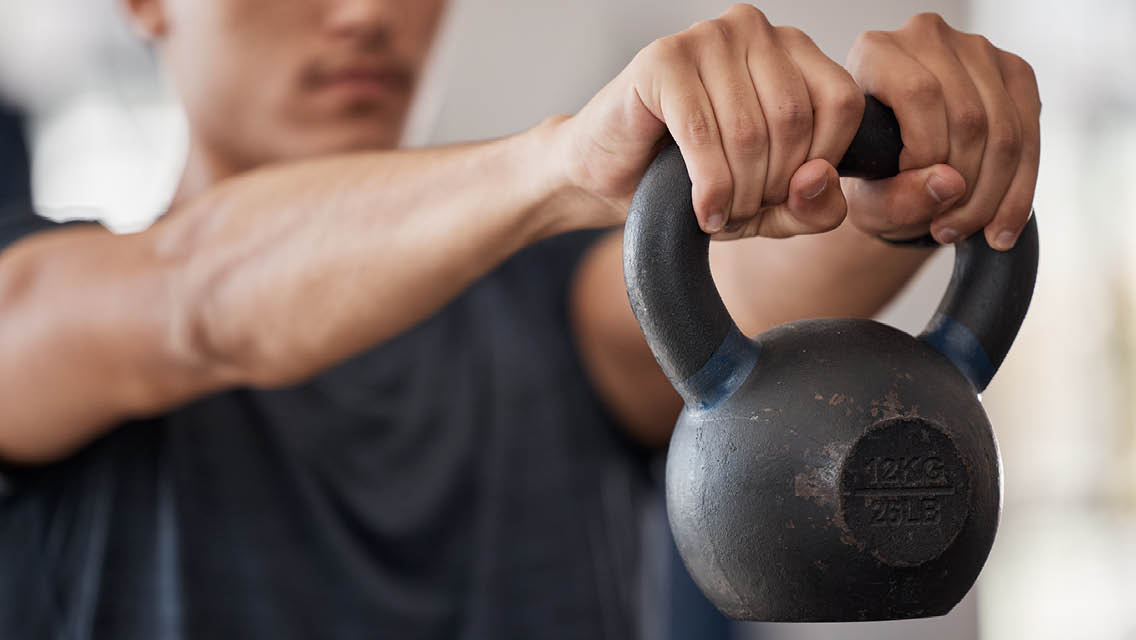
What it shows:
For decades, studies have linked greater grip strength to reduced mortality risk and a lower likelihood of developing heart disease. We know grip strength is important for daily tasks like opening jars or carrying groceries. As an assessment, it indicates your overall muscular strength and function, bone mineral density, fracture and fall risk, nutrition status, and cognition.
How to test:
Grip strength can be measured with a tool called a hand dynamometer, but not everyone has access to one. Instead, suggests healthy-aging specialist Amy Peters, CSCS, test yourself with a heavy farmer’s carry or a dead hang. To perform the carry, grasp weights in both hands (kettlebells, dumbbells, sandbags, and a trap bar are all good options) and see how long you can hold on while walking. Aim to carry at least half your body weight in your hands for 30 to 60 seconds. (For more detailed instructions, see “How to Do a Kettlebell Carry.“)
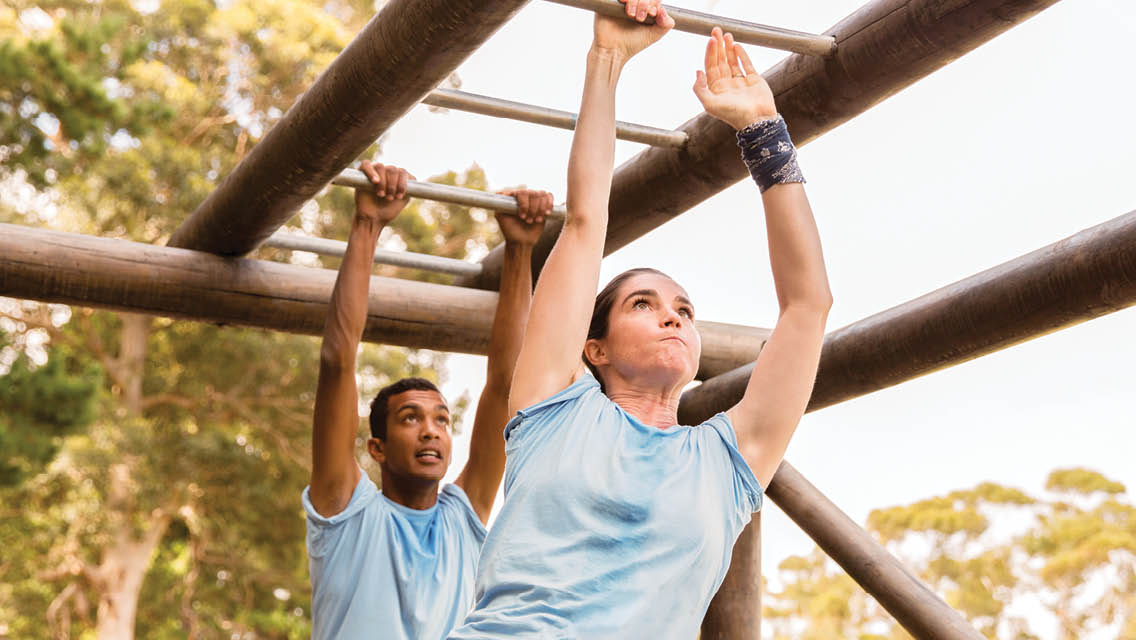
Alternatively, do a dead hang: Grasp a pull-up bar with both hands and hang as long as you can with both feet off the ground. Aim for 30 to 60 seconds. (See “The Benefits of the Dead Hang” for more.)
How to improve:
“I’ve seen people go and focus on improving grip strength specifically, but this misses the point,” says Peters. “Grip strength is the result of performing activities that require strength.” For a full-body grip-strength workout, visit “The Grip-Strength Workout.”
DIY Longevity Tests
Learn how to also assess your strength and coordination at “3 DIY Longevity Tests,” from which this article was excerpted.






Comments (0)