


Pickleball challenges your body in many ways. Every rally calls on your core for stability and rotation, your legs for agility, and your shoulders, arms, and wrists for controlling the paddle. The better conditioned you are off the court, the better you’ll move on it, and the less likely you are to get hurt.
That’s where Pilates and reformer-based workouts like Core Tone Reform (CTR) come in. This type of exercise is known for strengthening the full body, as well as increasing stability, flexibility, range of motion, balance, and coordination. These benefits can lift your game, which is why so many pickleballers are now choosing to add Pilates to their weekly training regimen.
“Pickleball players would greatly benefit from both Pilates and the athletic-reformer class we offer at Life Time, CTR,” says Emily Masia, group instructor and fitness coach at Life Time One Wall Street in New York City. “Pilates builds strength, flexibility, balance, and body awareness, which all translate beautifully to pickleball. CTR is a more athletic reformer workout inspired by Pilates. It targets the whole body to improve strength, endurance, flexibility, and mobility.”
Marni Cure, 52, a member at Life Time PENN 1 in New York City, is a pickleball player who’s also made regular Pilates work part of her routine. She plays six to seven days a week and does CTR two to three days a week.
“CTR has become my go-to for cross-training,” says Cure. “It feels super efficient and makes me feel strong. CTR may look intimidating to begin with, but stick with it, and know everything can be personalized to your strength abilities, body type, and level of fitness. It’s a very inclusive community and the instructors are incredible.” Cure credits CTR for improving her balance, shoulder stability, and core rotation.
If you’re a pickleball player, Masia recommends trying a CTR class. “It might just become a favorite part of your routine,” she says.
Here’s a closer look at why Pilates can be such a valuable complement to pickleball.
Benefits of Pilates for Pickleball Players
Muscle Flexibility and Joint Mobility
Stiff muscles and joints can prevent you from moving as freely as you want on the court. “Pilates improves the flexibility you need to perform your best in pickleball, especially in movements with a large range of motion,” says Masia. “Pickleball requires you to move in various planes of motion and also frequently transfer your weight. By improving shoulder, spine, hip, and ankle mobility, you’ll be able to play with more ease on the court.”
Core Strength
In Pilates, “core” refers to more than just your abdominal muscles. It includes the muscles attached to your spine, ribcage, pelvis, shoulder complex, neck, and head.
“Pilates trains the deep core muscles in the body,” says Masia. “Pickleball requires a lot of rotational and powerful movements, which are supported by your core and obliques. In Pilates, we emphasize building the obliques and your transverse abdominal strength to support these twisting movements, allow you to move with power and correct form, and help protect your spine while playing.”
Balance and Stability
Pickleball rewards quick reactions and steady footing. Pilates helps build both.
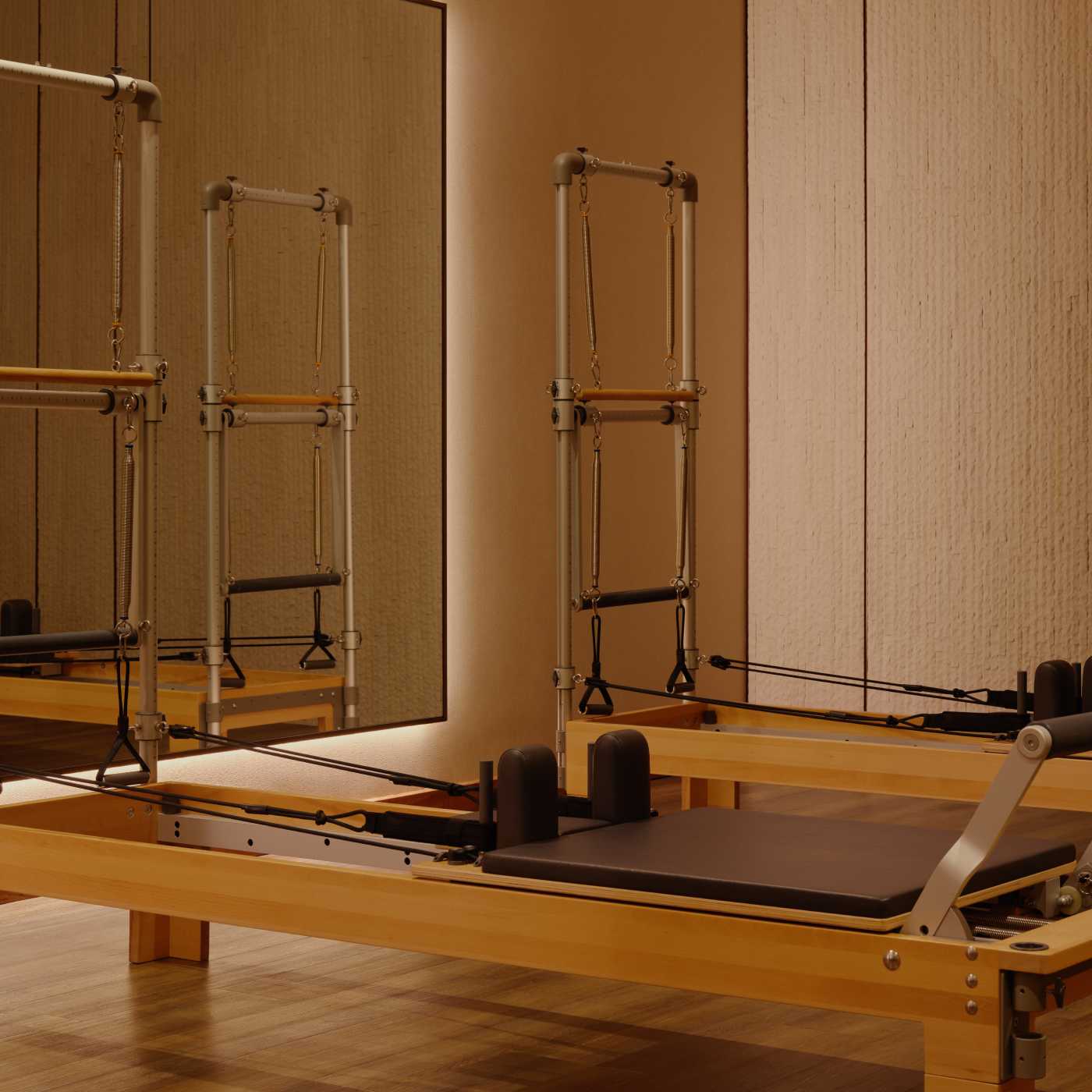
“In Pilates, we often work on a moving surface, the reformer, which is an act that challenges your coordination and body awareness,” says Masia. “This is so important for understanding where your body is in space and how to stabilize it, which is crucial in bodyweight transfers during pickleball.”
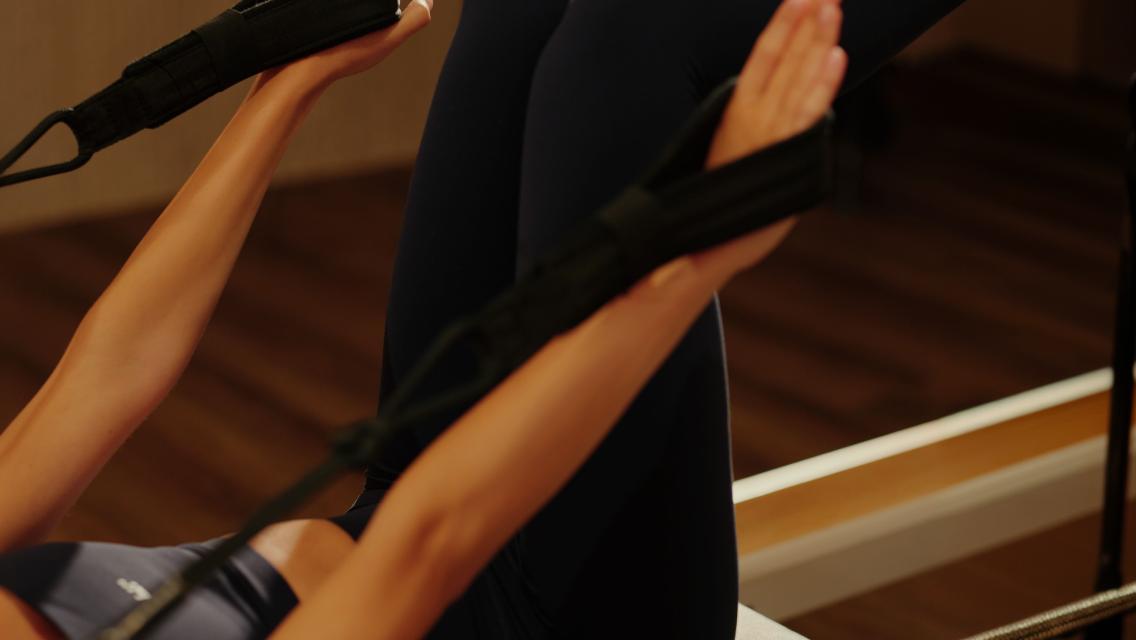
You can also expect to use the reformer’s arm handles and springs for exercises that improve strength and flexibility in your shoulder girdle. “This translates to the ability to make large and powerful pickleball swinging motions,” she explains. “It allows the shoulder to move in a safe and efficient range of motion.”
Longevity in Play
Many people hope to play pickleball well into their later years, and staying healthy makes that possible. “Pilates helps keep your body strong and mobile, ready to keep playing pickleball as you age,” says Masia.
Pilates is a low-impact form of exercise that builds both strength and flexibility without putting too much stress on your joints. It’s safe for all ages, and exercises can always be modified to fit your needs.
How to Get Involved in Pilates or CTR at Life Time
If these benefits sound appealing, there are four Pilates and Pilates-inspired options offered at Life Time, each suited to different preferences.
- Private Pilates: These are one-on-one sessions with an instructor that are customized to the individual. Private Pilates is available at an additional cost.
- Semi-Private Pilates: For these classes, instructors place individuals into the appropriate session for them to form a small group of six. You commit to attending on a consistent weekly schedule. Semi-Private Pilates is available at an additional cost.
- CTR: Core Tone Reform is a high-energy, low-impact workout performed on the reformer, blending the power of performance-based training with the precision and control of reformer movement. CTR is included in signature memberships. (Learn more: “Core, Tone, Reform: What Is CTR at Life Time?”)
- MAT PILATES: This is a low-impact class that focuses on strengthening your core and improving your posture, while increasing your mobility, and building overall body control. It does not use a reformer. MAT PILATES is included in memberships. (Learn more: “What’s the Difference Between MAT FUSION and MAT PILATES?”)
“If you’re new to Pilates, I always recommend at least one to two Private Pilates sessions,” says Masia. “This allows you to really learn and understand the movements and the equipment. Then, you could move into Semi-Private Pilates, which is great because it provides the opportunity to work out alongside others and feel more empowered in the Pilates system.” In a private or semi-private class, your Pilates instructor can also personalize exercises to mimic or complement pickleball movements.
By including both CTR and MAT PILATES in their regular routines, pickleball players can improve their full-body and core strength. “CTR allows you to use the reformer to build the strength, flexibility, mobility, stability, and balance required by pickleball players,” she notes. “MAT PILATES is done using your own bodyweight or small props, in its own way increasing strength, flexibility, body awareness, and balance.”
(Learn more: “Which Pilates Option Is Right for Me?”)