


Editor’s note: Due to the impacts of the Willow Fire, the course for the 2026 Leadville Trail 100 Run will look different than it has in previous years, but the race will proceed after the safety of the community was ensured.
The name Leadville carries a distinct gravitas. It’s the place where the trail climbs toward the sky, your breath gets louder with every step across the Rocky Mountain ground, and thoughts of, Can I physically finish this race? can’t help but creep in.
Leadville, Colo., is the home of the Leadville Race Series. Over its 40-plus-year history, it’s also become a collection of epic stories, grueling triumphs, and historical grit. Each year, tough-minded endurance athletes from around the world come to Leadville to push their bodies and minds to the limits for a shot at the coveted silver-and-gold belt buckle.
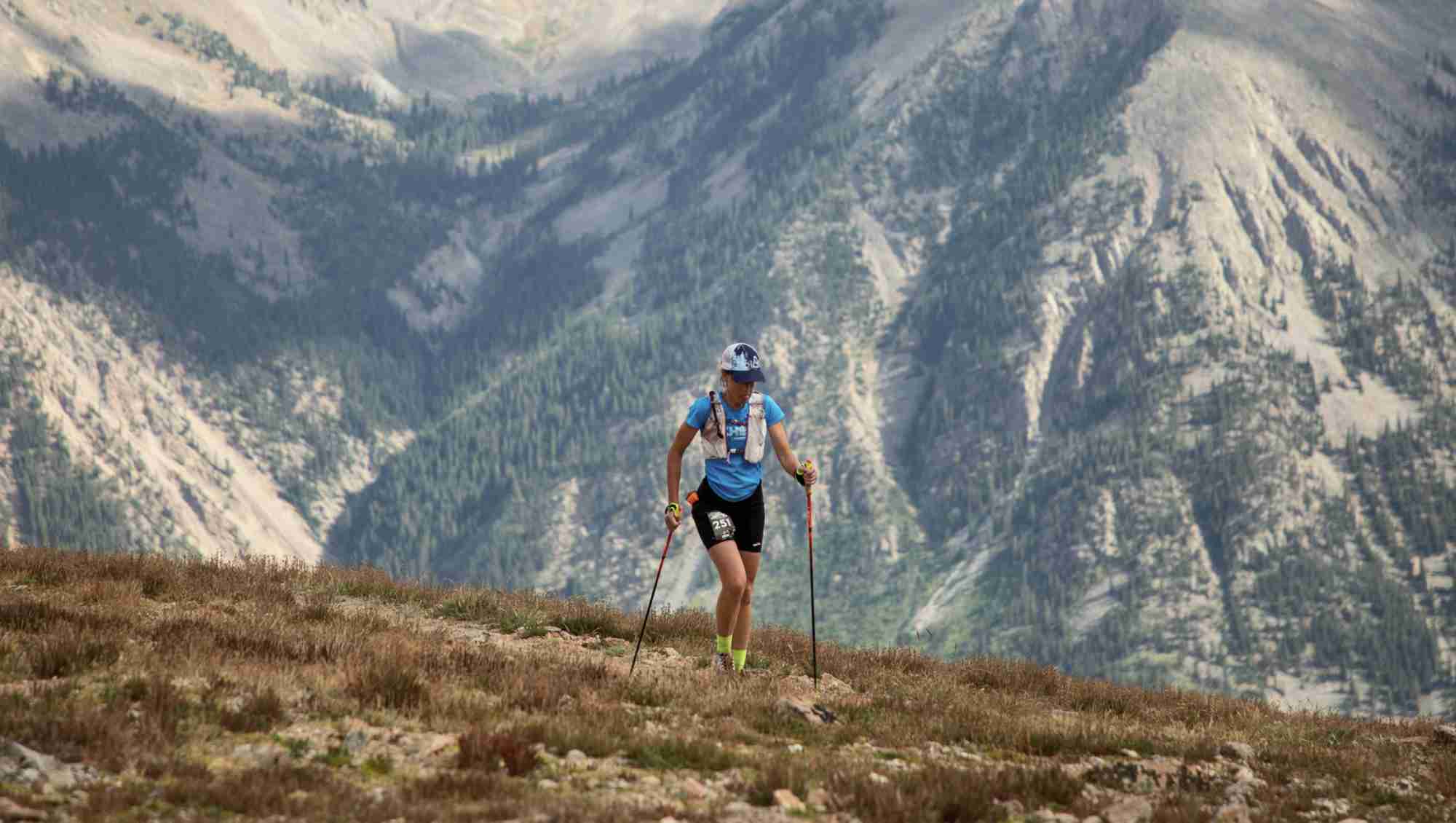
The event that started it all is the Life Time Leadville Trail 100 Run. Beginning at 10,200 feet above sea level, this race sends athletes across 100 miles of unforgiving mountain terrain and a climb not once, but twice, up Hope Pass, which has an altitude of 12,500 feet.
More than 700 athletes are registered to compete in the upcoming Leadville Train 100 Run on August 22, 2026. Let’s meet six of the gutsy, determined runners planning to take their shot at etching their name among the legendary this summer.
Tracy Maccherola
Age: 62
About: I’ve been involved in sports since childhood and have worked in the fitness industry since my early college years. Throughout my career, I’ve been a lot of different things to a lot of different people: a trainer, a coach, a manager, and more. I like to think I’ve touched a lot of lives, helping people to take one step forward in a direction that’s important to them.
My husband — who is currently dealing with stage 4 metastatic prostate cancer and is a strong part of my why — and I retired and moved to Roxborough, Colo., from Maryland about six years ago. We were chasing our children (we have two here in Colorado and one in Myanmar but opted for Colorado) and five grandchildren.
There’s so much here to enjoy outdoors. Trail running has become a natural pastime for me. My daughter and I now have a weekly ritual of catching up while we journey the amazing trail network, mostly sticking to the Waterton and Highline Canal trails.
How I became a runner: Although trail running is a newer endeavor for me, I’ve been a runner forever. I’ve participated in many running, triathlon, swimming, and cycling events over the years — but never a 100-mile trail run above 10,000 feet. The Leadville Trail 100 Run is definitely a new challenge for me.
I find that having a targeted event on the horizon keeps me focused, and having a training plan removes the stress of daily workout planning. The sense of achievement, the opportunity to test myself, and the possibility of finding a new friend for a day or for a lifetime are just some of the additional reasons that keep me signing up for athletic events. While some seem nearly impossible, you never know what’s possible until you try. I believe scary challenges allow me to see what I’m truly capable of.
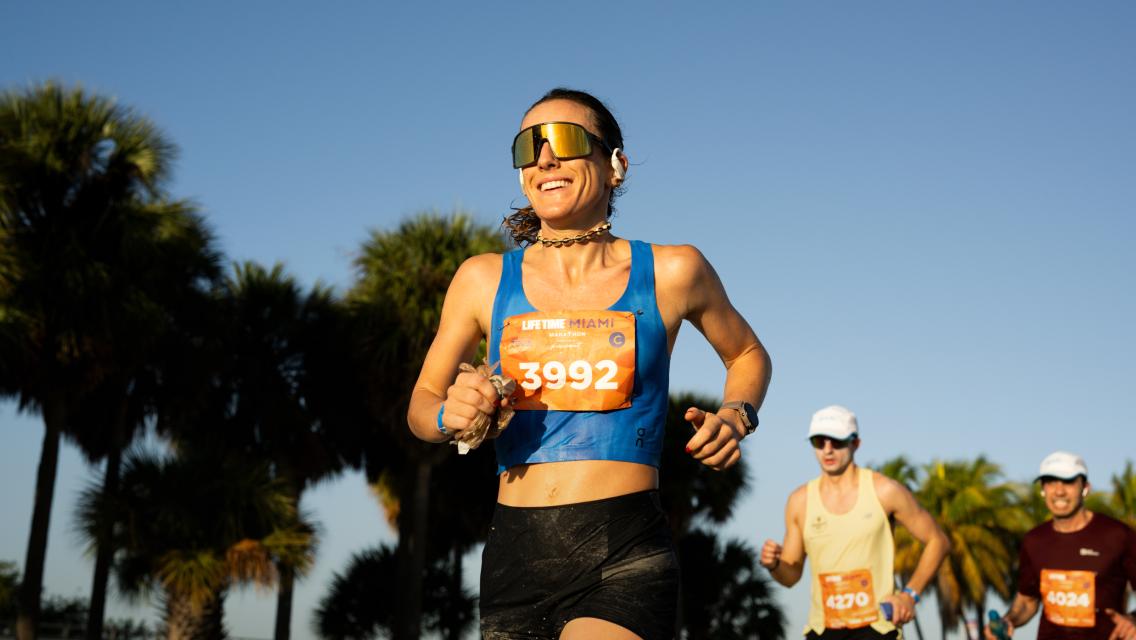
I’m a member at Life Time Centennial. Life Time offers the opportunity to do several races throughout the year. It sounds cliché, but I love Life Time. I’m truly enamored with everything it offers, and the community and facilities are wonderful. I’ve run the Miami Marathon (so much fun!), the Leadville Heavy Half (my first introduction to trail racing!), the Leadville Trail 100 Run Camp (allowed me to test the terrain in the company of some amazing athletes!), and will toe the line at the Leadville Trail 100 Run this August.
How I’m preparing for 100 miles: For training, if I can keep blinders on to all the YouTube video suggestions, podcast stories and interviews of athletes, coaches, and influencers who have run the race, and “wisdom” of friends, I’m good. Their content is well-meaning, but these athletes are in a completely different cohort. I’ll prepare to do my best on the day. I have all the faith in my ability to finish under the 30-hour cutoff. I’m not naive to the challenges that will arise, but I’m looking forward to embracing the race, all the opportunities it presents, and the beauty of the environment.
Recently, I found out that not many 62-year-old women have finished this race. That fact got in my head a bit and is intimidating, but it does also keep me engaged in what I’m trying to accomplish.
Going to Life Time is a critical part of my training plan. I have a nonconventional training plan that has me continuing with my biking and swimming activities. Biking provides leg strength and endurance without the pounding force required of running. Swimming is great for my recovery; I’ve been involved in the Master Swim program at Life Time, which has excellent coaches (like Elliot Lang!).
I use yoga to balance my body and calm my mind, and I attend various strength classes. How I train comes down to how much time I have every week and what my energy levels are like. The approach is very different from any other training I’ve completed, but I trust my coach, Daniel Brenzia of AP Racing, and I’m just embracing the journey to the start line.
Every day since signing up has involved training and a lot of thinking. I’m testing gear then retesting gear. I’m testing nutrition then retesting nutrition. I’m running trails, roads, and on the treadmill. I’m cueing up friends to start 4 a.m. long runs in the dark together.
Most importantly, I’m practicing thanking everyone who has helped me in my journey and is planning to support me on race day. I really couldn’t do any of these things without the unconditional love and support from my family.
Fun fact about me: I listen to the David and Meghan Roche Some Work, All Play podcast every week. Like David Roche — Leadville winner and record holder — says, and I’m paraphrasing here, “Shoot your shot.”
It’s a good guide when thinking about what to do with your life. Just say yes, before we run out of time.
Ellis Franks
Age: 49
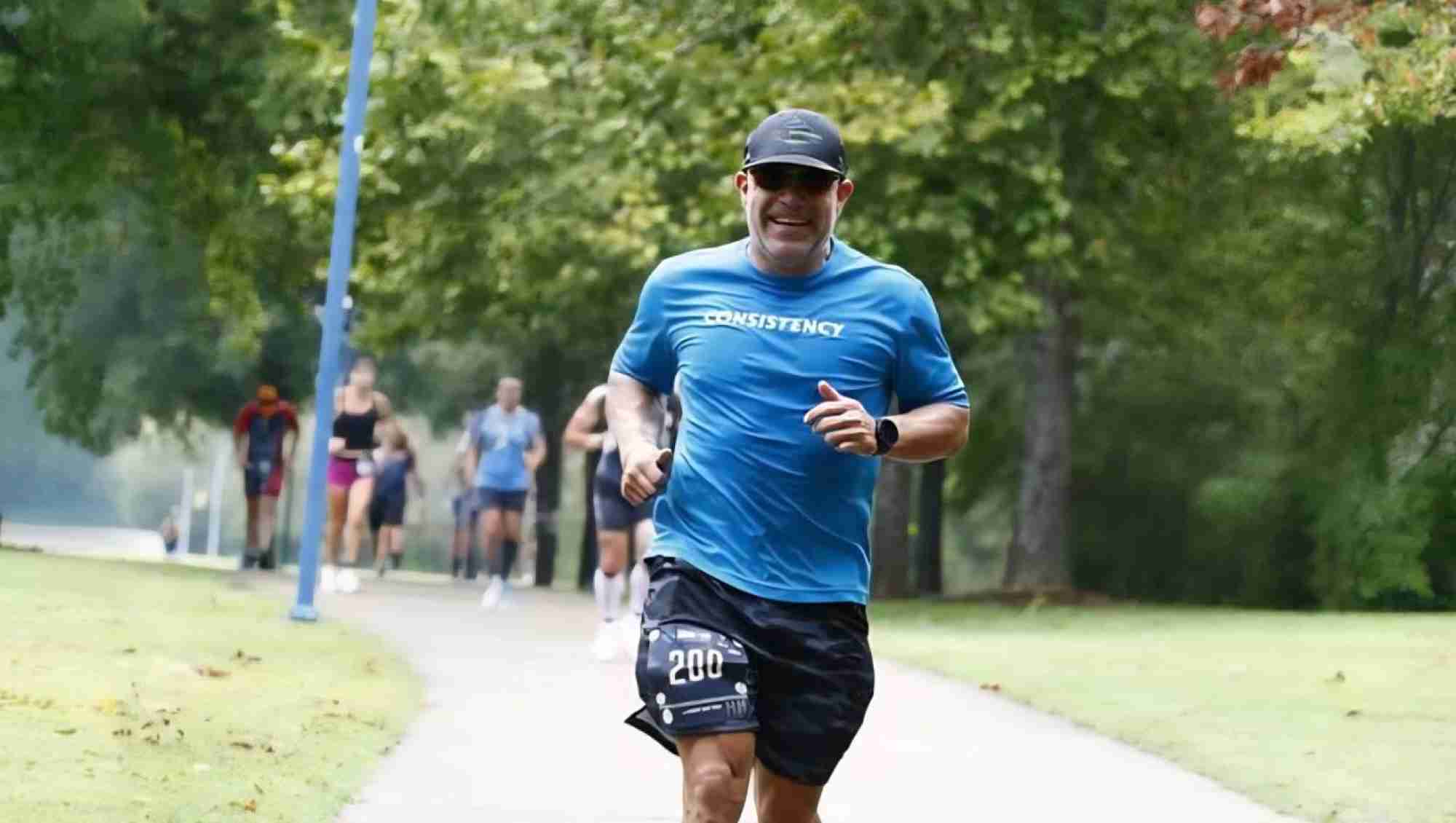
About: I’m a full-time endurance athlete and coach in Acworth, Ga., as well as the founder of the Reject Mediocrity Venture Studio, where we build technology and core-values-driven content to help every human achieve their own version of elite.
One of our creations is Ellis Abel Learns, a children’s illustrated book series, app, and website that combines autism awareness, social-emotional learning, and STEM. The story is based on my five-year-old son, Ellis, who has autism.
I also work with elite athletes who compete in Ironman races, marathons, and trail running races, often athletes with conditions like autism or Down syndrome who receive little market or mentorship support. Recently, an athlete I advised was signed to the Doug Flutie Jr. Foundation for Autism racing team. In her first race for them, she finished second overall in the T20 division (the T20 class is for long-distance runners who have a formally diagnosed intellectual or learning disability), earning her first professional racing prize money while positively representing the foundation.
Helping people realize their potential is my passion, and I integrate it into everything I build and do.
How I became a runner: I’ve been a runner my whole life, although for a long time it wasn’t by choice. I grew up extremely poor in a rural part of the country. Nothing was close by, and no one was coming to drive you anywhere. If you wanted to go somewhere, you ran. I never wanted to race.
I spent 14 years in the U.S. Air Force and traveled the world. I have lived in six different countries for a year or more. During that time, I ran a 24-hour ultra in the United Kingdom, but it was a fundraiser for the military, not an official race event.
In 2020, I became sick from a condition that had been affecting me since leaving Afghanistan in 2011. Like many other military members, I developed severe gastroesophageal reflux disease and gastritis and was later diagnosed with the beginning stages of Barrett’s esophagus. I was challenged to eat or drink without having severe attacks.
I started running, or rather mostly walking-running, while I remained symptomatic but undiagnosed. During this time, even water caused me to have terrible acid-reflux attacks. Running, along with utilizing medication, reduced my acid attacks to random occurrences. I didn’t run to race or travel; I just ran to push farther each day.
Then one day when I was 45 years old, someone talked me into trying racing. I met so many cool people on the course that I was hooked. My first official race was the Southern Fried 50.
I slowly built my schedule to run in 24 races in 2024, including 20 ultras and four Ironman races. Racing has led me to experience hidden parts of the country and meet really cool people. I went from being exceptionally fit and elite to being really sick, and now I’m returning to my best current version.
I raced almost every other week in 2024 and 2025 and got to see the best of the United States that way. My schedule was very busy with travel to many different states. But I race frequently with a guy named Jeff Mikesell who inspires me. He’s 65 years old and has raced a 100-mile race every other week for the last several years.
I’ve learned that you can’t fully experience a place by staying in a hotel or walking around a town center. I’ve found it’s best to go into the actual environment — sometimes the locals don’t even see the views you get to that way!
Before running became one of my primary focuses, I competed internationally in martial arts (Kuk Sool Won). I was a national champion in three different countries, a back-to-back European champion in both individual and team divisions, and I earned a bronze medal and a fourth-place finish at the World Championships. My competitive engine stayed the same when I pursued running — the sport has just changed.
How I’m preparing for 100 miles: This will be my first time running the Leadville Trail 100 Run. What makes Leadville stand out to me is the combination of altitude, terrain, history, and mental demand of the course.
In nearly every book I’ve read on distance running, this race is part of the story. Leadville has an iconic history intertwined with ultrarunning, layered with thousands of individual stories from some of the world’s toughest athletes. Just lining up at the starting line puts you in a community of humans that’s unmatched for consistency. It’s extremely rare to live a whole lifetime and find yourself surrounded by a group like that.
By this point in the year (June), I’ve usually raced eight to 10 times, but this year I’ve been focused on Leadville and pushed my schedule back by months to peak for the race. So far, I’ve only run one 100-mile trail race this season, which I did intentionally to test out my processes, my feet, and my mindset. I feel patience is the most important thing in training now and will also be in the race itself.
Leadville is a big goal built on tens of thousands of small decisions and actions over the last five years. I’ve watched countless videos of the race. I race to meet cool people, and I love experiencing the world firsthand through racing. Because I train others to meet their elite versions, I have to keep challenging myself to lead by example. Leadville is an elite challenge on many levels.
My only pacer is scheduled to be Robert Norris — nicknamed “Man of Iron” — a multiple world-record and world-first holder. He became the first athlete with Down syndrome to complete an ultradistance trail race and a full-distance Ironman completely independently on the course. Robert is the kind of hero who makes me want to race.
Moriah Dowding
Age: 34
About: I live in Colorado Springs, Colo. with my husband and our kiddo. I work for a global business and technology consulting firm, where I help companies figure out how to use technology to make big changes. I’m also a member at Life Time Colorado Springs.
How I became a runner: I’ve been a runner since the tender age of three, when I realized I was quick enough to jailbreak the front yard. In middle school, I joined the track team, and by high school I added cross country. Competing in a small 3A rural Kansas school didn’t come with deep talent pools, but the fundamentals stuck: Be coachable, be disciplined, and be competitive.
I had just enough skill to earn a spot on a college track team. After college, the “I need more” phase of my running experience hit. I moved into half marathons, which transpired quickly into long-form triathlons, then marathons, and now ultramarathons.
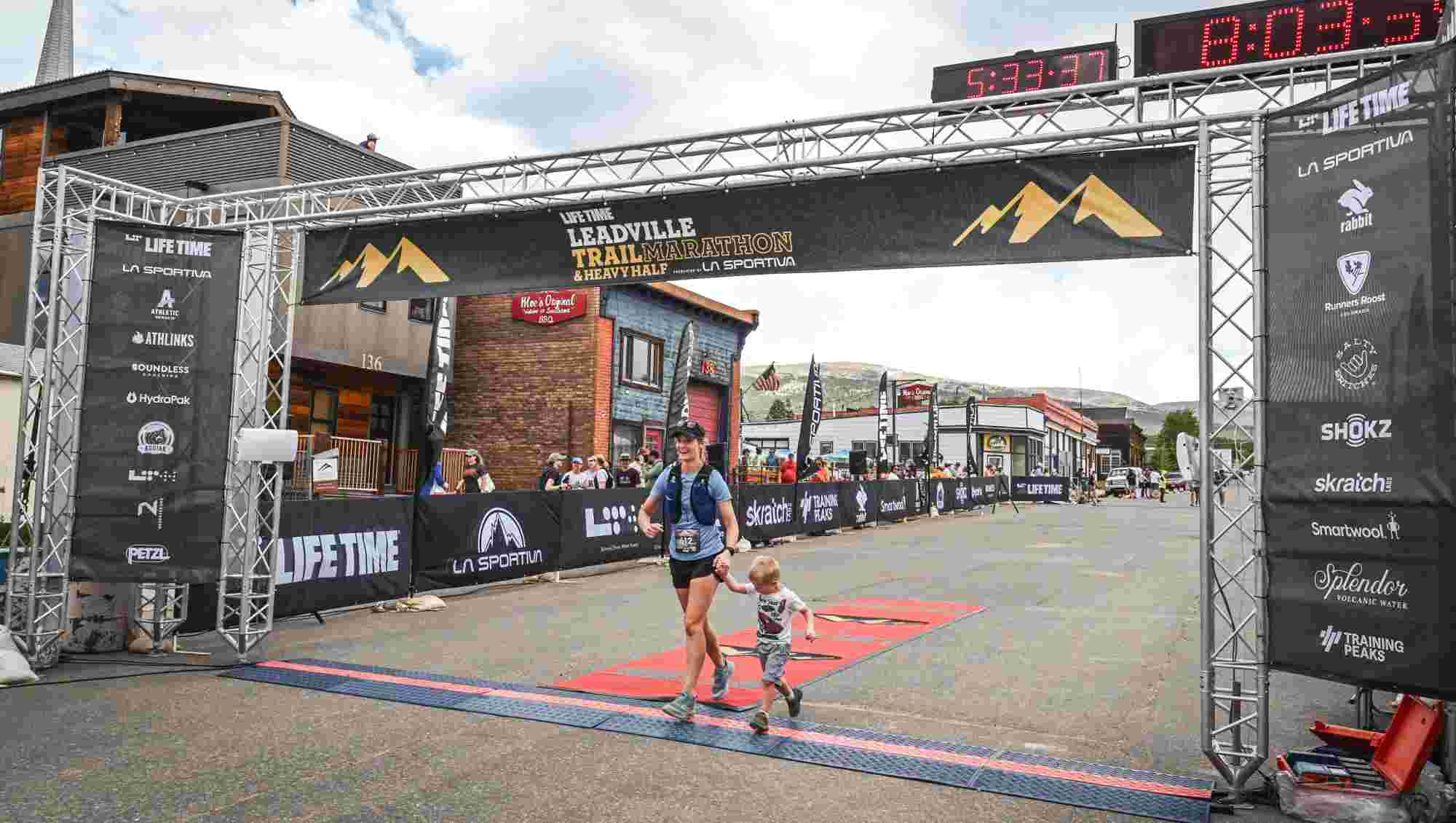
Last year, I completed the Life Time Leadville Trail Marathon. This year will be my first time running the Leadville Trail 100 Run. In fact, this will be my first time running 100 miles.
I’ve had this nagging curiosity about running 100 miles: What would that look like, and where could that experience take me? Eventually, I told myself, Just go do it.
Finishing the Leadville Marathon last year allowed me to enter the lottery — perhaps my only chance on this course — so I took it.
How I’m preparing for 100 miles: Training has been a journey and a major commitment. My support system has been solid, from home to work. At home, my husband and parents are all-in helping me through a training schedule, and my kid has been forgiving that training is frequently on his time.
At work, I’ve had to set boundaries to protect key training hours here and there. I also brought on a coach, which has leap-frogged my capabilities in trail running. The biggest impact has come from overhauling my nutrition habits and staying consistent with strength training.
We’re down to the final training weeks, and I’m starting to picture crossing the finish line. It looks something like the satisfaction you only get from suffering. I’m excited to be out there with my family, my crew, and my coaches — and to see if I have what it takes to earn a belt buckle.
Anna Sevey
Age: 27
About: I’ve lived in New York City for the past five years, working in advertising and media. I’m a member at Life Time One Wall Street.
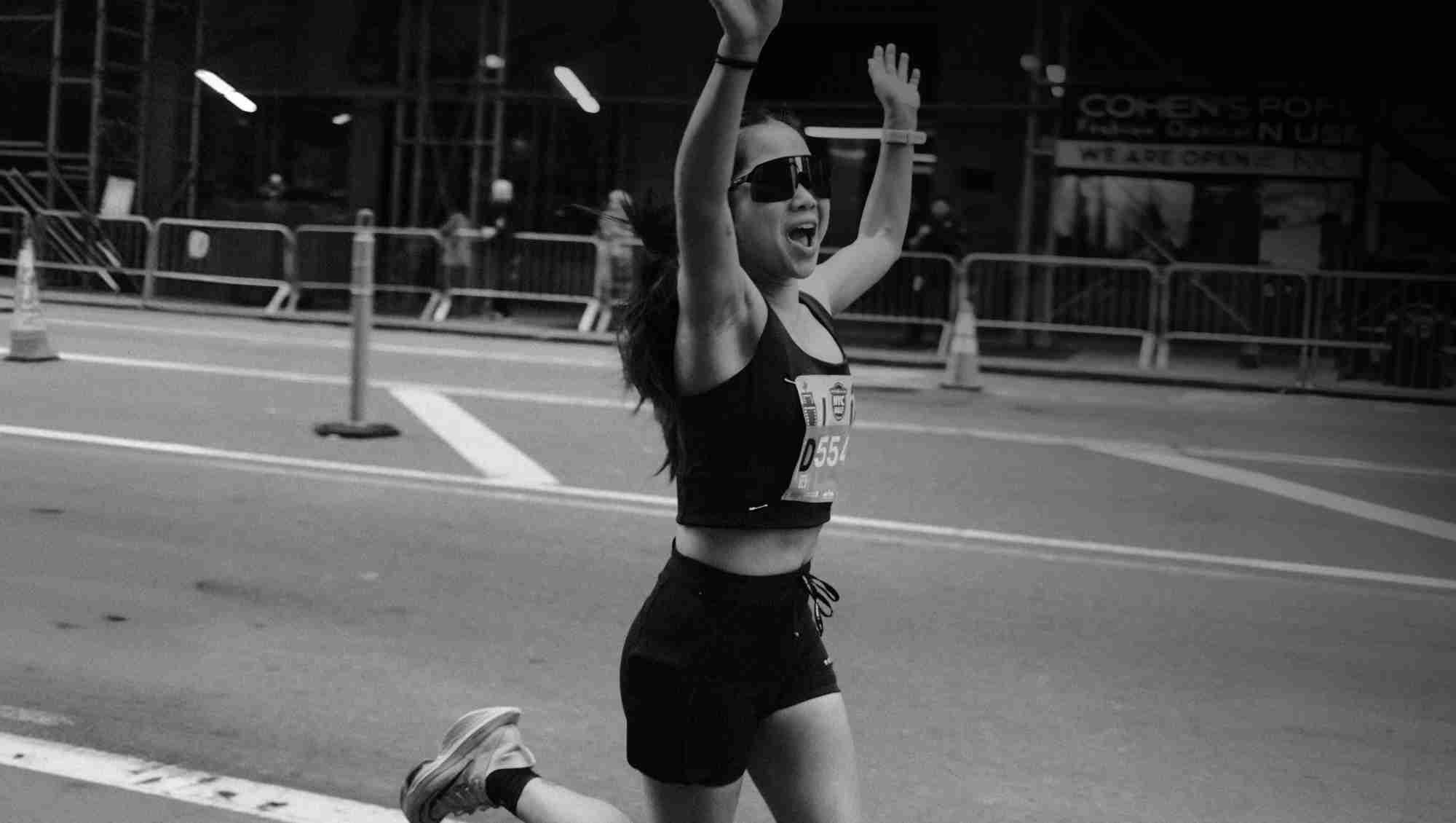
How I became a runner: I’ve been running more seriously for four years. I joined a few run clubs in New York City and am obsessed with the community aspect of running. I essentially wanted to get as fit as possible so I could continue hanging out and training with my friends. I also love feeling the sense of accomplishment I get from running.
I started with road marathons and gradually shifted to running trail ultras. Trail running is a whole different ballgame than road running. At first, I despised trail running, but over time I began to love it. I’m able to treat every run almost as an adventure. It’s like you become a little kid again playing in the woods.
This will be my first time running the Leadville Trail 100 Run, and I could not be more excited. Running 100 miles has always been a huge goal for me, and I thought, What better race to run than Leadville?
Running 100 miles has been a goal for me because I honestly don’t know how not to push myself to try and be the best I can be. I love to see how far my limits can go. Accomplishing 100 miles would mean everything to me. It would show me that my hard work and sacrifices have paid off.
I’ve heard from some of my friends who’ve run Leadville that if you have the chance to run it, take it. So I did!
How I’m preparing for 100 miles: Training has been going well overall. In the past, I typically chose marathons with courses as flat as a pancake so I knew I could attempt a personal record. This year, I’m pushing myself in a different way and training to not only run 100 miles, but also to climb up the side of a mountain.
I’ve been doing a mix of running, the stair master, and strength training along with some cycling. Training for a trail race in New York City has its difficulties, but I’ve been going to the trails in New Jersey to get some trail acclimation.
Although training has been going well, every part of it has been challenging. It’s required early mornings, late nights, trying to avoid injuries, and getting to a trail from the city — everything is exhausting, but I know it’ll be worth it. Most of my training has involved long, solo workouts. However, I’ve sprinkled in some workouts with friends around the city and with some who have come out to the trail with me.
I couldn’t be more nervous going into this race. I’m going an untouched distance for myself, as well as putting myself in high altitude when I live at sea level. I have a great crew and support system that I have faith will help me through. I’m so excited to see Hope’s Pass. Despite it being terrifying, I know at least there’s a beautiful and rewarding view at the top.
Tori Poulter
Age: 30
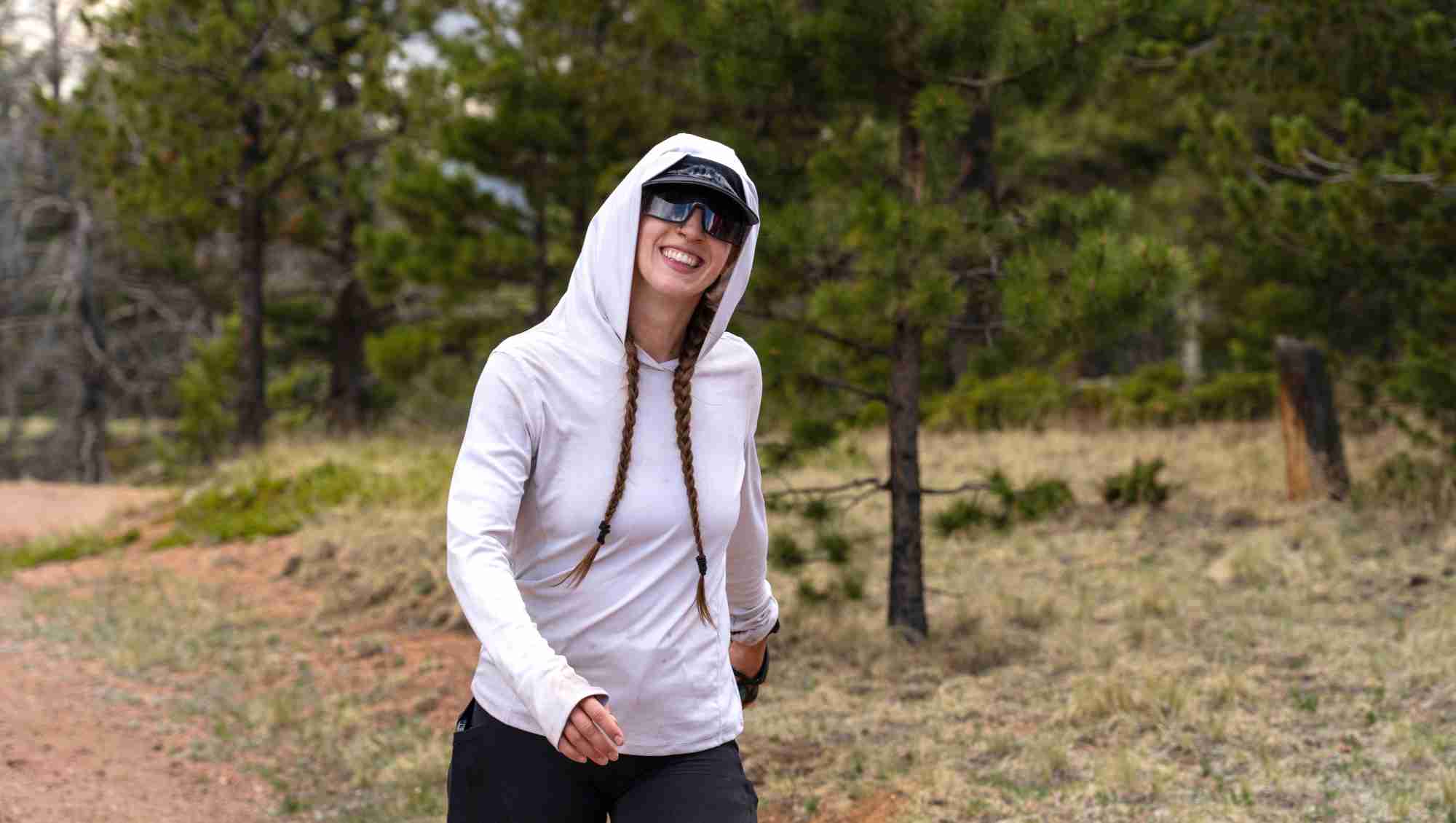
About: I’m from Colorado Springs, Colo., and fall into a lot of the typical “Colorado” stereotypes: I hike, I camp, I stay very active — however, I actually don’t ski or snowboard. In my free time, when I’m not running, I teach Lagree (a low-impact, high-intensity workout method) and occasionally hot yoga.
You’ll also frequently find me trying a new recipe or craft project. I enjoy finding ways to keep both the body and mind active. I’m a member at Life Time Colorado Springs.
How I became a runner: I haven’t been running for long; I ran the first race that I intentionally trained for, a half marathon, in August 2024, and then skipped the marathon distance entirely and ran my first 50K in March 2025. I’ve been gradually running longer and longer distances since then.
I had never considered myself a runner, but some friends invited me to race with them on their team, and that sparked my interest. One of the biggest driving forces for moving to longer distances is that I love to be outside and see more remote parts of wilderness.
In 2024, I hiked the Four Pass Loop in Aspen in a day, and I also did the rim-to-rim across the Grand Canyon, both of which were ultra distances. I was able to do those self-supported, so I knew I could do longer distances as races.
I enjoy running ultras for two main reasons. First, for the personal challenge, especially after thinking of myself as “not a runner.” I’m so impressed with and proud of what my body can do now. Second, I appreciate the mental clarity you get while running, especially during the harder moments.
This will be my first time running the Leadville Trail 100 Run, and I’m coming in with relatively very little experience. I’ve never run 100 miles; the farthest I’ve run is a 100K. I’m excited and nervous for this distance. I’ve been able to hit my personal goals in all races leading up to Leadville, and I’m seeing personal improvements in my own runs, especially these past few months.
How I’m preparing for 100 miles: I’m not seeking professional guidance, but I’m lucky enough to have several friends who’ve run 100-mile races, and I’ve been asking them for training tips. I’ve also had friends run and/or pace runners in this event the past few years.
I knew I wanted to do a 100-mile race this year, and Leadville has so much history behind it, it seemed like too good of an opportunity to pass up. It’s also nice that it’s so close to home for me so I don’t have to travel far for a race of this distance.
In 2025, I ran a 50K and a 50-miler, so it just made sense to me that in 2026 I’d run a 100K and a 100-miler. It seems like the appropriate jump for both the challenge and to give myself enough time to train for the longer distances.
Training is a grind right now, but in the best way. The recent heat we’ve been getting in Colorado has been a hard adjustment, but I’m making it work. I’ve been building up weekly mileage since January and have sprinkled in a few fun things to break up the monotony of training, including a 100K, a 12-hour race, and a trip out to Yosemite for some hiking.
I’m just so excited for race day to come and for training to be over. I’m reaching my peak weeks, and it’s a grind to hit the weekly mileage goals. Thankfully, my body has felt great with the increased mileage, so I’m excited to see what I can do!
Nick Walker
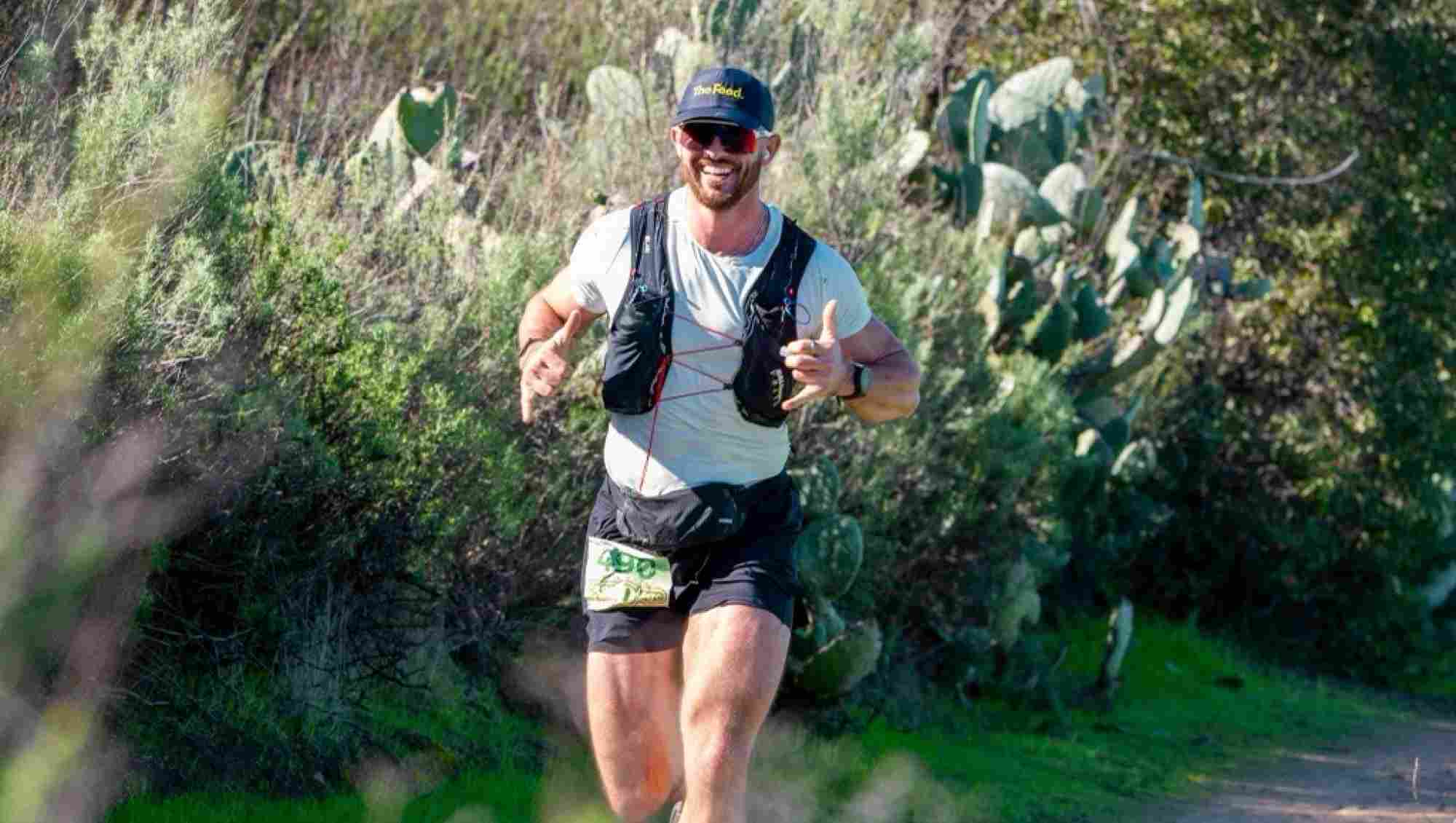
Age: 30
About: I’m originally from a small town just south of Nashville, Tenn., called Spring Hill. Now, I live in Newport Beach, Calif., and I work out at Life Time Lakeshore-Irvine.
How I became a runner: My initial experience with running was through playing baseball in college, when I associated it as punishment. About three years ago, I decided to train for a half Ironman, but then my bike was stolen. All I had was a pair of running shoes, so I decided to start running.
I’ve learned to really enjoy trail running. There’s such a connection with the mental aspect of life. It’s like therapy: When you’re out on the trail and feeling lonely, you just start thinking and peeling the layers back.
I have a few friends who have run or attempted to run the Leadville Trail 100 Run, and hearing about the challenge of the race and all the elements — the altitude, elevation, and the length of the race itself — intrigued me. It’s always been something kind of churning in my stomach, something that sounds challenging. This will be my first 100-mile race.
How I’m preparing for 100 miles: I’m training with Duncan Callahan, who was the Leadville Trail 100 Run winner in 2008 and 2010 (and who also has several ultrarace podium finishes and other running accomplishments to his name).
One of the biggest things about having him as a coach is that he’s able to speak from his experience at Leadville. I’ve never done ultrarunning before, and I’m learning a lot from him. Understanding what’s happening with training for this specific race and how to fuel and prepare for it has been really, really educational.
I feel good. I feel prepared. I was in Leadville recently for the Leadville Trail 100 Run Camp, and that was helpful. I learned two important things there.
First, it’s exciting because I’m 6 feet, 4 inches tall, and 235 pounds, and when you’re on your feet for 100 miles, you can’t only survive on gels. You have to understand what you crave and what goes down well. Being a larger person with a high metabolism, I’m naturally burning more calories and need to pay attention to my intake of calories, carbs per hour, and electrolytes and sodium per hour. It’s been important for me to learn what I like to eat when it comes to real food on the trails.
A large piece of this race is teaching myself how to win my own eating competition early on to be able to get the energy stores I’ll need as I get deeper into the race — not only from a fatigue standpoint, but because of what the altitude can do to your gut and preparing for the unexpected.
Secondly, something that surprised me is how the physiology of our bodies reacts when you’re on your feet for that long and in that altitude. At the training camp, I had some pretty crazy issues that made me made me look in the mirror and say, Hey, you’ve got some work to do in these last 60 days of training.
I’ve heard that a lot of therapists say that EMDR therapy works well for runners because it’s a similar pattern or rhythm in the brain to the pounding of the ground of repeated left and right steps. It explains so much to me about the runner’s high, and why how many times I’ve been on a trail or on a run and randomly started crying. It’s like you’re physically putting yourself in such a world of pain, which forces you to strip back these layers and come to these realizations.
And I think when you’re in nature, when you’re on a trail and out there on a super isolated path, it’s a pretty crazy metaphor for life. We’re all on our own trail, and in my own journey with therapy over the last few years, it’s required peeling back a lot of layers to come to acceptance and create a plan forward. This is so synergistic to running because it’s just taking one more step forward.
Everybody’s running their own “100-mile race.” It’s all relative, right? Even though I’m quite literally running a 100-mile race, that doesn’t mean it’s more important than what somebody else is doing in their life.
We’re all battling something, so it’s just dealing with it one step at a time. Something I’ve always said is “Don’t forget to smile.” There’s probably a good chance throughout the race I’ll be feeling a lot of pain — but I’ll still be smiling.