


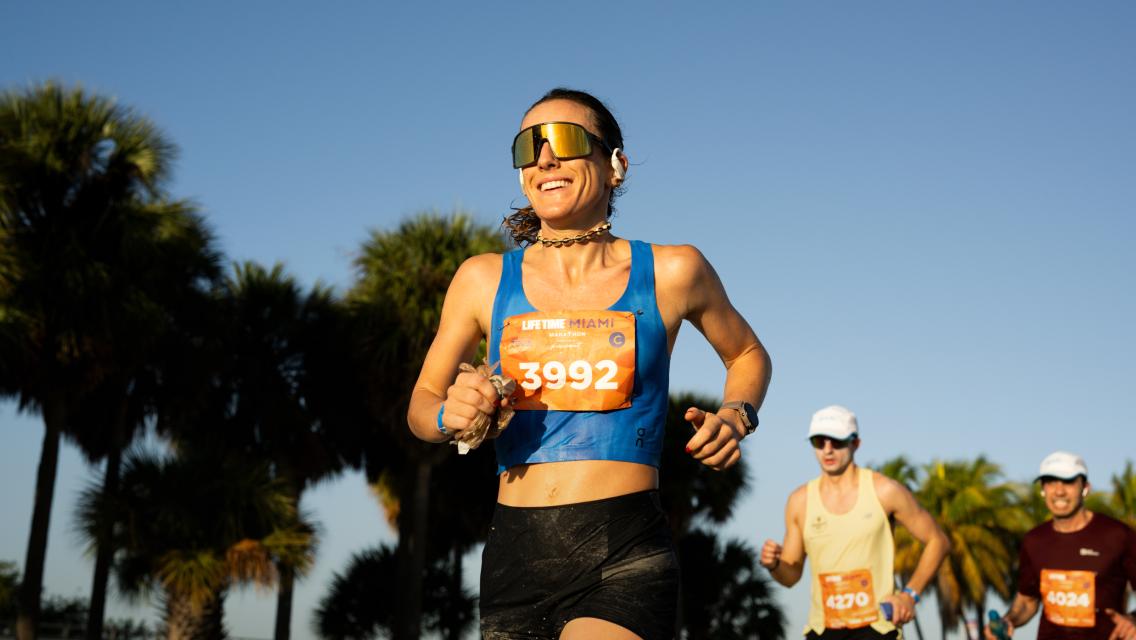
Every race has a finish line. But for a select few Life Time Miami Marathon and Half Marathon runners, the story is not just about finishing the race — it’s about showing up every single year without fail.
These runners are known as “streakers”: They are the athletes who have participated in the race every year since the inaugural event. “Streakers” are recognized across both the full marathon and half marathon distances. “It’s a really special distinction that reflects incredible dedication, consistency, and love for the event and running community,” says Stephanie Brown, marketing manager for Life Time Events.
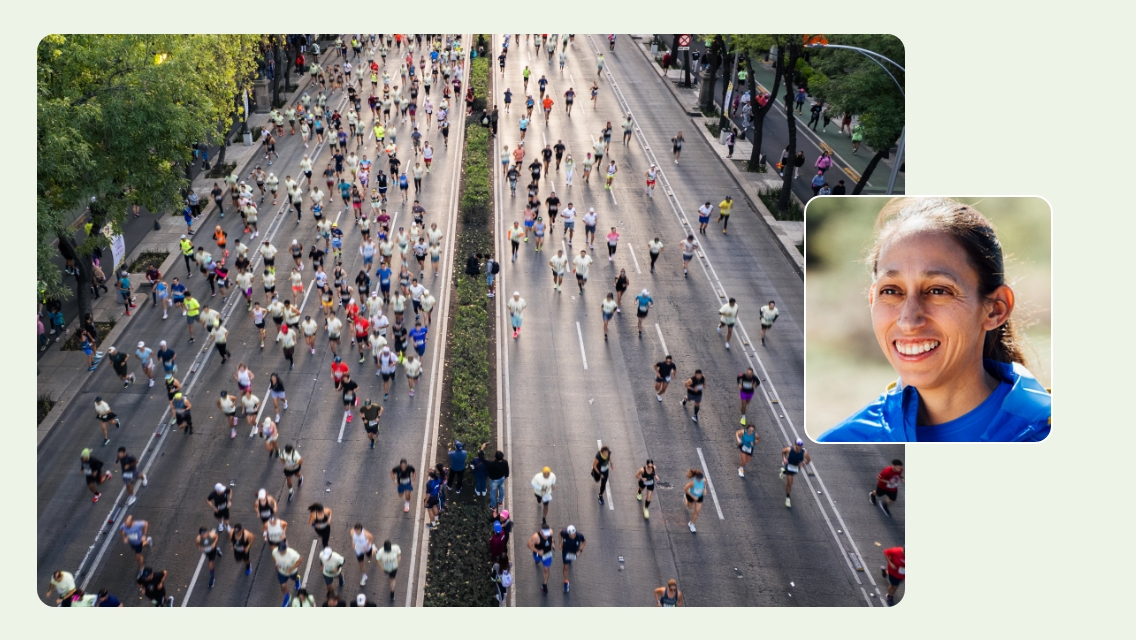
Since the first race in 2003, the Life Time Miami Marathon and Half Marathon has grown into a globally recognized event. In 2026, there were 18,500 runners, including about 7,500 newcomers and thousands of repeat participants. The entire pack typically represents around 75 countries and nearly all 50 states; in 2027, there will be 50 “streakers” returning to the course.
“Having ‘streakers’ and so many other repeat runners is incredibly meaningful to us,” shares Brown. “It speaks to the sense of community and connection this race has built over the years. For many participants, race weekend has become an annual tradition, something they train for, travel for, and share with friends and family year after year. It’s very special to see runners continually coming back and growing alongside the event.”
Let’s meet a few of the “streakers” returning for the 25th anniversary run in 2027.
Juan Carlos Fait
Age: 64
Resident of: San José, Costa Rica
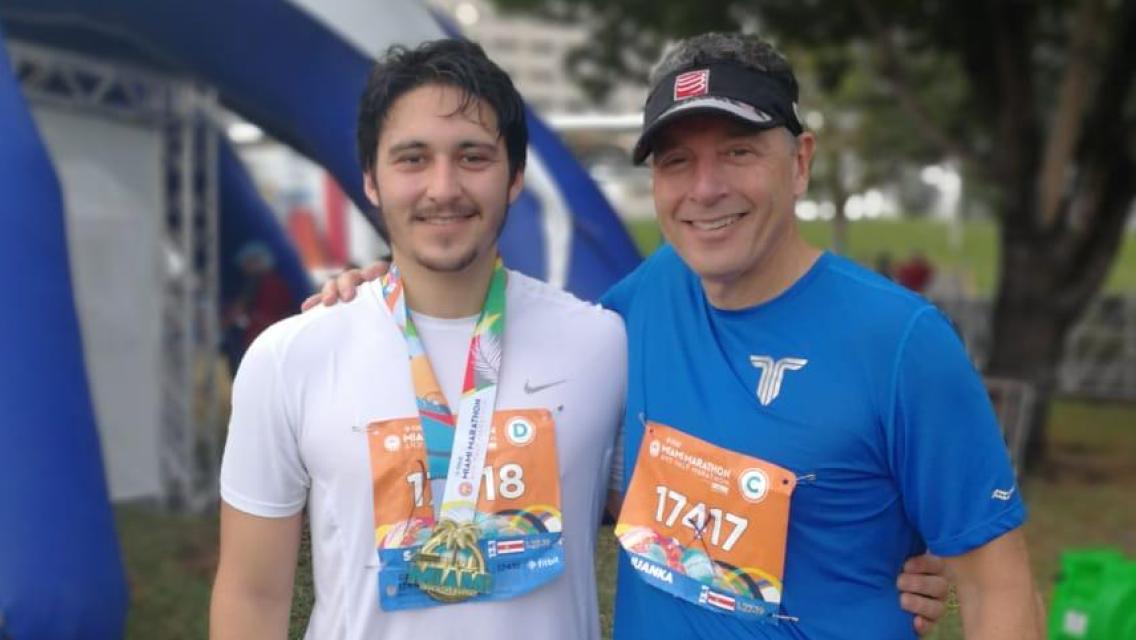
I’ve been a runner for the past 36 years. Throughout my life, I’ve participated in many races, but none of them has meant as much to me as the Miami Half Marathon, a race I’ve proudly run since its very first edition.
Over the years, I’ve watched the Miami Half Marathon grow into one of the most important and exciting running events in America. I’ve experienced this race through different stages of my life: As a young competitive runner, during my strongest athletic years, and now at a time where experience and passion mean even more than finishing times.
But if there was one chapter that, in my opinion, truly defined our journey as runners, it was the experience of running during COVID-19. The world changed overnight: Streets became empty, races were canceled, and uncertainty surrounded everyone. For those of us who had spent decades running, it was difficult to imagine life without races, training groups, travel, and the energy that comes from being surrounded by thousands of runners.
Running had always represented freedom, discipline, and connection. Suddenly, all of that disappeared.
I clearly remember those months of uncertainty. Nobody knew when races would return, when traveling would become safe, or when we would stand together at a starting line again. Many runners lost motivation, while others discovered that running was much more than a sport — it was a source of emotional strength and mental balance.
The Miami Marathon did not take a year off for us “streakers” — the race was held in January 2021, about 10 months after COVID-19 was declared a pandemic, so that group of us could maintain our tradition (for other participants, the race was held virtually). But it had to adapt to a completely different reality. There were health protocols, masks before and after the race, distancing measures, and an atmosphere unlike anything we had ever experienced before. Yet the spirit of the runners remained untouched.
I will never forget what it felt like to stand once again at the starting line after the hardest moments of the pandemic. The emotions were completely different from previous years. It was no longer only about personal records or finishing times. It was about celebrating life, health, resilience, and the opportunity to run together again.
Many of us arrived at that race carrying difficult personal stories. Friends affected by illness, families touched by loss, months of isolation, and uncertainty about the future. That is why every mile in Miami carried a deeper meaning. Running became a symbol of hope.
The city itself felt different. Miami still had its incredible energy and the excitement that makes this race so unique, but there was also a collective sense of gratitude among runners. Simply being there felt like a victory.
After so many years participating in this race, I can honestly say that the COVID-era became one of the most emotional chapters in my history of running the Miami Half Marathon. It reminded all of us why we run: Not only to compete, but because running has the power to unite people, strengthen our minds, and help us overcome difficult moments.
That experience gave an even deeper meaning to a race that has accompanied me for decades. From the very first race to one of the most uncertain periods in modern history to where we are now, the Miami Half Marathon has remained a steady part of my life as a runner.
Today, at 64 years old, I still feel the same excitement before every race. I still enjoy the preparation, the atmosphere, and the satisfaction of completing 13.1 miles. But after living through the pandemic, I now appreciate every race, every training session, and every finish line even more deeply.
Because in the end, running the Miami Half Marathon has never been only about athletics for me: It has been a way of celebrating perseverance, discipline, friendship, and life itself.
Maria Cesca
Age: 61
Resident of: Boston, Mass.
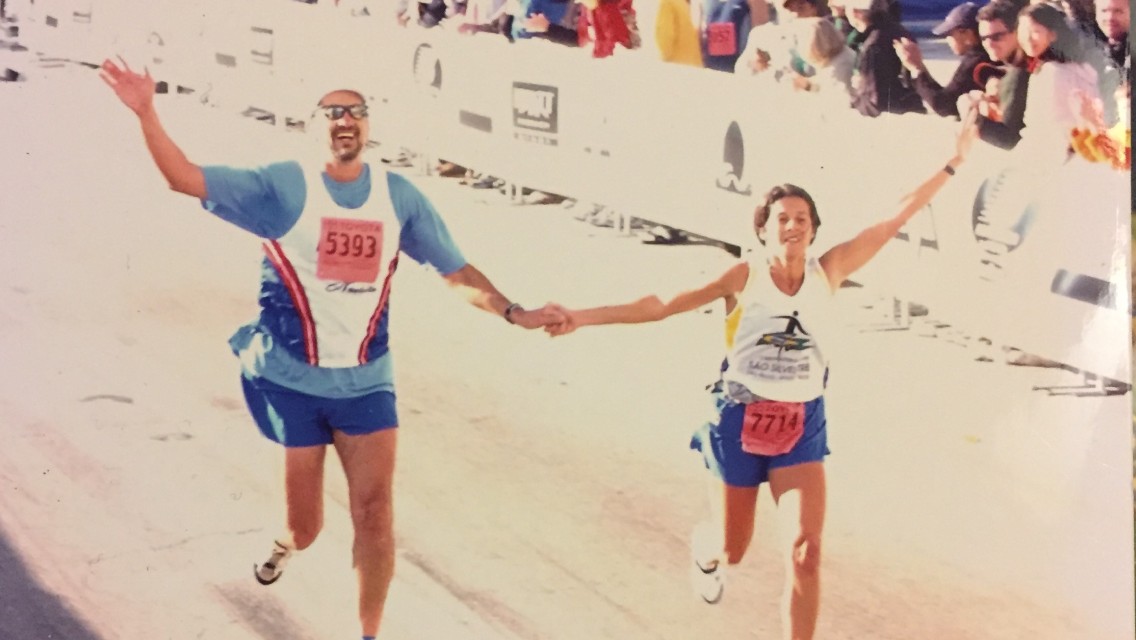
I’m a 61-year-old mother and grandmother who’s been running for more than 30 years. Over time, I’ve inspired my sons to run, and now I can also inspire my grandchildren. My motto is, “Never stop!” And I’m pleased to say I’ve “never stopped” running the Miami Marathon. I’m so happy to celebrate the 25th anniversary of the race — it’s like watching a child mature.
I started running full marathons in 2001. When the Miami Marathon was founded two years later, I was living in South Florida, where I resided for many years. I was happy to hear that we were going to have a marathon and half marathon in our area.
I registered right away for the full, inaugural marathon and registered my husband for the half marathon. Unfortunately, in November 2002, I ran the New York Marathon and experienced a stress fracture in my foot, and my doctor told me that I couldn’t run the full Miami Marathon. Thankfully, I was able to run the Half Marathon instead.
I didn’t let the injury deter me and trained in every way I could to be healthy for the race. And now, I had the opportunity to run with my husband at a relaxed pace while enjoying the beautiful view. It was a small race, but the route, the people, and the vibe were special.
I decided to come back the following year and run the full marathon distance. I’ve been running every year since the inaugural, toggling back and forth between distances. Nowadays, I choose to only run the half marathon distance.
The Miami Marathon and Half Marathon is part of my family’s memories and my running history. I’m going to be a 25-year streak runner this coming January. I feel so proud of that accomplishment.
Throughout those years, I’ve had the chance to race with my husband, my sons, my friends, strangers who became friends by the end of the race, and solo. I’ve run healthy, and I’ve run with a fractured shoulder. I’ve run slow, and I’ve run fast. I’ve run in the rain, in the humidity, and in the cold. I’ve inspired others to run. And now, as a grandmother, I hope to inspire my grandchildren to run the race someday, too.
After moving to Boston in 2024, this race has continued to be one more reason to get back to South Florida. It feels like a family reunion with the running community and the city. Although I’ve run other races many times, I keep coming back to Miami, my favorite race.
Over the years, this race has grown. I’ve appreciated the focus on the Latin American runners and the other Americans who travel here from across the country looking for a warm and beautiful marathon course. It’s amazing to see the current number of runners and the many corrals at the start line.
And now, we have even more spectators around the course cheering for us. For me, it’s still exciting to line up at the start line and run in the causeway, looking at the cruise ships at sunrise, just like I did 25 years ago. I feel that same great sensation and adrenaline I felt back in 2003.
Training for the race now is not as easy since I train in the Boston winter, but it’s worth it! It makes it even more special when I come back. The race feels like home.
Rolando Colmenares
Age: 56
Resident of: Doral, Fla.
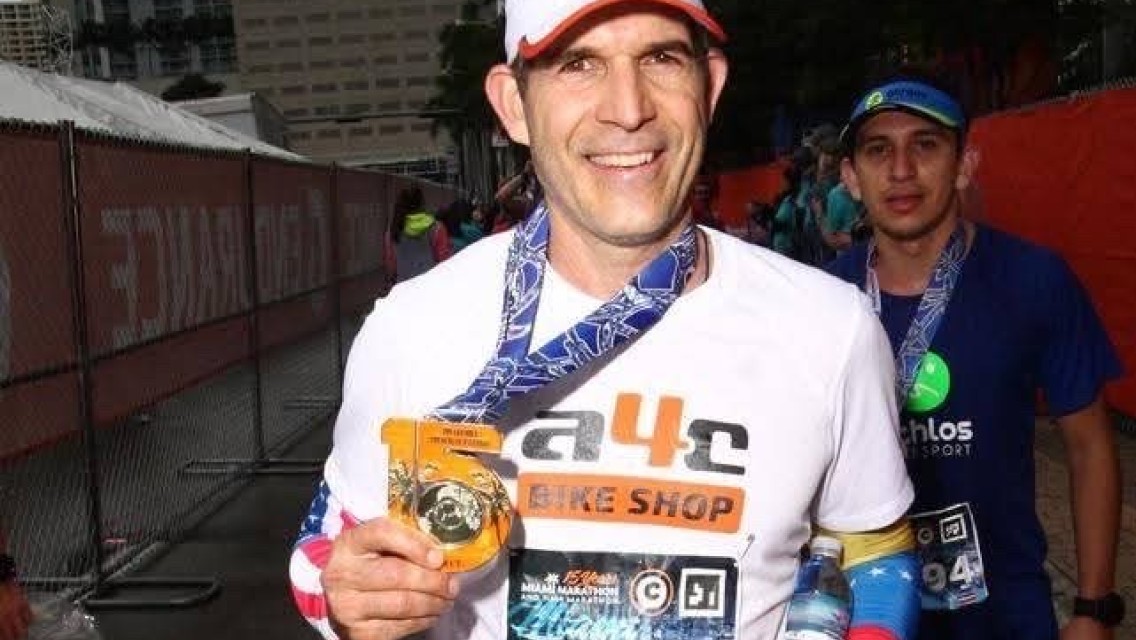
I was born in Venezuela in 1970 and moved to the United States in 2001 with my wife. We now live in Doral, Fla., and we have two sons. Running has been a central part of my life for as long as I can remember.
I recall watching a news story about Terry Fox and his “Marathon of Hope” when I was 10 years old, about two years after I was first introduced to running. (Fox lost his leg to osteogenic sarcoma at age 18 and decided to run across Canada to raise money for cancer research in a “Marathon of Hope.”) This courage and determination left a permanent mark on me and shaped the way I view running and perseverance.
My relationship with the Miami Marathon is truly special. We left Venezuela in April 2001, just after I completed my first marathon. We landed in Pasadena, Calif., where I ran my second marathon, the Los Angeles Marathon, in 2002. Then, around August 2002, we moved to Miami.
We were in a new city with new jobs, and I was looking to continue running marathons, which is how I found the Miami Marathon. I registered for the inaugural race in 2003, and I have completed every single one since then — out of the 24 to date, I’ve run 20 of the full marathons and four of the half marathons.
I’m preparing to run my 25th consecutive Miami Marathon event, and I plan to keep going for as long as God allows me to.
My inspiration for repeating this race comes from a very simple belief I hold: If you’re a runner, and your city has a marathon, you run it. Miami is my home, and the Miami Marathon has become part of who I am.
Taking place in January, it’s also the perfect way to start the running season each year. The energy, the weather, the atmosphere — everything feels like a fresh beginning. And every race becomes a reunion. Friends come from other cities and countries, and the race turns into a celebration of community, discipline, and tradition.
That combination — the love for my city, a love for running, and the people it brings together — is what keeps me coming back year after year.
My experience with the Miami Marathon has evolved in the best possible way. In the early years, the race felt like a new adventure. A young event finding its identity, and me, a new Miami resident, finding my place in the city.
Over time, the marathon has grown tremendously in organization, energy, and community support — and I’ve grown with it.
Each race has marked a different chapter of my life: running as a newcomer to the United States, running as a young father, running through career changes, and now running with decades of experience and gratitude.
The course, the crowds, and the atmosphere have all become richer and more vibrant, but what has changed the most is the meaning behind it.
What started as a race has become a tradition, a personal milestone, and a reminder of resilience. Every year feels like coming home. The Life Time Miami Marathon has become part of my story, and each race inspires me in a new way.
I hope to run the Miami Marathon for as many years as life allows, and to keep showing up on that starting line. This race has become part of my identity and part of my story in Miami. I don’t think of it as a number, I think of it as a tradition I want to continue for as long as I can.