



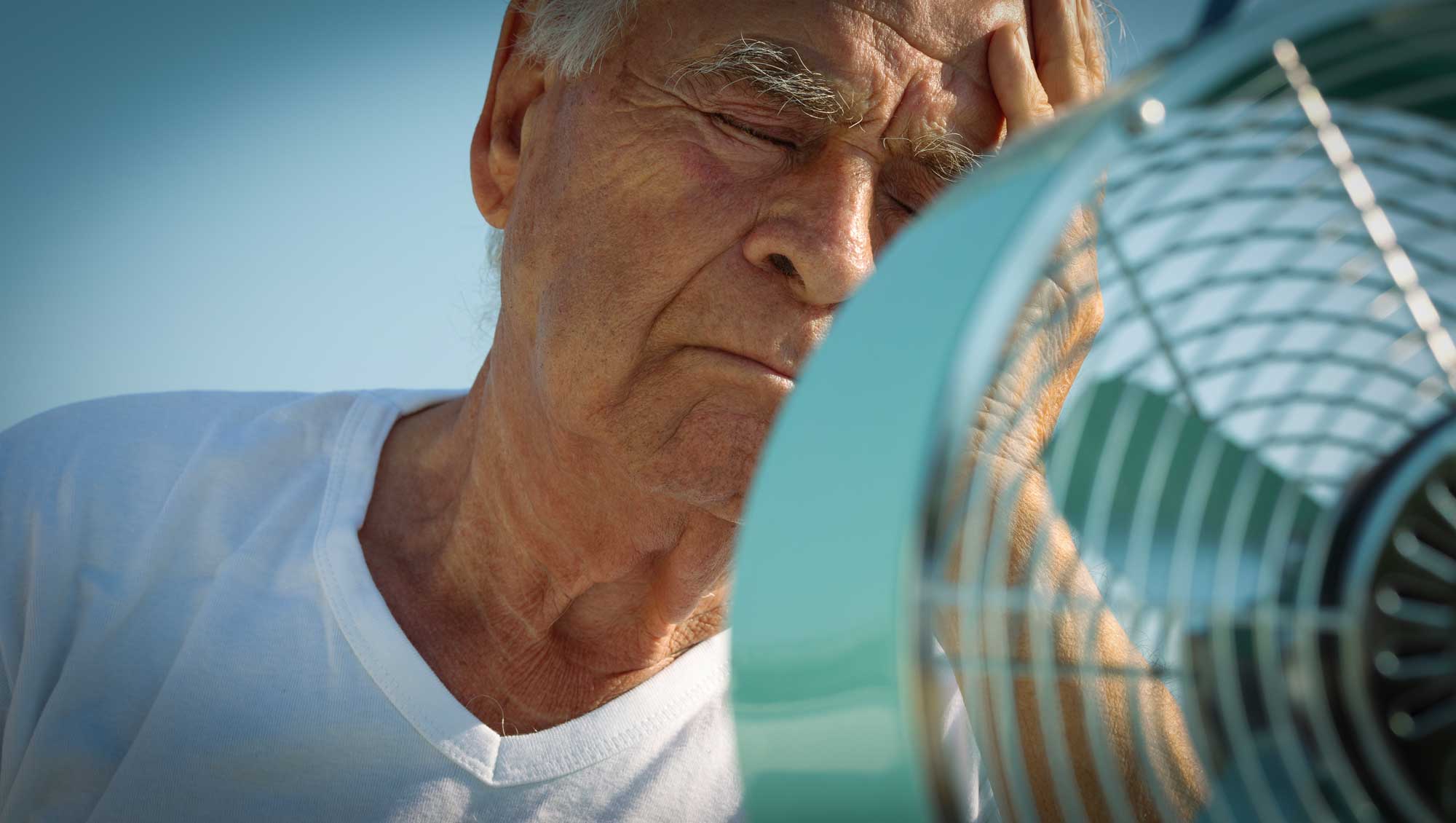
I’ve been spending a good deal of time out in the yard during the recent heat wave, yanking weeds, spreading mulch, and generally tidying the landscape. In my younger years, I could do this sort of work under similar conditions for a full day without feeling much of an effect. I’m more careful these days, limiting my exertion to two or three hours in an afternoon and taking frequent breaks. I even wear a hat and slather on some sunscreen.
Still, the heat and humidity tend to exact a toll after a few hours under the sun. No other activity leaves me feeling quite so old.
There’s plenty of evidence pointing to the danger hot weather presents for older adults. By some estimates, people over the age of 60 account for eight out of 10 heat-related deaths each year in the United States. Older bodies become easily dehydrated, our glands release less sweat, and poorly circulated blood holds in the heat. Chronic health conditions requiring multiple medications — including cardiovascular, lung, and kidney disease — can exacerbate the risks.
But recent research suggests that high temperatures can also accelerate the aging process at a cellular level, making us older than our years.
A 2025 study out of the University of Southern California (USC) found that people living in hotter regions of the country age faster, when measured biologically, than those living in cooler climes. Lead study author Jennifer Ailshire, PhD, and her team analyzed blood samples taken over a six-year period from 3,600 participants in the Health and Retirement Study and used epigenetic clocks to track methylation patterns to estimate each individual’s biological age at various points.
Comparing those patterns with National Weather Service data — heat index history and number of heat days — at each participant’s location, researchers found a “significant correlation” between accelerated biological aging and more days of extreme heat.
“Participants living in areas where heat days, as defined as Extreme Caution or higher levels (≥90 degrees F), occur half the year, such as Phoenix, experienced up to 14 months of additional biological aging compared to those living in areas with fewer than 10 heat days per year,” says Ailshire, a professor of gerontology and sociology at the USC Leonard Davis School. “Even after controlling for several factors, we found this association. Just because you live in an area with more heat days, you’re aging faster biologically.”
These epigenetic changes, she notes, appeared in participants after both short heat waves (seven days) and longer heat waves (30–60 days), suggesting that the effects can manifest very quickly and accumulate over time.
More recently, researchers at China’s Zhejiang University reached a similar conclusion after tracking the effects of heat waves on biological aging among 2,318 older adults living in various regions throughout the country. The results of their study, released last month, showed that, after adjusting for various demographic and lifestyle factors, those living in warmer climates aged faster than participants in cooler regions. Moreover, on average, nearly 60 percent of the study cohort — regardless of their location — saw their biological age increase by about six months with each heat wave.
Tracking various biomarkers, researchers found that heat-wave exposure raised total cholesterol and glycated hemoglobin levels, a sign of disrupted lipid and glucose metabolism. “These results,” the authors write in the journal Cyborg and Bionic Systems, “suggest that recurrent [heat-wave] exposure may contribute to accelerated biological aging, potentially through metabolic disruption, and highlighting the vulnerability of aging populations to climate-related thermal stress and the need for targeted climate-adaptation strategies.”
Those strategies might include such measures as targeted heat-health warnings, the creation of more urban green space, the strategic placement of bus stops, and other policies to protect a vulnerable population. For the most part, however, avoiding the immediate — and long-term — effects of extreme heat depends on our own mitigation efforts.
So, as the National Institute on Aging suggests, we should drink plenty of liquids — avoiding alcohol and caffeine — while also limiting time spent outside during heat waves. If your home lacks air conditioning, try to limit your use of the oven while keeping shades, blinds, and curtains drawn. (This is good advice even if you’re blessed with a reliable cooling system.) And don’t skimp on the sunscreen.
More than a few painful lessons over the years have taught me to respect the dangers of heat and humidity. These days I know when to slow down — and when to stop. After all, the weeds will still be there tomorrow.





Comments (0)