



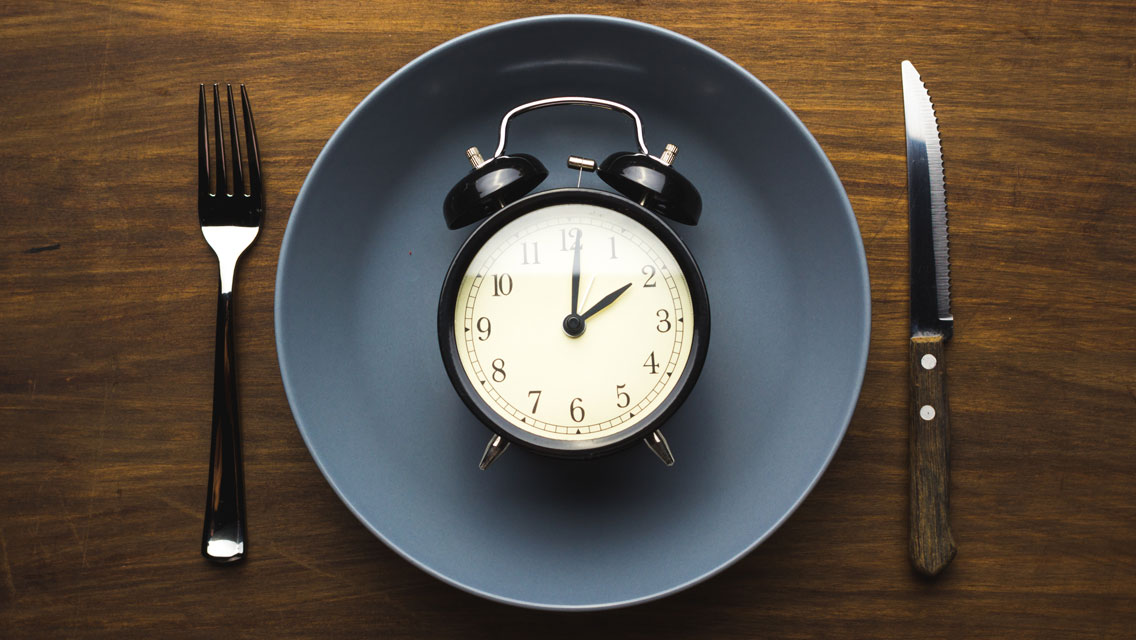
The best dietary advice I’ve ever come across is also the simplest: “Eat food. Not too much. Mostly plants.” It’s the mantra that fueled Michael Pollan’s 2008 book, In Defense of Food: An Eater’s Manifesto, an argument against what he calls the “professionalization of eating” that has done little to make us healthier. “Thirty years of official nutritional advice has only made us sicker and fatter while ruining countless numbers of meals,” he notes.
Sadly, Pollan’s bestseller has had little impact on the scientific community, which has demonstrated in recent years an odd fixation on such exotic dietary strategies as caloric restriction and intermittent fasting in an effort to extend our healthspans. The more we focus on limiting how much we eat (without becoming malnourished) or carefully scheduling when we eat it (or don’t), researchers seem to be arguing, the longer we’ll enjoy good health.
Several studies have pointed to the lifespan-extending effects of fewer calories on yeast, nematodes, rodents, and even rhesus monkeys, explaining how it benefits certain molecular pathways while stabilizing glucose levels and improving insulin sensitivity. Long-term studies on calorie-deprived humans, however, are limited for reasons that should be obvious.
Still, Yale University researchers earlier this year released the results of a study that suggests caloric restriction could reduce levels of a particular protein, complement component 3 (C3), that has been known to contribute to chronic inflammation — and thus accelerated aging. The 42 study participants cut their caloric intake by 11 to 14 percent over a two-year period, and researchers found that C3 was “significantly reduced” when compared to baseline levels.
“[T]he causal effects of C3 in aging and chronic inflammation have not been identified,” notes study coauthor Hee-Hoon Kim, PhD. “So, we were very excited to find that in our study.”`
Whether that would result in a longer, healthier life remains a mystery. Kim and his colleagues are exploring the possibility of using FDA-approved drugs designed to inhibit C3 production, which would not require people to curb their appetites. Trouble is, if you reduce levels of that protein too much, it will affect immune response — and not in a good way.
“The idea is not to remove complement systems that are required for us to fight infections,” explains Vishwa Deep Dixit, PhD, director of the Yale Center for Research on Aging. “Instead, the goal is to restore the balance.”
Meanwhile, intermittent fasting (IF) remains a popular topic among longevity researchers. This is the notion that eating only at certain times of the day — or only on certain days of the week — will help your body use its fuel more effectively while mitigating the age-related decline in immune function.
Existing research, however, has produced mixed results, according to a January review in the journal Frontiers in Nutrition. Studies have shown some promise for certain demographics, but seniors will need to wait for more research.
“Evidence to date highlights IF as a promising nonpharmacological intervention to improve immune function and systemic health, with potential implications for mitigating frailty and enhancing resilience in aging populations,” the authors note.
But, they add, the bulk of research has focused on younger, healthier people, rendering it less useful to frail and older populations. Further studies need to focus on a more vulnerable cohort. “Such data will be crucial to determine whether IF can be implemented as a safe intervention to enhance resilience and delay frailty progression in the aging population.”
And as one 2024 study noted, the margin for error when employing intermittent fasting may be surprisingly small. Tracking fasting periods and mortality rates from cardiovascular disease over a 13-year period among more than 10,000 older U.S. adults, a team of researchers found that those who fasted for 11.49 hours per day had the lowest mortality rate. Those who fasted on average for less than an hour longer (12.38 hours) died at the highest rate. And briefer fasts were not necessarily the healthiest choice: Those who fasted for the shortest periods were more likely to die from cancer and other diseases.
“As with any health intervention,” the authors write in the journal Nutrients, “clinicians should exercise caution when recommending a fasting regimen that is personalized to the health condition of people who are older.”
Adrián Carballo-Casla, PhD, and his research team at Sweden’s Karolinska Institutet, would agree. Last week, they released the results of a study in the Journal of Internal Medicine suggesting that intermittent fasting can be hazardous to a senior’s health if they go for too long without eating.
Analyzing data from the Swedish National Study on Aging and Care in Kungsholmen involving nearly 3,000 Stockholm residents 60 years old and older, the team tracked fasting schedules and health records for up to 15 years. They found that participants who fasted between 14 and 24 hours on a typical day developed chronic disease more rapidly than those who went without eating for six to 11.5 hours.
The problem, Carballo-Casla explains, may be connected to poor digestive capacity and nutrient absorption — especially in older participants. The effects were most noticeable in those who were 78 or older at the beginning of the study. “In the context of prolonged habitual fasting, which compresses the eating window,” he writes, “this reduced absorption capacity could contribute to subtle but cumulative nutrient deficiencies, which in turn contribute to chronic disease accumulation.”
Other factors may also come into play, he notes, including something as basic as the need to eat before taking some prescription drugs. “Prolonged habitual fasting may therefore interfere with drug-related food requirements, potentially increasing the risk of adverse effects.”
Carballo-Casla cautions that the study’s conclusions don’t necessarily mean that a certain fasting schedule caused the ailments, only that there’s an association. So maybe there’s nothing to worry about if you find yourself — purposefully or accidentally — avoiding meals. But, on the other hand, maybe there is.
So I’m inclined to keep things simple: Eat food. Not too much. Mostly plants.





Comments (0)