



I was diagnosed with autism in November 2019. I was 37 years old.
Although many people with autism receive a diagnosis in childhood, my condition flew under the radar for years because I began subconsciously masking at a young age. Masking involves suppressing socially unacceptable behaviors that are common among people with autism, such as fidgeting or rocking, as well as mimicking neurotypical behaviors. I often forced myself to make eye contact or remain in spaces that were overstimulating. Masking helped me fit in with my peers.
When I received my diagnosis in adulthood, I felt relief. It shed light on much of the friction and difficulty I’d experienced throughout my life.
I gained a new understanding of my son, Aidan, too. He had been diagnosed with autism nearly a decade prior. Following his diagnosis, I’d shared his experience to raise awareness about autism. But after learning that I’m also autistic, I realized that it was time to focus on my story.
Autism Advocacy
When Aidan was diagnosed with moderate to severe autism in November 2010, a week before his second birthday, our family life was turned upside down. At first, we hesitated to share the news; autism can carry a stigma, and we thought we could just keep it quiet while we pursued various treatments. But as our days became centered on his physical, occupational, and speech therapies, we couldn’t pretend nothing had changed.
Then our medical coverage for Aidan’s therapies, which we’d received through Minnesota’s state health plan for people with preexisting conditions, fell through. I began to tell Aidan’s story publicly to raise awareness about autism and to contribute to efforts (ultimately successful) to reinstate treatment coverage in Minnesota for people with autism and other conditions. It was all a labor of love — and emotionally taxing.
As Aidan’s sister, who is 14 months younger, moved through early childhood, I was vigilant for signs she might also have autism, despite experts assuring us she was developing neurotypically. When she was in third grade, I found myself online researching autism traits in girls. Based on what I was reading, I started to wonder if perhaps I was autistic myself.
Recognizing the Mask
Historically, diagnostic criteria for autism were based on male behavior, leading to underdiagnosis or late diagnosis in girls and women. Autism can present differently in boys and girls, with boys’ traits tending to be more external and noticeable — repetitive actions, difficulty responding to nonverbal cues, or physical behavior that appears aggressive, for example.
Autism traits in girls are often less apparent. A girl who struggles to make eye contact may be seen as shy. A girl with an intense special interest in art or animals may not catch the attention of teachers and parents the way a boy with an intense interest in machines might. A girl may have strong communication skills, which goes against the stereotype that kids with autism are noncommunicative.
I was that girl.
Like a lot of autistic girls, I had an easier time making friends in elementary school, but it was more difficult as I got older. Before social situations, I would practice mental scripts for how to interact — whom to talk to and how long to stay in one conversation before I could leave. I imitated other people, all the while wondering why I was so different.
Perfectionism, especially in school, was one way I tried to fit in. I pushed myself hard academically and would get very upset if I earned a grade lower than an A.
I remember my mother taking me aside when I was a teenager and telling me she worried I wasn’t enjoying life. I remember thinking, What does she mean, “enjoying life”? I struggled to get through each day, constantly thinking about what I had to do to get from one thing to the next. It takes a lot of energy to pretend you’re someone you’re not.
Years later, I saw my own experience reflected online in descriptions of autistic girls and women. I mustered the courage to call the Autism Society of Minnesota. In November 2019, I tested and scored high for autistic traits.
My husband and family have been very supportive as I’ve learned to unmask and accept myself as I am. I no longer feel so guilty about not being able to manage everything I think I’m supposed to, and I feel better about getting support when I need it.
Telling My Own Story
As Aidan grew older and more independent, I found I finally had the time to explore what “enjoying life” might mean for me.
I grew up in Calgary, Alberta, watching pageants — Miss Canada, Miss USA, Miss America, Miss Universe, Miss World — with my mother. I loved everything about the events: the glamour, confidence, and poise of these women; their presence on stage; their advocacy and causes. But as a girl of South Asian descent, I didn’t see many women who looked like me. It never occurred to me that competing in pageants was something I could do.
When I was a freshman in college, in 2000, Priyanka Chopra, from India, won Miss World. I wondered: Could I do something like this? No, I told myself. Girls like me don’t do pageants. We study and take life seriously. The dream lay dormant for another 20-plus years.
Then, in December 2024, my husband and I attended an event with self-help guru Tony Robbins (we’re big fans). Robbins asked participants what they’ve always wanted to do in their lives and challenged them to question how they could improve themselves so they could improve the world.
I realized I’d always wanted to do pageants. And I want to make sure no more women and girls feel as alone and helpless as I did.
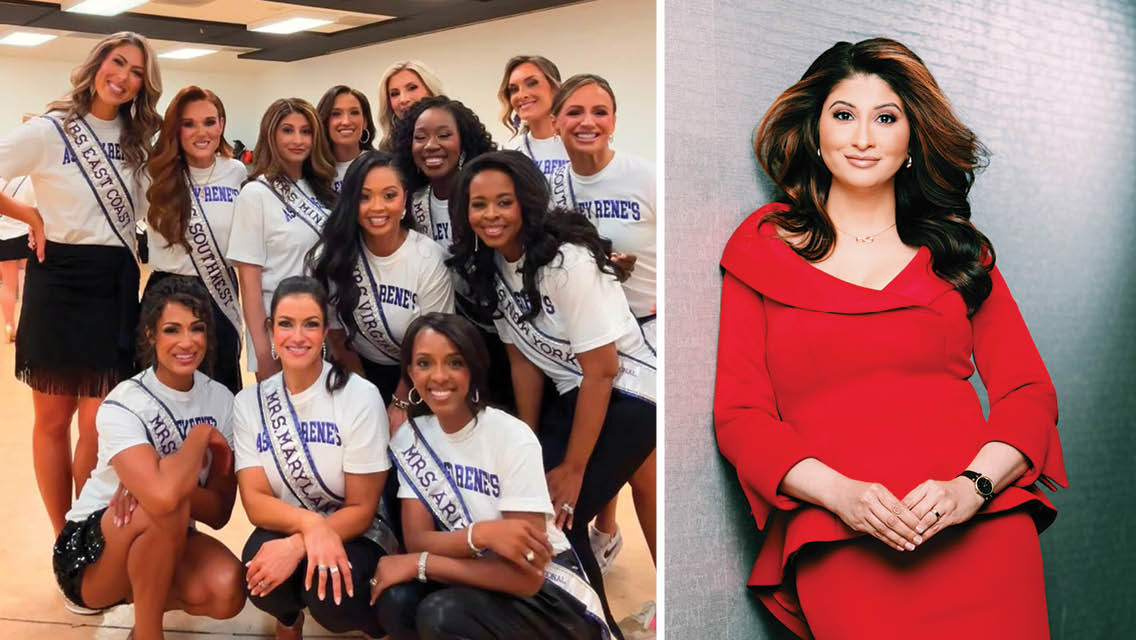
So, this past July, at the age of 44, I competed as Mrs. Minnesota International in the Mrs. International competition in Chicago. To prepare for the pageant, I did weight training and toning twice a week and took Pilates classes at Life Time in Edina, Minn. My parents-in-law brought back red silk fabric from their travels in India, and I had a gown made from it for the evening-gown competition. To build my platform about the importance of autism diagnoses in women, I organized events and fundraisers leading up to the competition, and I advocated for my cause on social media.
The pageant itself was an incredible experience with all the glamour and excitement I’d imagined. Although the final results didn’t go the way I wanted, the pageant gave me exactly what I needed.
During and after, women shared their own stories and thanked me for teaching them about autism in women — reminding me why I competed. Crowns and titles are great, but they were never the destination. The destination has always been raising awareness and proving that it is never too late to discover who you truly are.
Feroza’s Top 3 Takeaways
1. Trust your gut. Autistic traits in women and girls often get overlooked or misdiagnosed. Feroza recommends consulting with a professional if you have questions.
2. Go through the world with compassion. “You don’t know what’s going on in other people’s lives, so always extend grace,” she says.
3. Practice self-care. If someone you love is learning to unmask, take time to support yourself as you process the change, she adds.
My Turnaround
For more real-life success stories of people who have embraced healthy behaviors and changed their lives, visit our My Turnaround department.
This article originally appeared as “No More Masking” in the November/December 2026 issue of Experience Life.







Comments (0)