


Raised in the traditions of Punjabi Indian food culture, I always understood food to be medicine — a framework that has shaped my entire worldview. Being a first-generation Indian American came with its challenges, but I was always keenly aware of the uncommon privilege of belonging to two rich cultural traditions. The smells and the tastes of food at home provided me with a strong connection to my family, my heritage, and the medicine of our Ayurvedic cuisine.
Cooking Indian food at home is an art — a labor of love that demands time, patience, and instinct. Ask any Indian person born or raised outside India if they cook as well as their mother or grandmother, and few will claim they do. Our recipes live in memory and muscle, not on paper. I watched my mother cook: never the same way twice, never by a book. Each dish carried a nuance and essence impossible for me to re-create. The layering of spices and the play of salt, butter, and heat were a reflection of her mood, our family, our story. Each household, each hand does it differently — and that’s the beauty of it.
My mother’s food was always a kind of cure. If your stomach ached, she would prepare kitchari, a simple alchemy of rice, moong beans, cumin, and onions. Soft on the body and rich in fiber, protein, and minerals, it soothed and strengthened, the perfect medicine disguised as a meal. Headaches? Depending on the location and nature of the pain, a cucumber salad or a cup of cumin, coriander, and fennel tea could help. Cold coming on? My mother would offer a generous and overflowing spoonful of honey mixed with chopped-up turmeric root and garlic. Beyond the cultural significance and the health benefits, which I was not aware of as a child, the food itself was delicious and satisfying. Even as I ventured into the diverse culinary landscape of the United States, Indian home food remained a source of comfort and nostalgia, a medicine for my body and my heart.
But taking Indian food to school was impossible — too fragrant and too conspicuous for a brown girl who just wanted to blend in among classmates eating bologna sandwiches. There was no escaping the pull and draw of American life for me: the culture of eating on the go, eating out, and eating whenever there was time. Soon enough, the medicinal food of my childhood was a memory.
In college and medical school, eating — once one of my life’s great joys — became just a means to survive. I received no formal nutrition education, not even an hour on how food supports health. Though I knew the basics, I often skipped breakfast or grabbed a cellophane-wrapped muffin between lectures, then ate the same limp cafeteria sandwich each day — the only vegetarian option. Evenings were spent studying, barely pausing to eat whatever a friend brought back from a nearby restaurant or the hospital’s night cafeteria.
Inevitably, my poor health habits (and my perfectionism) would betray me. My weight dropped, my menstrual cycles stopped, I developed anemia, and I was perpetually exhausted. I exercised intensely but never recovered, becoming riddled with severe neck spasms that eventually led to steroid injections into my cervical spine. I was clearly far from well.
It took me years — through several more injections, pain medications, failed fertility treatments, a miscarriage, and physical therapy — to rebuild my relationship with food and to understand that food had to be the beginning of my health journey, not the end. Only when I was happily pregnant during my grueling OB fellowship, during which I delivered several babies every third night, did healing truly begin. My daughter’s small kicks inside me urged me to eat, to rest, to care for both of us. Food was no longer an afterthought — it became the foundation of my family’s health. Nothing if not a good student and patient, I began a reclamation of my health and my relationship with food.
My Return to Food as Medicine
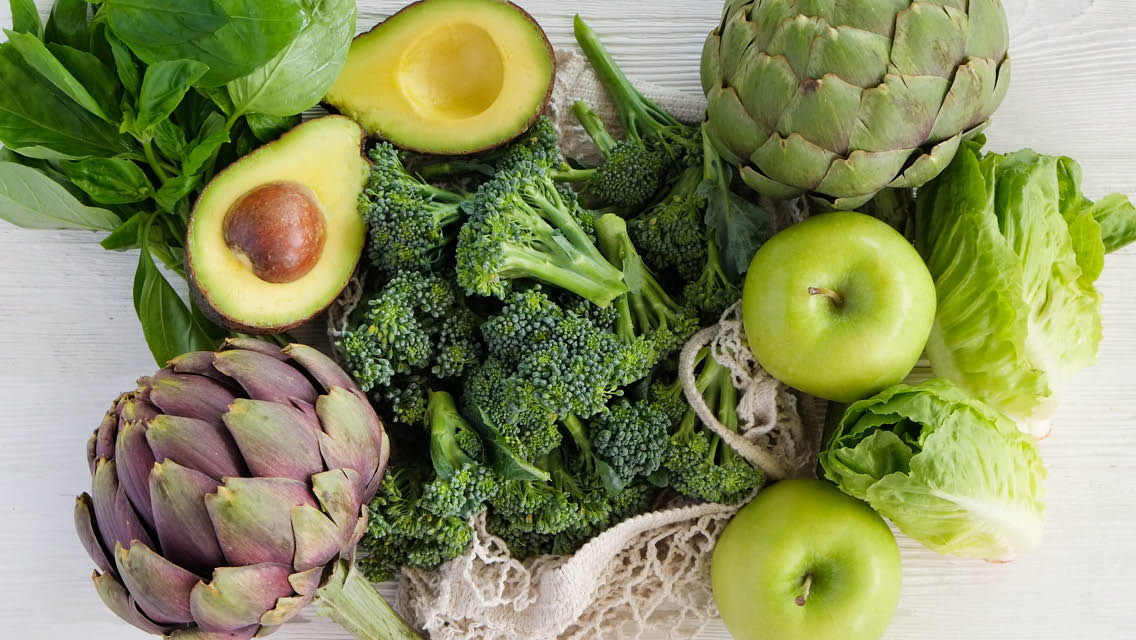
The path back to my family’s food roots and wisdom became much easier when my husband and I moved to the coastal California city of Ventura, months after our daughter was born, for our first jobs as attending physicians at the county medical center. I felt reconnected to something I hadn’t known I was missing, maybe even to the cellular memory of my ancestors. To a joy that felt deeper than the present but that flowed in my blood. It was in Ventura that I began to garden and grow food and cook and to remember that I am a daughter of land stewards, farmers, and food makers. My body responded well to this new place, and being surrounded by fields of fresh produce and regular farmers’ markets meant I ate more fresh, colorful food. The processed hospital food I was so accustomed to was replaced by dark green leafy chard and spinach, bright red peppers, yellow tomatoes, and avocados fresh off my neighbor’s trees.
The farmers’ market became my temple of worship, and I went several times a week. I cried there sometimes, so overcome by the beauty of all the bounty grown from this abundant land.
The more time I spent outside near the ocean, the more my nervous system calmed from decades of hustle and the more I began to feel and look like a healthy person. My menstrual cycles regulated for the first time; my anemia resolved from my improved diet; my weight was healthy for me; and my sleep was more restful, even with a young baby. How could you hold fresh, colorful vegetables from a farmers’ market, or pick your own lemons, and not feel yourself fall a little in love with the earth? I sure did. The farmers’ market became my temple of worship, and I went several times a week. I cried there sometimes, so overcome by the beauty of all the bounty grown from this abundant land. I fell deeply in love with the earth and my place in it. It was the remembrance of things past. A remembrance that food is medicine.
In Sickness and in Health
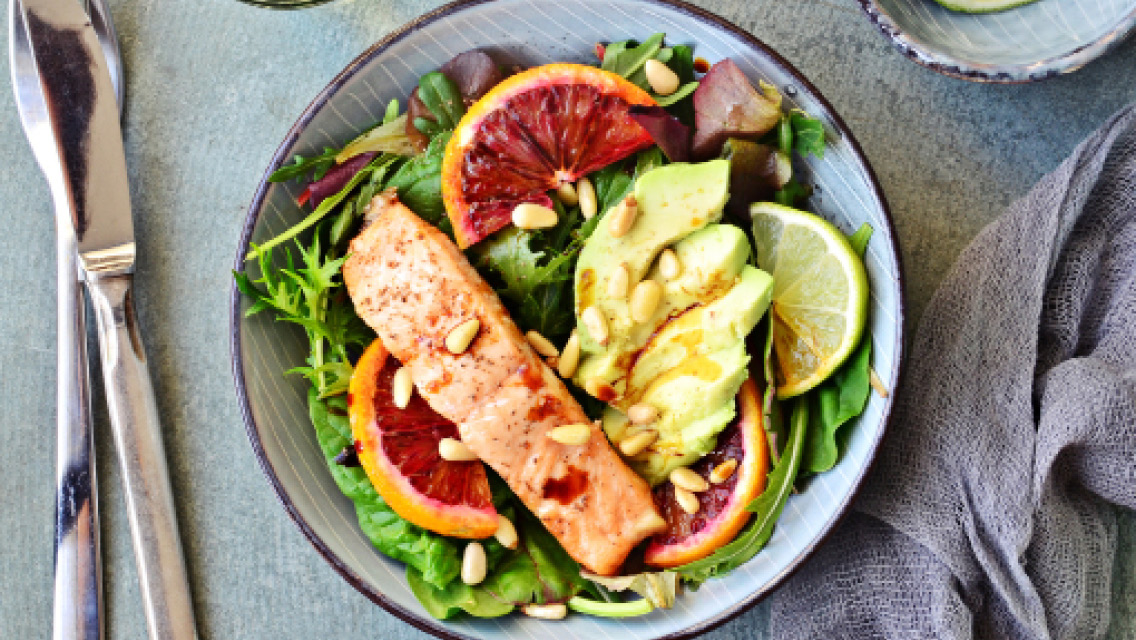
I tell every patient that food is the medicine we take daily, from our first breath onward. It is among the strongest medicines — or poisons — depending on what we choose. For many, this is a wake-up call: Our very cells are built from the nutrient density of what we eat, and little can be made without those raw materials. Each meal is an act of self-love and repair, a chance to build vitality from within. Yet most people don’t think of food this way; they focus on its flavor and texture, not its impact on body, mind, and emotions. People rarely expect to discuss food with their physician, but I invite my patients to see it as a profoundly powerful medicine. Even that shift in perspective — asking ourselves, Will this meal uplift my health? How will I feel afterward? — can change what we choose to eat.
Our very cells are built from the nutrient density of what we eat, and little can be made without those raw materials. Each meal is an act of self-love and repair, a chance to build vitality from within.
My patient Sabrina has been successful in overcoming the pain and disability that come from fibromyalgia, a poorly understood condition I see very often. This difficult disease typically affects women more than men and is characterized by widespread musculoskeletal pain, fatigue, and a heightened sensitivity to pain. It is challenging to treat and can be terrible to live with, as there is no single remedy or medication that works well. Additionally, fibromyalgia has a wide range of complex symptoms that overlap with chronic fatigue syndrome, irritable bowel syndrome, and other conditions, so it is often misdiagnosed. Sabrina visited me after seeing many doctors; she was on several medications and was still not feeling well or even consistently better. We dove into her lifestyle quickly, where I knew we could do the most beneficial work.
Sabrina’s diet was guided by cravings, not by how food made her feel — and much of her diet worsened her pain, fatigue, and heaviness. For her, the flavors of Puerto Rico were unmatched, though the dishes she loved most were often fried, meat-rich, and heavy with starch. Together, we tracked her meals and symptoms with a food journal, building awareness over several months. Through this mindfulness, she learned to notice which foods eased her pain and how to honor her body’s hunger and fullness cues. I offered the Ayurvedic wisdom on quantity: to eat until satisfied, not heavy, and to keep balance in the stomach — one-third food, one-third liquid, and one-third left open for digestion. Paying attention to how different foods made her feel, both physically and emotionally, allowed her to make connections that she hadn’t made before. She told me, “I love my pan sobao! But I noticed it triggered pain flares. So I slowed down, tuned in to how I’d feel later, and chose something else. I stopped buying so much of it and even found a great substitute at the bakery.”
Over several months of this practice of mindfulness, Sabrina was able to avoid foods that worsened her physical symptoms and intentionally choose ones that didn’t. She felt better and unintentionally lost weight, which motivated her to stay on this path. “You changed the way I thought about food,” she told me, “and after my mind changed, I didn’t go back.”
This was one of those aha moments that patients have, when a perceptual shift translates into action. Recognizing the profound effect food has on the body gives us real agency over both illness and health. Most people have grown up eating for pleasure or survival, not for well-being. Again and again, I have seen how powerful the “food is medicine” message can be. Almost everyone can understand it instantly, even children and teenagers. Beyond nourishment, food is information, fueling our cellular engines with what they need to detoxify, energize, and rebuild the body day after day. When we treat food as medicine, it can transform everything.
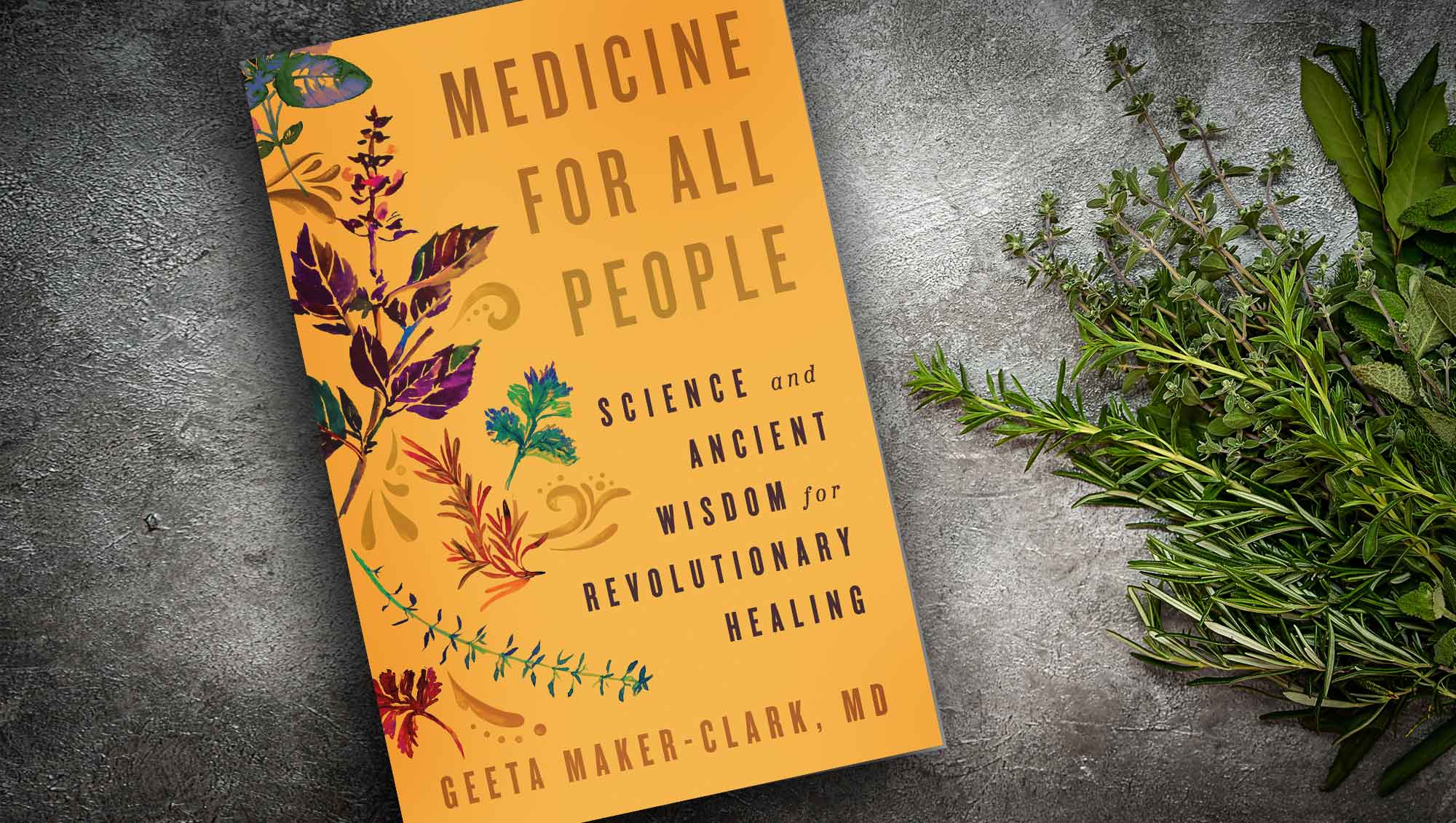
Excerpted from Medicine for All People: Science and Ancient Wisdom for Revolutionary Healing by Geeta Maker-Clark, MD. Published by Chelsea Green Publishing, 2026.
Comments (0)