




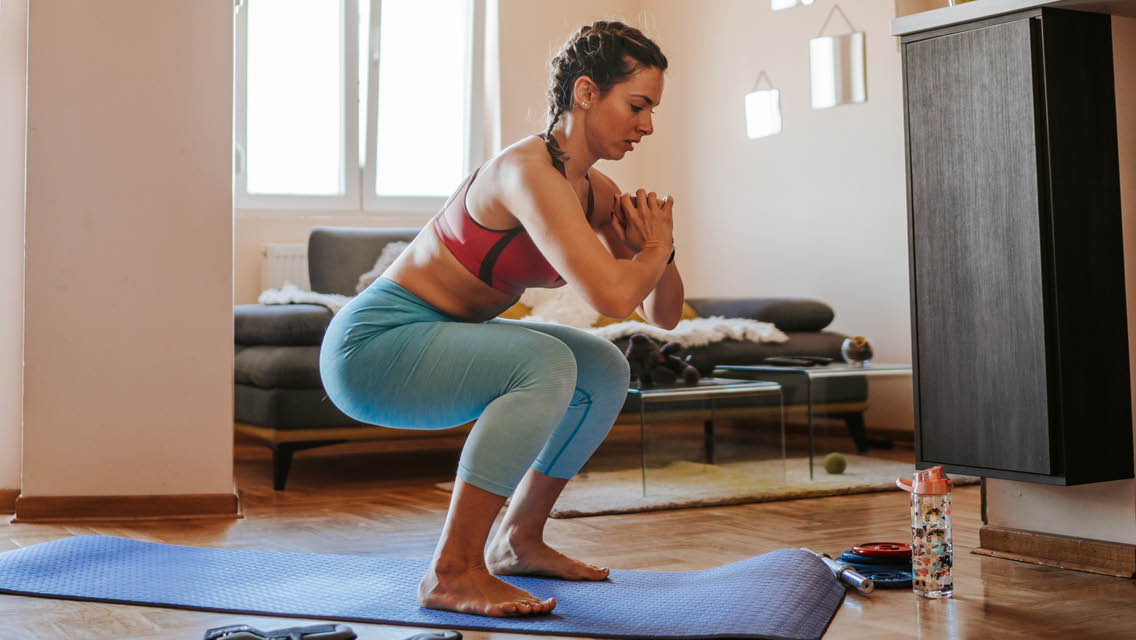
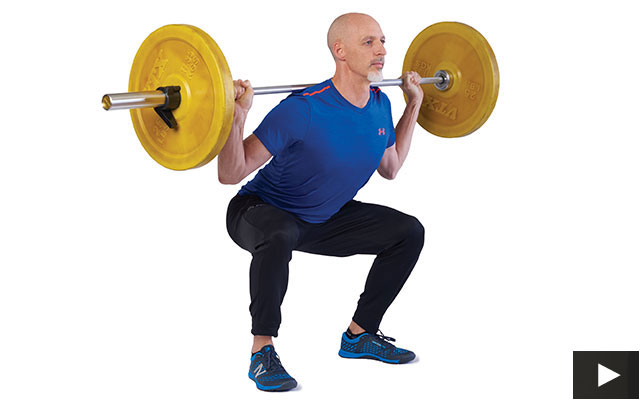
The “perfect” squat is one in which you hunker past parallel — your hip crease lowering below your knees. This builds core stability while improving range of motion and functionality in your hips, knees, and ankles.
But every body is different, and squatting depth may be affected by factors such as your range of motion, strength, compensatory patterns, and current or past injuries, says Julia Ladewski, CSCS, an Indiana-based Division I athletic trainer and powerlifter who works with clients of varying ages and abilities.
Your athletic goals will dictate how strict you need to be. Competitive athletes are held to tougher standards: Powerlifters need to squat deep enough so the tops of their thighs are parallel to the ground or lower. Olympic weightlifters, who compete in barbell snatches, cleans, and jerks, train with below-parallel squats to catch heavier weights.
So how low should you go?
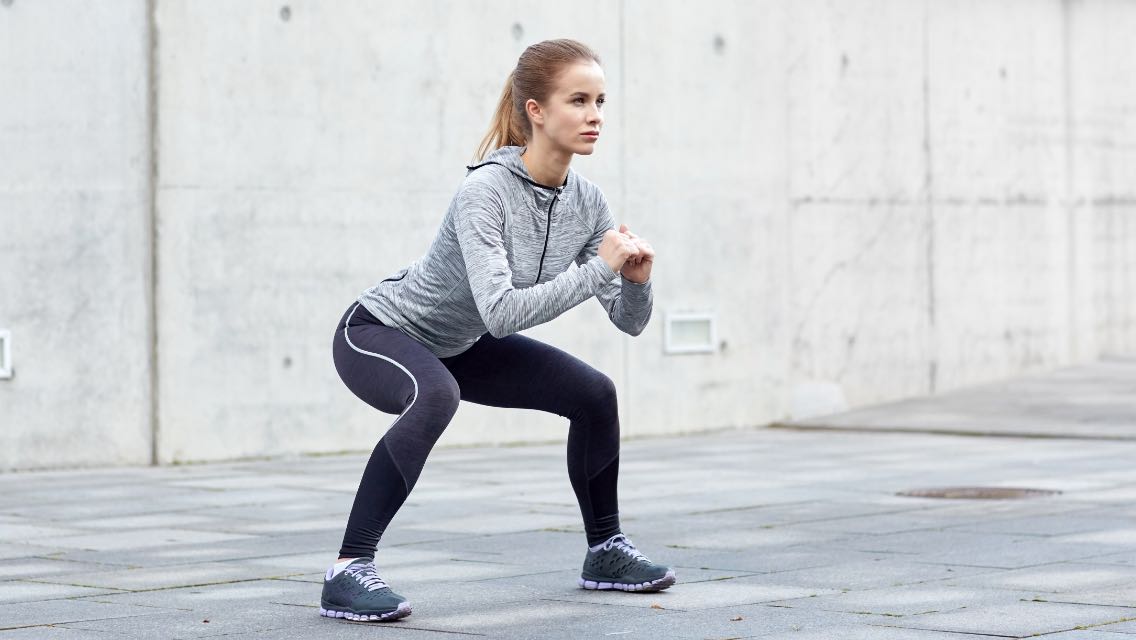
“Generally speaking, parallel is what would benefit most people and is all that is needed for improved daily function,” says Ladewski.
The key to your ideal squat depth, she explains, is to start with a range of motion you can perform properly. You’ll get more out of doing quarter-squats with good form than from wrenching your hips to get below parallel. As you get stronger and more mobile, and improve your squatting technique through repetition, you’ll likely find your range of motion improves and you can go lower.
A Better Squat
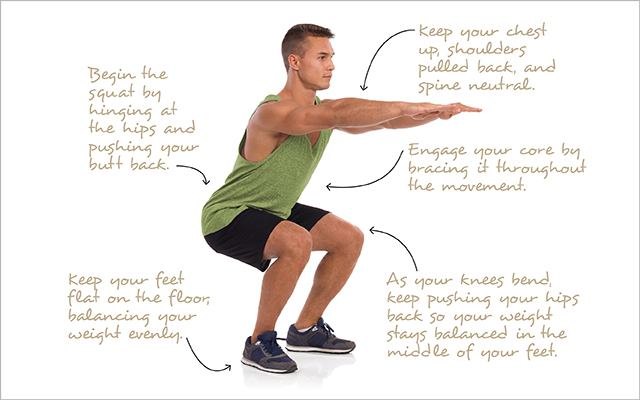
Squatting is an innate movement, but our sedentary lifestyles often diminish our ability to perform the move. To achieve your proper form, trainer Julia Ladewski, CSCS, recommends visualizing a toddler learning to stand. Keep these cues in mind the next time you perform this exercise:
- Begin the squat by hinging at the hips and pushing your butt back.
- Keep your chest up, shoulders pulled back, and spine neutral.
- Engage your core by bracing it throughout the movement.
- As your knees bend, keep pushing your hips back so your weight stays balanced in the middle of your feet.
- Keep your feet flat on the floor, balance your weight evenly.


Comments (0)