




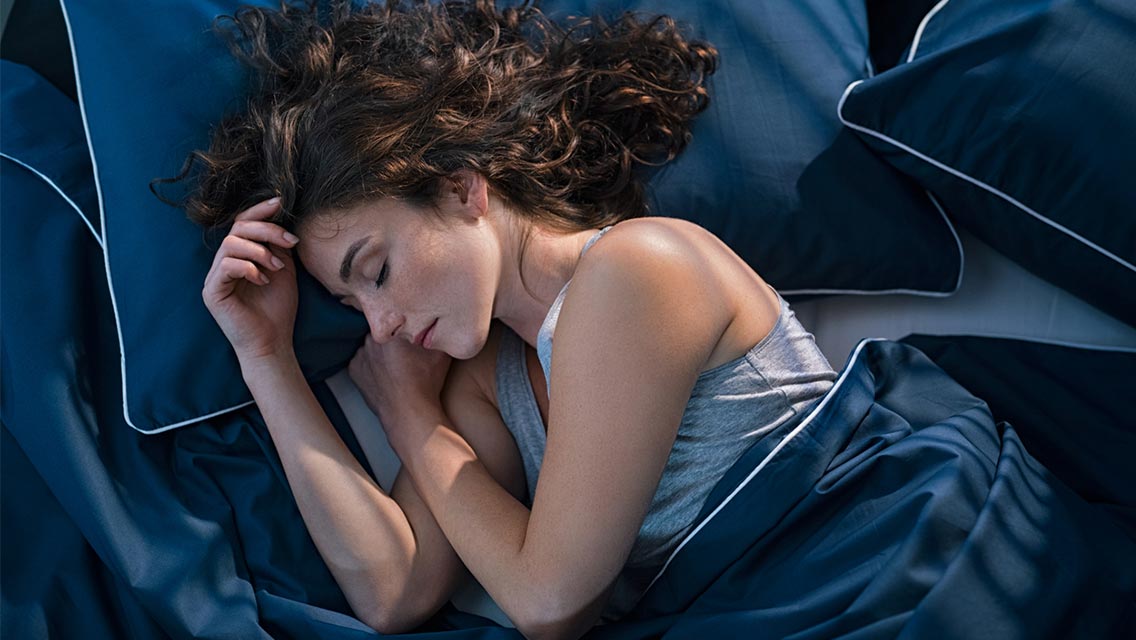
With all we are learning about the importance of sleep, it’s easy to obsess about getting sufficient shuteye. Wearable sleep trackers and apps have arrived as an accessible way to quantify sleep quality. Yet the reliance on such data has raised a question among scientists: Are we sabotaging our sleep in our quest to improve it?
There’s a name for the obsessive pursuit of optimal sleep — orthosomnia.
Orthosomnia has parallels to orthorexia, an unhealthy obsession with healthy eating characterized by a preoccupation with food quality (see “Orthorexia: When Healthy Eating Becomes an Obsession” for more). Orthosomnia is similarly perfectionistic.
We have long admired personalities who reportedly needed little sleep, including Thomas Edison and Margaret Thatcher. But it turns out that people who require less sleep — known as short sleepers — may have genetic factors that allow for it.
For the rest of us, a lack of sleep can be more detrimental. Research shows that disrupted sleep can heighten the risk of metabolic obesity and type 2 diabetes; cardiovascular disease; impaired immune function; Alzheimer’s and Parkinson’s; various mental health concerns; and certain types of cancer.
As far back as 2014, the Centers for Disease Control and Prevention was warning that Americans were experiencing a sleep-deprivation epidemic. Since then, the CDC has continued to warn that a third of Americans don’t get enough sleep.
A Sleep Paradox
Upon their introduction in the 2010s, consumer sleep trackers expanded on the data gathering of fitness trackers by monitoring sleep-related biometric data, noise, and movement. They have been hailed by many sleep scientists: In his book Why We Sleep, University of California, Berkeley, neuroscientist Matthew Walker, PhD, focuses on sleep trackers as part of a transformative “new vision for sleep in the twenty-first century.”
Some 35 percent of Americans have used a sleep tracker, according to a 2023 American Academy of Sleep Medicine survey; 77 percent of them found the tracker helpful and 68 percent said they have changed behavior based on what they learned.
“The patients’ inferred correlation between sleep tracker data and daytime fatigue may become a perfectionistic quest for the ideal sleep in order to optimize daytime function.”
It hasn’t been sweet dreams for all, though. The term “orthosomnia” was coined in 2017 by sleep researchers in a collection of case studies in the Journal of Clinical Sleep Medicine, where the authors summarize their findings: “The patients’ inferred correlation between sleep tracker data and daytime fatigue may become a perfectionistic quest for the ideal sleep in order to optimize daytime function.”
Experts caution that these trackers provide inaccurate or incomplete data; others warn that fiddling with such devices in bed is bad sleep hygiene.
A 2023 editorial in the journal Nature and Science of Sleep sums up concerns, asking, “Could the widespread practice of self-monitoring of sleep … lead to a sleep paradox, in which preoccupation with perfect sleep induces stress, anxiety, and arousal, compromising rather than improving sleep?”
How to Use Sleep Trackers
The key with sleep trackers is mindful use, explains neurologist David Perlmutter, MD. He recommends focusing on trends over time.
“Recognize that nightly variations in sleep are normal,” he says. “It is reasonable to get a baseline assessment of sleep with a wearable device, and if the parameters are acceptable, it isn’t necessary to track thereafter every night.”
A sleep tracker can help pinpoint the effects of variables such as caffeine consumption, blue-light exposure, ambient light and sound, and alcohol consumption, says Perlmutter. “Once a person has achieved numbers that are acceptable, it makes sense to back off from the use of the device.”
Overall, he adds, use sleep data as a general guide, not as an absolute measure. “Prioritize subjective feelings of restfulness and daily functioning over striving for idealized metrics.”
This article originally appeared as “Orthosomnia: An Obsession With Sleep” in the May/June 2025 issue of Experience Life.





Comments (0)