

Whether she’s stepping out for a run around her Minneapolis neighborhood or stepping up to the start line of the Leadville 100-mile trail race in Colorado, ultrarunner Barbara Powell’s day begins with the same set of actions.
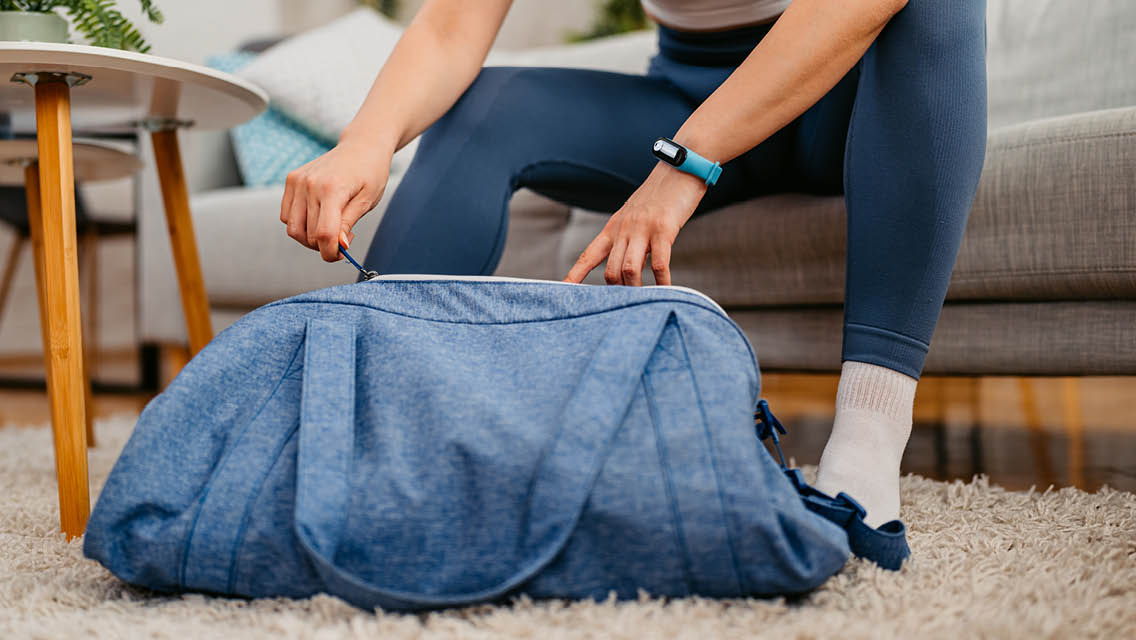
“I always journal with my morning coffee and breakfast, taking note of how I feel emotionally and physically,” says Powell, MA, NBC-HWC, a Life Time Mind performance coach and author of Finding Leadville: My Story to a Hallowed 100 Mile Finish Line. “Then I put on my gear, slowly and deliberately, focusing my attention on each piece I put on my body.”
On the surface, this sequence might sound kind of, well, ordinary. Journaling, eating breakfast, and getting dressed amount to little more than daily habits; fueling and gearing up before a workout are generally necessary.
For Powell, the sum is greater than the parts: The ritualized routine grounds her, quelling any anxiety about the miles ahead.
“The jitters don’t disappear,” she acknowledges. “Rather, they transform into useful energy.”
Powell is among a roster of athletes who swear by rituals. Some actions — like NHL players’ refusal to shave their beards during the playoffs — may seem like little more than superstition.
But, experts say, there is real magic in rituals: They have been shown to decrease anxiety, alleviate grief, reduce depression, and make it easier to cope or perform during stressful moments.
This makes ritual a tool for not just professional athletes but anyone facing an unknown. Rituals can serve as distraction from anxious thoughts and ground us in something that’s within our control.
“Rituals create a microenvironment of certainty that builds calm, confidence, and emotional stability, especially before something challenging,” explains Jessie Syfko, ND, CSCS, a Life Time senior vice president and creator of the MB360 mind-body program.
The secret of an effective ritual lies in its repetitive action. This makes it a strong coping mechanism, writes anthropologist and cognitive scientist Dimitris Xygalatas in Ritual: How Seemingly Senseless Acts Make Life Worth Living.
What sets rituals apart from, say, a habit like brushing your teeth is that they are largely symbolic and “deeply imbued with meaning and importance,” Xygalatas notes.
Research suggests that when you believe a routine is meaningful, it can become a tool for reducing anxiety rather than something that’s simply functional.
“A routine becomes a ritual when you attach meaning or emotional significance to it,” says mental performance coach Carrie Jackson, author of On Top of Your Game: Mental Skills to Maximize Your Athletic Performance. A sense of meaning shifts the focus from worry to connection and purpose.
If you’re ready to create your own fitness ritual, the following nine elements can help you build one.
1.
Visualization
Visualization is the practice of using mental imagery to prepare your mind and body for performance. You might picture yourself doing the workout or race and feeling excited to be there, Jackson says. Or you can replay a past successful performance in your mind as if watching a movie, focusing on how good you felt. (Learn more about visualization at “How to Use Visualization to Reach Your Fitness Goals.”)
2.
Breathwork
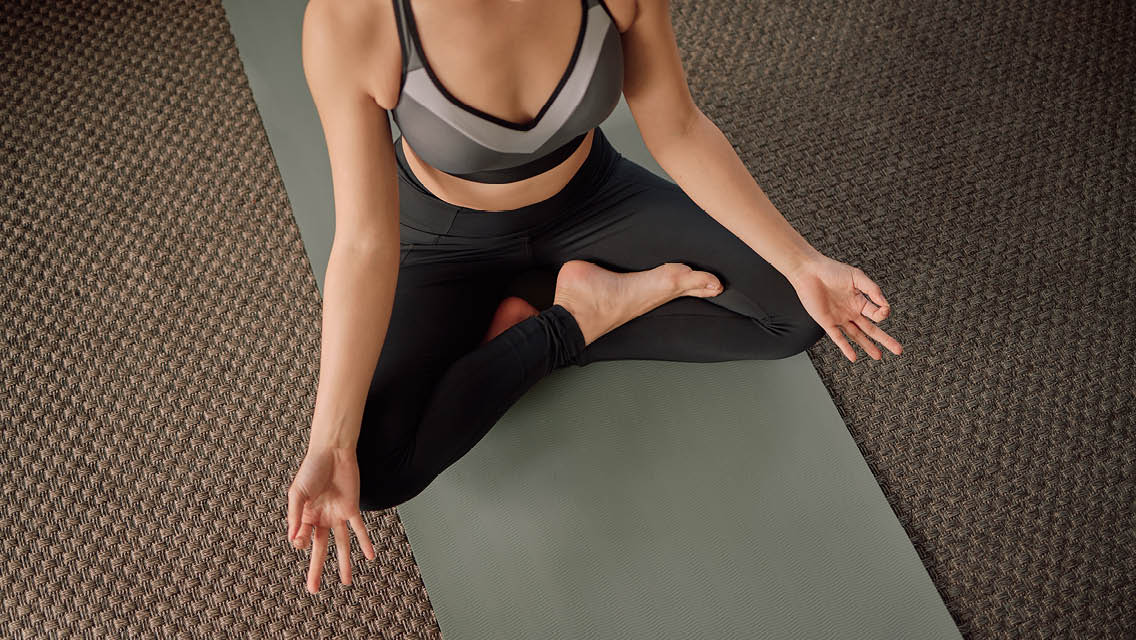
Breathing exercises are a great way to reset your focus and calm your nervous system, Syfko says. Find a comfortable spot and try box breathing: Inhale through your nose for four seconds, hold your breath for four, exhale through your mouth for four, and hold for four. Repeat this pattern several times until you feel centered and ready to begin again. (Discover more breathwork techniques at “6 Breathing Techniques.”)
3.
Music
Find your own pump-up song or create a playlist to listen to as you arrive at the gym or change into workout clothes. Experiment with genres to see what energizes and motivates you; you might be surprised by what resonates. “Clients come in with music they really love,” says Jackson. “But when we try something else, they realize, ‘Wow, classical music works really well for me.’”
4.
Essential Oils
Scents have a powerful impact on mood. While research suggests that lavender and jasmine soothe anxiety and peppermint boosts energy, a scent’s effects are personal. “Sometimes, there’s a compound in the scent that produces a particular response, but sometimes it’s an emotional memory associated with that scent,” Jackson says. (For more on essential oils, visit “What You Need to Know About Essential Oils.”)
5.
Journaling
Before a workout or event, jot down any top-of-mind thoughts or feelings without worrying about spelling, grammar, or writing in complete sentences.
Alternatively, use your journal to set an intention for your workout or race. Jackson suggests asking yourself, “How do I want to feel?” and giving space on the page to whatever comes up.
6.
Preperformance Routine
Michael Jordan’s free-throw routine always followed the same, systematic steps: shoulder-width stance, ball spin, three bounces, one more spin, then shot. Your preperformance routine can be just as structured — or much simpler, like taking three deep breaths before starting your timer or dipping your hands in chalk before each lift.
7.
Positive Affirmations
Create a list of encouraging affirmations to say before your workout or event. “Affirmations are powerful statements said as if they’re already true,” Jackson says.
They’re often “I” statements — “I am powerful in this moment,” “I will have a great workout today,” or “I am capable of anything.” Affirmations remind you of your strengths, helping act as a buffer against anxious, negative thoughts.
8.
Preworkout Fuel
Choose a snack or drink you enjoy and consume it only before workouts or competitions. Eating the same food or meal can offer more than just psychological comfort: It can provide a consistent and reliable digestive experience. (For fueling suggestions to support your body and mind, visit “What to Eat Before a Race.”)
9.
Power Outfits
Jackson views her workout clothes as a uniform reserved only for exercise. For her, this helps create the right mindset. “Think about the persona that you’re embodying to do the activity you’re about to do.”




Comments (0)