



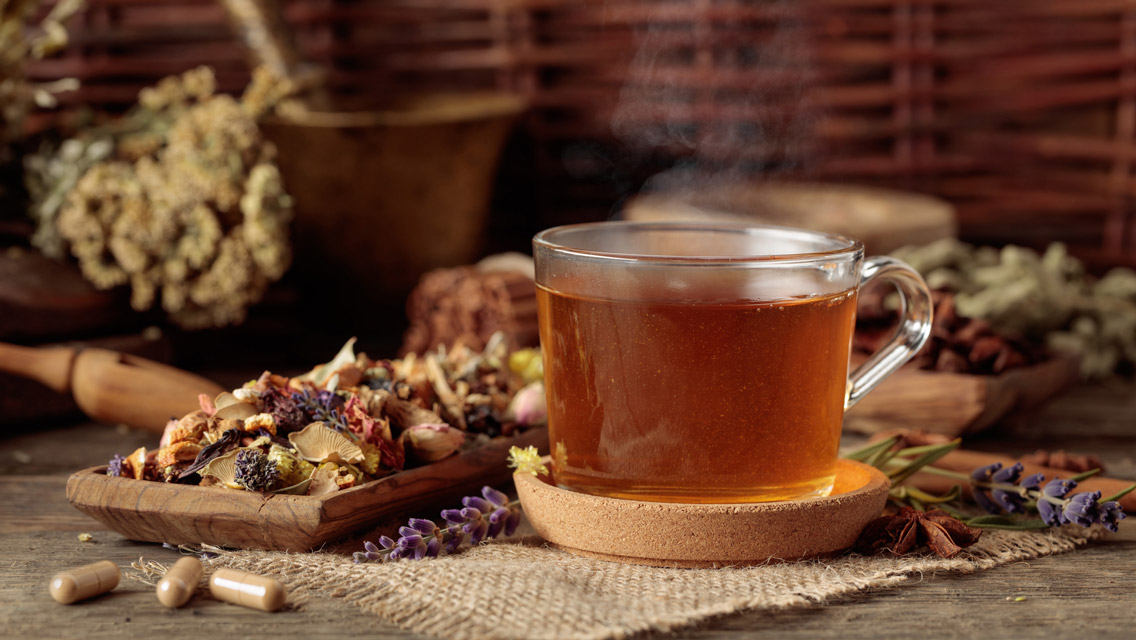
“Anxiety goes hand-in-hand with modern-day life,” says Aviva Romm, MD, author of The Adrenal Thyroid Revolution. In addition to making dietary changes in support of a calm mind, Romm recommends herbs to address symptoms of anxiety. Her favorites include:
1) English Lavender:
One of the most popular and well-studied antianxiety herbs, lavender’s essential oil can be added to a bath, sprinkled on a pillow, or diluted and rubbed on the temples to promote relaxation through aromatherapy. Lavender can also be taken internally; Romm recommends taking an 80 mg capsule before bed. (See “How to Use Lavender Oil” for more.)
2) Motherwort:
This herbal supplement has long been used safely for combating anxiety. It has less scientific research behind it than lavender, but Romm has found it to be fast-acting. “Motherwort is my personal favorite go-to for anxious moments or when I’m feeling overwhelmed or stressed,” she says. Motherwort can be taken as a tea, though its bitterness makes it better suited for tincture. Use according to package directions.
3) Reishi Mushrooms:
Chinese medical practitioners use reishi mushrooms (also known as ling zhi) for a wide variety of imbalances, including anxiety. These mushrooms are particularly good for anxiety-related insomnia and moodiness, says Romm. Because the herb works well for sleep issues, try taking it before bed. Reishi are most often taken via tincture or capsule. Follow the directions on the label. (Fungi have been used as medicine for thousands of years. See “The Health Benefits of Medicinal Mushrooms” for more.)
4) Ashwagandha:
An adaptogenic herb, ashwagandha helps the body by supporting the adrenal glands. Whereas many adaptogens are stimulating, ashwagandha calms the nervous system. Best used for anxiety, fatigue, cloudy thinking, and stress-induced insomnia, ashwaganda is one of Romm’s go-to herbs for patients with anxiety. Typically found as a tincture or capsule, use as directed and avoid if you are sensitive to plants in the nightshade family.
Safety note: For run-of-the-mill anxiety, most otherwise-healthy people don’t need to check with their healthcare providers to try these herbs, says Romm. Experiment with one or more and see what works best. If you are pregnant or breastfeeding, or if anxiety is persistent or overwhelming, it’s always a good idea to check in with your provider.
Anti-Anxiety Eating
Discover four nutritional strategies to help support a calmer state of mind at “4 Strategies for Anti-Anxiety Eating,” from which this article was excerpted.






Comments (0)