



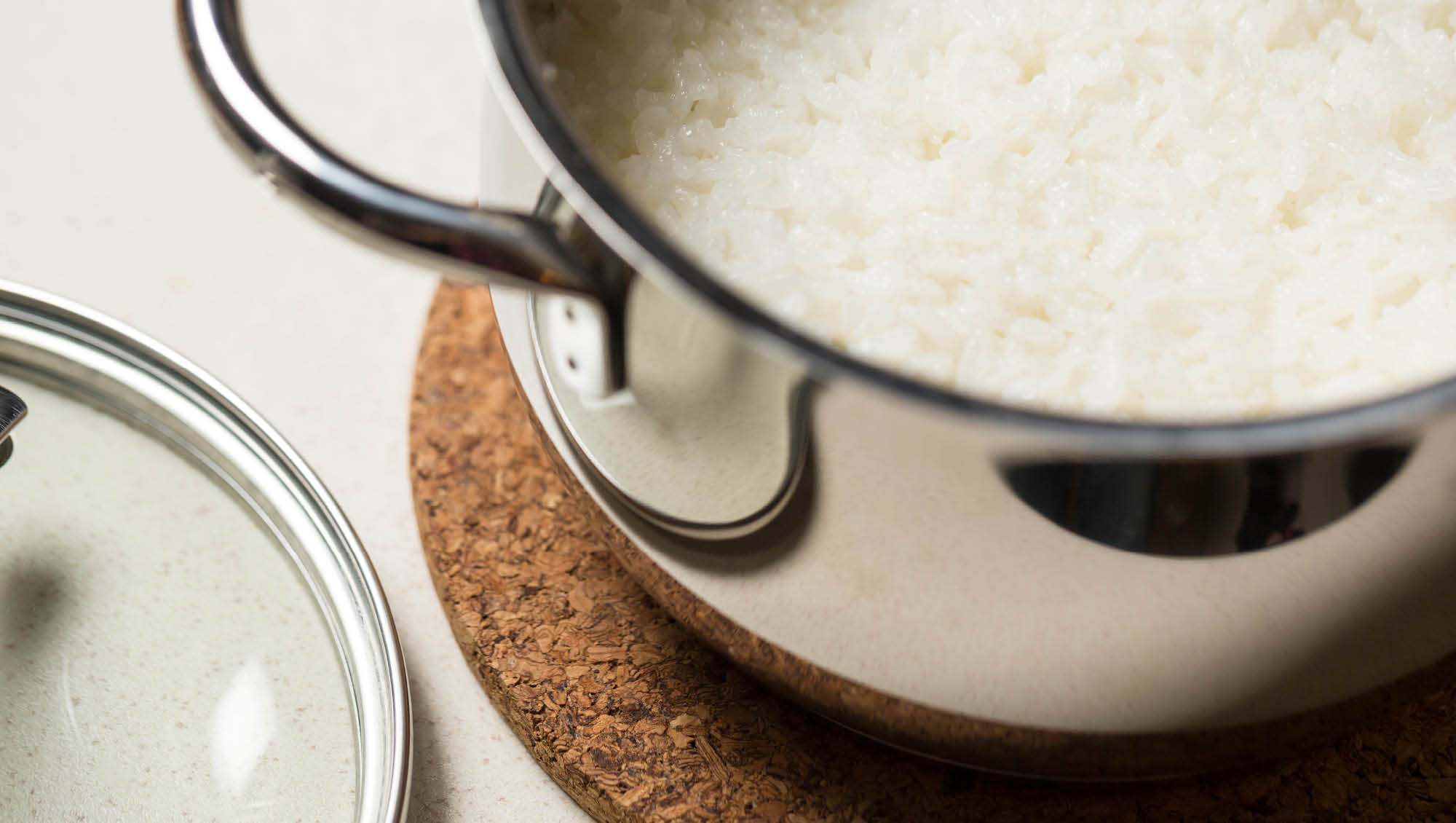
Rice is frequently high in arsenic, but cooking it like pasta can reduce that contaminant by 40 to 60 percent.
To use the pasta method, cook 1 cup of rinsed rice in 6 to 10 cups of water, and drain the excess water before eating. The downside to this approach is that it also slashes the grain’s healthful nutrients, such as folate and iron, by 50 to 70 percent.
Another option is parboiling, a common Ayurvedic method and Natarajan’s preference. She starts with hand-pounded sona masoori rice that has had its husks removed without metal equipment. Then she boils roughly 10 cups of water with 1 cup of rice. Once the grains start to soften, she drains the water, then adds 2 cups of fresh water, covers the pot, and finishes the rice on low heat. This method allows the rice to retain most of its nutrients.
It’s also valuable to consider the rice source. According to the nonprofit Healthy Babies Bright Futures, the highest levels of heavy metals are found in white rice grown in the southeastern United States, brown rice from any location, and arborio rice from Italy. The lowest levels are found in white rice grown in California, jasmine rice from Thailand, and basmati rice from India.
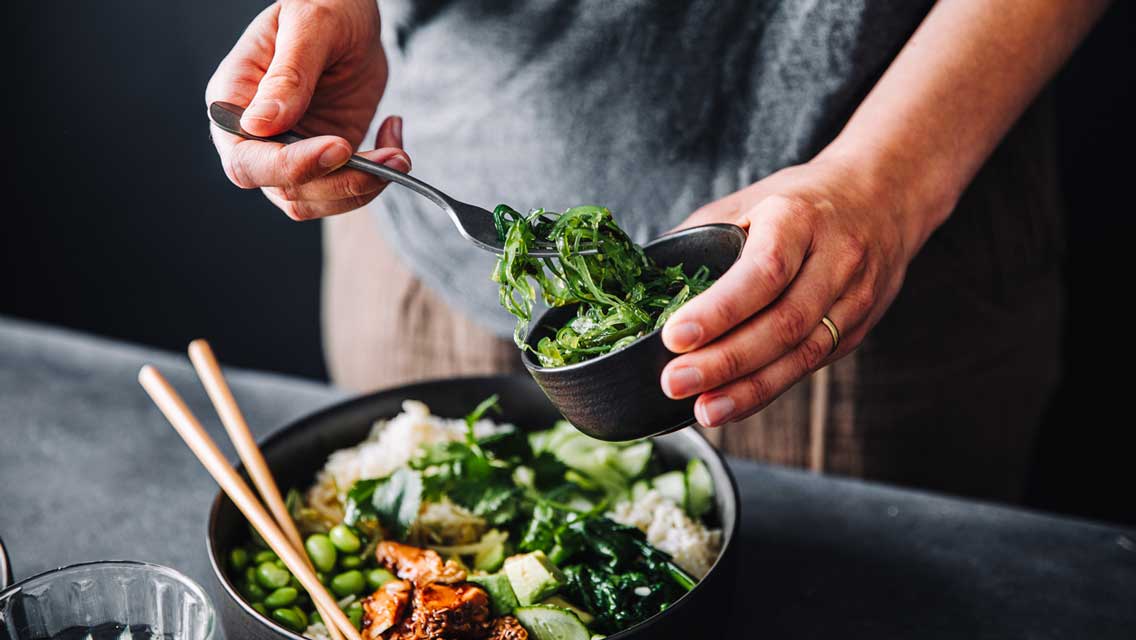
Finally, consider branching out to other grains. Compared with rice, whole grains like quinoa, barley, and farro contain fewer heavy metals and more fiber. (See “11 Ancient Grains to Try.”)
More on Heavy-Metals
Heavy metals are impossible to avoid — but there are ways to mitigate your exposure. Learn more at “A Guide to Detoxing Heavy Metals,” from which this article was excerpted.




Comments (0)