




The same lifestyle factors that support overall health — eating well, moving regularly, managing stress, sleeping enough — turn out to be exactly what your mitochondria need. The following levers are among the most meaningful for mitochondrial support.
1) Nutrition
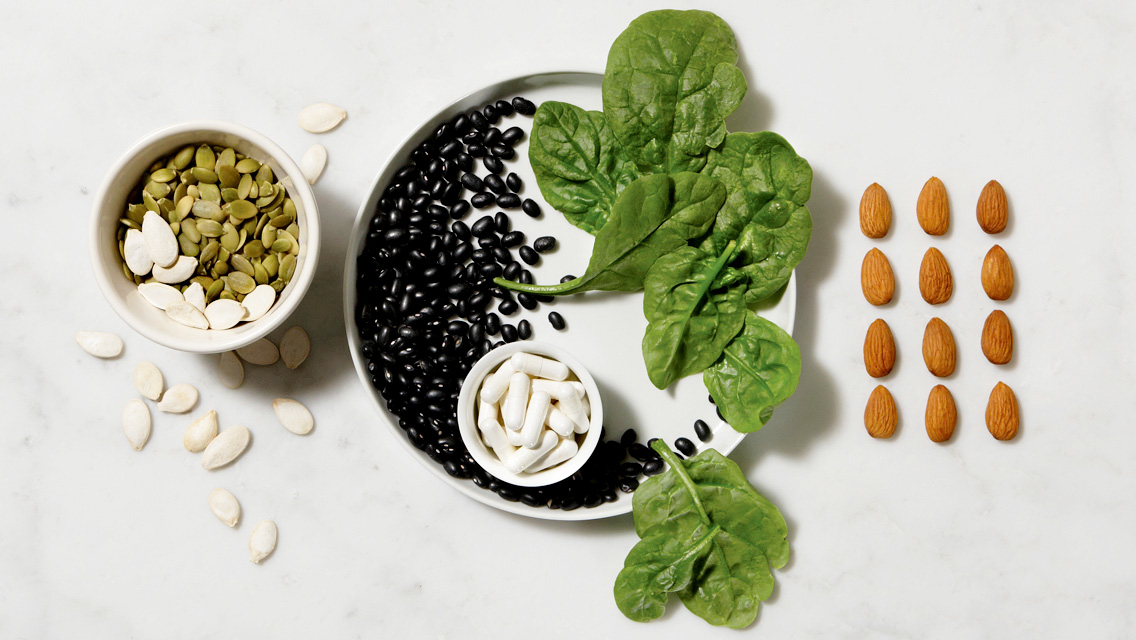
Mitochondria depend on a steady supply of nutrients to run their energy-producing machinery. B vitamins are essential cofactors, along with the minerals magnesium and zinc, says integrative-medicine physician Kurt Woeller, DO.
The inner membranes of mitochondria are made partly of fat. That means they require a good supply of healthy lipids: cholesterol, omega-3s, omega-6s, and phospholipids. University of Iowa clinical professor Terry Wahls, MD notes that phospholipids are most easily obtained from animal foods, so if you’re vegan, you’ll have to seek them out from other sources.
Overall diet matters too. Eating a diverse diet with plenty of vegetables supports the vitamins and minerals mitochondria need. To avoid metabolic oversupply, steer mostly clear of calorically dense combinations of fat and sugar.
Intermittent fasting can also help. It appears to trigger mitophagy — the body’s process of purging damaged mitochondria — while stimulating the growth of healthier mitochondria. “When you’re hungry, the body weeds the garden of bad mitochondria, and then the good ones can actually grow and flourish,” explains Columbia University mitochondrial psychobiologist Martin Picard, PhD. (For more, see “Everything You Need to Know About Intermittent Fasting.”)
2) Exercise
If there is a single most powerful intervention for mitochondrial health, it may be movement. Anything that makes you breathe harder — cardio and endurance work, including brisk walking — drives mitochondria to consume more oxygen. This signals your body to produce more mitochondria.
“If you breathe harder, energy is flowing through your system. And when that happens, the system says, ‘The next time this happens I need to be ready,’” Picard says. If you were to go from being completely sedentary to eventually training for a marathon, “you can double the number of mitochondria in your muscles.”
Cardio exercise also stimulates autophagy — the larger cellular process by which damaged cell structures are recycled into new components — and prompts cells to bolster their antioxidant defenses.
Resistance training is also key. “If you’re really interested in your mitochondria, you need to build muscle mass,” says functional-medicine physician Robert Rountree, MD. Current research supports combining cardio and strength training, as each contributes to mitochondrial health in complementary ways.
3) Mindset
Picard believes the things that energize us, such as a sense of purpose and meaningful human connection, may be acting on mitochondria at a deeper level.
Evidence for this view is building.
A study from one of Picard’s colleagues, Caroline Trumpff, PhD, found that people who reported greater well-being, social engagement, and purpose in life had greater mitochondrial energy capacity in the prefrontal cortex.
Meanwhile, those reporting more negative experiences, loneliness, and feelings of stress had less capacity.
While none of us can eliminate stress completely, cultivating positive, relaxed states does appear to be helpful for our mitochondria.
A 2024 paper proposes that contemplative practices, like meditation, yoga, and prayer, can benefit the body in concrete ways, in part by inducing a state of genuine rest through safety signaling. When the body feels safe and secure, it enables mitochondria to redirect energy away from the demands of the stress response and back toward cellular repair and maintenance.
4) Supplements
Both Picard and Rountree view supplements as one spoke in the wheel of mitochondrial health. “There’s not any one substance that’s going to do the trick,” Rountree says.
That said, there are compounds that can be useful for mitochondrial support. Picard points to NAD+, a critical coenzyme for mitochondrial energy flow that declines with age.
Rountree notes that creatine has shown some benefits for brain function and post-COVID fatigue. He also sees promise in berberine, a plant compound used in Traditional Chinese Medicine. Berberine may stimulate mitochondrial biogenesis by activating the same cellular mechanism that’s triggered by exercise and fasting.
CoQ10, another potent antioxidant, may be valuable as part of a broader protocol, particularly for those with mitochondrial dysfunction, Rountree says.
Still, for most of us, the most meaningful support comes from honoring the fundamentals — diet, movement, sleep, and emotional health. Our mitochondria, it turns out, are listening. They respond to how we live.
Meet the Mitochondria
Learn how these energy-producing parts of our cells support nearly every aspect of our health at “How Your Mitochondria Support Your Health and Vitality,” from which this article was excerpted.




Comments (0)