



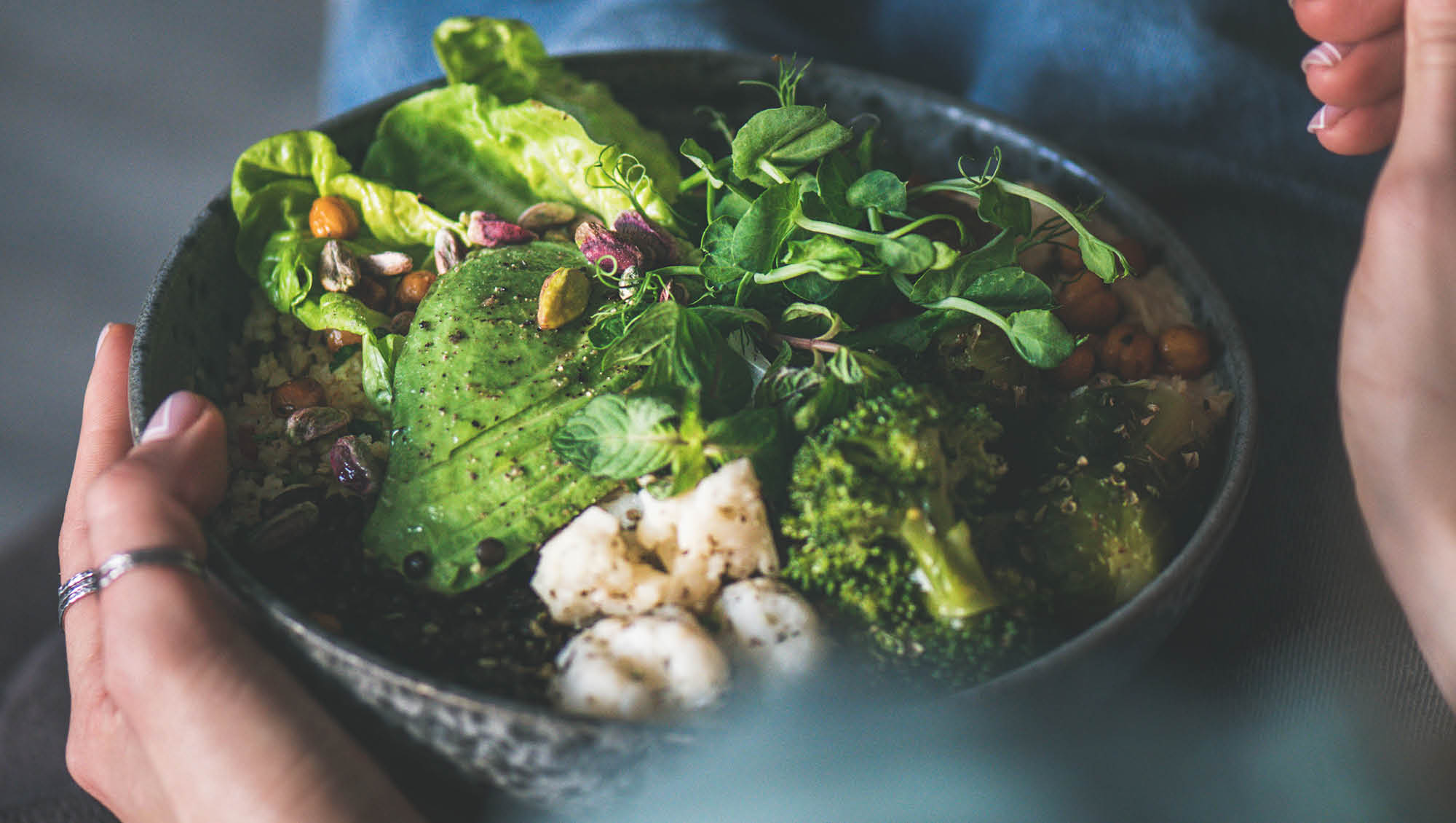
1. Diversify your diet.
The biggest step you can take to protect yourself from heavy metals in your diet is to eat a variety of foods. Eating the same food day after day exposes the body to the same contaminants, says Zagorski. It also narrows the body’s bandwidth for protecting itself.
“The goal is to have nutritive metals outperform nonnutritive ones,” he explains. For instance, iron competes with lead for space on the same transport mechanisms in the gut; so when you eat plenty of iron, there will be fewer empty seats for lead to occupy.
2. Befriend brassicas.
Members of the brassica family — broccoli, kale, cabbage, Brussels sprouts, cauliflower, and more — contain compounds called glucosinolates. These phytochemicals stimulate the liver and other organs to activate Nrf2 protein, a master regulator of antioxidative responses. Turning on Nrf2 is valuable because it tells DNA to make protective enzymes that mitigate the toxic effects of heavy metals, says Rountree. (For tips to get more cruciferous veggies into your diet, see “How to Eat More Brassicas.”)
3. Understand the limits of organic.
Organically grown, non-GMO crops can and do contain heavy metals. Not all organic farmers test their soil for heavy metals, and some vegetables — including spinach and sweet potatoes — are prone to absorbing toxins from the soil.
“If those metals are in the soil, it doesn’t matter if the crop is organic or not, non-GMO or not, they are going to be in the food,” says Zagorski. “It’s a matter of biology and chemistry at that point.”
(Want to go deeper on the soil-health connection? See “How Soil Health Is Connected to Human Health — and So Much More.”)
4. Get your fiber.
Americans are notoriously fiber challenged: On average, we eat just half of the recommended 25 to 30 grams a day. Yet fiber is one of the best weapons we can give our bodies to eliminate certain food-based heavy metals, says Zagorski. “Fiber physically binds up certain unwanted chemicals and allows them to pass through into your stool unabsorbed.”
To get more fiber, try leaving the skin on fruits and vegetables, adding beans to soups and stews, or sprinkling ground flaxseed on yogurt and salads.
One of the best foods to add to your gentle detox is fruit, according to Aparna Natarajan, MS, CNS, a faculty member of the Clinical Nutrition and Functional Medicine program at the University of Western States in Portland, Ore. Citrus and apples are good sources of pectin, a soluble fiber that binds to heavy metals and moves them out of the body.
(You don’t have to overhaul your diet to get more fiber. Try these “Simple Tips to Add More Fiber-Rich Foods to Your Diet.”)
5. Replenish antioxidants.
Heavy metals can cause overproduction of a type of free radical known as reactive oxygen species (ROS). These molecules can harm DNA, disrupt enzyme function, damage cell membranes, and prevent protein folding — a structural process that enables proteins to perform their various vital tasks throughout the body.
Eating plenty of antioxidant-rich foods can help repair harm caused by ROS. Fruit is a great source of antioxidants and, compared with vegetables, less likely to contain heavy metals. Rountree’s favorite antioxidant-rich picks include berries, pomegranate juice, organic coffee, and green tea.
6. Skip ultraprocessed foods.
By definition, ultraprocessed foods (UPF) are more likely to contain metals. “If the crop itself was contaminated and you add in the possibility of contamination by machines and manufacturing processes, you’re suddenly talking about the potential for multiple routes of heavy-metal exposures for one product,” explains Laurie Beyranevand, JD, director of the Center for Agricultural and Food Systems at Vermont Law and Graduate School.
If you’re trying to avoid UPFs, start by filling your plate with plenty of produce and protein to keep yourself full and satisfied. (Get more advice for cutting back at “The Truth About Ultraprocessed Foods.”)
7. Filter water.
Lead in drinking water is an enduring problem for many communities, but a quality filter can significantly lower your exposure. Look for filters certified by an independent testing organization, such as the National Sanitation Foundation. Certification should show NSF Standard 53 for lead removal and NSF Standard 42 for particulate removal.
If you want localized information, your water authority might be willing to test your water or let you know if lead pipes provide water to your home.
8. Boil — don’t steam — your rice.
Rice is frequently high in arsenic, but cooking it like pasta can reduce that contaminant by 40 to 60 percent.
To use the pasta method, cook 1 cup of rinsed rice in 6 to 10 cups of water, and drain the excess water before eating. The downside to this approach is that it also slashes the grain’s healthful nutrients, such as folate and iron, by 50 to 70 percent.
Another option is parboiling, a common Ayurvedic method and Natarajan’s preference. She starts with hand-pounded sona masoori rice that has had its husks removed without metal equipment. Then she boils roughly 10 cups of water with 1 cup of rice. Once the grains start to soften, she drains the water, then adds 2 cups of fresh water, covers the pot, and finishes the rice on low heat. This method allows the rice to retain most of its nutrients.
It’s also valuable to consider the rice source. According to the nonprofit Healthy Babies Bright Futures, the highest levels of heavy metals are found in white rice grown in the southeastern United States, brown rice from any location, and arborio rice from Italy. The lowest levels are found in white rice grown in California, jasmine rice from Thailand, and basmati rice from India.
Finally, consider branching out to other grains. Compared with rice, whole grains like quinoa, barley, and farro contain fewer heavy metals and more fiber. (See “11 Ancient Grains to Try.”)
9. Be choosy about fish.
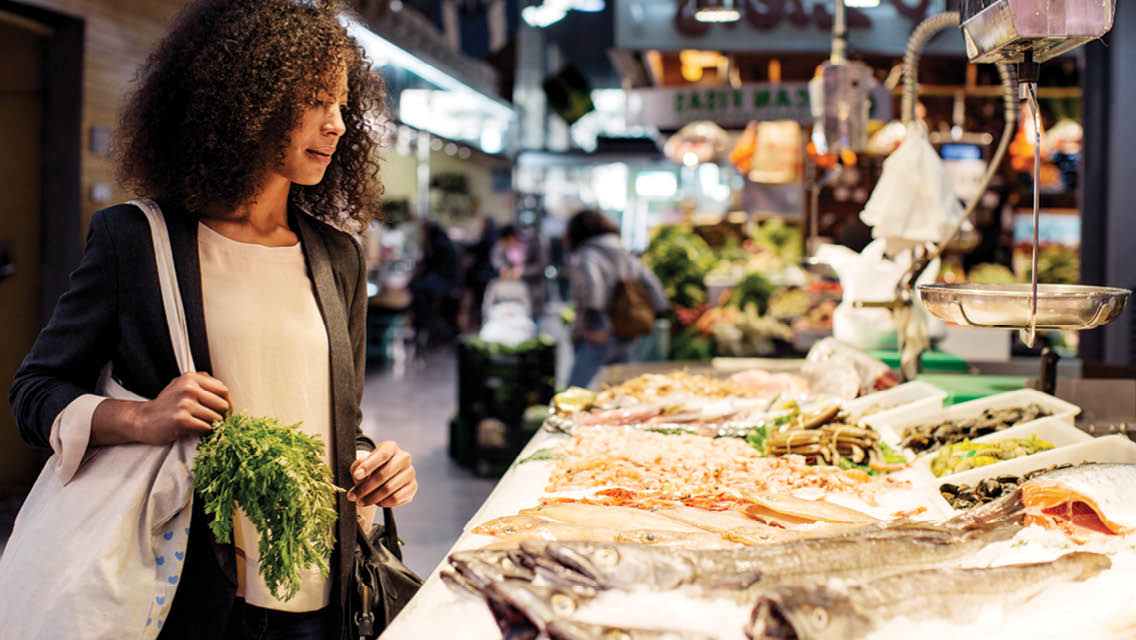
Fish is an excellent source of protein, omega-3 fatty acids, and other key vitamins and minerals. But because heavy metals bioaccumulate in large fish, smaller seafood is a better bet.
Opt for anchovies, catfish, flounder, haddock, sardines, and tilapia. Eat less swordfish, shark, and orange roughy. And if you like canned tuna, buy light tuna, which tends to be a smaller species like skipjack, as opposed to albacore, which typically packs three times more mercury.
10. Aim for progress, not perfection.
“Our living environments will never be perfectly pure,” Rountree says. As you progress toward less exposure, he adds, don’t let perfect be the enemy of “good enough, because doing so can drive you crazy.” At the end of the day, Zagorski says, focus on the foundations of good health — sleep, hydration, exercise, and a healthy diet. “Your body knows what to do and can take care of the rest.”
More on Heavy-Metals
Heavy metals are impossible to avoid — but there are ways to mitigate your exposure. Learn more at “A Guide to Detoxing Heavy Metals,” from which this article was excerpted.






Comments (0)