


Why the Nervous System Is a Vital Sign (Performance & Longevity Series)
We track metrics like heart rate, blood pressure, and respiration — but what if we saw the nervous system as one of the biggest indicators of our health status? The nervous system influences how we perform, recover, handle stress, and function, yet many of us are operating in chronic fight-or-flight mode without realizing it. This affects not only how we feel day to day, but also our long-term health and disease risk.



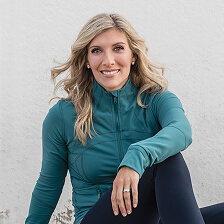

We track metrics like heart rate, blood pressure, and respiration — but what if we saw the nervous system as one of the biggest indicators of our health status? The nervous system influences how we perform, recover, handle stress, and function day to day. Yet many of us are operating in chronic fight-or-flight mode without realizing it.
In this episode, Jim LaValle, RPh, CCN, explains how stress, recovery, childhood experiences, and daily pressure shape how we feel, function, and perform. Together, these factors can shed light on an important truth: Even people who appear mentally and physically strong may be breaking down internally. When the nervous system is under strain, it affects not only how you feel each day, but also your long-term health and disease risk.
LaValle shares how to better understand the state of your nervous system, along with strategies to support nervous-system recovery and strengthen your response to stress.
This episode of Life Time Talks is part of our series on Performance and Longevity with MIORA.
Jim LaValle, RPh, CCN, is a clinical pharmacist, the cochair of the American Academy of Anti-Aging Medicine, the chair of the International Peptide Society, and the chief science officer for Life Time.
In this episode, LaValle discusses the nervous system’s role as the main controller of many bodily systems and how we can better support it. His insights include the following:
- The nervous system influences nearly every aspect of our health, including cardiovascular health, blood pressure, heart rate, breathing, digestion, sleep, mood, energy, metabolism, inflammation status, exercise recovery, and more. Nervous system dysfunction can pose a significant health risk even when traditional lab tests appear normal.
- When the body is in a sympathetic state (a.k.a. “fight-or-flight” mode), the nervous system activates the body for action, increasing heart and breathing rates, blood pressure, muscle tension, and cortisol and blood-glucose levels. The body is not designed to remain in a sympathetic state, and chronic sympathetic dominance can contribute to accelerated aging and metabolic strain, as well as anxiety, sleep disruption, digestive issues, fatigue, and more.
- The parasympathetic nervous system is associated with “rest-and-digest” activity. The body needs to shift out of sympathetic activation and into parasympathetic recovery. Nervous system health requires flexibility, not staying permanently calm or permanently activated; a resilient nervous system can respond to stress and then return to baseline.
- Circumstances of modern life can create repeated low-level stress, and though they may not feel like emergencies, the body still responds to them similarly. Examples include evening screen exposure, which stimulates the brain; artificial light at night, which interferes with the body’s transition toward sleep; repeated stimulation, which prevents the nervous system from fully downshifting; and poor sleep, which creates more stress the following day.
- Breathing is one of the simplest ways to influence nervous system activity. Slow, deep breathing can help signal safety to the brain and body; longer, controlled exhalations may support parasympathetic activity.
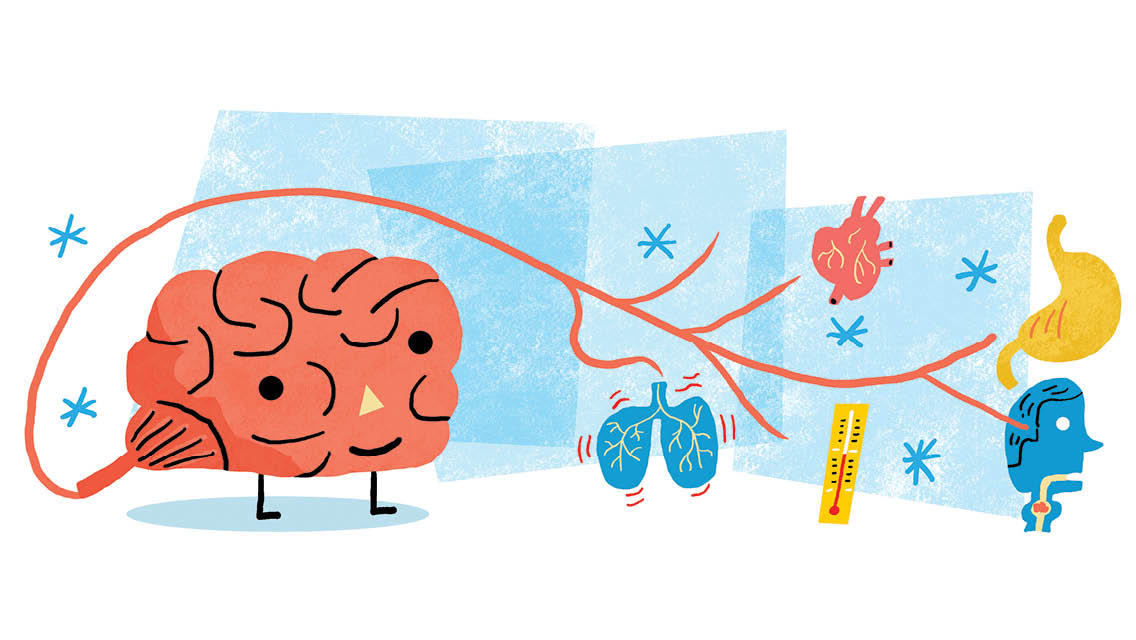
- The vagus nerve plays an important role in parasympathetic regulation. It connects the brain to organs throughout the body and influences many functions, including heart-rate regulation and relaxation. Slow breathing, gargling, or meditation chants can help stimulate vagal activity.
- Blood pressure is a practical measure of nervous system strain. LaValle encourages tracking both morning and evening blood pressure readings to get an idea of your baseline.
- Wearable devices can offer insights into nervous system activity and help you notice changes in your baseline. Trends over time are generally more useful than isolated readings. Common wearable measurements include the following:
- Heart rate variability (HRV): Measures the variation in time between heartbeats and is a marker of nervous system adaptability.
- Resting heart rate: Measures how hard the body is working at rest and provides insights into cardio fitness and recovery.
- Heart-rate recovery: Measures how quickly the heart rate decreases after exercise. A slower decrease may suggest that the body remains activated after exertion.
- Stress activates cortisol in the body, which can raise blood glucose. Persistent stress can contribute to insulin resistance.
- Past trauma, adverse childhood experiences, and PTSD can have lasting effects on nervous system patterns. Small or repeated stressful experiences can also accumulate over time.
Transcript: Why the Nervous System Is a Vital Sign (Performance & Longevity Series)
Jamie Martin
Welcome to Life Time Talks in our series on performance and longevity with MIORA. I’m Jamie Martin. And with me is Jim LaValle, Life Time’s Chief Science Officer, along with a he’s a clinical pharmacist, the co-chair of the American Academy of Anti-Aging Medicine, and the chair of the International Peptide Society. Jim, we’ve got a good topic today. What are we talking about?
Jim LaValle
This is one of my favorite.
Jamie Martin
I know we’ve been talking like alluding to this for a while now.
Jim LaValle
Build up, right? The nervous system is a vital sign.
Jamie Martin
I know. Okay, so tell let’s just jump right in because this is a big topic. We could talk about this for hours, like all the topics we talk about. Why should we be seeing the nervous system as a vital sign? Let’s just go right to the topic.
Jim LaValle
We’re all familiar with heart disease risk and the risk of a future acute myocardial infarction. So if you’re a smoker, is that the biggest risk for that?
Jamie Martin
Yes. Am I wrong? Am I gonna get these answers wrong? I’m a little nervous.
Jim LaValle
Yes, you’re probably going to. It’s okay. That’s what I love about this. Okay. But I’m no what you you always fail forward. Don’t worry about that. It’s good. Okay. So the next one would be if you’re a person with diabetes, is it is that it? The
Jamie Martin
Wait, was what it?
Jim LaValle
Most significant thing for an acute myocardial infarction. You’re a smoker.
Jamie Martin
I’m gonna say no based on where we’re going right now.
Jim LaValle
See now you’re cheating that see you probably got straight A’s in school because you always hacked the answers.
Jamie Martin
Learning ahead.
Jim LaValle
I got it. Okay, yep. and then the third would be autonomic nervous system dysfunction.
Jamie Martin
I’m gonna say yes to that one.
Jim LaValle
That’s exactly it. You are correct. I got it correct. So the nervous system, turn it turns out, is as important. So for our number one killer, heart disease, coronary vasospasm driven by your nervous system. There’s people that have no plaque in their arteries. Like up to 40% of heart attacks. It’s no plaque. But they have a coronary vasospasm due to autonomic nervous system dysfunction.
And so that covers everything from, you know, POTS like syndrome to hypertension, understanding sympathetic and parasympathetic nervous system, heart rate, two minute heart rate recovery. Yep. There’s a lot that goes into and the the neatest thing about the nervous system is you could tell a lot about it. Without any big fancy tests.
Jamie Martin
Okay.
Jim LaValle
Now I think that’s what’s cool. I really do. I and what we don’t realize is when you’re sympathetic dominant, meaning that you’re more in fight or flight, you make more adrenaline, your cortisol’s higher, you don’t go into a rest state, you accelerate your aging.
Jamie Martin
Mm-hmm.
Jim LaValle
When your nervous system is in balance, meaning parasympathetic nervous system, which is kind of what’s called the rest and digest side of your nervous system, that helps send the signal to stop the excitation. And then you got a better shot at longevity because fight or flight is supposed to be an intermittent thing. Right. Right. I’m I’m protecting.
Jamie Martin
A shorter period of time.
Jim LaValle
A very a very short period of time. Right. And then the the break is yeah, this is how I live the majority of the time. You know, like you know, as if you were sitting out on a pond watching a you know, a flower bloom, right? It’s like, hey, my body’s supposed to be operating like a cool breeze.
But it doesn’t in our modern world because we interpret traffic as fight or flight, we interpret an email as fight or flight, we interpret a text somebody sent us as fight or flight. We gotta stay up late at night, watch that. That episode right? I’ve got I’ve gotta get those episodes in. I mean, that was really big in Game of Thrones, right? How many people would you hear say, gosh, I been w binge washed that, I was up to one.
Jamie Martin
I hear that about shows all the time now because of just like the sh the next episode just start and I accidentally stayed up till two AM. I’ve done this multiple times with various things, right? It’s like I it’s like almost like you can’t stop it.
Jim LaValle
Yeah, it’s it’s odd, right? Yeah. But we have all these things and artificial light, right? Light at night. Our our brain takes in daylight to tell our superchiasmatic nucleus to awaken all the centers and then at night it’s supposed to not have all that light. But what do we do when we come in our house? Sun.
Jamie Martin
Turn on the light.
Jim LaValle
People turn on all the lights. And now my brain starts getting confused. And so the the basis of why is your nervous system the vital sign? Is that I think it’s something that you can have A, tremendous control over, but B, it’s like the four big vital signs of pulse, respiration, blood pressure, right, reflex, though those are those are the big ones. And then the issue is is that your nervous system controls all of them.
Jamie Martin
Right. So if the nervous system is —
Jim LaValle
Right. Right. You’re gonna you’re gonna have my blood pressure goes up, my heart rate goes up, my respiration gets more shallow because when I’m when I’m nervous or I’m sympathetic dominant, my diaphragm gets pulled up and now I’m a shallow breather and now I’m, you know, not oxygenating my tissues very well.
And that’s why we’ve all of all this interest in I mean, we have to have breathing classes. Think about that. I need to take a class so I breathe. Because if I don’t, what do you do? Turn blue? I mean, I’m not quite sure. I mean I I think but but honestly, it culturally we do need to have breathing classes that teach people how to drop —
Jamie Martin
Breathe.
Jim LaValle
— your diaphragm, get a full breath. And why that’s important is when you drop that diaphragm, it sends a signal to the vagus nerve that you’re now out of fight or flight.
Jamie Martin
Right. So it’s supporting that move into the parasympathetic system. Right. And hopefully a place where you want to stay. I always think whenever we talk about breath, the thing that I always love about it, it’s something that you don’t have to think about most of the time, but you can when you need to. Right. And it’s something that you can turn to in moments of stress.
And that like I think about I’ll be stuck in traffic and like just breathing normally and all of a sudden I like something happens. I’m like, okay, if I take a couple deep breaths here, I can have a little bit more empathy. I can be a little bit more patient. I can feel my body actually shift, right? Like that’s me having some level of control between the parasympathetic and sympathetic system.
Jim LaValle
Right. That’s flat out a major life hack right there. Right. It it it seriously is. I I I try I’ve taught people this for years. Yeah, because I, you know, did a lot of study in in basically qigong breathing and you know with Tai Chi and and learned it early on. So I saw the value in it for me. Right.
But just to get people to take three minutes and do structured breathing before you eat lunch, right? Right. Get you ready for that. Do it before you mow through dinner, right? Cause what happens when we get to food during lunch and we’re busy? You’re just
Jamie Martin
You just eat them.
Jim LaValle
eating fast and you’re chewing fast and you’re not really, you know, creating the proper in environment metabolically for you to absorb and neutralize that food. And do it before bedtime. You know, do it before bedtime as well.
So I think, you know, the first step is sympathetic tone. Parasympathetic tone. You have a seesaw. Right. Fight or flight is meant to be periodic, like you said. Majority of us get stuck in fight or flight. Yeah. Now, how can you know that? We got all I have I have had four wearables on today. I you want one? I’m gonna wait. Okay. Okay.
Jamie Martin
I have zero. But you could these are very helpful for this, like giving you clues into your —
Jim LaValle
What I’m trying to do is just correlate them all. I mean, honestly being a chief science officer a Life Time, people ask about all these devices. Like I want to know how the app works, I want to understand is does I feel like it’s accurate? Is it giving me good advice? Right.
But the very first most important thing you have to do is get your blood pressure done. Mm-hmm. And you have to take your blood pressure morning and night. Right. Because morning should be a little higher, night should be a little lower. And that’s showing that your brain is calming down and following its circadian pattern. The nervous system is saying, okay, time to shut down. Vessels are more pliable. Heart’s not, you know, hitting it is hard. That’s what should be happening.
Jamie Martin
Should okay, so let’s talk about just doing this. If this is something we all have access to, potentially taking our blood pressure, how should we do it in the morning? When do you do it at night? How soon before bed?
Jim LaValle
Yeah, yeah, great question. I would take the man a lot of times if people are having blood pressure issues, I’ll have them take it with them to work and say, Hey, after that meeting that you get really ticked off there too. Do it there too, just to show them like, hey, look, look what happened. Right.
Now we can do that somewhat with the watch and go, hey, where’s your heart rate at? Right. But I like showing them blood pressure because blood pressure, I mean, it is the silent killer, so it’s important. So I like relatively first thing in the morning. And then in the evening, probably hour before bed, just do
Jamie Martin
Okay.
Jim LaValle
those two readings. And you don’t have to do this all the time. Right. You just do it for a couple of days out of the month and see how you’re faring. Right. You know? I mean, and I and I think that really h helps. And then you can tell because there’s a lot of interventions you can do to correct for that. Mm-hmm. I think the other thing people get confused on is all these wearables. And not only they get confused, they get anxious.
Jamie Martin
Well, and you and I talked about this off camera because as a as we just showed, Jim has four devices on, I have no devices on. And the reason is because of this anxious side of it. Because for me I was finding that I was becoming somewhat obsessive about what the what the data was giving me. and now it’s talking to us.
Jim LaValle
It’s perfect ’cause it’s telling me you know what it just said? Jim, you’re wonderful. Your your heart rate is
Jamie Martin
And he just his whole parasympathetic nervous system just calm down with that.
Jim LaValle
Yeah. But you ha you were saying
Jamie Martin
Yeah, no, it it was too much information for me. I was getting become what obsessive about it and if I wasn’t hitting certain numbers, whether it was like the step count or I would see like a number of would flag for me, I’d like, this is I’m I’m failing. I would almost feel like I was failing and then I’d be like, What’s the point?
Jim LaValle
So it’s probably important for you to understand the numbers and then be empowered with them then. Right. And I think that’s where a lot of folks fall short or they try to overcompensate. Yeah.
And I I I honestly I I think that’s one of the things because I could be prone to that. Yeah. I I during my life I would be prone to that type of, you know, my gosh, I gotta do this, I gotta fix that. I don’t wanna see that anymore. But I’ve just learned that this is information right that helps me understand, hey, where is my resting heart rate at?
Jamie Martin
Yeah.
Jim LaValle
You know, and I need to understand that ideally you would have a resting heart rate, low sixties into the probably high forties, unless you’re some ultra ultra athlete where you might even be in the high thirties, but in general, high forties, low sixties.
And then when you start to move that heart rate up, the more the heart rate moves up, remember we’re mammals. Right. We only get so many heartbeats in our life. So do you want your your heartbeat to be fifty beats a minute or eighty beats a minute? Right. The lower the lower
Jamie Martin
The better, right?
Jim LaValle
the better. and and if you’re noticing that, what it should cue you up to is why is my heart rate going up? What am I worrying about? Is there something going on in my life that I need to address so I can you know do so that’s one. Right. Psychoemotional. Am I deconditioned? You
Jamie Martin
Yeah.
Jim LaValle
know, you know, do I need more zone two cardio? Do I need to, you know, create the right plan for say zone two, zone four, you know, those kind of things where you’re creating a bit of conditioning to your nervous system?
But I think a lot of people, if you don’t understand that this is information to help you shape your future best self. Right. If heart rate variability is low, and what heart rate variability is, right? Your heart has a little bit it’s not it’s not a metronome. If you remember remember getting little piano lessons, had a little metronome, perfect timing, right? TikTok back and forth. TikTok. That’s when you have low HR V, when it’s like the same all the time.
There’s an erratic nature to your heart when it’s when it’s beating, beat the beat. Higher that variability, the better off you are, for the most part. And there’s weird little outliers. And so if my heart rate variability is low, I should read up and understand it could be someone that’s overtraining. Right.
I know somebody really well that he overtrains so much that his heart rate variability is down around twenty. And he’s only a sixty year old guy. And it it’s it’s but I love the feeling. Well, you’re gonna love the feeling being in a box. Because you can’t You’re
Jamie Martin
You’re going too hard.
Jim LaValle
going too hard too often. And I and look, all that means is the next time you go into a Life Time, explore a yoga class. Explore a a a Pilates class. Take time and take more time in the sauna. Maybe do more stretching. You’ve got all these tools and resources. Learn about how to create a recovery day for you, right?
And I and I know like I’ve trained at you know, personally, I trained at a pretty high level at one point. I it’s always interesting when you take a rest day, how much stronger you are the following day. It’s like, wow, duh, it only took 30 years to figure that out.
Jamie Martin
Well, and again, that goes back to the idea of like r a strategic active recovery. It doesn’t mean you don’t have to do anything, right? But it is doing something that takes you out of that intensity in some ways, right?
Jim LaValle
That’s exactly right. So what are the three big things to track with a wearable? Right. Right? Three big things. So we got we got blood pressure over here. Now what’s our three biggies? One is HRV. Yep. And HRV is kind of the gold standard of nervous system fitness. Got it.
Now, why do I wear a bunch of these things? Because it turns out when I wear a strap. Yep. My HRVs are are more accurate. Now, you could say it’s about, well, even if it’s not, even if your ring or whatever isn’t as accurate, if it’s consistent, which it is, and you see a dip, then you should be able to correlate that to hey, that’s a problem. But if you want if you want really good, really good reading, I I really prefer people try using a chest strap. You can use these to monitor the rest of your day. Right. Right.
Jamie Martin
Keep an eye out.
Jim LaValle
Yeah, exactly. So one is HRV. The the more your heart becomes that metronome, the more you’re at risk. The next is resting heart rate, which I mentioned and you want that sixty two down. Yep. Now, every four points above sixty two, seven to ten percent increased risk of a cardiometabolic.
Jamie Martin
Every four points above.
Jim LaValle
Above sixty two. Okay. Now, in the sixties, you’re sixty-eight, I wouldn’t be worrying about it too much. If you’re upper seventies, I’d be trying to figure it out. Okay.
Now, there are some medications that will raise your heart rate. GLP ones, for example, can raise your heart rate three, four beats a minute, sometimes five beats a minute. So you people should realize that if you’re going to be on a medication you should ask, does this have anything to do with my heart rate? Mm-hmm. because there are some that will raise it.
and so the third one is two minute heart rate recovery. So you stop exercise, you sit down, and you measure, hey, what is my how many beats am I dropping a minute? And if you’re really good, it’s 20 beats per minute. So a 40 beat heart drop drop in two minutes.
Jamie Martin
In two minutes.
Jim LaValle
Now a lot and but I tell people just start at the goal of twelve beats per minute.
Jamie Martin
Yes, you have to start somewhere.
Jim LaValle
Start somewhere, get to twelve. But you definitely want to at least have twelve beats per minute drop. And so those three alone without blood pressure can tell you a tremendous amount about your heart health and cardiovascular health. Right. If your HRV is low, if your resting heart rate is high. If your two minute heart rate recovery is poor, you’re at a heightened risk. Yeah.
And then if your blood pressure is borderline high, look what blood pr all blood pressure is, right? Is that your blood bre your blood vessels need to relax. So when your blood pressure is elevated, they’re never relaxing. And because you’re in sympathetic dominance, you’re always pushing adrenaline to make them squeeze tighter and not be able to relax.
Jamie Martin
Got it.
Jim LaValle
So then you get less blood flow to your organs and tissues, which then creates damage to your organs and tissues over time. Right. So the nervous system being a vital sign is directly correlated to what happens to your cardiovascular system and the balance between sympathetic drive. Right. Right. Which is, you know, heart rate up, more glucose into the bloodstream, training the body to be insulin resistant if it’s chronic, because your body thinks things are fight or flight, it’s gonna keep more glucose in your blood.
Jamie Martin
It’s gonna just keep pumping it in there. You can’t take it up.
Jim LaValle
And your insulin receptor is under that chronic stress response, it gets sluggish. It doesn’t activate and catch the insulin anymore. Right. And so that’s probably the most important aspects of it is and I look at it like a couple p a couple times a day. Like I will look at it. I just did it. I just looked at my heart rate because we’re doing this talk. Yeah. And I want to know. Where am I at?
Because I’m feeling kind of excited because we do these talks and I get all, you know. Is there things you’re passionate about? Passionate and it’s like, well, where’s my heart rate at? And you know, it’s like, it was 64. It’s pretty nice. so I was happy with that, right? But I do watch it and I think w people should be aware of it. It’s surprising how many people don’t even know their morning blood pressure. Right. And that’s it, it’s it’s this it the nervous system drives that.
The other piece about the nervous system is a vital sign. So all of us want vitality at every stage in life. Right. Vitality is driven by a nervous system that’s imbalanced, right? I’m not wearing out my stress neurotransmitters so I don’t get fatigued. Because that’s one of the things you’ll notice. Cognitively claw. I’m fo I’m foggy headed, cloudy, what I call pushing a thought through jello. I can’t think clear. I’m fatigued. Well, that’s not vitality. Right?
Jamie Martin
Yeah, no.
Jim LaValle
Right. What that is, is my nervous system, I’m losing control of that and now I’m not feeling vital. Now I’m craving foods, which is very common. You lose dopamine. And so now that’s the reward cascade. Yeah. Right. And I want food, you’re a smoker, I want alcohol, I want to shop, I want to gamble. Those things get triggered. Is that vital?
Jamie Martin
Yeah, no. Right.
Jim LaValle
That behavior doesn’t lead to us, you know, building a healthy life. Right. So I think there’s indirect the point I’m getting to is there’s indirect effects when you push that nervous system too hard and you’re sympathetic dominant. Yep.
And if you’ve got if you’re genetically predisposed, wow, now all of a sudden that potato chip looks good, you know, the alcohol looks good and wow, I can’t control my appetite now. That’s like a downstream negative effect, right? Blood pressure issues, headaches. Poor glucose regulation, right? Those are the kind of things that happen when you’re sympathetic dominant. Right.
Jamie Martin
And is that the I mean, just to that point when it’s like the insulin resistance, that seems like the connection between the nervous system and inflammation then too, right? So let’s I think we need to make that really clear.
Jim LaValle
Great point.
Jamie Martin
Yeah.
Jim LaValle
insulin when you when insulin say insulin can go up because you make a lot of cortisol because you’re stressed out right or you’re not sleeping. Yep. And now cortisol is making more glucose. Glucose is demanding more insulin. Right? Yep. The cycle. Insulin in and of itself triggers more adrenaline and noradrenaline.
So the vicious cycle, you know, when you when you step back from it, like I I try to step back and look at well, where where are we going as a society? Right. We have all this obesity, diabetes, insulin resistance. But we say that people are sleeping really well and feel, you know, really calm in their day-to-day life. I think for most people I know, they fail both of those.
Jamie Martin
Right.
Jim LaValle
Yeah. Sixty percent of people will go to a a a pharmacy to get something for sleep during the next year. Right. Right.
So so because of that, you’ve got that chronic influx of insulin that’s always driving that sympathetic stress, which is why when you’re somebody with diabetes and you’re making all that adrenaline, it’s why you have more kidney disease because your blood vessels get tight to the kidneys and now you can’t get blood to more dementia blood vessels. Right. Right? More vascular disease, blood vessels.
Jamie Martin
Cardiovascular.
Jim LaValle
And so that’s it. So it’s a it’s that thought of, you know, your nervous system is at the middle of everything. It to me it’s it it really is a circuit breaker box. I try to explain it to people all the time. It’s it’s the circuit breaker box in your house. If you blow the circuit, you know, I can go and change that bulb all I want.
Jamie Martin
It’s not gonna work.
Jim LaValle
It’s not gonna work. I can turn the lamp on. I can go to the plug and jam it ten times and I gotta go back to that breaker box. You can repair your nervous system.
Sometimes if it’s traumatic, like post traumatic stress disorder, which can disorient the nervous system significantly. Right. Right? ‘Cause it refuses to accept duress, right? Right. At that point, you get excessive response. Well, then it might mean you know, I’ve got to go to therapy, I gotta go do EMDR, I gotta do something that kind of helps me over those humps to get through that.
But it’s interesting a lot of times, some of some of those issues around PTSD, for example, and war fighters and you know, men in particular, when they get their testosterone levels up, a lot of times it eradicates their PTSD. interesting. And then of course we’re now seeing nervous system resets that are on you know social media, pretty popular. Ibigaine and ketamine.
Jamie Martin
Mm, yes. We’ve covered ketamine in the magazine. Yeah.
Jim LaValle
And both of which should be done under —
Jamie Martin
Under supervision. Always with medical supervision. Right. Okay, so you you mentioned PTSD. It made me think also of ACEs, adverse childhood experiences. And like when I think about how many people have at least one adverse experience, it’s I I don’t know the exact number, but I know it’s pretty significant. Is it like forty percent or something about like one adverse child experience?
How are patterns of nervous system regulation or dysregulation potentially set as early as childhood if you had PTSD or an ex ACES or an adverse childhood experience that potentially leads to PTSD.
Jim LaValle
I think it’s all connected. I mean, I think you nailed that. I mean, I here I’m gonna take it a step further. I don’t think it has to be a significant adverse childhood event. I think it could be you’re living your life and you have a small imprint of something that went wrong. Right. You you know, you you say you took something and your mom corrected you maybe harshly. And that stuck in you.
I remember when I went through EMDR and all of a sudden I’m remembering, you know, when I was a child, I I had to wear the like the basically four scump shoes with the corrective sole on my one foot because my feet were turned in. Yeah. And then they had to get braced and I never cross-crawled, all that good stuff. But I remembered you know, and now I’m I’m you know, I wasn’t going there to my for my childhood, right? Right.
But under that EMDR, I I remembered other kids making fun of me and I remember being a very introverted child and getting very hurt from that and feeling the emotion was feeling vulnerable. Got it. And so yes, I don’t but I don’t think it has to be acute. I think it can be a cumulative. I think it can be your life story that triggers those type of things and why we need to work on ourselves and understand who we are and where we came from. Right. I think it’s really important.
Jamie Martin
Yeah, so it’s not I mean it doesn’t have to be something that necessarily is physiologically happening. It’s also something from a mental emotional standpoint that could be driving that nervous system dysregulation.
Jim LaValle
that’s exactly right. I mean, I look, I work I remember working on a Croatian concentration camp survivor and she became a psychologist and beautiful, you know, beautiful work, PhD. And at the same time, it was so hard to get her nervous system with all her knowledge, everything she knew about her life, that experience was pretty tough. Right.
And people have those kind of tough experiences. And yeah, we have to, you know, remember empathy, work with them, realize that sometimes something as simple as a peptide or a nutrient could be the master trigger to help that. And sometimes it’s much more. Right. Right.
Jamie Martin
Right. So it’s it can be a combination of factors, right? Like that we need to be looking at always. And never again, nothing happens in isolation or is really influenced in isolation, probably, right?
you mentioned the vagus nerve. Is there anything more we should touch on? Because what f my understanding of the vagus nerve, it kind of runs from the brain down into your gut system, but it has like tendrils out into your entire body, right? So what is that or like what else should we touch on with that before we move on from that on this topic of the nervous system?
Jim LaValle
Well, I mean that vagus nerve is can is going to dictate whether or not you’re getting good respiration rate, right? Whether the lungs are fully engaged, whether the blood vessels are able to relax and provide oxygen. The so you have that enteric nervous system. If you’re if you’re triggering excitatory chemicals through that nervous system, and our chromophin cells, the spinal cord, it attaches it to gut, causes gut permeability,
Jamie Martin
Yeah.
Jim LaValle
it it stimulates your mast cells to release histamine. Yep. So your gut gets permeable, you’re making more corticotropin releasing hormone, and you’re ramping up mast cells. So now what’s everybody talking about in social media? Mastocytosis. Yeah. I’ve got mast cell problems. Well, where where were all these mast cell problems fifty years ago? Right. They weren’t and it’s not like you don’t identify them because the because the symptoms are pretty obvious, right? Yeah.
But what it is is that I I really believe we have more and more people that are environmentally burdened, emotionally burdened, and sympathetically charged. So that enteric nervous system and the vagal nervous system and the sympathetic string triggering, that’s the dance.
And so when your gut’s permeable and you have chronic inflammation, you’re in sympathetic dominance. And when you’re breathing deep and you feel focused and you feel clear, that’s when you have that vagal tone is set. Loss of vagal tone is where you hear of things like Pots syndrome.
Jamie Martin
And we’re gonna yes, I wanna let’s talk about that. We should jump right there because you know, why is that becoming part of the conversation? One, what is it and why is it part of the conversation?
Jim LaValle
So it’s postural orthostatic tac tachycardic syndrome, right? So so I go to get up or up maybe I’m on a ladder or something, and all of a sudden my nervous system isn’t correctly driving how my blood vessels should be working, and therefore I don’t get proper blood flow to my brain and I get dizzy or I black out and can fall.
a the lighter version of that is just orthostatic hypotension. I get up from the if you’re working out and you get up from the ground and you get up and you go, Whoa, whoa, well wait a second.
Jamie Martin
Yeah.
Jim LaValle
I’m dizzy. That could be low sodium, right? You’re elect you’re electrolyte deficient. And I think if you’re training hard, you should be doing electrolytes anyway. but when you have the what happened why that got a lot more popular was during COVID.
Jamie Martin
Yes, and that was I wanted to bring that up because it feels like we’ve seen the rise since then.
Jim LaValle
Yeah. It it was a it was a one of the true symptoms of COVID of disrupting the vagus nerve in the brain and also triggering some other un unfortunate things like a change in your immune activation, which I know we’re gonna get to when we talk in our next episode about autoimmunity. But it’s it’s important.
It’s just important to understand that when you get inflammation due to, in this case it was a virus. Now they’re saying that, well, in some people, a side effect of any drug, the vaccine may have done that. so now you have to quiet that nervous system and that’s gonna take some interventions. Right. You’re gonna need phospholipids, you’re gonna need t you know, to take something to support your adrenals.
Cause what happens when you get pots? Yep. Is that your adrenal glands no longer fire appropriately to allow yourself to change the blood pressure when you’re getting up or when you’re on a ladder. And so you have to support it once again. It’s that pattern. Support the adrenals, calm the nervous system. Right. Right. and and then in the case of, you know, in the COVID situation, it was like, okay, how do we create modulation of the immune system at the same time?
So those are the three big key components. And it had a big uptick. It’s a big uptick. I mean, I I’d see one of those cases like every five years. Like, you know, in a in a in a very busy, you know, our practices were doing three, four hundred people a week. Right. Every once in a while someone would come in because they had pots.
Jamie Martin
Yeah.
Jim LaValle
And then post COVID, different world.
Jamie Martin
Yeah. Different world. Okay, so I think we need to get into like, okay, what can we do about this, right? Like how do we support our nervous system? And you know, again, we say this in every episode. Like, we know there’s a lifestyle factors that we have control over.
I mean, even things like deep breathing is one simple lifestyle strategy. Other things that I’ve heard that can help with vagal tone are things like gargling water or like the oming that you hear about in yoga, like what that does. So those are like simple things, but I know we’re gonna get into.
Jim LaValle
Yeah no no. I mean yeah, like those are they’re great. Like in my one of my saunas I used to play either Tibetan monk chance or Gregorian and I would try to mimic the Tibetan monk chance ’cause you get omic —
Jamie Martin
Because you can feel it.
Jim LaValle
— resonation, right? That omic about you know piece. But yeah, I think one is yes, gargling, breath work. Chance work. They just do. It’s been shown. And they’re kind of fun actually.
and then it’s do you need to use a device? Mm-hmm. I have some people say post COVID that they have like atrial node defects or basically their nervous system firing and their hearts a little off. So they’ll get random arrhythmias because they get under stress. So we have them wear a vagal stimulator that stimulates the vagus tone and dampens the stress response and gets them to be calmer.
There’s ones that you can wear on your f around your your leg. There’s one that looks like a old set of stereo buds that you can do. There’s another one that’s an actual almost like a handheld with two little nodes that you would put at specific spots for the parasympathetic nervous system, and you’d hold on to that stimulator for two minutes.
Jamie Martin
It feels like a little like anxious like a torture device. It’s not not torture.
Jim LaValle
Right. But but my sometimes people need to resort to that because hey, I’m I’m getting good sleep. And f the first step on all of it, get a good sleep.
Jamie Martin
Sleep starts. Like again, a lifestyle factor that we talk about on repeat, right?
Jim LaValle
Absolutely. And then the next piece, and by the way, the nervous system, I I think I said this in a previous episode. People that stay in a hyper excited state tend to die younger. I know I had mentioned the rest protein. And that’s basically it it blocks your body from staying in a heightened sympathetic state. And the people that had that lived longer. Right. And so that’s kinda cool. That’s pretty interesting.
And so you’ve got I I’m gonna try and sleep better. I I think one of the mistakes people make is that when they’re really stressed out. So you’ve measured all your things, right? Your HR V is low, your pulse is you know, is elevated, your blood pressure’s slightly elevated.
Jamie Martin
You’re not recovering well.
Jim LaValle
Not recovering. Maybe you should try training lighter or longer and not so when you do breath work, so when you train and you hold your breath. That’s a stress response.
Jamie Martin
Yep. Okay.
Jim LaValle
And so being careful about breathing through your work. I understand if you’re going for your pr your PR and you’re, you it’s probably gonna happen, but a lot of people don’t breathe right when they exercise as well. Right. And so a trainer should be able to help you. You know, DPT trainer would be able to help you be able to figure that out. Cause it takes a little bit of work to understand to breathe while you’re working out instead of holding your breath.
and and so that that and then posture, here’s what happens. I’ll give you an example. I’m at my desk. I’m here. I get
Jamie Martin
Yeah, we get rounded in the shoulder.
Jim LaValle
rounded and this comes forward. That puts a lot of neural tension on the the lungs and you don’t you don’t get good full expansion of your of of your lungs. That’s why I like people that you do Pilates, do yoga. open up length
Jamie Martin
Yep. Lengthen.
Jim LaValle
length in and open right so i think that’s really important to be aware of and then the obvious ones are and and i’m not kidding if like if you have an anger management issue like you’re getting angry all the time at everybody one maybe look at your hormones man or woman you know it could be a problem either one second watch your food get a blood test
Where’s your cortisol? Where’s your glucose? Where’s your insulin? You want to know the one of the biggest things that causes you to make bad actor cholesterol and lipids like the apolipoprotein B and lipoprotein little A? You want to know the biggest indicator of that is? What’s the biggest indicator? You’re the journalist. I’m trying to I’m helping you.
Jamie Martin
I know. I’m on the spot. Don’t judge me.
Jim LaValle
I know. It’s terrible. But it’s it’s not eating fat. It’s being under chronic stress and the adrenaline and noradrenaline and insulin make more bad actor lipids.
So really understanding that this is why you’re, you know, it’s the dog chasing the tail. your lipids are high. Let me give you something to lower your lipids. Well, if you don’t lower the lipids, if you lower the lipids, but you don’t fix the nervous system, you’re still gonna have heart disease problems. Right? So it’s all c it’s all together, right? It’s connected.
I think we’ve been sold a bill of goods that if you just take a statin, you’re gonna live longer and you’re not gonna have heart disease. You know, the studies are kind of it just depends on who you are. Mike, if you had a previous if you’ve already got plaque, it’s probably beneficial. Probably newer drugs like Rapatha is better. But if you don’t have plaque and your lipids are high, you could work on your stress and insulin and get them to come down. Right. That’s the better option. Right. Start there.
Start there and keep a complete thought of. Hey, what is my sleep like? Yeah. If you don’t know, say you live alone and you don’t know if you snore, you can get an app like sleep cycle. I got I’ve got nothing to do with that app. Sleep cycle. Yeah. Put the button on, it records your sleep. Yeah. And all of a sudden you notice, I’m snoring quite a bit. wait a second. I stopped breathing. Yep. You know, because you can hear it, right? It’s a kind of thing that happens, right?
But you should really get a feel for that. And if you find yourself being tired in the morning, even though you s thought you stayed on you know, a asleep all night, right. Apnee is a good one to think about.
Jamie Martin
think about getting looked at for that. I have one of those eight sleeps on my bed. So I can you know, it it measures all of these different factors and kind of tells like how long you’re in the deep REM sleep or if you snored or if you you know what I mean, how restless you were.
So that has been really interesting to be able to track that and notice like where I’m at. And especially if I don’t get a good night’s sleep, what happens to those numbers, right? And I am the person who will stay up late just because I can. So I’m like I don’t prioritize sleep, but I know what I know.
Jim LaValle
I think it’s I think it’s more about that’s what I struggle with just because of my travel schedule is consistency of sleep.
Jamie Martin
Yeah.
Jim LaValle
So consistency is like if you stay up like ideally 10 p.m. to six a.m. are your ideal sleeping hours. But if you were consistent about twelve AM to seven AM, that consistency your brain can adjust.
Jamie Martin
Yeah.
Jim LaValle
Well yeah, they have found that out. Yeah. It’s the trouble of you know, yesterday getting up at five to get to the airport. Like people that travel a lot and then you know, you have meetings and you’re in different time schedules, you really have to work your sleep hygiene ’cause I mean it it can put you through a ringer.
Jamie Martin
And make that the priority ’cause that again to your point affects the nervous system right down there.
Jim LaValle
It’s only important if you want to be effective the next day.
Jamie Martin
Who doesn’t want to be effective, right?
Jim LaValle
Exactly that’s the point.
Jamie Martin
So just thinking about what’s available at Life Time that can support your nervous system. Are there certain tools, therapies or services that you think could be helpful to w for nervous system regulation, recovery, resilience?
Jim LaValle
Well, you’ve got I I’m gonna I’m gonna really pump a lot of these things ’cause I think they’re important. Our version of stretch is dynamic
Jamie Martin
Dynamics.
Jim LaValle
stretch is fantastic. Walking into doing that is great because you’re relaxed, someone is moving you, and I think you feel kind of wonderful. Right?
Jamie Martin
Yeah. It feels great.
Jim LaValle
massage, awesome. Chiropractic care. Yep. Getting out of that inflammatory state. And then we get into the really fun stuff. Go into sauna. Do deep breathing. Get in the steam. some will have ice plunges, right? We’re getting the coal plunges. Right.
Jamie Martin
Yeah.
Jim LaValle
They’re coming in more more places. Those are great. if you have red light therapy at a Life Time, get in red light therapy. It helps to restore the mitochondria, it’s great for the skin, great for our immune system. you could do normotec boots. You know, that those right? You decompress after your workout, they feel really good.
and then I look, yoga’s great. Now it depends on what kind of yoga. Right. But yoga in general, great. Pilates can be great, can be pretty tense. Yeah. It’s pretty great. It’s pretty physical. Yep. But the point being is there are so many things. Have we got mindfulness? I mean, there are so many
Jamie Martin
Yeah.
Jim LaValle
Exactly. So don’t I mean we have a lot. What did I miss? Is there anything else I missed?
Jamie Martin
I’m thinking here. I think I think I covered most of as I think about like walking around a club. What I find.
Jim LaValle
Well, you know what’s really cool? I mean, I’ll tell you one, and I just discovered this. I don’t like swimming. I’m just telling you, I’m not a swimmer. But I was talking to this really f this guy who was used to be the strength coach for the Seattle Seahawks. I had injured my back, he was at my home for visiting, and I was he said, just lay over one of those floaties and float.
Jamie Martin
I’ll tell you what.
Jim LaValle
Well yeah, it’s like you’re floating in plasma, right? You’re just like, huh.
Jamie Martin
Okay. Okay, I will tell you being in water is one of my very favorite things to reset.
Jim LaValle
That’s like my that’s like my wife, yeah.
Jamie Martin
Yeah. Just be in the water, just float. It’s a happy place.
Jim LaValle
It’s amazing. So now I’m I’m not averse. But it’s pretty recent.
Jamie Martin
Okay. so spend some time in the pool potentially. There are ways like open you can go in.
Jim LaValle
That’s what mean when that’s what I mean. You’ve got a great spot for swim. There’s there’s just so many different ways. And I actually think that the recovery phase and trying to re entrain your nervous system after you work out it’s really critical. Yeah. And you have that ability with all the different tools that we just discussed.
Jamie Martin
Yep. So just to that point, you know, we think about people, they come in, they train hard. But can you tr can you train hard and support your nervous system well? Or are those two things at odds all the time? I’m not all the time. Yeah.
Jim LaValle
I hope not. because that’s I I I did it a lot over the years. No, you could train hard. Yeah. here here’s the thing: you use heart rate variability and and recovery scoring to dictate how hard you train the next day.
So you can train hard and you may have a run of like a couple weeks where you’ve been able to train, you know, pretty hard because your scores were good, but then one day you wake up and your scores tanked, and that’s I need to get more focused on active recovery day. So, yes, can you train hard? Absolutely, you can train hard. You just want to be aware.
Because look, the bottom line is when you overtrain, you get injured. When you overtrain, your gut gets permeable. When you’re overtrained, you tank your hormones. Right. When you overtrain, you know, you you know, your your gut gets disrupted. There’s so many things that happen in the in the wrong direction. You get more prone to injury. So why not pace yourself? I look at it like why I’m looking at the nervous system is I want the best results out of my training.
Jamie Martin
So help it inform.
Jim LaValle
That informs me that I need to do a lighter day in order to have another great day. Right. What so that I’m fully rested, recovered, and my nervous system is ready to move. Look, the only thing that that separates pro athletes from, say, the collegiate athlete that didn’t make it. It typically isn’t their body, right?
You can look at, you know, five skiers, you know, three of them are collegiate, one’s just a local, you know, whoever. Yeah. And then you got this one person over here in the corner and they’re the pro skier. What is it that separates a pro athlete from anyone else is their nervous system. Their ability to fire, the ability to participate, anticipate, participate in the next move. Yep.
And then more importantly, the ability of the nervous system to recover for the next event. Right. That that is why it’s important. Because what we do is we train hard and we want to do what pros do. We may not have their nervous system. That’s why you measure and go, okay, light day.
Jamie Martin
Yep. And use that data to inform. I love that. Okay, so for those who are listening and or and who suspect their nervous system may be a little bit dysregulated or under strain, what’s what are some of the first practical steps you would recommend for them?
Jim LaValle
Start your day with sunlight and some deep breathing, right? Relax into that that day. Don’t just jump out of bed and think you gotta go do a hundred-mile bike ride or something, right? Yeah, you wanna ease in. Get that, you know, get that nervous system reset. Really important. Just first 30 minutes. Yep. hydration’s important for your nervous system. Electrolytes are important for your nervous system.
Jamie Martin
Yep.
Jim LaValle
Putting an order to your day, realizing that you’re not gonna probably get everything done that you were hoping to get done. And I mean like really I I I found myself now making sure I try as chaotic as my travel is, planning my day. And what are the three critical things I need to get done today that really move everything else forward that needs to get done behind it? And I think we get I I think a lot of times we get lost on that.
And and you you really have to manage it. It’s different. We have a primitive nervous system in a modern world. Right. And so watch your I mean, I I would say watch your screen time. Bull watch your screen time. Right. I got the people on camera here, they’re scrolling through their phones right now. You know? I mean, you know, it it’s like we’re we’re we’re that society.
But you do have to watch that you don’t overdo it. You do have to watch that you’re easing out the light in your eyes at night. Yep. and then get some readings on yourself. You can go in if you can’t afford a blood pressure cuff, go into a local pharmacy and put your arm in it. most people can afford a blood pressure cuff these days. Yep.
You don’t have to get the Mac Daddy’s, you know, the the you know, you could get a Fitbit. You can get get something that is tracking heart rate. You can measure it. And I think those are the key things.
Jamie Martin
Okay.
Jim LaValle
Do you think we covered enough?
Jamie Martin
I think we covered a lot. Do you think we missed anything? Anything like let any final thoughts on the nervous system as a vital sign?
Jim LaValle
Well, I mean, I I think you one thing I think you could also do is there’s a lot of programs now like binaural beats where you can listen and it helps to balance, you know, your brain and get you back into parasympathetic. You’ve got the goggles now that they have different sensory experience that re entrains the brain to help get you back.
That kind of goes into, you know, brain health. I mean the nervous system and brain health go hand in hand. But but you can use those kind of tools too, depending on, you know, budget. desire, you know.
I I you know, I’ve I’ve my wife and I are really different because she really feels those kind of things. Whereas I just kinda already am relaxed and I don’t like I don’t necessarily go, wow, that was amazing. Yeah. But I but I also think there’s gender specificity to that that on the nervous system women are wired to more fight or flight than men.
Jamie Martin
Interesting. Why is that? Is it the protection like nurturing protection?
Jim LaValle
You’re the mom. You’re protecting that child. It’s the protection side. And so that’s also why I think more women end up with anxiety and depression because they’re more prone to push those limits of the nervous system. And then you get allostatic load, you break the nervous system, and now, I need Xanax. I need Prozac. Where really we need adaptogens, nutrients, and understand our stress.
But I think most of us think men are the ones that are there, but it’s actually women that have a f stronger fight or flight response. That was Marianne Legato’s work out of Columbia. She was doing gender specific medicine in the n nineties when I was around. I mean, yeah, I th I I try to think about this ’cause it’s like, okay, what decade was that information out on, you know?
Jamie Martin
I mean you’ve been doing this a long time, forty some years.
Jim LaValle
Yeah, are you gonna help me out of the chair when we’re done?
I think I need my cane.
Jamie Martin
Yeah, especially with your back. [LAUGHTER]
Jim LaValle
Back when I was young . . . [LAUGHTER]
Jamie Martin
We have covered a lot. A lot of these things also we’ve covered in depth in other episodes. Like if we’ve mentioned something about a certain nutrient or whatever, like you can go back and listen to previous episodes. yeah, right. A lot of these things are all intertwined. So as we talk about you mentioned the cardiovascular system, you talked about the brain. Like go back, listen to different episodes or watch for them. Some of them are gonna be coming.
and if you wanna learn more about MIORA, the performance and longevity program at Life Time, you can go to MIORA dot lifetime.life, visit experience life.com to find all of these podcasts and also articles and content that we’re doing to cover nervous system and more. Thank you, Jim.
Jim LaValle
You’re welcome. You do an amazing job at getting content together, I have to say.
Jamie Martin
Thank you. You gotta keep being the expert we go to, so thank you.
More like this




We’d Love to Hear From You
Have thoughts you’d like to share or topic ideas for future episodes? Email us at lttalks@lt.life.
The information in this podcast is intended to provide broad understanding and knowledge of healthcare topics. This information is for educational purposes only and should not be considered complete and should not be used in place of advice from your physician or healthcare provider. We recommend you consult your physician or healthcare professional before beginning or altering your personal exercise, diet or supplementation program.
Life Time provides administrative, non-clinical support to MIORA as well as services and amenities related to general wellness and fitness; Life Time does not provide medical advice, diagnosis, treatment or care.
Advertisement