


Train Hard, Recover Harder: Advice for Bouncing Back (Performance & Longevity Series)
Learn lifestyle strategies for supporting your recovery — whether you’re training intensely or coming back from an injury.


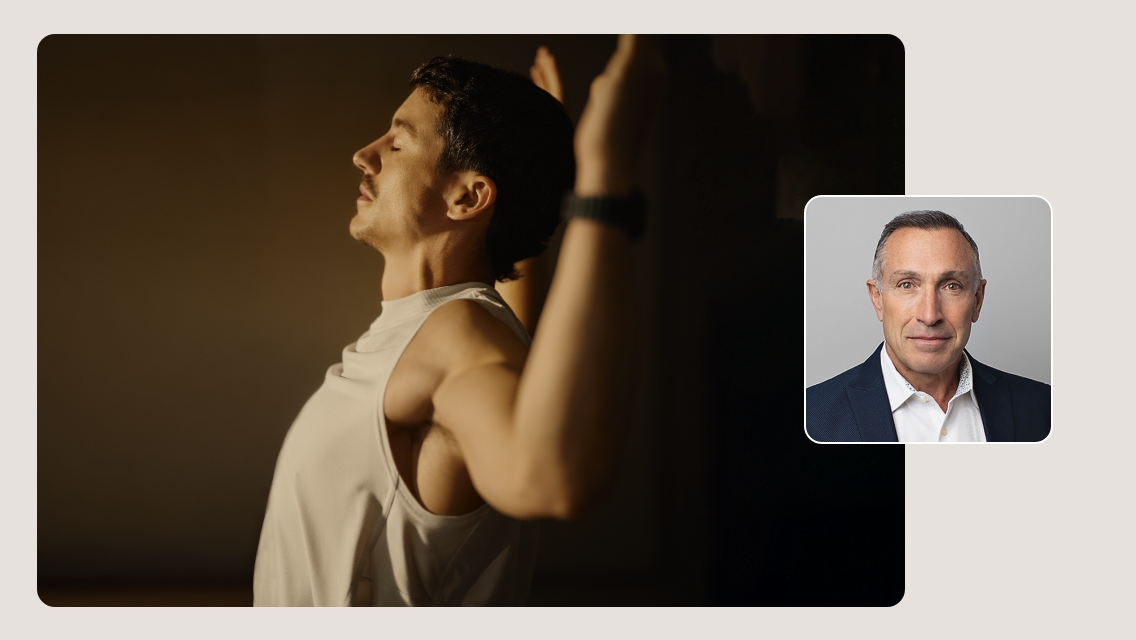

Recovery is crucial for our bodies to perform at their best — and strategic recovery practices can both elevate athletic performance and speed healing when injury happens.
In this episode, Jim LaValle, RPh, CCN, discusses recovery strategies for two groups of people: those who train hard and need to be ready for their next workout, and those who are coming back to fitness following an injury. Learn lifestyle approaches for supporting your recovery so you can continue moving and seeing results from your efforts.
This episode of Life Time Talks is part of our series on Performance and Longevity with MIORA.
Jim LaValle, RPh, CCN, is a clinical pharmacist, the cochair of the American Academy of Anti-Aging Medicine, the chair of the International Peptide Society, and the Chief Science Officer for Life Time.
In this episode, LaValle explores the importance of recovery, along with strategies to support both everyday athletes and those coming back from injury. Insights include the following:
- Whether you’re returning to fitness post-injury or are an athlete continuing to train consistently, a smart recovery plan is crucial to speed up your ability to come back and maximize training gains.
- It’s important to understand your personal recovery needs, especially as you age. That’s when recovery becomes more necessary.
- There are several physiological signs of poor recovery: overtraining syndrome (OTS) symptoms, delayed onset muscle soreness (DOMS), mood changes, lack of motivation, depleted nutrient status, sleep disturbances, and reduced strength gains.
- Sleep is the No. 1 recovery strategy and you need to build all other strategies around it, according to LaValle.
- You can support your recovery with proper nutrition and targeted supplementation, including:
- Creatine: Helps with ATP production and lean muscle mass maintenance.
- Collagen peptides (combined with vitamin C): Help dampen connective tissue inflammation and support repair.
- Protein: Helps with lean mass development.
- Electrolytes and magnesium: Help with muscle function and the removal of lactic acid buildup in muscles.
- Omega-3 fatty acids: Help regulate inflammatory signaling.
- A greens drink: Helps provide antioxidants to counteract free radicals in the body from the stress of training.
- Some peptides and other supplements that can help with recovery include:
- Sermorelin: This peptide can stimulate growth hormone release.
- BPC: This peptide can help with inflammation reduction and collagen repair.
- Glucosamine, chondroitin, and curcumin: These supplements can be helpful if you’re dealing with a connective tissue or bone injury.
- Understanding your stress level is important for realizing your body’s ability to recover and recognizing your risk for injury. As cortisol goes up, you make less growth hormone, which limits the body’s ability to build muscle. Chronic stress also inhibits gonadotropin-releasing hormone, leading to lower levels of testosterone (for men and women); this can make it difficult to maintain and build lean mass.
- Certain blood markers — including cortisol, advanced lipid markers, homocysteine, adiponectin, and mean platelet volume — can offer insights about whether you’re overtraining.
- Heart-rate measures, including heart-rate variability (HRV), resting heart rate, and heart-rate recovery, are important ways to track and monitor your recovery. Many wearable devices now track these.
Transcript: Train Hard, Recover Harder: Advice for Bouncing Back (Performance & Longevity Series)
Jamie Martin
Welcome to Life Time Talks in our series on performance and longevity with MIORA. I’m Jamie Martin. I’m here with Jim LaValle. He is a clinical pharmacist, clinical nutritionist, and the chief science officer for Life Time among many other titles that you have.
Jim, how are you today?
Jim LaValle
I’m doing good.
Jamie Martin
It’s always good to have you back.
Jim LaValle
I know, it’s always fun.
Jamie Martin
Well, today we’re going have a fun topic. We’re talking about recovering after exercise and kind of looking at this with two specific groups of people: Those who are coming back to fitness following an injury, and those who train hard and they kind of just need to prepare well for their next workout and the next thing. So we’re going to dive right in. So let’s talk about why a smart recovery plan, regardless of who you are, is important. Because recovery is more important and it’s been getting a lot of attention.
Jim LaValle
Well, you know, it’s interesting because I’ve, you know, whether I’m working with tactical forces, you know, done a lot of work with U.S. special forces or pro teams. The one thing that everybody understands, it’s not about how hard you train, it’s about how well you recover. So why is recovery important? Recovery is important because it maximizes your ability to get the gains from your training and to advance your training.
And then if you’re injured, it’s important because I know just from strategies that I’ve done with people that have been going through surgeries or recovering from injuries, we can speed up that time. If it’s an athlete, return to play. But I always talk about return to life. How long do you want to be limping due to a surgery, having to be on crutches? If you can shorten that, why wouldn’t you want to do that? If you’re building back stronger. So those are the two key areas that I think are important for.
Jamie Martin
Yeah. And I think it kind of puts, flips some of the old thinking around exercise, you know, on its head, it’s more like train hard, recover harder. You know, there is something that’s really, you know, versus other sayings that you’ve heard, but it is so important. And we want to talk about like, why do people compromise their recovery? I mean, you see trends. Why do you think, do you think people just set that to the side?
Jim LaValle
That’s probably one of the best questions that I may not have a good answer for. I think one is the stigma that you just said. People still think it’s all about how hard you train and they don’t understand readiness for the next day. The older you get, you should be thinking about, you know, am I recovered to hit it hard again the next day? I think there’s a lot of those stigmas that need to be broken which is basically what’s your real goal?
If your real goal is to get the most out of your training if you’re gonna spend time doing it. So if it’s a harder day an easier day a more, you know a more stretch day. You know, is it a high intensity day, whatever, but is there a strategy to that so that you don’t fall into reduced recover ability right because that gets into your you know, you lose metabolic capacity or you hear these terms your metabolic flexibility gets limited, right? Resiliency goes down.
So I think that’s probably the big one is I think for the most part a lot of people still don’t understand everything that influences their readiness to train and therefore if you go into it with a deficit, you’re gonna have to overcome that much more when you’re trying to recover from a hard day of training, right? Something as simple as sleep, right? Super important.
Jamie Martin
It’s a recovery strategy if we’re smart and strategic with it.
Jim LaValle
I think it’s the recovery strategy and then everything else you build around it. You know, and there are different things that you do depending on whether it’s injury related or it’s just, hey, I’m a performance gains driven.
Jamie Martin
Are there specific physiological signs that somebody might notice to indicate that they’re not recovering well from exercise? I mean, you and I were talking offline over lunch. We were talking about how I wasn’t feeling that great when I was training for an endurance event. And you were like, were you achy? So it’s like, are those some of the signs? Or what would people look for from a physiological standpoint?
Jim LaValle
So I mean, if you look at classic overtraining syndrome, right? It’s called OTS, overtraining syndrome. And then there’s overreaching. Like I’m almost overtrained, but not quite.
You know, not recovering, so delayed onset muscle soreness, the term DOMS, right? So there’s, I’m holding onto my achiness, and you know, a lot of people go, wow, it’s good to have that soreness. Yeah, that’s right, but you’re supposed to recover from it. So if you’re holding onto that achiness and soreness too long, that’s an issue. If you find your resiliency’s down, meaning you wake up and say you’re training for a 10 kilometer run. I don’t know if you know anybody that was doing 10K runs, but if you did, and you woke up and thought I don’t even want to do this run today. My mood just isn’t in it. I’m not there. It’s the motivation is lost. Or motivation, achiness, soreness, mood changes can start to occur. You can notice you’re not getting the gains.
Like, so you’re, I mean, how many times have you heard people sitting around a gym? Man, I’m putting in all this work, but I don’t feel like I’m getting the gains. Well, maybe you’re putting in too much work. Your body’s always breaking down and therefore you can’t get gains. And so that piece is big. So you end up being catabolic. One of the other ones, if it’s more endurance oriented, right? If you’re doing, if you’re running or biking, those kinds of things, more endurance training. The gut microbiome changes, that starts to change your absorption status on nutrients. So then you start to, hey, I’m cramping more, I’m getting restless legs, why is my mood foggy? How come I can’t go more than two hours without eating, right? The blood sugars are going up and down.
And then of course, sleep is a big disturbance that starts to occur in people that are overtrained or just training too hard. It’s like all of a sudden your brain thinks, wait a second, we’re running from a white tiger still, right? And that is just that fact of training. And you know, the old argument, I used to love it, you know because I’ve been around this space now for so long. No, you never overtrain, you just ever under recover. I would say that you can overtrain and you can under recover.
Jamie Martin
Yeah, it’s a both-and in those circumstances, right?
Jim LaValle
It’s an and or yeah, it’s not just you know, there’s you know, you can always train as hard as you want to and you’re you just need to recover better now there has to be a strategy. I think that’s why it’s important to have a you know, somebody guide an individual. So if you don’t have a background if you’re not a you know professional in a fitness space, if you’re gonna train hard, it’s probably good to have someone in your corner, know helping to rotate your workouts understanding what you’re doing.
That’s why our you know our Dynamic Personal Trainers are so important. It’s because they actually help you to guide that. That’s what’s really exciting about the programs that are run at Life Time.
Jamie Martin
Right, well, and it’s that progression over time, but it’s always thinking about those different elements. There’s the idea of periodization, right? And you’ve talked about, you know, there’s a seasonality to things. Like you don’t always go hard. You have to figure out how you taper and, you know, shift within a program. Yeah.
Jim LaValle
I remember this was years ago, walking into corporate office and talking with somebody and the term back then was undulating periodicity.
Jamie Martin
Oh undulating. That’s very fun to say.
Jim LaValle
Yeah, I know I’m surprised I got that out but undulating periodicity is basically just that right variable load and you know, once again, I have to say that you have to pay attention to this as you’re aging that’s what’s interesting on Life Time is that three months to 90 years through all the way through and so the older we get I’m not saying don’t push hard because I love to push hard. You know, and I’m, I’m a senior citizen.
So, you know, I love to push hard. You always laugh. It’s just cause I am. I mean, you know, it’s like, is what it is. I’m not saying, but if I want to be the best, most fit 65 year old that I can possibly be, well, then you need a plan and you need to recover and you need to understand.
You know, back when I qualified for the U.S. Nationals when I was 20 years old, I can’t train like that, right? But I can push to get maximum results, but you need to recover. So there’s key things that we need to do for that.
Jamie Martin
Absolutely. Well, and it’s so funny that you say that because I would I mean I am a I would say a recreational athlete I’ve been training for years, you know consistently exercising working out sure, but there are moments where I’m like, well, why am I not training as well as I did when I was 20 and it’s like hello you’ve aged 20 years since then things are different. But again, I could I can be as fit as I was then it’s just different now than it was and the recovery I need now is different than I needed 20 years ago.
Jim LaValle
Yeah, there’s no limitations that should be put on you as you’re aging. In the end, what this is really about is continuing to be as functional as possible throughout all stages of your life. So, know, I always did, you know, in all the clinics I’ve ever owned, we’ve always had this saying of, know, vitality at every stage in life. It doesn’t matter whether you’re three months older or 69 months, 69 years old, right?
I mean, no matter how old you are, you should be able to be at your best. So what are the key things you need? So from the just straight out performance recovery side, I’m training hard, I need to improve. Love creatine. Creatine’s great because it builds ATP, it keeps the lean mass on your body. Obviously there’s the new recent ideas of brain health benefits and that, but just sticking to performance and recovery.
Creatine’s great in terms of maintaining lean mass when you’re training hard. The other one would be collagen peptides actually help you to recover from exercise. And especially if you make sure you got a little bit of vitamin C with that, right? That’s what all the studies were published on, was a little bit of vitamin C with collagen powder. And that helps as well with kind of dampening the connective tissue inflammation that’s going on as well as repair. You need adequate protein for lean mass development. A lot of times people don’t, you know, they don’t take in enough protein and therefore when they work out they’re not going to rebuild or gain new lean mass.
Jamie Martin
It really is meant to help support the gains, right?
Jim LaValle
Yeah, you know, obviously always electrolytes, you know, you always want to think about electrolytes. You know, one of the biggest ones that I always talk about is what’s your magnesium status, you know, without adequate magnesium and you could you could kind of lump that in with electrolytes, but a lot of times you’re not getting enough magnesium in the electrolytes for your overall need.
Jamie Martin
Right. So if you’re and a lot of us are depleted, there’s a lot of stats. It’s magnesium is one of the nutrients that a good percentage of the population is not getting enough of.
Jim LaValle
Well over 70%, then you’re training right, right? Yeah, so I think mag is important because it helps get the lactic acid out of your muscles and then you know, I mean these are kind of essential if you’re serious about training and wanting to recover you need fish oil. You need omega-3 fatty acids because it regulates inflammatory signaling and you know, that’s like F2-isoprostanes. Big word, right, isoprostanes.
But those are, you know, oxidative compounds in your body that omega-3 fatty acids help to dampen after you’ve turned them on, right? So you train hard. Inflammation is turned on actually to help you create results, but you’re supposed to turn it off. And what happens is when you under recover, meaning you’re not taking fish oil, you’re not getting enough sleep. You know, you’re, you you’re not creating the positive, they’re not eating the proper foods after you work out.
That inflammation lingers too long. And now you’re going to go into your next workout. And instead of having those, those, those switches turned back off so that you’re ready to go again, they’re still on. They’re at that low level. And now you start to kind of grind away at your inflammation response, which is now damaging tissues. And now before you know it, you’re not getting results.
And I’d say the last one that’s real important would be just knowing your cortisol levels and managing stress response well, because cortisol to testosterone ratios are really important in terms of, know, am I gonna recover or what’s my risk for injury? And so knowing, hey, just being a realist about, hey, am I under stress? Do I feel overcommitted? Am I craving foods due to stress? Am I filling time in between my meals with eating just because I need something, right? Like that.
And then am I having trouble sleeping, right? Because when you’re, too much cortisol means more than likely you’re gonna have trouble sleeping. One of the biggest things right there is that sleep cortisol connection because as your cortisol goes up, you don’t make growth hormone, because it inhibits growth hormone release. That means you’re not gonna build back muscle. And then it also inhibits something called gonadotropin-releasing hormone, which means you’re not gonna make your sex hormones the way you should. So if men testosterone is going down and women testosterone goes down, when your testosterone’s low, you’re gonna have trouble with lean mass.
Jamie Martin
Right, it’s harder to maintain and build that muscle that you’ve been working hard for.
Jim LaValle
And it also affects women for estradiol, which is important as well, right? So I think, you know, those are some key things. And then if you’re looking into the world of peptides, Sermorelin, a growth hormone, secretagogues , especially if you’re over the age of 30, or you’re trying to really lean out, Sermorelin makes a lot of sense because it’s helping you to release growth hormone.
And you know, the way you take that now is if it’s an injectable, you would do it five days out of seven. If it’s, you could do an oral liposomal tablet, then you could do that easily six days out of seven. But you typically do that at bedtime. Some people will do it twice a day if they want to kind of enhance the lean mass output. Right? Might get a little more lean mass. So Sermorelin ‘s a big one.
BPC and a Lipotab, a chewable tablet, a lot of those products are on the market in capsule form. The chewable lipotab absorbs better. People really get great results. to kind of decrease the inflammation signaling and repair collagen. Because you’re getting micro tears in your muscle and your collagen when you train, right? I mean, that’s part of the process of strengthening them. You stress them, you tear them up a little bit, and then they re-mend even stronger and bigger, hopefully. You’re looking for muscles.
Jamie Martin
Yes. There’s a lot there. I want to also talk, I mean, is that, would that be true for the athlete who’s like, I just want to perform better tomorrow? Would those same, you know, nutrients and strategies also be true for someone coming back from an injury? Or is there anything that you would suggest that would be different for somebody who is just getting back into their fitness routine?
Jim LaValle
Those are kind of injury it is, but if it’s connective tissue or bone, I would also make sure they’re taking glucosamine and chondroitin. I would probably have them on curcumin, like a turcumin liposomal tablet that I know we utilize within MIORA at Life Time. I would have them doing a BPC lipotab. I would have them on extra vitamin C to promote collagen synthesis.
It’s a little bit different when you’re coming back from an injury because you kind of got to quell the inflammation and stimulate repair, right? It’s a little different than, hey, I have to pump. Like I wouldn’t worry about maybe taking creatine right away because there’s only so much stack that a person’s willing to do. So I would probably be more concerned with, you know, BPC, TetraCur, maybe doing something like EndurO2, which is the LANDKIND ingredient from France that increases proliferation of oxygen into the microcapillaries. So you’re getting more oxygen deep into tissues for repair. So I think that is a really good process.
Then collagen, vitamin C. I would even say alkalinization, like a good green drink, because as long, because iIt’s interesting, you. know, when you’re under injury, you create a lot more free radicals, right?
Jamie Martin
That’s the oxidation, the rusting that you talk about.
Jim LaValle
The rusting. Oxidative stress you want to neutralize that. Magnesium is one of the big ones. So I would always add mag in there, but I also love green drinks for that. So if people aren’t opposed to green drinks, I like them it’s just they have to taste good. Some of them are great some tastes like you just went out in your yard and cut up grass, right? So you want great tasting green drinks great in there and I think that you know, I think that’s kind of a smart strategy. And fish oil is always a must.
Jamie Martin
As part of a regular regimen.
Jim LaValle
Yeah, I mean, I think that’s whether you’re coming back from an injury, training hard, training light, or just trying to be healthy in general, Fish oil is a smart call. And then sleep.
Jamie Martin
Sleep and stress management.
Jim LaValle
Sleep and stress management is so big. It really is. I mean, you know, it’s interesting. I’m traditionally, I haven’t had a lot of issues around sleep and I’m just sharing personally, but you know, you get a little older and, and, you know, still flying around and all that. And all of a sudden I’m going, hey, I think I may have to take a little extra melatonin or maybe phospholipids like phosphatidylserine, ashwagandha, theanine, nutrients like that and you know Life Time has a product called Dream that was just been released. That’s very interesting because it’s a non melatonin agent that helps you sleep. It’s like a combination powder that I think that’s really interesting.
Jamie Martin
And that’s like the multi-meg, right? So it’s three different types of magnesium in one.
Jim LaValle
And significant amounts of all the ingredients. So you’re getting a true effect from the phosphatidylserine, the magnesium, the theanine, all very good, ashwagandha. So I think that’s a part of a smart strategy. If you’re having trouble sleeping, your head hits the bed. And you’re out. And you’re out, and you wake up and you feel refreshed, then you probably don’t need to think about sleep strategy. If you’re head hits the bed and you wake up at 3 a.m., then you need a sleep strategy.
Jamie Martin
When you talk about sleep strategies, what do you include in that? I mean, there’s a lot of people talk about sleep hygiene, like the things that help you go to sleep. What does that mean for you?
Jim LaValle
Pretty similar, but it’s just like realizing that if you’re probably, if you’re having trouble sleeping or waking up in the middle of the night, more than likely you’ve overstimulated your body during the day. So it’s dampening the response during the day. Am I over training? Is that the reason? Is that why I’m having trouble sleeping at night?
And then I would say when your body puts out too much cortisol, which is a common feature of people that train really hard. The more trained you are, doesn’t mean you’re allowed to put out more cortisol. It just means you’re more on the edge. I mean, there’s certain articles coming out right now like, Olympians have more elevated lipids and higher stress hormones. And well, yeah, because they’re training and they’re the ones that survived at the next level. Well, and there’s people that go train for the Olympics and they get injured at the trials or they get sick because they’ve over trained. Their cortisol was high.
But they were just further along on breaking their body down. So that’s why you still want to look at that. Once cortisol is up, especially in the night, the more your brain is not going to release melatonin, it’s not going to release delta sleep inducing peptide, which helps your brain to say go to sleep. If you don’t do that, it’s trouble. So my strategies are pretty simple. Dampen the stress response. Yes, sleep hygeine, lavender, out a mask on if you need to. Don’t have blue screens on. All the standard. 69 degree room. All that.
Jamie Martin
But it goes back to your point like sleep really does matter in all of us. Again it’s probably number one strategy to be thinking about in this stage, right?
Jim LaValle
Without a doubt.
Jamie Martin
If somebody is wondering, okay, am I over training? Are there any sort of blood markers or things that would indicate over training within somebody?
Jim LaValle
Blood markers and wearable devices, both. So blood markers would be, is your cortisol up? What are your lipid, advanced lipid markers look like? Are you creating more oxidative stress? Are you using up your B vitamins? Where’s your magnesium at? So is your homocysteine elevated? Adiponectin is an interesting lab marker that shows oxidative stress. And then mean platelet volume, which is in every every CMP, CBC, know, complete blood count and you know, that you can look at mean platelet volume. So yeah, you can see if someone is overtraining, their hormones are usually starting to tank a little bit.
Jamie Martin
Talk about the smart devices. I think the one that comes to mind for me is HRV, heart rate variability, can be an indicator of whether you’re recovering well enough. Is that a truly accurate measurement, recovery? Or training readiness?
Jim LaValle
It depends what you’re measuring it with. So I think if you’re wearing a strap, you’re probably getting the best HRV. I think that there’s some improvements that are happening on the wearable rings. I mean, let’s face it, I’ve got two devices on right now. Right. Right? And I think they have varying efficacy in how they’re calculating HRV. But I think it’s getting better. I think we’re at the point now where we’re able to watch that data, create some normalization to it based on what device you’re using. But look, simple stuff, heart rate.
Jamie Martin
I was gonna say, heart rate, resting heart rate.
Jim LaValle
If you wake up in the morning and you’re resting heart rate is 10% higher than it was the day before after a hard training day, you should probably rest or have like a resilient day, a little bit of stretching, rolling out, maybe a walk or maybe a little tempo run, but not a lot. And then the two minute heart rate recovery. Are you recovering at least 24 beats in two minutes? Super important. I think that’s killer that you do that. And then I love HRV. HRV, resting heart rate, and two minute heart rate recovery will absolutely dictate where your cardiovascular fitness is at and where your future mortality is at.
Jamie Martin
Okay, say more about that.
Jim LaValle
Well, it turns out that when your heart rate recovery is low, when your HRV is low, when your heart rate is elevated, all of those are independent risk factors for things like acute MIs. So meaning a myocardial infarction or a heart attack. Yeah, MI, myocardial infarction, sorry. I know, your eyes were doing this.
Jamie Martin
I was like, oh, I’m thinking.
Jim LaValle
I should probably say that. I was glad. You were computating. I was getting it. So anyway, I mean, in other words, your cardiovascular risks go up on each one of those independently. So just think of all three of them.
Jamie Martin
Right. There are things that we all, a lot of us, most of us are wearing some device or another using some device. paying attention, they’re not the end all be all of signaling for you, but they can be indicators.
Jim LaValle
And you don’t want to use them to make you freak out. I think one of the big problems people stop using these devices is they get freaked out about what they’re reading. I can tell you one, I have a pet peeve. I have never slept more than seven hours ever. I mean, I’ve written 26 books, five databases, couple hundred articles. I get a lot done. I feel rested, but I’m always penalized because on, for example, a Whoop, I have to hit nine hours. I would have social anxiety if I stayed in bed for nine hours. I mean, what do I do? I’m awake for two hours laying in this bed. What am I supposed to do?
Do I think that less than seven hours is a problem? Yes, it is. The average person should sleep. There is some evidence some people can get by, but very rare they get by on less than seven. But that whole thing of seven and nine is good, but I don’t want to be penalized if I’m good at seven. Yeah, brains clear. There’s no problem. So that’s why I think you have to really dig into that data and understand, well, is this really that they’re dinging me on sleep? I have to account for that. but at the same time, heart rate, HRV, two-minute heart rate recovery. Man, you can count on those, you can lean into those in a big way.
Jamie Martin
That’s awesome. I think what’s really important within all of this is like being aware for yourself and understanding yourself. You talk about the Metabolic Code. You it’s not just the blood tests you’re looking at. You’re assessing how you feel at the same time. So always checking in with yourself too about where, how am I feeling today? How does my body feel? How does my mind, how is it functioning? All those pieces.
Jim LaValle
So important. No, it really is. I mean, your body works as a system of systems, right. So every system relies on every other system in order to maximize how you’re going to feel that day. Yeah. So, you know, I think it’s just appropriate that you look at your body in a whole perspective. Where are you as a whole person moving through time with your labs, with your symptoms, with your biometrics, with your wearable data, and then instead of freaking out about them, saying, how do I make a step towards improving one of those?
Jamie Martin
Right? One step at a time too, right? So no matter where you are in terms of recovering from an injury or that athlete who, you’re an athlete who wants to kind of go hard, there’s something for you that recovery can offer, right? To help get you to that next place. But, and you don’t have to do all of those things at one time. It’s like start small, do something, maybe add onto it over time and go from there.
Jim LaValle
Yeah, absolutely. I mean, obviously, sauna, red light therapy, we haven’t even touched on them. I’m sure we’re going to have a chat about all that. You know, there’s so many.
Jamie Martin
Awesome. Well, Jim, that’s just a primer. We’re going to have to come back and talk through all those. Anything else you want to add before I sign us off here?
Jim LaValle
I would say be as passionate as you want to be about how hard you like to train no matter what stage of life you’re in, but be every bit as passionate of caring for your body when you’re pushing yourself as hard as you want to.
Jamie Martin
Yep. I love that. It’s a great way to end it. Thanks, Jim. Thanks for coming back. If people want to learn more, they can visit miora.lifetime.life or experiencelife.lifetime.life, where you can find lots of articles and content from the MIORA team. Thanks, Jim.
Jim LaValle
Awesome.
More like this

Talks — S11, EP24 / Sleep and Resiliency: A Guide to This Essential Recovery and Repair Window (Performance & Longevity Series)
Learn about the critical role of sleep for health and longevity, the barriers that might be preventing you from getting enough quality sleep, and practical strategies for sleep improvement.
Talks — S6, EP14 / What to Know About Nutritional Supplementation
There’s a lot of confusion around supplements, leaving many wondering, “What supplements should I take?” or “Do I even need to take any at all?” Paul Kriegler, RD, CPT, shares the top supplements he recommends for most everyone, why supplementing is perhaps more important now than ever, and the importance of quality and how to identify the best options.

We’d Love to Hear From You
Have thoughts you’d like to share or topic ideas for future episodes? Email us at lttalks@lt.life.
The information in this podcast is intended to provide broad understanding and knowledge of healthcare topics. This information is for educational purposes only and should not be considered complete and should not be used in place of advice from your physician or healthcare provider. We recommend you consult your physician or healthcare professional before beginning or altering your personal exercise, diet or supplementation program.
Life Time provides administrative, non-clinical support to MIORA as well as services and amenities related to general wellness and fitness; Life Time does not provide medical advice, diagnosis, treatment or care.
Advertisement