


The Wellness Advice We Actually Use
To kick off season 13, our cohosts reflect on six years of Life Time Talks, sharing the conversations, insights, and habits that have shaped how they approach health and wellness.



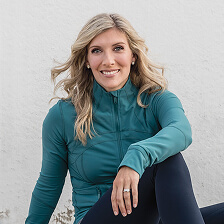

To kick off season 13, cohosts Jamie Martin and David Freeman look back on six years of Life Time Talks and the conversations that have shaped the way they think about health and wellness. They share the insights that have stuck, the habits they’ve actually applied, and what they’re carrying into the season ahead.
Jamie Martin and David Freeman are the cohosts of the Life Time Talks podcast. Martin is the vice president of content strategy at Life Time and the editor in chief of Experience Life, Life Time’s whole-life health and wellness magazine. Freeman is the senior director of signature coach excellence at Life Time.
In this episode, Martin and Freeman look back on six years and 12 seasons of the podcast, sharing a few of the lessons that have stayed with them — and the ones they’ve put into practice in their everyday lives. Their key takeaways include:
- Revisit your purpose when you feel stuck. Martin says the concept of “ikigai” has stayed with her over the years. She returns to it when she feels disconnected or unsure, using it to reflect on where passion, skill, reward, and contribution overlap. (Listen to the episode: “Cultivating Ikigai: A Tool for a Happy, Fulfilled Life With Jeanne Rosner, MD”)
- Be coachable, even when feedback is hard to hear. Freeman highlights “being coachable” as one of his biggest lasting lessons. For him, that means receiving feedback with openness, trusting that it often comes from care, and using it to improve rather than getting defensive. (Listen to the episode: “Being Coachable With NFL Veteran Desmond Howard”)
- Consistency matters more than intensity. Martin says she’s learned that feeling her best comes less from going hard all the time and more from staying consistent with movement and exercise. Sustainable routines have been more valuable to her than all-out effort. (Listen to the episode: “Ask the Trainers: Your Fitness Questions, Answered (Part Three) With Jeff Rosga, CPT, and Lindsay Ogden, CPT”)
- Write down goals to make them real. Freeman shares that one habit he’s consistently applied is writing down what he wants to do. He sees this as a way to stay focused, make intentions visible, and create a stronger sense of follow through. (Listen to the episode: “Habit Hacking for Health: A 4-Step Plan With Lindsay Ogden”)
- Use supplementation to strategically fill in nutrient gaps. Martin says she’s embraced strategic supplementation more seriously in recent years. She specifically mentions omega-3s, magnesium, and vitamin D as nonnegotiables, applying what she’s learned about supporting health where nutrition alone may fall short. (Listen to the episodes: “Why Omega-3s? With Paul Kriegler, RD, “Why Magnesium? With Samantha McKinney, RD,” and “Why Vitamin D? With Anika Christ, RD”)
- Practice uncommon courage. Freeman reflects on the reminder that growth often requires stepping into the unknown, even when others doubt what’s possible. For him, the lesson is to keep moving forward with belief and conviction, despite outside noise or uncertainty. (Listen to the episode: “Uncommon Courage With Olympian Mechelle Lewis Freeman”)
- Give yourself permission to rest without guilt. Martin shares one of her biggest personal shifts has been embracing rest as something productive and necessary. She’s learned to be more present and intentional about recovery. (Listen to the episode: “How Do I Rest — Really? Understanding the 7 Types of Rest With Barbara Powell, MA, NBC-HWC”)
- Use testing and data to personalize your health choices. Both Martin and Freeman reflect on the value of objective measures like lab work and other assessments. Rather than guessing, they’ve taken to using data to understand what’s happening in their bodies and make more informed adjustments. (Listen to the episode: “A Clearer View of Health: A Guide to Understanding Comprehensive Bloodwork With Jim LaValle, RPh, CCN”)
- All past episodes of Life Time Talks
- Cultivating Ikigai: A Tool for a Happy, Fulfilled Life With Jeanne Rosner, MD
- Being Coachable With NFL Veteran Desmond Howard
- Ask the Trainers: Your Fitness Questions, Answered (Part Three) With Jeff Rosga, CPT, and Lindsay Ogden, CPT
- Habit Hacking for Health: A 4-Step Plan With Lindsay Ogden
- Why Omega-3s? With Paul Kriegler, RD
- Why Magnesium? With Samantha McKinney, RD
- Why Vitamin D? With Anika Christ, RD
- Uncommon Courage With Olympian Mechelle Lewis Freeman
- How Do I Rest — Really? Understanding the 7 Types of Rest With Barbara Powell, MA, NBC-HWC
- A Clearer View of Health: A Guide to Understanding Comprehensive Bloodwork With Jim LaValle, RPh, CCN
Transcript: The Wellness Advice We Actually Use
Jamie Martin
Welcome back to another season of Life Time Talks. I’m Jamie Martin. How are you?
David Freeman
And I’m David Freeman. How are you?
Jamie Martin
I’m good. Not only another season, season 13. Lucky number 13. Did you ever think that we were gonna get into 13 seasons when we started this way back in 2019?
David Freeman
I love your confidence, even coming into it. I just remember so many of the conversations and have shared it on other podcasts, but just knowing how much of a reach we could have from using these voices and all the voices around us to impact those that are listening. So I for sure 13 plus is coming.
Jamie Martin
Well, and I feel like there are just so many conversations we’ve had and so many that we will continue to have that just continue to evolve the story of health and wellness, what it looks like. I mean, we’re constantly learning something new in this space and there’s no shortage of topics that we can be covering.
David Freeman
Yeah. The part that I like is we’re hearing a lot of things and it sounds like, did we talk about that before? But the similarities behind it, hearing it from different voices and different experiences, it just holds so much more weight. So that’s the beautiful part about it.
It’s almost like the parent game. Like you said it, I’ve said it. For whatever reason, when the child hears it from someone else, you’re like, now I get it. So that’s the part I like about it is the consistency behind the message.
Jamie Martin
Well, and you and we have talked about this a lot. Like we talk about the pillars of health at Life Time where it can seem like we’re saying a lot of the same things over and over again, but it’s because those are the things that really do make the biggest difference and make a lot of the things we’re talking about more sustainable.
So when we talk about consistent exercise and regular movement, or strategic supplementation along with really good, solid nutritional bases, along with sleep, stress management, community, those are the things that really do make a difference in the day to day and over the long term. So short term they’re things we can focus on, but they have long term consequences, mostly in positive ways, if we’re thinking about it like that.
David Freeman
Yeah. The pillars in itself, going back to the foundation, when we’re thinking about, all right, what is the message gonna be? And when we think of healthier and happier lives as a whole, we know when we tie it back to those pillars that all comes to life. So that’s a beautiful part.
Now that we think about a lot of the things that we’ve heard over these past seasons, what are some of those habits that have actually stuck with you?
Jamie Martin
Yeah, it’s so interesting because we’ve done so many episodes now. I had to kind of go back through our library. I have like four or five I want to share today, but this one was from season three. It was a conversation that we had with Jeannie Rosner, who was a nutritionist, on Ikigai. It’s this concept around what brings us purpose and meaning in life.
It’s this concept of Ikigai, which kind of brings together these four ideas and then where do they all interconnect, like in a Venn diagram, right? So it’s what you love, what you’re good at, what you can be rewarded for, and what the world needs. And ever since we had that conversation with her — and I don’t even remember what year that was. Probably like 2020, 2021, somewhere in there.
David Freeman
Yeah.
Jamie Martin
But it’s been a concept that I return to regularly. Like when I feel like I’m getting stuck, or when I feel like, what am I doing? How do I reconnect with my why? That’s the concept I consistently go back to, to be like, think about those four things. How do they intersect? Am I in my sweet spot, where I can thrive and where I can give my best to the people around me? So that’s one for me that has been more of a mindset piece that is foundational that I continue to return to over and over again.
David Freeman
I love that. I do remember that episode. And the thing that stood out that you just said, as far as the mental piece and the mental gains that you actually got from that. So that’s beautiful.
If I had to reflect, I’m gonna go to Desmond Howard. It was season three, episode fifteen, right? And it was about being coachable. I feel like this has just followed me throughout life in a sense, but it is so applicable to any and everything that we do in life — being coachable, being able to take on feedback and knowing how to apply that.
And also knowing that those who are coming to you with the feedback, when you are coachable, being able to know that it comes from a place of care because they want to see you actually getting better. So whatever realm you’re in, whether it is in the work life or if it is on the field or the courts or whatever it is, understand that that feedback comes from a place of care and know how to now take on that feedback, go out there and apply it. So being coachable is such a big one for me.
Jamie Martin
Well, and what I remember from that too is not everything you’re gonna hear is necessarily gonna be things you like to hear, but it’s like, are you willing to listen and take it in and apply it, right? And kind of go forward from there versus getting stuck in something that might seem negative at its face value. But what does it have to teach you?
David Freeman
Yeah. It’s been a minute, but I remember you were coaching your daughters. So when you were coaching, and then obviously you got mom hat and then you got coach hat. How was that to be able to navigate between the two?
Jamie Martin
You know, you have to be able to separate them a little bit, I think. I mean, you’re a coach all the time. I haven’t been a coach for a couple of years now, but I have my mom hat and my coach hat. My coach hat is really like, how can I take what I know in this space, whether it’s basketball or lacrosse or whatever it is, and offer constructive feedback that will help them grow?
I think about the coaches that I had who were the most impactful. And they were the ones who were willing to, again, tell me the hard things, but they did it with love and care. Right. And that’s what I want to bring to it. I want these mostly girls who I’ve coached to know that they are seen and heard and, yes, we all have opportunities to grow, but here’s how we can help you. So that’s how I approach it.
David Freeman
I love that. Love that.
Jamie Martin
Okay, another theme — I’m not gonna pick a specific episode, but a theme that has come through from a variety of our Life Time experts and outsiders as well. The idea of just consistency and what I’m carrying through in my life and still following. We’ve talked to Lindsay Ogden about this. I think Jeff Rosga, Julie Brown, probably Sam and Anika and Paul too, but just the concept of the importance of consistency, especially in my fitness routine, right?
For a long, long time I was like, I gotta go hard all the time. It was about the intensity. I’ve realized that when I am consistent, I feel my best. When I am consistently getting in movement, whether it’s a formal workout or just activity, I feel better. And it’s those times when, if life gets really busy and my workout is the thing I sacrifice, that’s what I feel.
So I think I have been really good over the last, probably since 2020 when we launched this, the consistent workouts have just been something that I followed through. But hearing that message that it doesn’t have to be about going hard all the time — how do I create a routine that’s really consistent? Because that’s what’s sustainable for me too.
David Freeman
So I remember from the Lindsay episode, more of the habit tracking and stacking, right? So just within that, the one thing I’ve been consistent with is always writing down what it is that I’m trying to do. So I can always come back to it. When it’s in my head, obviously we’re thinking, all right, I’m gonna remember that later. But we have so many things coming at us, you tend to forget. What’s that again?
So when you now write it down — and the studies behind this too — if you write something now, you’re two times more likely to do it. And then when you share it, going back to a community that you’re a part of, then you’re three times more likely to do it. So just knowing the power of writing something down, you write it down, you now see it. Now that you see it, you can come back to it later to be like, yeah, I need to be doing this.
And then from that, you start to speak it into existence when you share it with someone, or somebody that is more than just one individual. So now you have a little bit of accountability there too. So that’s the part that I like about it.
Jamie Martin
Bring it all together. Where do you write yours down so that you can see them on a regular basis?
David Freeman
It’s right when I get up out of the bed, it’s right there on the wall. I talk about, love is all you need, and just be the change. So these little short sayings, but at the same time it’s so simple. And then it’s right there. I get my feet turned to the side of the bed, boom, it’s right there in front of me.
So my alarm — all right, be the change. Right when my alarm goes off, you know how you could edit and put text at the bottom of your alarm? So it’s the first thing that you’re seeing. So now you’re just living that out.
Jamie Martin
I’ve gotta be better about writing things down. I’m really good, like if I know it’s part of my routine, I’m just gonna do it. But I don’t necessarily write it down, which I think is an opportunity.
David Freeman
You gotta see it, you gotta see it.
Jamie Martin
I know. So the other thing that I’ve embraced more so, I would say in the last three years probably, is just strategic supplementation. And I can’t pick a specific episode for this either because we’ve talked about this with so many of our experts — Paul Kriegler, Sam McKinney, Anika Christ, among others.
Just the importance of filling the gaps in our nutrition where things might be falling down a little bit. I do mostly like the 80-20 rule with my eating habits, like 80% of the time trying to eat mostly whole foods that look a lot like what they came out of the ground or were grown as. But there’s that 20%, and after doing lab testing and all this, where do I have gaps?
So being really strategic with supplementation, specifically my omega-3s, magnesium, and vitamin D, are non-negotiables for me and have been now for a long time. And I can see the results of that with the lab testing I’m doing. I can see it making a difference, but I can also feel it in my body.
Like, there’ll be times I’ll go on vacation and I’ll miss a couple days of things. But I’m not gonna fall down on that. I can still come back to that and feel good. But when I’m consistent month over month with my supplementation routine and my healthy eating for the most part, I feel my best. So just knowing all the details of why those things matter — omega-3s for brain health, magnesium for what, like three hundred plus functions in the body that it supports — the why behind them has really helped me just embrace them more too.
David Freeman
Yeah. I mean, just to piggyback off of that, when we talk about the actual nutrition, we talk about the supplementation, the rest, recovery, the movement — now we can have a way of actually checking to see how we are doing in that space. So when you think of MIORA, and we’ve had MIORA episodes as well, it’s just being able to have this blood work done and to see objectively how we’re moving in the right direction, or if we need a course correct and change some things up.
So the beautiful part is seeing all the things that we’ve talked about. We’re implementing them, now we should be able to see the changes internally. And then if it’s not in a place, now we can go back to the drawing board and correct those. So that’s the thing that I would look at some of the past episodes as well — it’s objective. It’s not a guessing game anymore.
Jamie Martin
Well, and that actually goes into something that people are gonna be hearing more and more about from Life Time in general. Just like, know yourself, which essentially means, be willing to look under the hood and know exactly what’s happening in your unique body if you can.
There’s various ways to do that. You could do it through an AMA test, an active metabolic assessment, to know how are you burning fuel? When are you burning fat versus carbs most efficiently? Those pieces. It might be through more advanced blood work.
But I think one of the things people are going to be hearing more and more from us about is why understanding your unique physiology, what’s happening in your body, is important. And so that’s something, as we go towards end of 2026 into 2027, we’re gonna be hearing a lot about.
David Freeman
Okay, gotta go back. Season two, episode 13, shout out to the wife. Uncommon courage. I love it.
Jamie Martin
That episode.
David Freeman
It was something that I got to witness. And then to be able to hear it, share it to the masses. All of us have this within us — being able to go to that place that is the unknown and knowing how to approach it. Because you’re gonna hear what the noise is gonna be on the outside. And if it seems like it’s uncommon to most, they’re gonna be like, you’re not gonna be able to do that.
So being able to have the courage to continue to take the step forward, even when everybody else in that noise that you’re hearing is saying that’s not gonna work out. So just to reflect on that, just quitting her job in 2006 saying, I’m about to pursue the Olympics after being away from the game for like two, three years, and then to actually make the world team and then actually make the Olympic team — that’s uncommon courage.
And then I’ll take that beyond the sport and what it is that she’s doing with her nonprofit. And just seeing what she’s doing as a wife and a mother. It’s that constant beat of that drum of uncommon courage that went beyond the sport. That’s so awesome to be able to witness. But all of us have it within us. You just gotta bring it out.
Jamie Martin
Well, and she’s such a great example, Mechelle, of the belief in self. Like even with all, as you were saying, the noise coming in, the doubters, the people who were probably questioning her, right? That belief in self and trusting that she knew what she could do. She knew that she had the potential to do those things, which is really inspiring.
I loved that episode. That was early on. I remember you guys were in separate rooms in your house when we were recording. I’m like, you guys gotta be apart from each other. No echoes happening. We were figuring this all out, I think.
The last one I want to talk about for me, and this is one that I’ve had to give myself permission for — I didn’t write down the season it was in, but it was with Barbara Powell, who’s one of the Life Time mind coaches. And we talked about seven types of rest and the various ways that we can just slow down in our life and be more present. And in doing that, kind of allow ourselves to refresh, recover, and come back better.
So I think about that a lot. Like when I’ll have moments of feeling guilty for letting myself rest for a few minutes. Is this actually okay? But I think when we give ourselves permission — and I’ve been doing this more regularly — I let myself go out and hang on my hammock and not feel an ounce of guilt about it. I just get to sit here and breathe this fresh air and look at my garden and just be here. It does wonders for my mindset, my energy, my attitude. It’s one of those episodes that I think about frequently and come back to with regularity.
David Freeman
No, I love that. I mean, Barbara as a whole and the way she presents, the way she connects — there’s something about that, the art of the way she delivers all the things that she does. So it’s a great appreciation for what it is that she’s doing and the mind. You know, I was talking about mind, right, body. So just to be able to connect in the way that she does is a beautiful thing.
Jamie Martin
Yeah, she’s so intentional. Just the way that she brings these ideas to life. And it doesn’t seem like it’s inaccessible, right? She makes it feel very accessible and it has the why behind it all.
David Freeman
Yeah. Connection. The connection is there. Absolutely.
Okay, what I would finish off with would be reflection. We did an actual mid reflection. And I look back now, six years within this space, right? Season 13, 13 seasons, and just a plethora of different episodes that we’ve hit on. When I reflect, I go back to — I could be anywhere in the US and somebody might say, hey, I heard that episode. And just to know that the reach is there. And the impact that is being made from these stories.
And that’s the beautiful piece about what it is that we get to do. We get to share these stories and connect with so many different individuals and learn so much in the same process. So just to be able to look back over the past six years and share these stories and know the impact that we’re making in so many lives is an amazing thing.
Jamie Martin
Right. It is. When you travel around to different locations and you’re like, hey, I do the podcast. Well, in some cases, people are like, I didn’t even know you had a podcast. I’m like, we do, and you should tune in. It’s in our app. Make sure to check that out.
But then when they do know it, I’ve had people be like, I feel like I know you because of this conversation we’ve had, or this episode made a difference for me. I mean, I think that’s one of my favorite parts of doing this podcast — the feedback we get from listeners about what has made a difference for them. It’s why I love doing the magazine and Experience Life as well. The feedback we get about which articles make a difference. It’s the same thing. And this is just another way of getting good information out to people.
So I would encourage our listeners, if you have a topic we haven’t talked about, send it to our inbox. Send us your ideas. And any of your feedback or additional questions you have, because that is what is going to help us continue to create content that you really love. And as we go into season 13, let us know what you’re loving and what we need more of. So any final thoughts?
David Freeman
Yeah, once again, what Jamie just said, just echoing it. I can tell you firsthand, so many people have reached out and I send it right to Molly and Jamie and say, hey, let me know what you all think of this. Let’s connect with these individuals. So we are listening, we are taking the feedback, and we know there’s so many diamonds out there, in the rough, that we want to be able to share the story. So definitely keep the feedback coming.
And I guess I would say what I’m looking forward to, as we continue to evolve in this space, is not only just more storytelling, but it’s the opportunity to see how we’re growing in this space too. And I know that might sound somewhat selfish, but to your point, since we’re hearing all these stories, how the application of these stories impacts our lives. So I know a lot of times we’re sharing the story through the microphone and to the masses, but how are we now applying a lot of what it is that we’re hearing and seeing from these individuals that we’re interviewing?
Jamie Martin
Well, don’t you think we’re kind of the lucky ones in that way? Because we get to take it all in and then take bits and pieces of it. I’ve always said that since doing the magazine too. I feel like I continually learn and grow and hopefully get better as the years go by because of all this great information. And to be on the receiving end of that and then to get to push it out to the world and expand and share that is amazing.
David Freeman
Yeah, I feel like the expectation is higher for us if we’re able to have all the points of contact.
Jamie Martin
Okay, but here’s where I will also say too, this is also where I give us permission. And one thing I’m hearing — we’re recording episodes for this season right now — there’s a theme that’s starting to come through, this goal of, let’s be human together. And that means being perfectly imperfect in doing that.
So we hear all these things. We’re not necessarily doing all these things perfectly in our own lives, but we’re learning and growing as we do them. And so I think, if there’s anything that we can leave people, it’s, embrace where you are, give yourself grace in it, and know that in this phase you’re gonna have certain priorities and focuses, and then you’ll shift and, as time goes on, things will change. But let’s just enjoy it and be perfectly imperfect as we’re doing it and go from there.
David Freeman
I love it. All right. Well, let’s get ready to go on a ride.
Jamie Martin
Season 13.
More like this




We’d Love to Hear From You
Have thoughts you’d like to share or topic ideas for future episodes? Email us at lttalks@lt.life.
The information in this podcast is intended to provide broad understanding and knowledge of healthcare topics. This information is for educational purposes only and should not be considered complete and should not be used in place of advice from your physician or healthcare provider. We recommend you consult your physician or healthcare professional before beginning or altering your personal exercise, diet or supplementation program.
Life Time provides administrative, non-clinical support to MIORA as well as services and amenities related to general wellness and fitness; Life Time does not provide medical advice, diagnosis, treatment or care.
Advertisement