


The Rise of Fatty Liver Disease (Performance & Longevity Series)
Metabolic dysfunction-associated steatotic liver disease (or MASLD, formally known as nonalcoholic fatty liver disease, or NAFLD) is a chronic condition that affects up to one-third of American adults. Learn why it’s on the rise and how you can help protect, support, and heal this vital organ.


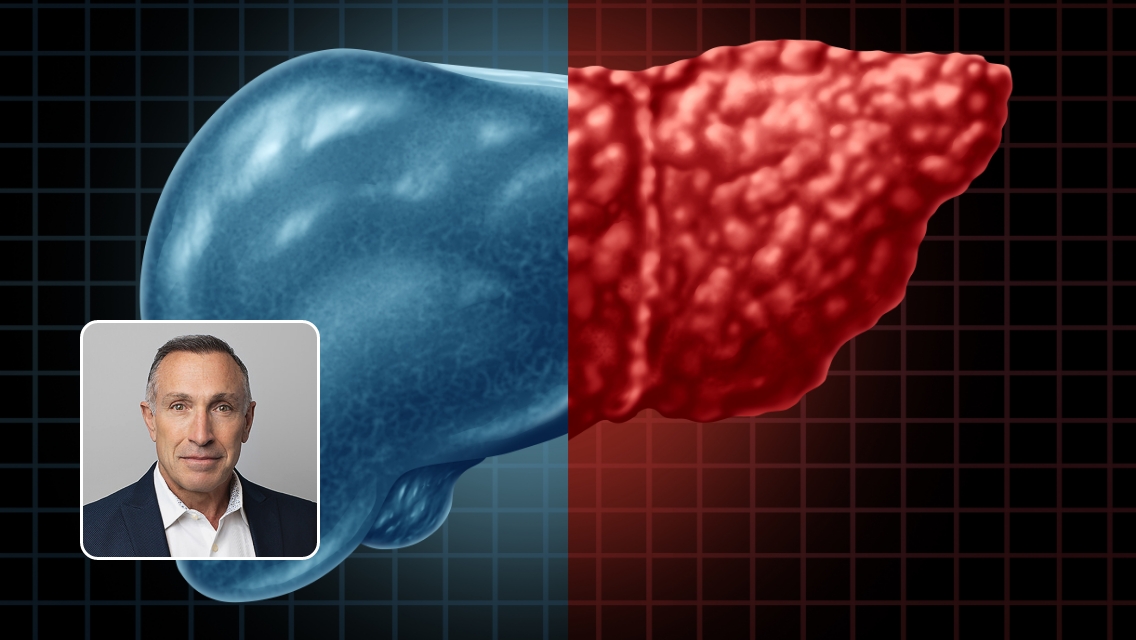

Up to one-third of American adults may be dealing with a liver condition that’s often “silent” until it becomes more serious. Metabolic dysfunction-associated steatotic liver disease (or MASLD, formerly known as nonalcoholic fatty liver disease, or NAFLD) is a chronic condition in which fat builds up in the liver. Because the liver is involved in about 500 bodily processes, MASLD’s effects can extend across multiple organs and systems.
In this episode, Jim LaValle, RPh, CCN, explains why liver health matters and why fatty liver disease is on the rise. He also discusses the blood markers to monitor to understand your liver health and the lifestyle factors that can help protect, support, and heal the liver.
This episode of Life Time Talks is part of our series on Performance and Longevity with MIORA.
Jim LaValle, RPh, CCN, is a clinical pharmacist, the cochair of the American Academy of Anti-Aging Medicine, the chair of the International Peptide Society, and the chief science officer for Life Time.
In this episode, LaValle explores the liver’s role in the body, why liver issues are on the rise, and how you can support the health of your liver. His insights include the following:
- The liver is an essential organ for your physiology. It’s involved in over 500 bodily processes, including storing glycogen, which supports proper glucose use and energy production. It also helps the body detoxify environmental toxins and process hormones and metabolic byproducts.
- The liver and gallbladder work together to create bile and bile acids that go into the gut. If bile acids are disrupted, the gut’s mucosal barrier can erode, leading to gut permeability.
- Suboptimal liver health means fat is being stored in the liver, causing it to produce inflammatory compounds that can have body-wide effects.
- Fatty liver refers to an accumulation of fat in the liver. The chronic disease long known as nonalcoholic fatty liver disease (NAFLD) was recently renamed to metabolic dysfunction-associated steatotic liver disease (MASLD). This name change reflects the understanding of the disease’s multi-organ effects.
- Alcohol-related fatty liver affects only a smaller portion of the population. The rise in MASLD is due to other drivers, including environmental burden; the consumption of ultraprocessed foods, sugar, and carbohydrates; insulin resistance and type 2 diabetes; high blood pressure; gut permeability; low thyroid function; chronic stress; and unhealthy weight gain.
- When the liver cannot process a compound correctly, it recirculates it in the body, which can lead to further health issues or direct liver damage.
- Up to one-third of American adults may have fatty liver disease — and the rate has more than doubled in the last 20 years.
- MASLD is usually asymptomatic until the disease is more serious. It’s important to monitor blood markers like AST and ALT (available in a CBC differential), as well as lipids, triglycerides, triglyceride-to-HDL ratio, insulin, and glucose. An advanced ultrasound can also detect early liver dysfunction. Additional comprehensive bloodwork is often needed to understand the cause of liver dysfunction.
- Symptoms of progressing liver dysfunction could include fatigue, right-sided tenderness under the rib cage, changes in bowel movements, headaches, histamine sensitivity, and rashes. Skin or eye yellowing is a sign of liver disease.
- Alcohol is still a big factor in liver issues. Even if it’s not caused by it, fatty liver disease can be worsened by drinking.
- The liver is incredibly resilient, and it is often possible to heal it even if dysfunction is far along. To support your liver health, consider these habits:
- Focus on good nutrition. Watch your fructose intake and consume nutrient-dense, whole foods, including plenty of vegetables and some healthy fats. Be mindful of your saturated fat intake.
- Adopt healthy lifestyle habits, especially adequate sleep and stress management protocols.
- Consider supplementing with milk thistle, which can help lower liver enzymes, as well as B vitamins, magnesium, and amino acids like glycine to help with liver function. Artichoke extract can also be helpful.
- Support your body’s detoxification processes with a program such as the two-week Life Time D.TOX.
Transcript: The Rise of Fatty Liver Disease (Performance & Longevity Series)
Jamie Martin
Welcome to Life Time Talks and our series on performance and longevity with MIORA. I’m Jamie Martin, and I’m here with Jim LaValle, Lifetime’s Chief Science Officer. He’s also a clinical pharmacist, the co-chair of the American Academy of Anti-Aging Medicine, and the chair of the International Peptide Society. And in today’s episode, we are delving into a topic we haven’t really ever gotten into on the podcast before. We’re talking about fatty liver disease and the rise of it.
Up to a third of American adults may be dealing with a liver condition that often stays what we’re calling silent until it becomes more serious. So we’re gonna be talking about the rise of this as well as why liver health is so important overall and which tests to be monitoring, as well as lifestyle changes that can help protect, support, and heal our liver. Jim, how are you?
Jim LaValle
I’m doing great. How are you doing?
Jamie Martin
I’m doing great and I’m excited about this topic because when we were planning for this season, y this was one of the things that you brought to us and we’re all like kind of our jaws drop to the floor. Cause you know, I’ve heard of you know, fatty liver disease and all these things, but I was like, What? Those rates are crazy.
So we’re gonna get into those stats and why it’s happening, but I do think people need to understand the role of the liver in the body first and foremost. Like let’s start there because we think of it often we’ll think about liver as a detoxifier, like it helps with processing alcohol or other things, but it’s actually associated with some like five hundred bodily processes. So give us an a little overview and then maybe some unexpected things we may not know.
Jim LaValle
Exactly. So we won’t have time to go over all five hundred.
Jamie Martin
No, we’re gonna go.
Jim LaValle
But let’s abbreviate. So the big thing I think is that first of all you have to think of the liver as is really a central organ for your physiology. One, it’s instrumental in storing glycogen. And so when you utilize glucose correctly and store glycogen, the liver helps support energy processes in your body. So you don’t think of that. I think the ability of the the liver detoxification’s pretty important. Right.
But it’s not just detoxification of the exposome or what’s in the environment. Our body’s the processes and byproducts of our metabolism, we have to process that to get it out of the body as well. So for example, how do we process hormones out of our body, estrogen being a primary example? The liver helps with the processing of hormones through these phases of detoxification.
Got it. So and and then there’s the aspect of you know metabolism. So and the one thing I think we we we tend to think of, like you said, is yeah, the liver’s just there because if we drink too much or you know, you know, it it’s helping us to detoxify. But detoxify is kind of this weird term, right? It’s kind of all encompassing.
You know, I think the other piece to it is that, you know, when your liver is functioning correctly, you have to make bile. So the liver and gallbladder work together to create bile, bile acids that go into the gut. When you start to get a disruption in bile acids, that erodes the mucosal barrier of the gut. And now all of a sudden you got a g a permeability problem in your gut.
And someone could be working with you. We got to help improve your gut barrier, right? We got to work on gut health, gut health, gut health. But if they’re not paying attention to the liver, you could always being you’re you’re swimming upstream against actually trying to fix the issue.
So we get into these now multiple issues around are we storing when the liver’s not going so well, are we storing fats in the liver? The big topic of our of our discussion today. But it’s also what’s the global effect when the liver is producing too many inflammatory compounds, when the liver is not organizing that bile acid release appropriately.
And look, the liver ends up having to process even things like if you’re exposed to molds or say biotoxins, and you start making a lot of inflammatory compounds called inflammagens, you start to create something called damage-associated molecular patterns or damps, or something called pathogen associated molecular patterns, PAMPS. Okay. Right? So there’s signals that have come from these two types of things. And the liver’s really sensitive to that. Okay.
And then before you know it, the liver becomes this inflammatory engine for the rest of the body. So on one side it’s supposed to protect. Right. But on the other side it could be sending out signals that could be going out globally into our tissues and organs and leading to future damage.
Jamie Martin
So just to make sure I’m gonna talk this back to you a little bit. So again, we think of it as a protective organ, right? Helping us do this, but it can also potentially be a source of damaging things just depending on what’s being what’s kind of coming into it. Exactly.
Jim LaValle
Got it. Right. Okay. That’s exactly it. Because you’re, you know, if you think about how the you know, just quickly, how does your liver detoxify? I think we have to understand that. Absolutely.
So you have two some say two, some say three phases of detoxification in your body, but phase one and phase two are totally related to your liver. Got it. You phase one detoxification includes what’s called the cytochrome P450 system, which you hear about certain drugs that you take could be influenced by the way your liver metabolizes them. Well, that is the cytochrome P450 system.
You need a lot of nutrients to make that work. And we have a lot of functional nutrient deficiencies in people. So a lot of people right away, phase one isn’t that good for them. So now when you go to bring a toxin in, it creates what’s called a phase one intermediate. And that phase one intermediate’s actually more toxic than the parent compound was. Okay.
Jamie Martin
Got it.
Jim LaValle
So then the liver has to hand that off to phase two detoxification. We hear about sulfation, glucuronidation, acetylation, all of the processes that the liver has these different mechanisms to take that intermediate that’s really a bad actor and say, hey, we’re gonna put you through this process so that we can get this out of you and make it more water soluble. So it can be excreted through kidneys or through the feces. And that’s what’s thought of as phase three.
But important. Both instances, nutritional adequacy is important. You need amino acids, you need vitamins, you need minerals in order to make phase one and phase two detoxification work. That’s why you can never forget the basics of about what we’ve always talked about is that groundedness in adequate nutrients, adequate and you know, proper diet, so that we can really make sure the liver has everything it needs. And then of course, once you start to get into trouble, it may have heightened needs.
Jamie Martin
Well, right. And then it’s like if you’re in a nutrient deficiency, which we know a lot of people are in our country with various things, which I’m sure we’ll probably get into. Right. But I think just understanding like the different processes.
So if if this something doesn’t get let’s say the liver can kind of send it back out, is that where some of like the recirculation can happen? Like of keeping like we’ve talked in other episodes about estrogen specifically. Like if it doesn’t get processed, is a li does that go through the liver kind of can get if it’s not broken down correctly or however you want to call it. Acetilized or whatever the sulfate sulfated, whatever one of the
Jim LaValle
Whatever other things are.
Jamie Martin
parts but it can get kind of just put back in, which then that kinda becomes like an estrogen overload, right, in the body.
Jim LaValle
Can be that, or it could even be just starting to damage the liver. Got— I’ll
Jamie Martin
So just happening right in the space.
Jim LaValle
And I’ll probably one of the best examples of this of how does it work together. Yeah. Is like it’s candida is a common issue. A lot of people have heard of, you know, candida. But when you have an abundance of candida, say you’ve been on a lot of antibiotics, women who are on oral contraceptives sometimes are more prone to eat you know, yeast and infections, or they get on an antibiotic, they get a yeast infection. Right.
You use up a lot of acid, you use up a lot of an enzyme called acid aldehyde dehydrogenase. That builds your acid aldehyde levels that your liver has to process. And when it gets too much, it actually can start to lead to scarring or fibrosis of the liver. So that’s just one example of how the microbiome, it’s not where it’s supposed to be, and the liver are interacting, and then the liver’s not functioning well.
It doesn’t make the correct bile you know acids to help the mucosal barrier. And now you’ve got this vicious cycle, which leads to, you know, there’s a condition called cholingitis that happens.
So I think it’s really important that we always remember, like we’re always talking about, hey, we got to break this down to an organ. Yep. But your body works as a system of systems. There’s always networking that’s going on. And if the communication’s bad, it snowballs and that’s why people should do earlier lab diagnostics to figure out the why.
Jamie Martin
Right. That actually leads us right into the statistic that I mentioned at the top of the episode. Like we’re talking about up to a third of American adults having what we’re calling fatty liver disease. And it’s the most common form of liver disease in children, which then that’s a statistic that’s more than doubled in the past twenty years. So why is this becoming so prevalent? What’s happening that we’re seeing this rise in liver issues?
Jim LaValle
Yeah, you know, I’ve I’ve really dug into the this over the last year because of being involved in some s you know new studies that that are being proposed at a couple universities. And it’s not alcohol. Like everybody thinks of you have fatty liver, you you’re an alcoholic.
Jamie Martin
You drink too much.
Jim LaValle
That is actually a smaller portion of the population. I’ll tell you the other fact that relates to this, it’s so important. More people will need a liver transplant due to non-alcoholic fatty liver than to hepatitis C over the next decade, which that’s really you know alarming to me that you know, we’re you know, that it’s that significant.
So I think there’s a couple things that are going on. One is environmental burden. Right. You know, we realize that with the environment having more and more you know, environmental exposure, more of the exposome, our liver’s gotta work harder to keep our body clean. So it gets overwhelmed. That leads to a a certain amount of toxicity.
Probably the most significant though is that you know when snack wells came out? Remember snack wells, Jamie? Yep. So we went from this cholesterol as the villain. So eat carbs and sugar, right? So snack wells were low in fat, but high in sugar and carbs. And so this really tsunami of insulin resistance and type 2 diabetes has really been the one of the big drivers of why we’ve developed fatty liver disease.
So it’s more about sugar, excess carbohydrate intake, and the fact that we’re moving less. So therefore we’re not burning up that sugar and carbs. And then we’re deficient in nutrients, and then there’s environmental exposure. And there to some extent is genetic risk, like certain gene SNPs that would say, you’re not as good of a detoxifier. Right.
And then you couple that with the fact that people are on multiple medications in many instances, especially over the age of 50, right. That could be disrupting liver enzymes as well. Well, it’s not hard to see where the problem is starting to really, I would say, come into full bloom. Right.
Because there’s so many factors that I think as a culture we’ve we’ve pushed ourselves towards and with really not even realizing it. We don’t realize that maybe the chemicals we’re using to clean in our house are an issue or that maybe the filters in our home haven’t been changed in a couple of years because we’re lazy about changing our air all that. I
Jamie Martin
And then we’re taking that in, right?
Jim LaValle
I’ll give you a gr a great example would be if you ever think about you know, I have to get into rental cars ’cause I travel a lot, right? But when I get into a brand new rental car and I smell kind of the outgassing from the rental car, you st you actually start to taste it. Yeah. Right? You actually
Jamie Martin
Yeah. Exactly what you’re talking about.
Jim LaValle
And that is the chemical getting in you. And right. And so you have to be able to detoxify it. We live in a modern world. Who knows what we’re gonna get exposed to at any any kind of moment or instance. So let’s be realistic. But I’m just trying to bring up an example of, you know what, this environment thing’s pretty real. Yeah. And and we have to think about that.
And and so the biggest issue though is because of we’re recognizing that it is a multi-organ system that leads to fatty liver. That means that if I have low thyroid function, or if I am insulin resistant, or if I have a permeable gut, or if I’m under a lot of stress, which leads to the permeable gut, right? Right. It’s that thought of there’s all these things that can lead us to the situation.
That’s why it’s just so critical that people understand. You should be looking at lab values about your health as quickly as you can with a full thought to what’s going on in your whole body. But if you’re s especially interested in your liver, you know, look at those those markers and make sure that, you know, hey, they’re in line and it’s okay.
Jamie Martin
Yep. And we’ll get to what those are. I think there’s some important ones we want to talk to. You’ve mentioned and and we talked about fatty liver disease. Let’s talk about what that exactly is. And so as from the way it sounds, right? Like at a simplicity level, it sounds like an accumulation of fat in the liver. Yeah. Is that it’s it’s Yeah.
Jim LaValle
That’s pretty much it. No, you got that.
Jamie Martin
So I mean, and one thing that’s of note I think we should say is like it was once called or what recently was non-alcoholic fatty liver disease or NAFLD. It’s similar to like how PCOS has been renamed as PMOS. It’s now being referred to as metabolic dysfunction associated steatotic liver disease or MASLD. Whew, those are like mouthfuls of words and like all that. But what does that shift in the name for fatty liver disease mean? Or what does it signify?
Jim LaValle
Yeah, I I think it’s the f you know, once again, it’s that full thought if it that your body is working as a system of systems, that there are multi organs involved and why the liver ends up being the focus of that issue. Right. Right. So what are the things related to the liver that are in other organ systems that are that are creating the you know, this train wreck, this crash in metabolic liver function?
And and if of course, you know, I just kind of highlighted some of those, right? But it’s really I I think people have to realize you’re you don’t have organs operating in isolation most of the time.
Jamie Martin
Yeah.
Jim LaValle
Your your body is creating this crosstalk. And you’re and I what I whenever I’m lecturing, and I mean whether I’m talking on a radio show or I’m in front of healthcare providers, you’re only as strong as your weakest organ. Because when you have an organ that’s kind of not performing up the stuff, it starts to send those, you know, bad signals to other organs. Right. And that starts to lead to why we have these multi organ or multi endocrine dysfunctions that are going on.
Jamie Martin
Yep, that makes total sense to me. And it’s things I mean, let’s think about it. It’s like things like high blood pressure, high blood sugar, weight gain, all of those things could be connected with this because of how the s systems are intertwined. Absolutely.
So for and that’s what I think it can get so complicated because if I’m someone who maybe like I have a blood sugar issue and all of a sudden I’m they’re my test results for liver are coming back weird, I might not at face value make that connection. And what’s that what’s the source for me might be different than what the source is for you. So again, individuality and all of this and how do you kind of get to the root of what it is? That’s what’s hard, I think.
Jim LaValle
Well, I I you know, that’s why I developed the metabolic code. Right. I mean, I developed the metabolic code to say your body works as a system of systems. And we could have created any, you know, networks, right? Because your body is one whole network, but we created the ones that were in the literature so that you can start to look at well, where are my big metabolic roadblocks at so that you can start to address the biggest issues and see when you correct the biggest issues, other organ systems start to fall in line.
Jamie Martin
It’s the same thing. Like for positive or negative, that’s what happens.
Jim LaValle
That’s exactly right. So I think that’s the the point that is most people miss when they get a lab test is they’re looking at single numbers and they’re putting them into chat. Right? They’re putting them in AI. That’s what everybody’s doing now. And it that’s not happening with this like a systems of systems effect.
And a lot of the research is just being published. I mean, literally in the last six months that’s validating a lot of what we proposed in our thesis on metabolic code and obviously went through curriculum committee at George Washington School of Medicine. So we felt like, you know, yeah, we got good validation on all the thoughts of what what went into it.
Jamie Martin
That’s awesome. I mean, we need that validation to say we can keep getting more information out there about this and the research then that backs it up, right?
Jim LaValle
Exactly.
Jamie Martin
So one thing that’s also really important to know about this is many people who maybe have MASLD, it can often be asymptomatic until a point that it’s pretty serious, right? So how does it be typically get detected or diagnosed? And what would that like, what happens if it’s left untreated or it gets to be a point where like, all of a sudden I have symptoms. Now what?
Jim LaValle
Yeah, so this is really important because in many cases, it’s just like kidney disease. You don’t really it’s kind of silent until it’s not anymore. Yep. And so you look at AST and ALT are big ones for you know, what’s going on with with the liver. So that’s in a comprehensive metabolic panel. Got it. And typically you run a C B C with a differential with you know, that as well.
Then you then you can look at your lipids and you can see if your triglycerides are high, which is kind of a stored form of of sugars, actually. Right. So triglycerides are a really good sign. And we always look at things like triglyceride to HDL ratio, for example, for heart health. But it turns out that, you know, high triglycerides that’s one of the reasons there’s a liver heart connection, right? Yep.
And you can look at LDL cholesterol and particle size as well to take a look at well, what’s going on with that? You need to look at insulin and glucose. Right. So insulin, glucose, AST, ALT, and triglycerides right away gives you a pretty quick insight and well, hey, am I early on bubbling up this risk of of fatty liver?
Obviously, another thing you could do that would not be a a lab test, but you could do an ultrasound. And they have advanced ultrasound imaging now that really picks up everything from the early stages of of liver disruption, fatty liver, all the way into fibrosis of the liver. And so when you get an ultrasound, you get your lab values. Now you have a pretty comprehensive picture. And there’s some accessory lab values as well that that have meaning, but those are the key ones you really need to look out for if you’re in the preventative mode. Right.
Jamie Martin
Let’s say it’s too though. Like, hey, all of a sudden I’m what would the symptoms be that all of a sudden, like, this is this I could be moving in this direction or I I have ASLD.
Jim LaValle
So, fatigue. You could have right sided tenderness under the rib cage. Right. Changes in bowel movements could be big. You don’t store glycogen anymore. You could start to experience more headaches, you could become more histaminic, so you get more rashes. Right. So those are some key things that you can you you would notice right away. It’s not like you’re gonna notice, I’m not detoxifying from glyphosate. Yeah, yeah. It’s not gonna be You’re not noticing any that.
Jamie Martin
Yeah, but it’s some of these symptoms that could be again associated with many things.
Jim LaValle
Yeah, I would be looking for rashes and headaches and fatigue, feeling that engorgement if your stools start to change color. Right. So, you know, when stools start to go gold, you know there’s, you know, gallbladder issues. And and and so that could be a sign as well, just looking at your bowel movement.
Jamie Martin
What about skin color? ‘Cause I often think people think of like all the livers not working functionally or starting to look a little bit yellow too.
Jim LaValle
Yeah, it’s like it’s like grandpa looks like a banana. Yeah. Right. It’s that’s an example I use in a case study. Eyes being yellow, right? So you get that because of bilirubin changes, right? You know, so bilirubin being another value. And then of course skin color as well. Yeah, sure.
There’s so you know, I think for people what I would always encourage people, if you really feel something’s not right, look at it early. Yeah. Yeah. ‘Cause I think and I think women are better at looking at things early than men. Yeah. Men wait until, you know, my eyes are yellow? I didn’t notice that. Great. You know?
And then the farthest situation is you start to see changes in albumin as well. Okay. And so you’ll get that papery looking skin that’s shiny. That can happen when the liver and the kidney are starting, ’cause when the liver starts to go in that direction, typically the kidney’s kind of mirroring it a little bit. So you could even see those kind of changes as well. Got it.
Jamie Martin
You mentioned like some of the differences. Women might notice this before men. Is is this MASLD more common in women and men? Is it pretty evenly split? I mean
Jim LaValle
I think it’s becoming yeah, I think it’s becoming pretty evenly split at this point, because of the the main driver for this is still insulin resistance. Right. It’s still type two diabetes, it’s still intake and diet. I would say that there’s no genetic predisposition, unlike autoimmunity, where there is a clear difference because of you know women having two X chromosomes, men not. Right. Which we’ll get into on another episode.
But so I don’t think there’s a a a major you know difference there. It’s you know as a culture, we’ve learned to eat a lot of sugar. There’s a lot of hidden sugars. Yep. And then even artificial sweeteners. So we think, I’m not gonna eat sugar, I’m gonna eat artificial sweeteners.
Some artificial sweeteners actually could be pretty problematic for the liver as well as eating a lot of refined foods or foods that you know, just have multiple kind of chemical ingredients that our body’s asking to process, right? It’s like, you know, help here’s another another set of chemicals coming down. And then you’ve got that fact of, you know, a lot of medications.
Jamie Martin
With the rise of ultra processed foods, for instance, like I mean, that has to be be playing some part of the role in this too, I would imagine. With the point on the chemicals.
Jim LaValle
I would I it it’s interesting. I had recently just did a podcast on ultra processed food and I don’t really think people understand how many foods have ultra processing in them.
Jamie Martin
Yes. Yes. We did an article on this in Experience Life not long ago because we’re like, we have to cover this. It’s so important. Yeah. Yeah.
Jim LaValle
So I really think that’s another important piece of the puzzle that we have to get back to you know, eating more foods in their original forms.
Jamie Martin
As close to nature as possible. Right. Like does it look like it was grown? Yeah, maybe let’s grab more of that. So I don’t want to overlook alcohol either though, ’cause that can still be problematic in with this.
Jim LaValle
Well, alcohol’s a big issue actually. And the the issue becomes, well, what if I s you know, maybe I started out with non-alcoholic fatty liver, but hey, you know what? I’m under a lot of stress now, I’m starting to drink. Yeah. And I’m having a I’m having a glass of wine at night in order to, I think, get to sleep, which we know that’s kind of a that’s
Jamie Martin
Sure, whatever.
Jim LaValle
a bit of a myth. But but the point being is is that you can load onto that. Or if it’s just the fact that you’re an alcoholic, alcoholism incredibly damaging to the liver and it scleroses the liver.
So you said what’s the end synthesis of this, right? As you lose the capacity to be able to detoxify, you you fibrose liver, you increase your risk for liver cancer, and you in you know you start as you fibros liver and lose metabolic function, puffiness, right? You s you start to, you know, have poor lymphatic drainage. And so there’s a a lot of you know downstream effects that are that are very difficult.
You know, so one of the biggest things, say for example, an alcoholic who’s had a lot of damage to their liver is they can’t score glycogen. Yep. So they’re they’re having to find a way to get their blood sugar up because they have no glycogen storage capacity anymore.
Jamie Martin
Right. So they’re very insulin resistant, but there’s nowhere for it to go. So you just it’s again keep cycling through.
Jim LaValle
Exactly. So what happens? More insulin, more glucose, more triglycerides, more damage, less liver capacity. Right. Right? So it’s this, it’s this downward spiral that starts to occur.
The liver’s incredibly resilient. Yeah. You can you can repair the liver. Even if you’re pretty far down the road of, you know, dysfunction. And I think that’s what people need to understand and lean into. Like it’s never too late. The farther it goes, the harder it is. But early, you catch it, you’ve got a great opportunity to totally turn it around.
Jamie Martin
Well I think that’s what we should spend the rest of the episode talking about ’cause it’s like what can we do? And it whether you were on this path or not, like how do we just take care of our liver as part of the bodywide system that we’re the systems that are connected and doing that?
So I mean, you mentioned already some of the tests we should look at. You know, we know blood markers, we want to look at ranges, right? Sure. So, like, what then can we do? Right? Let’s start with nutrition. I mean, we talked already about like get more foods from the original sources, but I’m I’m assuming there’s also strategic supplementation and potentially other paths in that case. Yeah.
Jim LaValle
Yeah, I think the first one is really watch your fructose intake. Yeah. Fructose is a big culprit in fatty liver. So from the dietary side, watch the drinks that list fructose. Yep. You really want to be careful of that. Eating s eating a little bit of fruit each day is not gonna hurt you. Like a lot of people go, my God, there’s fructose in that. That makes it bad. Yep. Not not quite the same as drinking 16 ounces of a high fructose corn syrup or fructose drink. Yep. So I think number one is really watch that fructose.
Number two is watch your glucose. Get a gluc — get a CGM. You know, put a put a monitor on yourself. See where your glucose is at. Right. Understand how your fluctuations are. What are the foods that are spiking your glucose?
The most inflammatory signal your body makes is postprandial hyperglycemia. So when you eat and you spike your glucose, it’s one of the most inflammatory, and actually it’s the number one thing that leads to blood vessel disease, right? So you end up getting, you know, heart disease from that. Yep. But it also has a significant impact on all the other organs because when your blood vessels are getting stiffer, you’re not delivering as much blood to those organs and tissues, right? Enough blood nutrients. Yeah. All that.
So I think that’s important to note that, hey, and once again this is an unpopular word. Vegetables. You you’ve got to learn to eat more vegetables because they’re nutrient to fish. They’re they’re they’re high in nutrients, right? You got high nutrient density, low calorie, not gonna spike your your blood sugar for the most part. You got a few that are dense, right? So potatoes might, you know, you might wanna watch too much of that.
You gotta watch eating a lot of carbs. You know, I I eat brown rice instead of white rice. Guess what? If you eat a lot of it, it’s still gonna be a problem. Right. So you’ve gotta watch overdoing carbohydrates. That’s why monitoring your blood sugar is important.
Fats to a certain extent, obviously healthy fats, olive oil, getting maybe some avocado in. A lot of people are eating grass fed and finished meats. So it’s lower in saturated fat. I really encourage people to look at their saturated fat intake. I think in general, ’cause a lot of things have coconut oil in them, especially in those ultra processed foods, they use coconut oil. So you really want to watch that.
Too much sat fat. Do do I think it’s a problem for everyone? No, but there especially for ApoE34 and 44 people, which we’ve talked about in previous episodes, you gotta watch the sat. And then it’s also about being consistent about your eating. Okay. You know, I I think a lot of times there’s a lot of negative information coming out about people who consistently do 16, 8 fast, interesting.
Jamie Martin
Yeah, yeah.
Jim LaValle
Time restricted eating all the time. Yeah. Right? That that it’s creating too much tension and stress on the body. So at least think about a 12-12 window. Think about breakfast, lunch, dinner, you know, create consistent nutrient ingestion on a consistent basis. Right.
And then look, you know, one of the big, big disruptors again, if you have sleep apnea or you’re not getting enough sleep, it’s gonna elevate your blood sugar, elevate your cortisol. Right. All of those things are gonna have an impact on your liver downstream. And so those are some key things that you can do from a lifestyle perspective and diet perspective. Now let’s look at nutrients.
Jamie Martin
Yeah, exactly. Let’s delve into those.
Jim LaValle
Yeah, so probably the the the the old standby that the tested time entity or or you know remedy is it’s milk thistle. Milk thistle’s a botanical, great at lowering liver enzymes, specific for detoxification, improving phase two detox, helps with normalizing phase one. So I think milk thistle, great nutrient.
You have to have B vitamins. Magnesium is really important for detoxification. Amino acids like glycine are important for detoxification. Sulfur, another compound, important. Sulfation, you would need sulfur. And a lot of times we’re not getting that in our diet. I don’t like to eat onions or garlic because guess what? I I smell like onions or garlic. I’m not gonna eat that. But they’re super
Jamie Martin
So good for that, right? Like the
Jim LaValle
important, right? And and so the so you can do things like MSM. You can think of milk thistle. Artichoke extract, really good for helping bile and you know, acting as what’s called a colorectic. So helping process lipids, help the bile. A lot of people don’t use artichoke extract in the U.S. It’s a lot bigger in Europe, actually.
Jamie Martin
How do you take it? Like that’s one I’m . . .
Jim LaValle
Artichoke extract? Capsule, tincture. Yeah, yeah. It’s you know it can be taken. It’s standardized to Cenarins. Okay. So there’s a standardized extract that’s been studied. Okay. So that one’s incredibly important.
And and then of course we get into, you know, do you have adequate folate? Do you have adequate B12? Because you got to make glutathione. But the other piece that people miss is you have three principal detoxifying slash antioxidant systems. Glutathione, SOD, superoxide dismutase, and catalase. So your body operates and your liver is dependent on, hey, we’ve got these molecules that really help us to be efficient.
And and then of course there’s, you know, there’s other nutrients that you can think of, S adenosyl methionine. People hear of SAM E. Yep. Sam E is really good to help support phase one detoxification. So there’s different nutrients.
What I would recommend is typically you’ll find a a combination formula that may have milk thistles, some MSM, maybe artichoke. Right. You know, it’ll have a combination of these nutrients. Or obviously, you know, I mean Annika Christ has done a great job with the the detox project that she has. I mean, so I think it’s a great jump start. Yeah. Right. Why not think about that? You know, do that as your yeah, a two week jump start.
But the one thing that you can’t move away from is that you wanna exercise, you wanna move, you wanna get blood flow through the, you know, through the liver. Yep. You wanna decrease your weight, try to get to the weight that’s right for you. We all have different sizes. It’s just weight
Jamie Martin
Yeah.
Jim LaValle
management. You’ve got you’ve got to get to that. When you when the more you have visceral fat, the more you make adipokines, which makes inflammatory compounds that your liver has to deal with. Yep. So really important to recognize that.
I I think the stress restro response is always important. So it is that total body approach of what do I do mentally? What do I do physically? How do I eat? Exercise. And gee, if my numbers are starting to go up, let’s look at why. But then you can always start with supporting your liver with some of those most important nutrients like glycine, mukdhistle, artichoke, salmon, those types of nutrients.
Jamie Martin
Yeah, we have we will link and like have those included in the show notes so everybody can kind of see what you’re sharing here. Absolutely. We also have several articles on like eating for detoxification because our body is innately built to help us detoxify, right? So how do we support them through what we put in there? So some of those whole food sources and things like that we’ll be able we’ll be sure to include.
Anything else we missed from like lifestyle factors that can influence? I mean, you could covered exercise. We talked about sleep, stress. We’ve kind of covered our basics. Alcohol intake, kind of minim minimize that.
Jim LaValle
No, I I think exposures are hard because you know, we’re all getting exposed. So that’s why it’s even more important that you realize you need to love your liver. Yeah. Right? You know, love your liver, right? We could we have a little button we could have with that, right?
Jamie Martin
Wearing those next time.
Jim LaValle
But but I think the the it’s just important for people to understand you’re not gonna know this unless you do a lab test. Yeah. You’re not gonna understand if you’re at the early stages.
And early stages mean okay, I you know, so my liver enzymes are trending high. Right. They’re not even out of bounds yet, but they’re almost out of bounds. They’re still normal. They’re normal, but you’re going in the wrong direction, and gee, your alkaline phosphatase is off, and your lipids look bad, and your glucose is trending a little high. Wow, I’ve just strung together a bunch of things that tell me I need to start to work on my liver. Yeah. Right.
And it it’s probably one of the most neglected things that’s I I think people don’t realize. They wait and all of a sudden somebody tells you you have a fatty liver and people go,
Jamie Martin
Yeah, then you’re reacting versus being able to like really be proactive. Which again, there’s still things you can do in that case, reiterate that, but how so much better. Like the case for regular lab testing proactively, so you can get ahead of it ideally.
Jim LaValle
It just gets stronger and stronger that you should be doing regular lab testing, in my opinion. And and remember, triglycerides sometimes is the early warning sign.
So if your triglycerides are going even above five a hundred, which like a one fifty has been the the range, but it’s being c encouraged in the normal lab values to get that down under a to a hundred. Yep. If you’re trending in the one forties again and normal, yeah, you’re probably already starting to shift into the wrong direction and loading some you know fats into the liver. Yeah. And then it’s if once it’s in the two hundreds, you know, it’s happening.
Jamie Martin
Yeah, that’s gone. Okay. Okay. Well let’s okay, so we’ve t talked about the labs. There is one other thing I want to make sure we bring up. You had mentioned when we were prepping for this episode, like there’s some advanced ultrasounds that are beginning to happen out of UC Irvine. So like what other innovations are happening in terms of whether it’s research or new ultrasounds or things like that to really help support liver health and wellbeing.
Jim LaValle
Yeah, so I mean you could there’s more advanced testing that you could do. If you if you had liver suspected liver disease, right? You have fatty liver disease. There’s advanced testing that can go on to like identify certain proteins or compounds that shouldn’t be in your body. So there would be an advanced test. Okay. And and with a lot of sophisticated marks.
Jamie Martin
And you would be able to get like more specific for yourself and understand what’s really going on.
Jim LaValle
Yeah, you understand how far along you are, right? Which is important. The other one is you can look at genetic predisposition. I’m big on believing in epigenetics. So if you have the genetic predisposition, C O T enzyme, you know, C O T SNPs, which is a like a one of the detox SNPs, that predisposes you, but once your liver enzymes are up, well, you know what? That’s already probably going on. You’ve already activated those enzymes. Right. That’s So I think I think that that you know, some you know, genetic testing could you know, actually add a little more insight for yourself.
Liver ultrasound’s the way to go. I mean, you know, especially the new ones that are, you know, able to truly identify what’s going on. There’s a study that’s being, you know, done at University of California Irvine, which of course is, you know, a massive integrative medicine institution. Right. Due to the Samuel Elli family that, you know, created an incredible donation to further the research and integrative care, right?
So they’re gonna be looking at this and looking at a botanical compound that has had a lot of clinical evidence that it’s that it reverses non-alcoholic fatty liver or now our new terminology. Yeah, right. But also fibrosis in early stages.
And I’m really excited about it because one of the lead researchers I’ve talked to, because you know, he’s you know, a, you know, D that does oncology work on, you know, doing surgeries on pancreatic cancers and liver cancers. Like this this this doc, you know, Gareth is fantastic because he because he really understands both sides. Big believer in in alternative therapies, natural therapies.
And so he’ll be leading that study where they’re using this combination of nanoparticled herbs that has been shown to be successful, but now in a structured study. Got it. So I think that I think is gonna just be amazing when that gets completed and and published. I’m sure it’s gonna show positive results.
Jamie Martin
Yeah. Well that’s super interesting. W one last question that just occurred to me. Like you often hear about like liver transplants and like that’s something that, you know, part taking part of a healthy liver from someone and putting that in somebody else. I mean, how common is that? Like when if something were to progress, say with MASLD to a more serious state, like cirrhosis or something like that, like when is that needed? I don’t know if you have those stats off.
Jim LaValle
I don’t have those thoughts offhand. I would say that that need is increasing at a I’d say a yearly rate at this point. Okay. It’s it’s a lot more common than we think that people need that liver transplant and people are on liver transplant list. Yep. So as I said at the beginning of our talk, more liver transplants are gonna be needed due to fatty liver. Right.
Jamie Martin
Yeah.
Jim LaValle
Than due to what used to be the reason hepatitis C, which a vector can damage and destroy the liver. Right. So it’s you know, it is a epidemic issue.
So that’s why I’m serious when I say love your liver, go get a lab test, understand what’s going on for your health, consult with providers. MIORA has fantastic healthcare providers that can help guide you in an organized path. To feeling your best and neutralizing some of the things that may be starting to skew that are leading you down the wrong path towards chronic illness instead of chronic vitality and resiliency. Right.
Jamie Martin
I mean we wanna be in that ladder camp, right? That’s exactly all right. So love your liver. We’ve got that. Okay. Jim, thank you as always for just helping us get a little bit more up to speed on what’s happening with these like this aspect of our health. So appreciate
Jim LaValle
It was a pleasure.
More like this




We’d Love to Hear From You
Have thoughts you’d like to share or topic ideas for future episodes? Email us at lttalks@lt.life.
The information in this podcast is intended to provide broad understanding and knowledge of healthcare topics. This information is for educational purposes only and should not be considered complete and should not be used in place of advice from your physician or healthcare provider. We recommend you consult your physician or healthcare professional before beginning or altering your personal exercise, diet or supplementation program.
Life Time provides administrative, non-clinical support to MIORA as well as services and amenities related to general wellness and fitness; Life Time does not provide medical advice, diagnosis, treatment or care.
Advertisement