

The Ordinary Medicines Found in Everyday Life With Geeta Maker-Clark, MD
Explore the belief that healing extends beyond traditional healthcare and is cultivated through the seemingly ordinary medicines of daily life, like breath, movement, nourishing meals, and connection.


What if we expanded our view of medicine as something that’s practiced outside of clinics and beyond prescriptions, and began to view it as something that surrounds us every day?
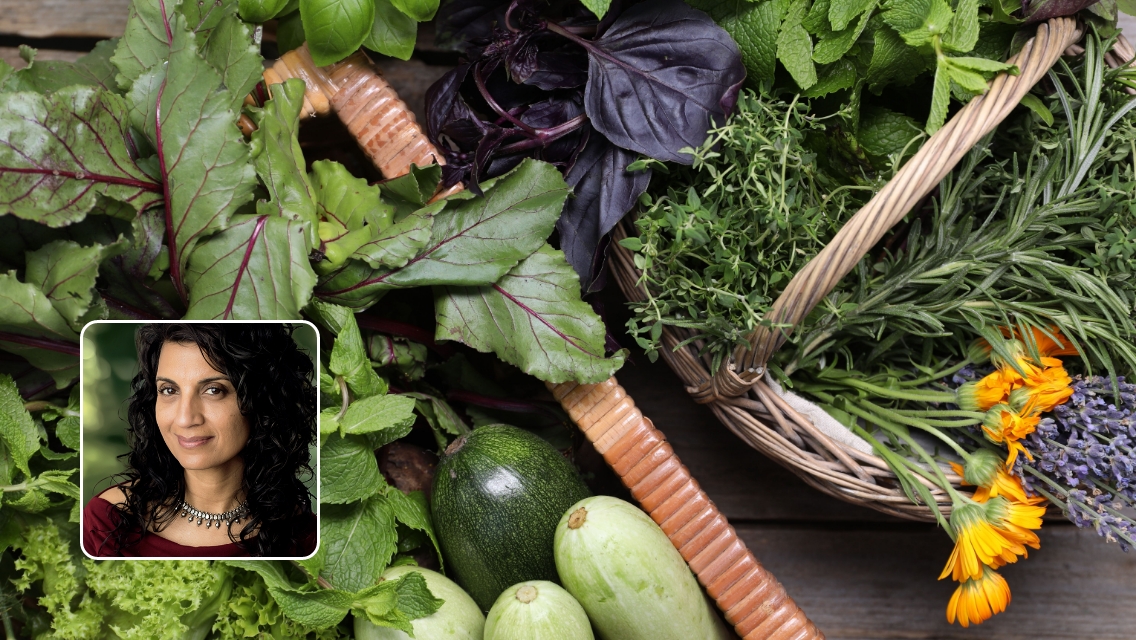
In this episode, Geeta Maker-Clark, MD, makes the case that healing is far bigger than healthcare as we traditionally know it. She talks about the medicines hiding in plain sight — from breath to movement to nourishing meals — and why she prescribes them to all her patients. She explores what it really means to cultivate vitality through small, ordinary, daily practices.
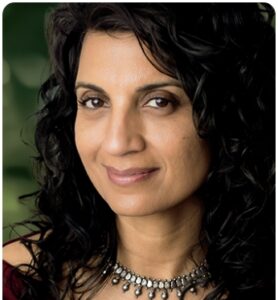
Geeta Maker-Clark, MD, is a nationally recognized leader, speaker, educator, and advocate in the field of integrative medicine. She is the director of integrative nutrition and advocacy at Endeavor Health, clinical assistant professor and codirector of the culinary medicine program at the University of Chicago Pritzker School of Medicine, and faculty for the University of Arizona integrative medicine and ayurveda fellowship.
She has spent two decades studying integrative medicine, nutritional science, botanical medicine, mind-body medicine, and natural childbirth in health clinics all over the world. She started the Food is Power program on the South Side of Chicago in Chicago Public Schools to empower youth with health literacy, through a curriculum that focuses on decolonized food education, food justice and sovereignty.
Maker-Clark has been honored with several awards for her contributions to the field of integrative medicine and is a widely requested speaker, passionate about sharing her knowledge and experience to help communities thrive. Maker-Clark believes in transforming the way we think about medicine and looks to ancient wisdom and modern struggles as opportunities to heal with the medicines that are all around us.
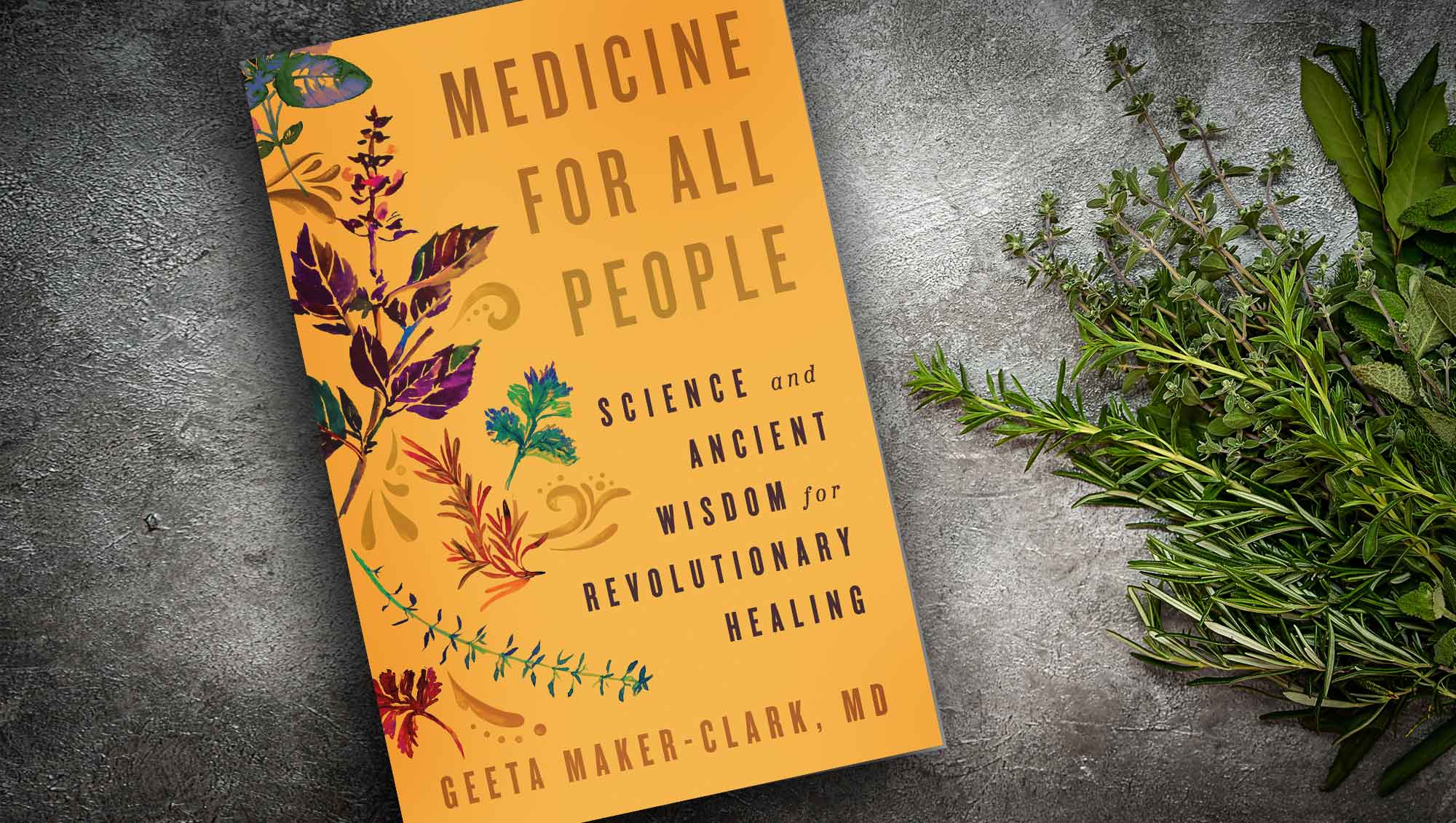
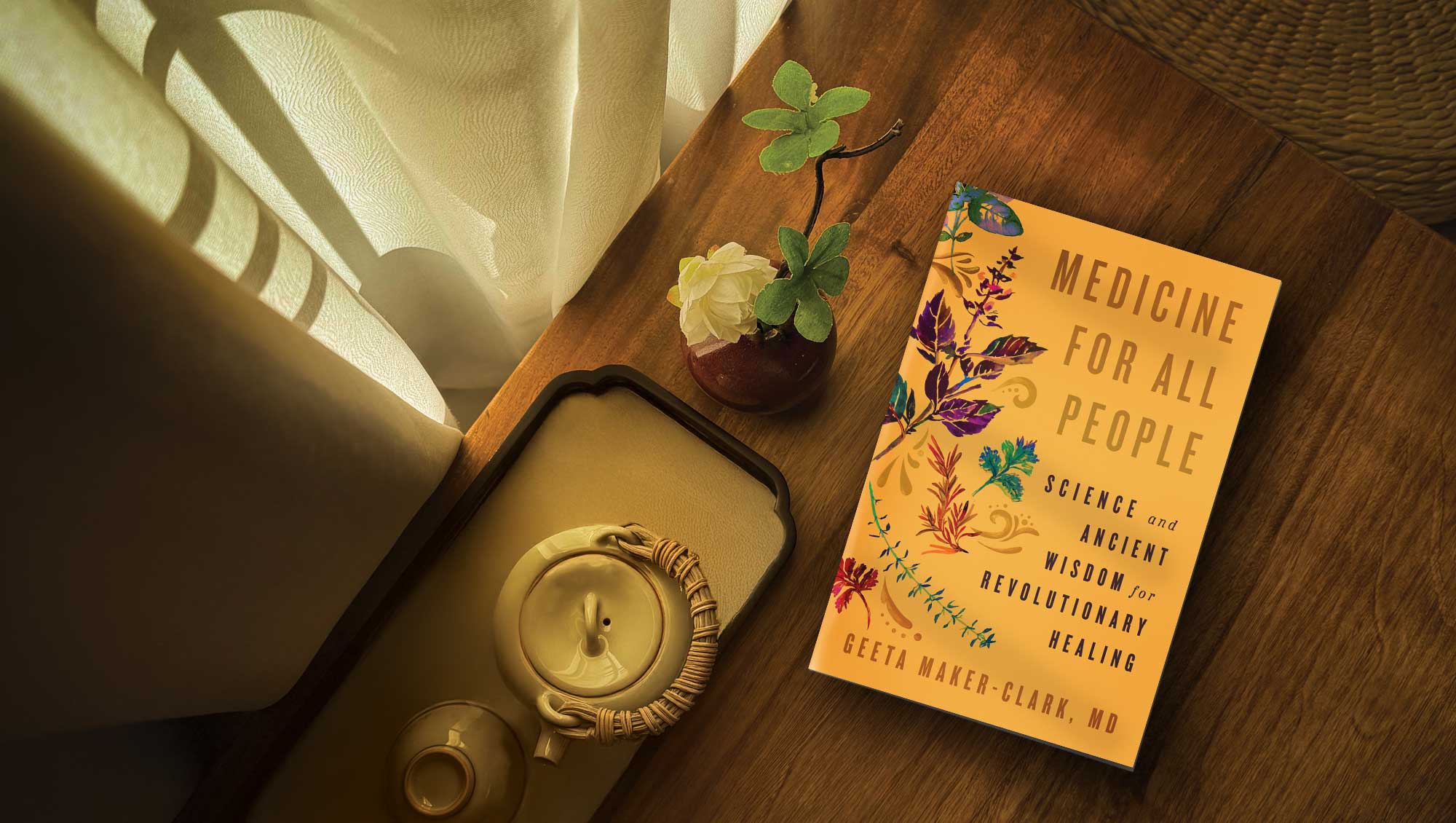
Her new book, Medicine for All People: Science and Ancient Wisdom for Revolutionary Healing, is a compelling call to nourish what ancestral health wisdom has been forgotten.
In this episode, Maker-Clark encourages us to expand our definition of “medicine,” exploring the tools for wellness that surround us every day. Her insights include the following:
- Medicine is bigger than the doctor’s office, and real healing doesn’t only happen through prescriptions and diagnostics. As Maker-Clark puts it, “Healing [is] really much, much bigger than healthcare as we know it.” Things like breath, movement, and connection all count.
- We’re living in a vitality gap. We track our steps, sleep, and supplements like never before, yet exhaustion, anxiety, and chronic illness keep climbing. “Vitality can’t be downloaded. Vitality can’t be purchased,” says Maker-Clark. It grows from small, seemingly ordinary daily practices.
- Your zip code may matter more than your genetic code. Where you live, including your access to resources, can predict your health and longevity more strongly than the genes you inherited.
- Healthy eating can be affordable. Nourishing food doesn’t require a specialty store or a big budget.
- How you eat can matter as much as what you eat. Food affects your body differently if it’s eaten while you’re stressed at your desk or in the car versus if you sit down to enjoy it in the quiet or while in good conversation with others.
- Play is a biological need, not a childhood luxury. Play lets us “fail safely” in low-stakes settings, training the nervous system to handle real-world stress. It’s a tool for resilience. If play feels forced, it may be the wrong kind of play for you. Lean into activities that spark joy for you.
- Dancing helps protect your brain. Movement paired with rhythm stimulates the brain to build new neural connections. That neuroplasticity supports cognitive health.
- Connection isn’t a nice-to-have. “Belonging is a medicine and not a luxury, and it’s an actual biological need,” says Maker-Clark.
- Gather your “ordinary medicines” every day. Vitality can come from free, simple practices: Look out at the natural horizon, dance for a few minutes, share a meal, or send a quick text to someone you care about. Small acts, repeated daily, add up.
Transcript: The Ordinary Medicines Found in Everyday Life With Geeta Maker-Clark, MD
Jamie Martin
Welcome to this episode of Life Time Talks. I’m Jamie Martin, and I am so excited for my conversation today with Dr. Geeta Maker-Clark. She is the author of the new book, Medicine for All People: Science and Ancient Wisdom for Revolutionary Healing. And in this book, she explores the idea of what would happen if we expanded our view of medicine as something that’s practiced outside of clinics and goes beyond prescriptions and began to view it as something that’s all around us.
In this episode, we’ll be talking with her about the medicines that are all around us, from breath and movement to restored connections and why she prescribes them for all of her patients. Dr. Geeta Maker-Clark, thanks for joining us on the podcast. How are you?
Geeta Maker-Clark
Thank you so much, Jamie, for having me. I’m just really happy to be here.
Jamie Martin
I’m so excited to have this conversation. You and I met at the Institute for Functional Medicine’s annual international conference a while back. And I got to hear you speak on these topics, and I’m just really excited to be able to share what you’re doing with more people. Before I get into my questions, I gotta share your bio with our listeners, and we’ll dive in here.
So Dr. Geeta Maker-Clark is a nationally recognized leader, speaker, educator, and an advocate in the field of integrative medicine. She is the director of integrative nutrition and advocacy at Endeavor Health, Clinical Assistant Professor and Co-Director of the Culinary Medicine Program at the University of Chicago, Pritzker School of Medicine, and faculty for the University of Arizona Integrative Medicine and Ayurveda Fellowship. She has spent two decades studying integrative medicine, nutritional science, botanical medicine, mind body medicine, and natural childbirth in health clinics all over the world.
And she has started the Food is Power program on the South Side of Chicago and Chicago public schools to empower youth with health literacy through a curriculum that focuses on decolonized food justice and sovereignty. Dr. Maker-Clark believes in transforming the way we think about medicine and looks to ancient wisdom and modern struggles as opportunities to heal with the medicines that are all around us. As a woman of color, a community organizer, an integrative physician and thought leader, her work aims to help communities be well-nourished, the heart of healing in our society and country.
That’s quite the bio. You have a lot of different aspects to your work. And we’re going to dive into that.
Geeta Maker-Clark
Yeah, thank you. I know that was a long one.
Jamie Martin
I love it. Well, I mean, to that point, you have worked in a variety of medical settings, practiced medicine in a variety of spaces in your career over the past two decades. How has your definition of what it means to be a healer expanded as you’ve done this work?
Geeta Maker-Clark
Well, when I entered medicine, I really did think healing was going to be happening more in exam rooms, in hospitals, in the OR, in the various places that I was doing my training. And I was trained very well to diagnose disease and to prescribe medications, treatments, and to intervene when things were not going well for a patient.
And those skills are incredibly important. I am so grateful for the training that I received. I’m very grateful for modern medicine and what we do in all of those spaces. But what I was noticing over time was really that my training had not fully prepared me for actual care of human beings in their daily lives. And that’s what a family doctor does. The most powerful influences on my patients’ health really had very little to do with what was happening in the 30 minutes that we were seeing each other in the clinic.
They were shaped by much larger forces, whether they had access to healthy food, whether they were safe in their neighborhoods, whether they had meaningful relationships or were lonely and isolated, whether they felt connected to their culture, to their family, whether they had time to rest or time to move or celebrate or feel belonging.
And so there wasn’t really a single moment that changed everything for me, that sort of cracked me open, but really thousands of encounters with patients over time where I was seeing that healing was really much, much bigger than healthcare as we know it. And that’s what I’m interested in. And that’s why I went into medicine in the first place.
When I was seeing people who were very well optimized, whose medications and dosing were well optimized, but they were still very unwell. They were still exhausted, lonely, isolated, struggling to meet basic needs, facing significant illness, some of them. And then also being filled with vitality because they were deeply connected to purpose and meaning and community. I really started to see healing was much bigger than anything I had been taught, and really pulling back my lens to help people not just manage disease, but to create conditions in which they could thrive.
Jamie Martin
Right. And so much of what you’re speaking to are things that don’t happen in a clinic setting. They’re things that we’re encountering every day in our environments, in our spaces. And I know that you talk a lot about the role of environment when it comes to health and well-being. So can you speak to that environmental piece a little bit?
Geeta Maker-Clark
Yeah, I think that environment means a lot of different things. So for a person who is lonely, for instance, and isolated for whatever the reasons may be, the environment is really about community for them. Are there any meaningful relationships? Are there any connections? Are they communicating with someone every day? So what kind of environment does that individual need to actually be able to thrive?
There are others who might have those things. They may be very well connected, have relationships that feed them, and be indoors all the time, working in indoor spaces in front of a computer and then coming home to a full family life of work and maybe getting back on a computer later at night, and not being connected to the natural world and the environment of bird song, of fresh air, of trees changing.
And then there are others for whom the outdoor environment is unsafe because of air pollution or threats to their safety. So for each individual, I feel like I look to see what are the environments, what are the ecosystems in which we can really explore what would be the most beneficial for them in that moment, knowing that there are so many layers of environment.
Jamie Martin
Right. And again, it’s individual, which so many things when it comes to health are, right? There’s never just one thing that’s maybe going to work for you that will work for me, or, you know, just depending on the variety of things. So for someone who hasn’t, let’s say, ever experienced health as something that happens outside of a clinic, or they think it’s managed in a doctor’s office, what’s the most important thing you would want them to understand about your idea here with your book?
Geeta Maker-Clark
I would want people to know that health isn’t something that happens to us, right? That it’s not something that we either get to have or don’t have, or some people are lucky enough to have. It is something that we participate in every single day. And healthcare is incredibly important when we’re sick, when we’re injured, when we need specialized care. But those interactions, that healthcare itself accounts for such a small amount of time in our lives, a fraction really, of what determines our overall health outcomes.
So I think the choices that we make matter very, very much. And equally important are the conditions in which we are making those choices. So that means the food available in our neighborhoods, the relationships that are supporting us. And I want people to know that the burden of responsibility is not entirely on you to be healthy.
You should make good choices for yourself, get the sleep you need, make the efforts to reach out to people when you need help and create those relationships and cultivate them, eat well when you can and when you’re able. And that also we need to be doing this together as a community and as a society to help each other thrive.
And I think that is an important lens because right now we’re really focusing so much on individuals holding all of the responsibility of their care. And none of us can do this alone. So if you need help, it’s okay to ask for it and to know that you actually will be healthier for asking for it.
Jamie Martin
I love that perspective. And it’s interesting. Several years ago, the tagline for Experience Life magazine — it’s shifted a couple of times over the years, right, it’s healthy, happy, for real — but for a period of time when our founding editor was here, it was being healthy as a revolutionary act. And it was this idea that she brought to us because it was really like there are a lot of things, yes, that we can make choices about and we have control, but there’s also a lot of outside factors.
And to be healthy when you’ve got a lot of obstacles out in the world that make it difficult to make healthy choices, it is revolutionary to be that side. So it’s interesting to hear you say that. It’s like this perspective shift. We’ll talk about this a lot, this idea of like, I get to do this versus I have to do this. And that’s not always easy when it comes to health, but it’s something if you can shift the words even just a little bit, it can change the mentality around it too.
Geeta Maker-Clark
I totally agree with you, Jamie. And that’s why I included the word revolutionary in the title of this book. It was really that, that we think about revolutions as being these massive transformative shifts, these giant movements. Revolutions are made up of individual people, right? And if we can transform and expand the way that we think about medicine, what is medicine, back to what our ancestors considered medicines to be, you start to realize that these health practices of taking a walk and preparing a meal and reaching out to a friend, that these are how we participate in our own healing. And I think that’s revolutionary.
Jamie Martin
Yes. It can seem ordinary, but when we do it consistently, right? The change that can happen. That’s so great.
Geeta Maker-Clark
Absolutely.
Jamie Martin
Well, to that point, one thing that you have talked a little bit about is this idea of the vitality gap that’s in America. We have access to more things that are supposed to be helping us be healthy — medicines, supplements. We have tons of health content. Experience Life contributes to that. And yet there’s still the majority of us who are not truly well. What’s driving that gap, do you think? And why does it seem to be continuing to widen?
Geeta Maker-Clark
Yeah, that’s such an important question. That vitality gap, I think, is existing because we’ve become very skilled at treating disease, but we’re becoming less skilled at cultivating health. And they’re different things. So we have so much health information, more than we’ve ever had before, with apps, with excellent supplements, with trackers. So many people who are experts or claiming to be experts, right? And more interventions than we’ve ever had at any point in human history, really. It’s pretty phenomenal.
But even my most studied patients who have an Oura ring, or have the apps that are tracking their carb intake, their continuous glucose monitoring, they’re some of my most exhausted, disconnected, overwhelmed, anxious patients. They’re looking for answers, and rightfully so. They’re advocating for themselves, but the problem isn’t, in my perspective, a lack of information. I don’t really feel like I’m getting lots of information to help me treat people better when we are using all of those things.
I think that the conditions that support vitality are eroding and they have been for a while. So when we spend less time in community, less time outdoors, like we were just speaking about, less time playing and dancing and preparing meals together, less time in ritual — that actually is why I believe those sort of practices have fallen away. And then there’s been more chronic stress and social isolation and even economic insecurity and digital overload that have become increasingly common.
So I like to just think about this: that vitality can’t be downloaded, right? Vitality can’t be purchased, even if the jar says vitality right on there. It’s not something that you can buy. It emerges. It emerges from cultivation and from time and from daily small ordinary practices that support our flourishing. And so I really believe we can narrow that vitality gap, and we can narrow it quickly if we start to look at the right places to do our work. When we start to work on cultivating health rather than treating disease or treating problems.
And the good news to me, the great news, is that these medicines are available to us. They’re all around us. They’ve been here all along. And the challenge really comes from remembering them and making space for them in our lives.
Jamie Martin
Yeah, because these things seem ordinary and they can get crowded out by all the other things, all the distractions that are around all of us, right? So one of the things that really struck me when you were presenting at IFM was when you talked about the role that someone’s zip code can play as a predictor of their health and longevity. In your experience, what does that look like when the conditions of someone’s life are working against their health before they really have a chance to even make choices for themselves?
Geeta Maker-Clark
Yeah, I write a lot about this in the book. For me, in my clinic, it looks like a mother who’s working two jobs and she wants to cook healthy meals for her family, but she doesn’t either have the time or the access to the healthy food she wants to cook. It looks like a child who’s growing up in a neighborhood where there are no safe places for them to play. I have elders in my practice who have no reliable transportation to appointments and are living alone and very isolated. And it also looks like people who live with chronic stress because of their housing struggles, their safety struggles, their trying to make ends meet.
So we talk about health as if it’s something that we’re all starting at the same starting line for this race we’re about to run. But some people are navigating, and maybe most people are navigating, enormous barriers before they even make one single health decision.
So recognizing those realities is vital — that your zip code determines your health outcome more than your genetic code does — because then we can shift the way that we are creating our systems of health and healthcare. And we also are looking at people with a different lens rather than this person who has individual symptoms and disease, but we’re expanding what health really truly requires.
And I was speaking recently at a food is medicine conference. And they asked — it was a panel of us — they were asking, what do you think would be the most transformative thing that could happen to uplift the food as medicine movement? And everyone was sort of speaking into their expertise and their place of their ideas around this. And when they came to me, I said, a living wage. I think a living wage would actually be the most important thing we could do to uplift this movement. Because until we get real about the fact that people can’t afford food right now because their jobs aren’t paying them enough, we’re kind of working up here, you know, instead of down here at the roots.
Jamie Martin
Yeah, where are the origins of where the struggles are coming from, right? Like where is that happening? And that really gets into this idea. There’s the idea of affordability. There’s also the idea of access. You talk about concepts like food swamps and food apartheid. They don’t get a lot of media coverage. I will say I’m really proud that we have talked about this in Experience Life. It’s something we’ve had in our conversations and in our coverage. How do they fit into really any conversation about root medicine as you were just talking about?
Geeta Maker-Clark
Yeah. I’m really grateful that Experience Life has uplifted those terms because they aren’t well understood. And I think people still kind of traffic in this idea of a food desert. And I avoid that term food desert because a desert is a natural ecosystem. It naturally occurs. It’s not a struggle. It belongs in the ecosystem of our planet. A food desert implies that there’s something natural about having areas where there’s not access to healthy food, and that’s just not true.
So I think these terms are more accurate. A food swamp is an area where unhealthy food vastly outnumbers healthy food options. And for many neighborhoods in America and throughout the world, the corner stores, the convenience stores may have an overwhelming amount of options, but many of them are packaged and processed food and nothing fresh.
And then a food apartheid framework goes even deeper and really acknowledges that this inequitable food access is not an accidental happening. It is the result of historical and ongoing policies, disinvestments in neighborhoods, systemic racism, systemic inequities. So to your point, I think if we’re serious about root cause medicine, we have to ask why people are making the choices that they make, right? They may be making them because those are the only choices that they have. So it’s not enough to tell people what to eat. It’s really about looking upstream and addressing the conditions that are shaping their health long before disease develops.
And I work with many patients in neighborhoods such as these in Chicago that are really affected by food apartheid. And of course, I’m not going to be able to change the food system, and neither are they. We can’t start pouring an investment into the neighborhood in their lifetimes in the way that we would like. So we have to help people where they are at, right?
And that’s why the recipes that I work with in our culinary medicine program are very simple recipes with only ingredients that are available even at corner stores or at grocery stores that don’t have a lot of options, and that also average less than $2.50 per serving. So we have to meet people where they are at, right? And it’s just not doing any justice to anyone to tell them to eat healthy and well and give them a bunch of ideas that they just cannot meet.
Jamie Martin
It can’t create unrealistic expectations for people. I mean, that’s the challenge sometimes with recipes: I don’t even know where to find that thing. And that’s most of us — a lot of people don’t even have access to the basics, right, that would be good for our health. Well, I think that gets into this idea that you have, like the culinary kitchen as pharmacy. Like the food we eat, how we nourish ourselves, can be the medicine for us, right? So talk to us a little bit about that and where that kind of thinking came from for you.
Geeta Maker-Clark
Yeah, I love the idea of kitchen as pharmacy. It’s really one of humanity’s oldest pharmacies. And across cultures, food has always been much more than nutrients, right? It’s really been about stories, traditions, identity, memory, healing, belonging. Every person I’ve talked to about food has told me their favorite recipes are the ones that they remember from their childhood, that someone they loved made for them, that held something deeper. They’re not usually like, I love my low calorie, high protein chicken salad or whatever.
Jamie Martin
Right. Right.
Geeta Maker-Clark
Right, right. It might be the thing that is the healthiest thing they eat, but it’s not the thing that’s the most nourishing, which is something different. So when we reduce food to just grams of protein and carbohydrate counts, I think we miss a lot of the power.
And the idea of the cultural kitchen as a pharmacy is that a family recipe, a grandmother’s soup, a shared meal during a celebration, even if that meal isn’t the healthiest meal — these nourish us in ways that extend far beyond biochemistry and far beyond nutritional science. And so I very much value the heritage diets of people, and I try to work with them where they’re at in terms of what cultural foods do you like to eat? And how can we work with those to make them healthier for you if that’s your goal? And if it’s not, to just celebrate what there is in their food culture that is good and cultivating health for them.
And for some patients, honestly, I’m working with just, let’s get you not eating in your car or at your desk before we’re even talking about what they’re eating. You know, I’m like—
Jamie Martin
Yes. Yes.
Geeta Maker-Clark
That’s right. And like if you can take five minutes to go outside and eat quietly by yourself and it’s McDonald’s, do that. That’s a nourishing meal, versus trying to eat it on the go while you’re having a meeting on Zoom at the same time. So there’s a lot to it. But I think all of that layers into the idea of a cultural kitchen and walking away from a meal and feeling nourished.
Jamie Martin
Yeah. Is that idea received when you’re working in your Food is Power program in the Chicago school districts? Like when they think about food as that versus just nutrients, right? As you’re teaching kids these concepts, how do they receive that, and what have you learned from them and your experience in those schools?
Geeta Maker-Clark
Yeah, it’s been one of the greatest joys of my life to work with kids in the Chicago public schools. It’s been 11 years now that we’ve been teaching Food is Power. And I’ve learned way more from them than I think they’ve learned from me. Because what I’ve noticed about working with young kids — and these are middle schooler age that I teach — first of all, they’re a lot more aware than adults realize that they are. I think they understand when systems are unfair. I know they understand when systems are unfair. They know that the access they have in their neighborhoods is different than what the rest of the city might have. They care about their communities, they care about their family. They are smart about what they like and what they don’t like.
And one of the most inspiring things I’ve witnessed is that we give them a lot of autonomy in these classes. They get a chef’s knife, a cutting board. We teach them. We have a wonderful teaching chef who comes in and teaches them some knife skills. And then they put it to work and they’re really creating the whole recipe.
And once they have that knowledge and that agency, they are teaching us. Like, I made something like this with my mom the other day, or, this is how we chop this at home, or, I don’t like that because of XYZ thing. They are teaching us, they see themselves as leaders. And that kind of transformation is very difficult to capture in a clinic setting. It’s impossible to capture in a clinic setting, I will say, after seeing kids for 25 years in my clinic.
It’s profoundly powerful to see kids feel powerful and excited about food. And that’s why the class is called Food is Power, because really it’s not about this is what you should eat and shouldn’t eat. It’s really like this is how you take control over your own choices. And maybe that will extend beyond food in their life too.
Jamie Martin
I was gonna say that’s exactly what I was just thinking. Like it seems like lessons that are beyond the food side, but also like you talk about the leaders, the passion, the you know, those things that come out of them, like those carry over into other aspects of our lives. And if they can feel food is power, there’s power elsewhere too, maybe that they can channel.
Geeta Maker-Clark
Absolutely. And some of the kids have been like, I want to open a restaurant. They’ve had dreams that they would not have had otherwise. Some of them are like, I want to be a doctor, because they’re working with my medical students who are not that far off in age from them. So there’s a lot that comes in that class that has really far more to do with life and living and power than just food and nutrition.
Jamie Martin
Yeah, that’s pretty exciting. It’s got to be really rewarding for you and your doctors that are out there with them. Talking about this idea of social eating — I know that’s something we’ve heard a lot about through things like the blue zones and that type of thing. But just the role of social eating and longevity. When we think about that, and thinking about how food is nourishing, what does that look like through that lens, nourishing food and longevity?
Geeta Maker-Clark
Yeah. Social eating is such an interesting concept, isn’t it? That we even have to put the word social in front of it now.
Jamie Martin
Right. I mean the fact that people just don’t eat together as often anymore. There’s lots of statistics around this.
Geeta Maker-Clark
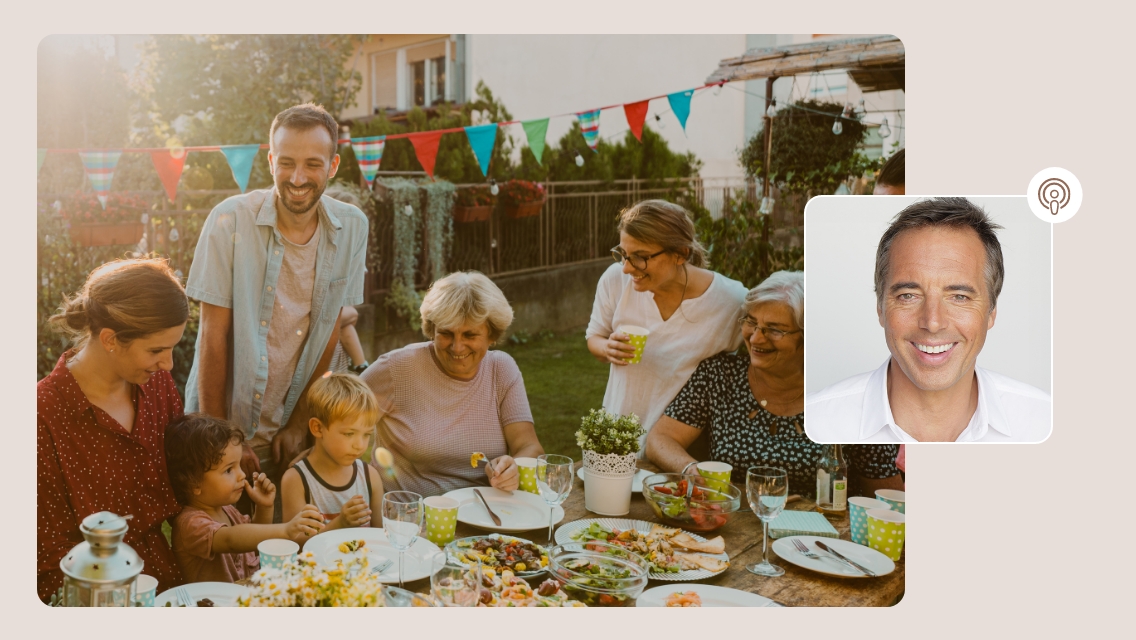
Yeah, they don’t. And a nourishing meal — it’s a beautiful question. I don’t think it’s really defined by ingredients or by any kind of dietary pattern or philosophy. A nourishing meal to me is a meal that feeds the body and the spirit. And so it might include vegetables and whole grains and healthy fats, but it will also include conversation and laughter and storytelling and catching up and gratitude and connection.
The Blue Zones research really uplifts that some of the healthiest communities in the world are not just eating differently. It’s not just about what they’re eating that is allowing for this incredible longevity. It’s that they’re celebrating together, they’re eating together, they’re creating rituals around food — Sunday lunches with the whole family together — they’re strengthening relationships, they’re strengthening a sense of belonging.
And belonging really regulates our nervous system. A sense of belonging and safety regulates our nervous system. And when that is regulated, there is a much better environment for our bodies to thrive physiologically as well. The people who I see who tend to get the most affected by chronic disease are the ones who also have so many other stressors dysregulating their nervous system. The body doesn’t have the ability to do what it knows how to do as well.
So a truly nourishing meal actually can provide all of those things. People leave feeling fed in every sense of the word.
Jamie Martin
When you say that, there are certain places that come to mind for me where there’s nostalgia in it. I think about my grandparents’ table where on Sundays we would all gather. Whether we were all sitting around the table, we were together. Food was the centerpiece of it, and that’s what brought us there. But then just the conversations that would happen, the connections that were made — those things are so powerful. I bet anybody, if you think about where those things happened for you around food, it’s always so much more than just food, right?
Geeta Maker-Clark
That’s right.
Jamie Martin
I love that. You also talk about things in plain sight. In your book, you’re covering things like awe and gratitude and play, trust, community, nature. These all have measurable effects on our biology, right? But what does the science actually show about these things? Which one do you think surprises people the most?
Geeta Maker-Clark
I think the chapter on play was one that I was really purposeful in including because I felt like people have really forgotten about play as a medicine — and that play is something we get to have our whole lives, not just when we’re children. So out of all of them, I think that was the one that seems to surprise people the most.
The other ones — food, nature, trust, gratitude — people kind of nod along with. But for me too, I was stunned by the research around play. It is very well studied and well defined. And the people who are successful in holding long-term relationships in healthy ways over their lifetime are generally people who had opportunities to play freely when they were younger.
What play offers us is a chance to fail safely. When we start as children playing tag or hide and seek, those are like little baby failures, and you just get up and keep playing. That’s actually how our bodies and physiology are trained to work with other people and to keep going in the face of changing environments.
I had never thought about play like that before I started doing the research for the book. And then the flip side — which is really fascinating and kind of dark — is that some of the research looking at people who are very unsuccessful in social relationships, including those who have become dangerous in society, points to a childhood without play and without normal trusting connections. Their brains were not developed in a way that allowed them to function in society as we know it.
So play is serious business. We need to make sure our children have opportunities to play. And I think this matters a lot right now, in this digital world where we’re seeing so much play happening online or on phones or tablets. But it also means that we as adults need to keep playing too — not feel like life is that serious all the time. Find the opportunities to dance and be silly or go for a bike ride with no particular destination. Reclaim that for ourselves.
Jamie Martin
Do you find that people are resistant to that idea? We’ve covered this in the magazine too. It’s like, how do you tap into what would be play for you now? We don’t think of play as naturally as adults. How do you encourage someone, or help them overcome that resistance if they’re not quite sure what to do?
Geeta Maker-Clark
Yeah, people are resistant. It’s really interesting. Even when I talk about dance with people, they get a little hunched up. If they haven’t danced in a while, they’re like, is she gonna make me dance right here in the clinic? And I think that’s just a natural protective response to something that people have socialized themselves so far away from that they’re scared to re-enter it.
For play in particular, there are many play personalities, and I go through these in the book. Not all of us play in the same way. Figuring out what kind of play personality you have can make it much easier to view play as something you’d actually enjoy. Some people are jokers and pranksters — that’s their way of being playful. Others are more competitive and lean toward board games or sports.
And then there are things I learned in the research that really surprised me: being a collector, an artist, a thrifter — that’s also play. To collect and create things, to be a designer of your own space, is play. So I just remind people there are many ways to be playful in your life. Find the one that speaks to you and lean into that. Don’t feel like you have to go start jumping rope if that’s not your thing.
Jamie Martin
Didn’t like to do that when I was a kid anyway! I just think there’s such a connection here between the ideas of play and joy and flow — not forcing something, but letting it come naturally. The result of play can be joy or contentment or something else entirely. Well, you mentioned dance, and this is something that at the end of your session at IFM, we all stood up and danced it out for like two minutes. There’s something happening not just emotionally when we dance, but also biologically. What’s happening there, and why is dance such a go-to for you?
Geeta Maker-Clark
Dance to me is one of the most complete forms of medicine that I know — that I’ve researched, that I’ve tried myself, and that I’ve worked with with patients and communities. Dance combines movement of the body with music and rhythm and coordination and creativity, because you’re just moving your body in whatever way feels good to you. It combines emotional expression and emotional release, joy, and sometimes social connection if you’re dancing in a big group or at a concert or a barn dance.
Biologically, it’s actually helping our brains create new neuronal connections. That’s fascinating to me because it’s not an easy thing to do — to instantaneously have your neurons creating new pathways. It’s well known that most of us are using the same well-worn pathways of our brain every single day. The same thoughts, the same words, right? About 80% of our brains are just doing the same exact things over and over.
So what dance does, even for just a few minutes like we did together at the conference, is give your brain an opportunity to start firing in different ways — to step out of those pathways and create new synaptic openings and new neuronal connections. And that neuroplasticity is actually a key to longevity. It’s been shown to reduce the risk of dementia, of which we have no cure.
And I think dance reminds us that movement can be joyful. It doesn’t always have to be exercising for strength, or running for aerobic capacity. A lot of my patients think of exercise as a chore. Dance transforms movement into celebration. And yes, into joy. How great is that?
Jamie Martin
I just have to share a quick experience. This past weekend, I got invited by a colleague to go to this event called Early Birds. It was at First Avenue in Minneapolis — a dance party from 6 p.m. to 10 p.m. The idea is you go early, you can still get home and get a good night’s sleep. It was packed. The majority of the people there were women, and we were just dancing and singing and embracing the moment. It was so joyful. I hadn’t been to something like that in a really long time, but I was so glad I went. To see so many people collectively finding that joy together was just so much fun.
Geeta Maker-Clark
Right. That collective effervescence. I’m so glad you got to that. The Early Birds, the Daybreaker — this whole movement of dance at reasonable hours, without substances. I think people have been like, sure, I’ll dance after I’ve had a couple of drinks and I can let my guard down. But that’s starting to dissolve in these movements. We don’t have to drug ourselves into feeling joy. We can just let our bodies feel it and be unabashed about it. And it’s actually better that way. So that’s cool that you got to experience that.
Jamie Martin
It was just one of those things. I was hesitant at first — it was a Friday and I wasn’t sure I had the energy. But I got there and I’m so glad I did.
Geeta Maker-Clark
You said yes. And I know it’s always a bit of a struggle to say yes to those kinds of things, because you think, I don’t have the energy for that. And then you go, and all of a sudden you’re like, I absolutely do have the energy for this somehow.
Jamie Martin
Yes. And some songs just bring it out more than others. You’re like, okay, this is my song. I’m going for it. Well, I know we’re getting to the end of our time, so I just want to move through a couple more questions. One of the things you’ve talked about is moving beyond blame and toward understanding when it comes to health outcomes. In our culture, it can often default to personal responsibility as the answer. But what does that shift actually require — from our clinicians, from our systems, from each of us as individuals?
Geeta Maker-Clark
Yeah, it’s a good question. I think it requires humility. It requires us to stop asking the same question over and over — why aren’t people making better choices? — which is a very blame-based question. And instead ask, what are the conditions that are shaping those choices?
For clinicians and healthcare providers, it means listening more deeply. For health systems at large, it means addressing the social determinants of health, which we’ve known about for decades but need to do better at addressing. For communities, it means investing in the conditions that allow people to thrive — and that can look like better sidewalks and bigger parks and community dances at the YMCA that are free of cost.
Moving beyond blame doesn’t eliminate personal responsibility. That will always be an important piece of our health practice. But it means placing that responsibility in a broader context, in a broader understanding of the human experience.
Jamie Martin
And that really gets to this idea of interconnectedness that you’ve talked about — that medicine can be built around connection, compassion, and belonging. It’s not something we’re navigating alone, right?
Geeta Maker-Clark
Right. We’re not separate. That illusion — that we are separate — was built to make us feel like we had to put all productivity goals and consumer choices entirely on ourselves. But health is relational. It’s profoundly relational. We regulate one another’s nervous systems.
What you felt at that Early Birds dance was everyone experiencing something together. Heart rates were actually starting to co-regulate too. If I could have measured everybody’s pulses at one point, they probably would have all been around the same, believe it or not.
Jamie Martin
Is that the HeartMath stuff? Like how when we’re in space with one another, we start to sync up?
Geeta Maker-Clark
Absolutely. Heart rate variability. We co-regulate each other, we influence one another’s habits, and we shape each other’s opportunities. We depend on these communities, relationships, and ecosystems. And a medicine that’s built on connection recognizes that belonging is a medicine, not a luxury — it’s an actual biological need.
If we remember that we’re not meant to do life alone, it really helps a lot in getting us further on our path to health and vitality.
Jamie Martin
Well, and to that point, I know you’ve said that vitality is not something you can prescribe, but it’s something we can remember and practice. So for you, what do you practice regularly? How do you live this medicine in your own life?
Geeta Maker-Clark
My medicines are wonderfully ordinary. I spend time in nature every day. I don’t live in the mountains or by the sea — I live in a suburb of Chicago — and that means walking in the park across the street. I live beside Lake Michigan, and I try to get there every day to get my eyes on the horizon of the lake, even when it’s snowing, just to feel part of something much bigger than myself.
I dance every day for a couple of minutes, usually just by myself. Sometimes I dance in classes or with my dance company, but mostly it’s just a few minutes on my own. I try to share meals with people I love whenever I can.
I make a lot of time for my friends — and sometimes that just means texting a couple of times a day when I’m taking a break, to stay connected. That helps me a lot. I serve my community through my medical practice and in other ways. I spend time with my family. I have three basically adult children now, and I try to grab them when I can.
And I will add that these practices don’t make me immune to stress or sickness or difficulty. Right before we got on today, I was in the midst of some difficult things and needed some time to gather my medicines to be able to show up the way I’d planned. What these practices do is help me return to myself. They remind me of what matters. And that, for me, is the most important way to feel a sense of vitality and health every day. I’ve made it a practice and a discipline to wake up knowing I have these tools at my disposal — and to actually use them.
Jamie Martin
Yeah. And what your book will do is share that these things are accessible to most of us. A lot of the medicines you’re talking about — hopefully all of us, regardless of what ecosystem we’re in, can tap into many of them. Maybe not all of them, but hopefully some of them, and bring some of that vitality back.
Geeta Maker-Clark
Yeah.
Jamie Martin
Is there anything else I missed? Any final thoughts before we wrap up?
Geeta Maker-Clark
Well, first, I so appreciate this opportunity to talk about the book and the principles in it. This book was really a love letter to humanity for me. I enjoyed writing it so much because it reminded me of what mattered — to me, to my community, to my patients.
And if there’s just one thing I would want people to take away, it’s this: many and most of the medicines that you need are already within reach. They’re widely available to you. And if we can expand our idea of what a medicine is, we can understand that health is not something we have to build by ourselves. We can create this together — like a mycelium network underneath the forest.
Jamie Martin
Yes, that interconnectedness again, right? I don’t have the physical book yet, but I do know I’m getting it. The book will be out in August, and you’ll also be seeing more from Dr. Geeta Maker-Clark in Experience Life magazine later in the year — we’re so excited about that. If people want to follow you or learn more about your work, they can find you at drgeetamakerclark.com and on Instagram at @foodplantsdance. We’ll put all of this in the show notes so you don’t have to remember it offhand. Dr. Maker-Clark, thank you so much for your time. It’s been a real joy.
Geeta Maker-Clark
Thank you, Jamie, and thank you Experience Life. This was a lot of fun.
More like this

We’d Love to Hear From You
Have thoughts you’d like to share or topic ideas for future episodes? Email us at lttalks@lt.life.
The information in this podcast is intended to provide broad understanding and knowledge of healthcare topics. This information is for educational purposes only and should not be considered complete and should not be used in place of advice from your physician or healthcare provider. We recommend you consult your physician or healthcare professional before beginning or altering your personal exercise, diet or supplementation program.
Life Time provides administrative, non-clinical support to MIORA as well as services and amenities related to general wellness and fitness; Life Time does not provide medical advice, diagnosis, treatment or care.
Advertisement