

Health, Heritage, and Hmong Cuisine With Chef Yia Vang
Vang discusses preserving his family’s legacy through food, honoring Hmong culinary heritage, and how a personal wake-up call reshaped his health in and out of the kitchen.


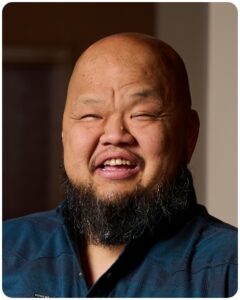
In this episode, we’re joined by celebrated chef and entrepreneur Yia Vang, who, at the heart of his cooking, holds a deep commitment to keeping his family’s legacy alive.
Over the last few years, Yia has earned well-deserved recognition for his incredible food. Behind the scenes, he’s also focused on a personal health journey after a serious wake-up call reshaped his perspective on and approach to health and fitness.
In this episode, he discusses Hmong culinary heritage, the meaning behind every dish he plates, and how caring for himself has made him stronger, both in and out of the kitchen.
Yia Vang is a trained chef with extensive experience at top restaurants across the Twin Cities in Minnesota. He is the executive chef and owner of Vinai in Minneapolis, which opened in 2024, earning a spot on The New York Times’ 50 Best Restaurants in America list. Vinai was also named one of the Best New Restaurants in the World by Conde Nast Traveler and one of Time’s World’s Greatest Places of 2025.
Yia has earned four James Beard Foundation Nominations and has been featured in The New York Times, National Geographic, and Bon Appetit, as well as on Netflix’s Iron Chef and CNN’s United Shades of America. He has hosted cooking shows such as the Outdoor Channel’s Feral, Food Network’s Stocked, and the Twin Cities PBS series Relish.
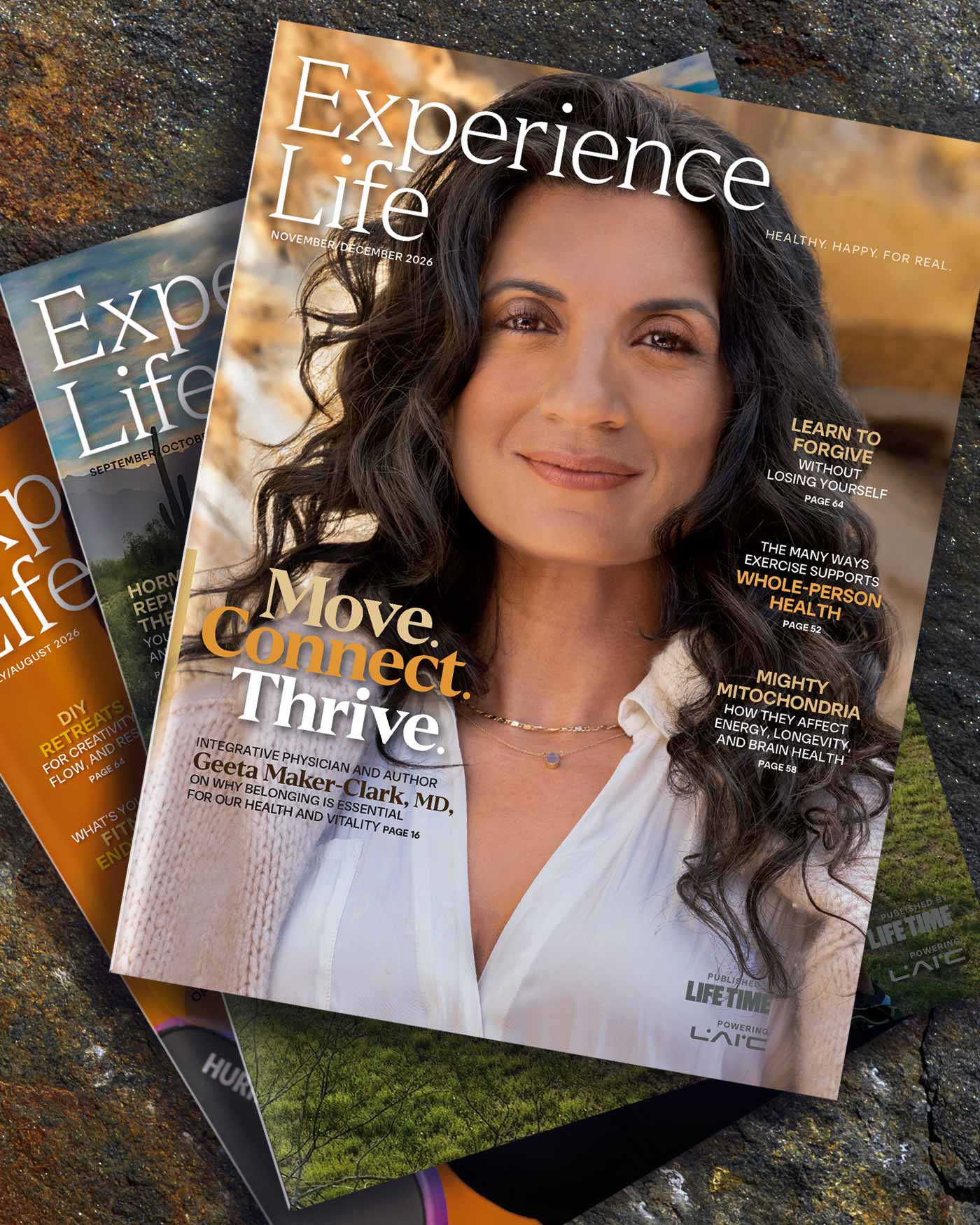
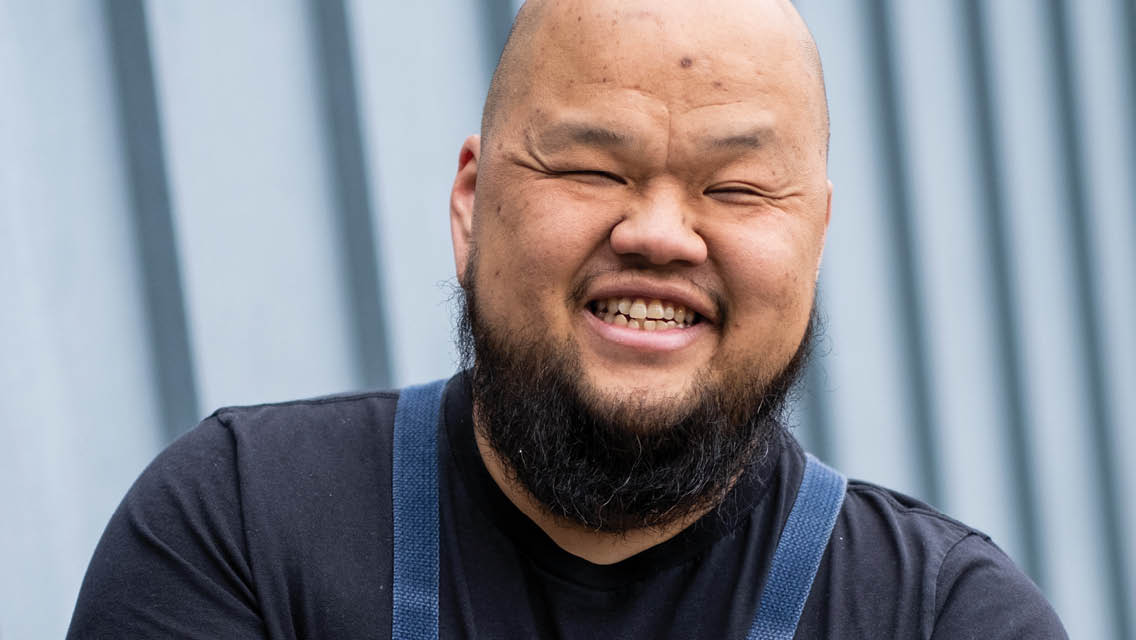
Photos by Lauren Cutshall.
In this episode, Vang speaks to the stories that food can tell us if we’re curious about where it comes from and the people who make it, and how keeping his family’s legacy alive through food became his why. He also shares how his focus on his health supports that mission. His insights include the following:
- Find your why to sustain the work. Long hours and hard days become manageable when you know what drives you. For Vang, food is the vehicle to tell his parents’ story. As he puts it, “Every dish has a narrative. You follow that narrative long enough and close enough, and you get the people behind the food. And once you’re there, it’s actually not about the food. It’s about the people.”
- Don’t “tough it out” with your health. Ignoring chronic conditions or injuries can turn dangerous fast, something that Vang learned the hard way when a sore quad became an infection that required emergency surgery.
- Reject the “badge of honor” mindset. In many kitchens, staff wear pain and overwork like a medal, often skipping care because healthcare feels out of reach. That can take a real toll, and Vang stresses that pushing through isn’t the same as being strong.
- Shift your fitness goals from ego to longevity. Vang moved away from the high-intensity powerlifting he once did in his teenage years and early adulthood toward functional fitness that emphasizes full range of motion and consistency for the long haul.
- Protect one day a week. Vang guards his mental health with a “sanctuary Sunday,” a full day dedicated to his personal life that includes zero work communication. Clear boundaries help him show up better on the other days of the week.
- Delegate and trust your team. High-level success depends on a group where everyone knows and owns their role. You can’t carry it all yourself — and you shouldn’t try to.
- Understand “los noj nov,” the art of the invitation. Los noj nov translates to “come and eat,” and is a warm yet commanding welcome rooted in a refugee mindset: There is always room for one more at the table. It’s a reminder that hospitality is about belonging.
- Redefine what a difficult season can mean. Vinai, the refugee camp where Vang was born, translates to “dignity” or “honor.” As Vang’s mother says, “Vinai is not the place our story ended, but it’s where our story began.” Even hard chapters can be places of redemption and new beginnings.
- Embrace the fluidity of Hmong food. Hmong cuisine isn’t a fixed set of regional dishes. It’s defined by gleaning and adapting elements from the many cultures where Hmong people have lived, which makes it living, evolving, and deeply personal.
- Let your purpose speak through your work. Vang’s restaurant carries meaning in its very name. When your values are built into what you create, the message carries itself.
Transcript: Health, Heritage, and Hmong Cuisine With Chef Yia Vang
David Freeman
Welcome back to another episode of Life Time Talks. I’m David Freeman.
Jamie Martin
And I’m Jamie Martin.
David Freeman
In today’s episode, we’re going to be hitting on health, heritage, and Hmong cuisine. So today we are joined by Yia Vang. You might know him as a celebrated chef and entrepreneur, but at the heart of his cooking is a deep commitment to keeping his family’s legacy alive. Over the last few years, Yia has earned a lot of well-deserved recognition for his incredible food. But behind the scenes, he has also been focused on a personal health journey. Welcome, Yia.
Yia Vang
Hey, thanks for having me, man. I’m really excited to be here.
Jamie Martin
We’re so happy to have you. And I just want to go into a little bit more detail about your background, because you have a lot of kudos to your name already. I mean, you’re the executive chef and owner of Vinai in Minneapolis, which opened in 2024. You earned a spot on the New York Times 50 best restaurants in America. Vinai was also named one of the best restaurants in the world by Conde Nast Travel and one of Time’s World’s Greatest Places of 2025. That’s amazing in and of itself.
But you’ve also earned four James Beard Foundation nominations and been featured in the New York Times, National Geographic, and Bon Appetit, as well as Netflix’s Iron Chef and CNN’s United Shades of America. You have hosted cooking shows on the outdoor channel, Feral, I don’t know that I’ve seen that one, is it okay? Food Network Stocked, and the Twin Cities PBS series Relish. Plus, you just shared with us that you also have a cookbook coming out at some point. So you’ve got a lot going on. How are you managing all that?
Yia Vang
Good. You know, I think that I can do what I can do because we have an incredible team. Our GM for the restaurant, he said to me straight up, he said, “Hey man, my job is to make sure that you can have fun doing what you want to do.” And so it’s a team. And then I grew up playing team sports in high school, and that was like one of the greatest things I learned right away. Like some of my old high school football coaches, that’s the first thing they said, you know, like everyone’s got a responsibility.
You stick to your responsibility because at the end of the day, you’ll see how the team cohesively works together. And so that’s what I really love is we have an incredible team.
David Freeman
Yeah, so let’s get right into it. I kind of said it in the intro as far as this family legacy and how much they played a crucial role within what it is that you’re doing. So just the family’s journey from a refugee camp to the United States, how has that shaped your identity and your passion behind what it is that you’re doing?
Yia Vang
Yeah, so to be honest, man, I first started just like any kid who was just like, “Hey, mom, dad, leave me alone, let me live my own life.” And I didn’t realize that I wasn’t born in this country. I was born in Vinai, which is the name of the restaurant. It’s the refugee camp. I was born in Vinai in eighty-four, and in eighty-seven, eighty-eight we moved here and ended up in Saint Paul, you know, in the east side Saint Paul area. We ended up moving out west and then came back into central Wisconsin, and that’s where I did most of my high school and college.
And one of the things I really learned was that I kept running from who I was, you know, because I just look different than everybody, all the kids. And when you grow up in a small community that’s kind of unknown and people keep asking, “Well, what are you? Or who are you?” So that was an internal question. And even growing up, like I cooked in restaurants, but I didn’t want to cook Hmong food, let alone Asian food. I literally cooked everything else. I worked at an Italian place, I worked at a barbecue place, I worked at a Tex-Mex place, I worked at every place that wasn’t the food of my culture or heritage. And I think eventually there’s this, I call it this soul longing, there’s this thing inside your heart, especially as you get older.
You start really connecting with that. And for me, it took my father having a really bad accident. He was in the ICU, he had a bad accident at work, and I was standing by his side. I still remember that day, and this is like 10 years ago, almost 12 years ago. And we weren’t sure if he was going to make it, and I think it really clicked in my head where it’s like, “What are you doing with your life?”
You know, like this man dies in this hospital and his legacy’s gone. And if you don’t figure out who he is or what his legacy is, and it doesn’t go through you, then it ends here. And that’s where it kind of changed me.
Jamie Martin
Well, and you’ve brought that into the work you’re doing today. So growing up in a Hmong family, how has that influenced your relationship with food and cooking?
Yia Vang
So when we grow up in a Hmong family, there’s always food and cooking around, right? So the aunties are over, the cousins are over, the uncles are over, and there’s always celebration. We celebrate everything around food, right? And so to me, it wasn’t like it’s a bunch of people over and we’re having dinner, or a bunch of people over and we’re having some kind of party on a Saturday. We just call that a Saturday. It wasn’t a special occasion, it wasn’t a holiday, we just did it, all kinds of celebration. Anything from birthdays to weddings and funerals and whatever. It’s just constant gathering of people.
The joke was, when we were younger, we’re like, if you really timed it out, there’s enough wedding celebrations going on every weekend over the summer that you could get a free dinner, a free meal, a free lunch, whatever, somewhere. Because you’re related to a cousin of someone, you know? You can just hit it up every weekend and you’re like, “Good.” That was the joke.
I just thought that that was just what we normally did. There wasn’t any nuance to me. But I grew up cooking with my parents because that was just part of your gig. Like simply, hey, your job is to cut the grass. It was your job to make sure dinner was on the table. And so I remember I got to college and I took a whole chicken, we had an apartment and there were some friends over, and I took this whole chicken and I broke it down and roasted it off. And I remember my friend, she looked at me and goes, “How do you know how to do that?” And I looked at her and I’m like, “How do you not know how to do this?” And she was like, “That’s not normal.” I’m like, “What do you mean?” She goes, “I didn’t know you can cut a chicken like that.” And I looked at her and I’m like, “How do you get your chickens?” You know? And she goes, “They’re already cut when we get them.” And it dawned on me my sophomore year in college that I was raised differently. And that’s when I started realizing there’s some things about how I was raised and how I learned that not everybody knows.
Jamie Martin
That’s awesome. I will say, like, I come from a big family as well, and gathering, like the food, was always central, right? Like it was just there. It was like just any day of the week you might show up at grandma’s house and have thirty different people there just grazing and eating and just doing the thing, and everybody had a part in it. So I connect with that. And I’m also small-town Wisconsin, so there you go. So I just want to go back to that timeline. So, almost ten, twelve years ago you’re standing by your dad in the hospital, and then when you’re in your sophomore year in college, it’s like that aha moment. Then what were the next steps to go into, “All right, I want to pursue this as a career?”
Yia Vang
Yeah, so I always tell people, me and cooking, like restaurant cooking and a restaurant kitchen, it’s like, remember in high school when you start dating? It’s like you start dating that one girl, but you break up before you go to college and you’re like, “I think we’re different people.” But then when you come back to your hometown, you still say, “Hey, what’s up, girl? What are you doing?” And then you go back and forth for a few years, but then you guys go live a little life and you come back, and then now you’re adults and you see each other at the towny bar and you’re like, “How are things going?” You know, and you have all those memories.
Well, that’s like me and restaurant cooking, right? I quit so many times. I remember I’d be like, “I hate this. This is my last summer. I’ll never do this again.” And then it’s like, “Okay, well, they need a grill cook. I’ll go do that.” And you get going back. And I jokingly said, after 15, 16 years of that, I think I’m in love with you, you know? And then you’re like, “I must put a ring on it,” right? And so it became this thing where I said, the restaurant world, I didn’t find it, it found me.
And I needed to know a why. Because at the end of the day, it’s hard work. My father and my mother always said, “We want you to have a college education.” They always said, “We’re refugees in this country.” So my parents don’t speak English, but my mom and dad, they worked their tails off to make sure that we had every opportunity, just like any kid who was born in this country. And I remember my dad said to me, “I want you one day to work in a big office in one of those tall buildings, and all you do is sign the checks of the people who work for you. I don’t ever want you to be like me.” Because my dad was a laborer. He was a carpenter, he was a welder, he worked with his hands. His hands were always just either cut up or roughed up, because that’s what he did, that’s what he knows how to do.
But he always said, “I don’t want you to be like me. I want you to be you. You came here so that I break my back and my hands so that you’ll never have to do that.” And they really pushed hard. But the thing I always said to my father was, “Man, on those hard days where my hands are achy and my knees are shot out, I feel the most like my father.” And I love that. I love the fact that I can connect with him, because that’s how I feel.
And so I never wanted to do the restaurant thing because it’s just hard work. But at the end of the day, what I really found out was I needed to know my why. That’s it. It’s anything in life. You know, Mark Twain has a quote that says the two most important days in a person’s life are the day they’re born and the day they find out why. And for me, I worked at a few of the restaurants around town here, and then when I figured out my why, things became clear. And then, you know, it’s a butchery term, but it was all about trimming the fat. You just trim the fat and like, let’s get to the meat here.
And so when I figured that out, I said, “Hey, what I really wanted to do is I want to tell their story.” And how do I tell their story? Well, what do I do? I know how to cook. So what if we can tell their story through food? And it became this mantra. Union Hmong Kitchen was the first restaurant we had, so it became the mantra of that. And Vinai took on that mantra of every dish has a narrative. You follow that narrative long enough and close enough, you can get to the people behind the food. And once you’re there, it’s actually not about food. It’s about people. That food is a catalyst into cultivating great relationships.
And when I put that into practice with mom and dad at their table, and the food that they made for me when I was a little kid, the food that rejuvenated my soul, I found their story. And when I found their story, I said, “Hey, this is my why. My life goal now is to make sure people hear their story or know their story.” And so we get to do that everywhere we go. We get to do that with the food we do, and then we get to do that across the country.
Jamie Martin
That’s such a beautiful way of putting it. I mean, just that idea of food as a connector and storyteller. Tell us a little bit about maybe one of your dishes and what story it tells. Like, do you have a favorite dish and a story that’s behind it?
Yia Vang
Yeah, you know, I don’t really have a favorite dish, but I think that all the dishes we have show different elements of how we grew up. So for example, all the chilies that go into all our sauces come from mom and dad’s farm. So they have a farm up in Scandia, Minnesota, and it’s about ten acres. And they dedicate at least four of those acres just to grow chilies for us every year.
And everything they grow on that farm, it’s just the both of them working that farm. Everything they grow on that farm comes to the restaurant at no cost. So they work that farm and they’re so excited. Like this season, mom and dad are like, “We got more land over here, they’re giving us more of this.” And then my mom is like, “Okay, I’m growing corn here, and I got more melons over here, and I got more cucumbers here.” And they’re just genuinely excited. And so I tell people, when you come into the restaurant and you have any of the sauces, it’s literally every single pepper is handpicked by them.
Jamie Martin
They’re behind it all.
Yia Vang
Yes. You know, we’re kind of known for our pork chop. So it’s a double-cut pork chop, about two pounds, right? So two big bones on it. We have an incredible butcher. Ramiro is an incredible butcher. He butchers it down for us. And the technique and the way that we use to grill the pork is the exact same technique that my father learned as a boy living in the mountains of Laos, using that style of grilling. And we get to do that with a piece of pork that is from a farm here in Minnesota, about an hour south of here.
So that’s so incredible, because what I get to tell people is, my father taught us that when you’re in a country where you don’t know what’s going to happen next, you don’t let that determine your future. You can kind of control it. And so by teaching me, he’s like, “Use the resources around us. What do we have?” You know, if Compart Farms has some of the best Duroc pork, then let’s go make friends with them. So making friends with that farm and figuring it out, that’s what we do. And so it’s kind of like that mentality dad has always set up for us.
Jamie Martin
Well, I just have to delve into that. I’m a farm girl from Wisconsin. So knowing where your food is from is so, so powerful. And to actually see it in practice and know it went from that field to this plate. Like, there is just something so magical about that. And to have that connection with the land itself, too. So that’s amazing that everything comes right from there, like in terms of your chilies.
Yia Vang
Yeah, and I tell people too, once you start realizing the life of a farmer, that’s a person. That’s a human. That’s somebody with a soul. And we always talk about the fact of, how do we connect that? And so it’s so cool beyond that romantic, sexy, like, “Yes, farm to table, blah, blah, blah.” Which is funny, because when I was growing up and I heard that term in the food world, like farm to table, I’m like, yeah, we call that a Tuesday. It wasn’t like, “Guys, today’s Friday farm-to-table day.” No, we had a farm and we just pulled things off of that all the time.
And as a kid you hate it. You’re like, “This is stupid, I want to go to a farm?” It’s a Saturday morning, I want to watch cartoons and eat cereal like every other kid, you know? But you’re out there, we’re harvesting. And now as I think about it, the Hmong word is kokusi, which means it makes you treasure everything. Like even when you see a pepper fall off, you’re like, “No.” Because I know that they’re out there at five in the morning harvesting, because they’re dedicated to this.
And so my thing that I tell our team is, we’ve got to outwork them. You know, like they’re our standard. You think you’re tired? No, mom and dad were up at four thirty. They got out before the sun came out so that they could get all the harvesting done before it got too hot. So we’ve got to outwork them. And so that’s our standard.
David Freeman
Yep. I love that. The standard of excellence for sure. So, like you said, you see food as a universal language that connects people and fosters community. So can you also tell us about the significance of the phrase los noj mov, which means come and eat, in your restaurant?
Yia Vang
Yeah, so los noj mov means come and eat, and every Hmong person knows that term, right? It is like the quintessential mom calling you in, right? So when we were little kids, mom would, you know, we’re outside playing doing whatever, but come dinner time, mom cracks that window open, that screen door, and just yells, “los noj mov,” which was like come and eat. And when you have guests over you say los noj mov, which literally means come and eat.
But because the Hmong language is such a tonal language, it depends on the inflection of how you say it. I can hear my mom still saying that when I say it. It’s this, you’re imploring somebody. You’re almost, in a gentle, beautiful way, commanding them to come and eat. It is an invitation. So for example, if we’re having dinner and one of my uncles comes by and he’s grabbing the lawnmower or something and we’re having dinner, in our culture, we will not allow you to leave unless you come and eat at the table with us.
Jamie Martin
Come join us.
Yia Vang
And it’s not like, hey. Because it was weird, in like my white friends’ homes they would always say, “Yeah, come after dinner,” because we would never have that. It would be like, “No, we’re having dinner, you’re joining us.”
And regardless of what we have in the middle of the table, regardless of that, we’re going to make it work. We’re going to figure it out. And it comes from a refugee mentality. My father said, in the refugee camp, there was barely any food. We had little rations that we would get by with. But no matter what happened, we would always have a place for everyone around that table. And for me, it was such a thing that changed my worldview.
That there’s always a place for everybody around the table. And regardless of what’s in the center, that’s not the most important thing. The most important thing are the people around the table. And that really just set up the ethos of how we wanted to set up the restaurant.
Jamie Martin
Well, I love that so much. All right. We’re going to switch gears a little bit, because I know you’ve been on your own health journey. Obviously at Life Time we focus a lot on health and well-being and fitness. Tell us a little bit about what you’ve been through and how it has changed your perspective on taking care of yourself and your health.
Yia Vang
Yeah, so I grew up in a small town in Port Edwards, Wisconsin, central Wisconsin, and the big thing was growing up playing football, right? And you had that old-school football mentality, right? It’s like, “Are you injured or are you hurt?” And it’s like, “I don’t know, coach.” But it built inside of you, which on one end was really cool, like that toughness, right? It’s just pure tough.
You know, my dad, when he was thirteen, he joined up and fought in a war for the Americans in Laos during the Secret War. So you’re just like, yeah, my dad is so tough. So inside of you there’s this toughness that you want to have. But the other end of that is understanding, “Hey man, I need help.” And so I feel like all through high school and college, I just didn’t know how to balance that.
And so when I was finishing up college, I got diagnosed with type two diabetes, which I had no idea what it meant. And the first few, and this is by no means throwing shade on anybody, but the first few diabetic educators I talked to, I know their heart was good, but it was the, “Do you want your leg to fall off? Do you want to lose your sight?” So I get what they were doing there, but at that point I’m like, “No, I’m not coming back to you ever again.”
And then I’m one of those, “Well, I’ll just tough it out. I’ll just tough it out,” right? And you can’t tough out diabetes. There’s no, “If I tough it out, it’ll go away.” And then after that, working in the restaurant, there’s no health care. So you kind of just, there’s no health care. And we’re very blessed that at our restaurant we can provide that now. We can provide health benefits, and we’re very blessed to be able to do that. When I was growing up in the restaurant, it was like, “Nah, kid, you got to go figure it out yourself.” So I kind of just, “Okay, cool, I’ll just do whatever.” And then these health problems would happen and I would just like, “Well, I just got to work harder, I just got to work harder.” And that’s how it was.
And then it got to a point where it got really bad. And again, I’m one of those where I’m like, “If it ain’t broke, don’t fix it. And if it’s kind of injured, you just throw some dirt on it,” you know? And it is not good at all. I remember we were in the build-out phase for the restaurant. And I remember one morning I woke up and I was walking, and my left leg was kind of sore, but it felt like the “you did too many squats” kind of sore. So I’m like, “I’ve had this many times.” Too many squats, whatever. You’re going hard on your squats, it’s just sore.
And then it got a little bit more sore the next day. And I’m like, “Whatever. Three days it’s gone.” And it got really bad to the point where I couldn’t walk. But then I always self-diagnose myself. I’m like, “Okay, if I take enough Tylenol, or if I take enough of these pain relievers, it won’t hurt as much, but I can still keep working.” And it was like, “I got to keep working here, because we had all these things we were doing. We were building out the restaurant.”
And then eventually, the voice of reason is always my mom, where she’s just like, “No, you’re done.” And so we went in and they’re like, “You had an infection in your leg, on your left leg, in your left quad.” And what happened is it got necrotic, so part of it is dead tissue. So we have to go in, cut it out, and just remove a bunch of that.
And I think it didn’t really sink in yet. I was like, “Okay, okay. So how long before I’m,” because I’m like, “Hey, next week we got more of these, we’re building, so we got to do this stuff next week. So how long?” And I think the doc just looked at me and goes, “Dude, you just got to really hear what I’m saying. We don’t know how you’re going to walk again with this.” And I’m like, “Okay, but seriously, doc, am I out a week or whatever?” And that’s when it all sunk in. Because when you’re laying in bed in the hospital and half your leg is gone and you’re just sitting there, and at night you can’t sleep and you’re just like, “Okay.”
So right away that became this change of, “Okay, what are the steps I need to do?” And I had some really incredible physicians and doctors and surgeons who came in and said, “Dude, this is not the end. We can start from here.” And that was it. And it was like, “Okay, how do we do this? We got to control your blood sugar, so let’s start with there.” And then it was little step by step by step. And it’s been a little over two and a half years now. And it was one of those things where it’s like, “Okay, I think I can do this.”
Jamie Martin
Yeah, the health had to become a focus for you and a priority.
Yia Vang
Absolutely. I think that was one of the things. I mean, I think that a lot of restaurant workers, we almost wear as a badge of honor how hurt we are. It’s like, “Yeah, I did this,” or I would hear these stories of guys like, “Yeah, I cut myself and then I just put it on the burner, seared it off, so then it would stop bleeding, I’d wrap it up and I was good.” And these were like the quote-unquote war stories we would hear growing up. You’re like, “Yeah, I want to be like that guy.” But that guy’s also like sixty-five and falling apart. Like, I don’t want to be that guy.
And so there’s a really great restaurateur that I kind of just told him, “You’re my mentor, even if you don’t want to be.” Alex Roberts, from Alma and Brasa. Alex, I mean, he has his whole health regimen, which is just like taking care of yourself. And I remember just talking to him about it, and he’s like, “Yeah, you got to do that, because you got to be sustainable.” And he’s like, “Dude, you don’t want to be fifty, sixty and just falling apart and constantly in and out of the hospital.” And I’m just like, “It’s not cool.” And yeah.
David Freeman
So you had the wake-up call, and from that you ended up stepping forward into your fitness journey. So what does that look like now as far as your workout regimen and how you have that balance on top of the restaurant?
Yia Vang
So I’ll be very honest, it’s an ebb and flow of how the seasons are, you know. There are times where it’s like, “Hey, I can get into a rhythm and do this and keep on a schedule.” And then it’s like, “Shoot, ran a week without it, you know.” And it’s like, boy.
One of the things I really learned is this. I had to switch, because like 20 years ago, I played defensive lineman, I was a power lifter. So I was like, “That’s how we do it.” Hang cleans, power cleans, you know. If we’re not just throwing weights around, and it’s like a gym-rat type where you’re yelling. And I literally had to switch my mind from that to being like, “Maintain.” So you’re not going to be throwing weights around, but hey, you want full range of movement. And if it’s a ten-pound plate on there, dude, it’s a ten-pound plate. Nobody’s watching you. You know what I’m saying? Like you have that insecurity of like, back in the day when I was eighteen, you know? And then I’m like, “But I’m not eighteen anymore. I’m forty-one, you know?” And it’s full range of motion.
So for example, one of the things I started doing after my leg surgery was going out to the lakes and saying, “Okay, I’m going to take my morning meetings on the phone, all the morning meetings I have, but I’m going to do a lap around the lake and just walk.” And then just using my Apple watch and saying, “Okay, here’s my rhythm. Here’s a pace, and just follow that.” And I’m not going to lie, guys, the first time I did it, I’m like, “Man, if eighteen-year-old me could see me now.” You know what I’m saying? I feel like such a loser. But then after I was done, I’m like, “No, this is okay. I think just the ego has to be out of it.” That’s the biggest thing.
And so some weeks I do well. Some weeks you’re more active. Some weeks where I’m just like, “Man, I did not manage my week well to be as active as I wanted to be.”
David Freeman
Within health and wellness, I think sometimes we think of just the workout. But outside of the workout you have the other things as well, which you probably can hit on when it comes to nutrition, but also like just recovery and sleep. So how are you doing in those spaces as well within the regimen?
Yia Vang
I would love to say that I’m good on my sleep, but it takes me a while to kind of fall asleep and wind down. So I do have, like, this is my resume at home. My fiancée doesn’t really like it, because she’s like, “I feel like you get back, you don’t talk to me.” I’m like, “Yeah, but if you give me like thirty minutes.” Because I talked to a lot of people today, you know?
Jamie Martin
Need to find your inner introvert for a little bit. Embrace your introvert.
Yia Vang
So my thing is this: Sundays, the restaurants—our restaurants close on Sunday and Monday. So Sundays, some of the chefs and I, we call it Sanctuary Sunday. We keep it a sanctuary. Unless the restaurant is burning down, we’re not calling each other and we’re not texting about work or whatever. On Sunday, I literally do nothing that’s restaurant related.
Sometimes it’s like, go grocery shopping. Or it’s laundry, you know. It’s very precious. My Sundays are very precious to me, and I zone out a little bit there.
The nutrition thing—I used to be like restaurant people. I joke with people, but the two most important women in my life at that time when I was doing the restaurant stuff earlier were my girl Wendy’s and my girl Taco Bell. Because you’re done at ten thirty at night. You pull up to Wendy’s, the window late night, you’re like, “What’s up, girl?” And you grab a few, and then you go park in the corner, the dark side of the parking lot.
You have a little, you know, and then you kind of wipe her all off of you, and you throw away that bag and air the car out so nobody can smell her. And then the next morning you just have regret. It’s a very toxic relationship, you know? But I’m like, I can’t do this anymore. So it’s literally just cutting that stuff out.
My fiancé Amanda is not a health nut, but she really helps me a lot on that. This is her thing. She’s an F45er, true, true F45er. She’s all about Whole Foods and all that stuff. So even cooking at home, we keep it real simple. I think people have this thing where it’s like, “Dude, do you make this kind of food?” No, man. It’s literally potatoes, vegetables, and a protein. And actually I really like it. It’s very simple.
And at times she does this thing where in the morning she’ll be like, “Okay, I laid out your fruits for you.” Or sometimes I’ll make her a little yogurt bowl before I leave. So it’s kind of like that, encouraging each other. Or sometimes she’s like, “Hey, let’s just go for a walk on a Sunday.” And it’s like, okay, cool. Those are my favorite things because we’re both real busy, and those are the times where I say, “Hey, how do I spend time with her? And how do we spend time being active?”
Jamie Martin
Right. And then you’re also getting out in nature when it’s nice here in Minnesota, right? How do you get out there and enjoy that as much as you can? Okay. So talk a little bit about—I mean, being a chef is physically demanding, right? Being on your feet, working late. How do you do that while maintaining your health and well-being? How do you say, “Okay, I have to do that, but I’m also going to do this over here,” and do both?
Yia Vang
So I use this principle. When we were starting the restaurant, we were raising money, right? And when we’re raising money, I talked to a bunch of potential investors and stuff like that. I sat down with this person, I had a deck ready. At the end of the day, you guys have to realize I’m a cook, right? I didn’t go to business school. I don’t know how this deck thing works. I’m a cook—start a fire and throw an animal on it, and I can do that for you.
But sitting down in a boardroom with a bunch of bankers, and they’re asking me, “What are your COGS, what are your percentages?” So I remember I sat down in front of this potential investor, and he said something to me. In that moment I was really hurt, but it was the best lesson ever.
He’s like, “Okay, so, look, can you show me the P&Ls? What are the COGS?” And I’m like, “I don’t know. What does it—grill meats and make rice?” I was not prepared for it at all. And I think, in the nicest way, it’s the best thing he said to me. He goes, “Here’s the deal. You want to keep your parents’ legacy going. I get that, man, and I’m with you on that. But if the restaurant dies out in six months because the business end doesn’t work, what does that really say about how precious their legacy is to you?”
That changed the way I thought about business. I’m like, “Dude, you’ve got to figure this out.” And so pulling the right people in, right? That’s the same principle I use. I switched over to like, “Hey man, you really want to keep their story going. You want to keep telling their story. But if you have another bad infection, or something happens to you—God forbid something happens to you physically and you’re out, you’re done—what happens?”
And that really changed me. I could be as tough as I want. These 20-year-old kids are carrying like four bags of rice on their shoulder, and it’s like, yeah, but I’m not about that life anymore. I don’t have anything to prove to anybody. But it’s maintained that. And then even like, hey, you’re getting married—that’s a responsibility thing, right?
So I think it’s getting away from that. I love Japanese history, and I love Japanese warrior history. That samurai who doesn’t have a master, he’s a ronin, right? Getting away from that ronin mentality and saying, “No, no, no, you’re here for a bigger cause. You’re not the lone samurai who’s like, yep, I can go out there and do whatever I want, it’s just my life.” The moment you start realizing that you’re actually part of something bigger here, it changes the way you do everything. Because my parents taught me that.
One of the great stories I heard from my mom about my dad, probably a few years ago—I didn’t know this—she said, “Honey, you guys don’t know the story, but the day we were in Vinai, the refugee camp, that night before we were going to come to America, your father looked at me and said, ‘I am really excited to go to a new country, to a world where my sons’ and daughters’ lives won’t be determined by war. They can write their own destiny.'”
So my father believed that we could write our own destiny, that he sacrificed everything. He let everything go, came here to this country, to a language and a country where he didn’t speak the language. At times he got ridiculed at work. He took the pain, he took everything, so that we had the ability to write our own destiny.
And if we don’t take that gift, and if it doesn’t become a good burden for me to carry, then what am I truly thinking of that? So even all the way to the way I think about my health. Because man, when you’re in your twenties and thirties, you’re like, “Yeah, I’m living the ronin life. I can just sleep on the couch. I’m cool. I got a rental here, whatever.” But it’s like, no, you’re part of something bigger. And Mom and Dad taught me that. So what are you going to do to be responsible for what is given to you?
And that changed a lot—even the way I think about my days, how I set up my days. Just this simple way of like, hey, just stop and eat something.
Jamie Martin
What are the simple ways you can take care of yourself so you can show up better for everybody else, right?
Yia Vang
Right. Absolutely.
Jamie Martin
I mean, obviously the work ethic there, right? And then even from the experience of what you shared from when you were in Wisconsin, your mindset and all that, and then the conversation you had with the potential investor—how have all these experiences helped you shape the team or the people surrounding you? And also your influence on them, because you’ve obviously had so many different individuals shaping, supporting, and impacting you. So how do you wear that hat when it comes to the team?
Yia Vang
Yeah, I always had that mentality, right? And in the last few years it has changed. My mentality was whatever, dude. I just do what I do, and you guys can come if you want to come, right? It’s a non-investment leadership, I call it. You’re still leading in a way, but you’re not invested, because you’re like, “Whatever, man. If you don’t think this is cool and you don’t want to do it, you don’t have to do it.”
I’ve realized that it’s a pushing of responsibility away. Because there’s a sense of like, when you lead a group, when you become the front of somebody or a group, you’re actually responsible for them. But the thing is, that responsibility is hard, because anything can happen. You get hurt.
I had a counselor who taught me that. He’s like, “Dude, when you love people, you’re opening yourself up to be hurt. And you have to ask yourself, is that okay? Because if you’re not okay with that, then just kind of hide it.” And I was like, “I get what you’re saying, Carl.” But inside you’re like, “Ugh.” So in the last few years, what I’ve really learned is this idea that I can’t just be like, “Yeah man, I’m just going to do my thing, and you guys do whatever you want to do.” It’s actually taking accountability for that. That’s why I think leadership sometimes is really hard.
So one of the things we always talk about is Vinai. What does Vinai stand for? What is Vinai? And I tell people, Vinai, the restaurant, is a place of redemption. It’s a place of rest. The word Vinai itself literally translates to dignity or honor. They wanted to call the refugee camp Vinai because they wanted it to be a place of honor and dignity for all the refugees who came through. The Hmong word for refugee literally translates to people broken from war—or out of an explosion of war. Like a war exploded and people were out of there. That’s our word for refugee.
So Vinai, the refugee camp, was made with the name that said you can come here and start over again. My mother taught me this. My mom said to me, “Hey, Vinai is not the place where our story ended, but it’s where our story began.” So we took that idea and said, “What if we did that with Vinai, the restaurant?”
And so what we need to do is first start with our staff. We want our staff to come in and we say, “Here’s the vision, mission, values, and goals of what we’re doing here at Vinai. Nobody’s bigger than that. I’m not bigger than that.” And then we instill that culture into them. If they believe in that, great. Some people say, “Hey, this is not my thing.” Awesome. No harm, no foul. But if some people believe in that, then let’s work on this together.
One of the most incredible things that I love about our staff is that a lot of our chefs and our preps are Latinos. A lot of them don’t speak English, or English is their second language. And one time I was just thinking about it, and I always thought about my father when he would go to work, back when we were growing up and he didn’t speak English. I remember he would tell my mom, kind of in secret, and we would overhear, how he was ridiculed or things were said to him because he didn’t speak English, right?
And I look at our back-of-the-house staff, I look at our chefs and our cooks and our prep cooks, and I see them. I remember I was a little boy, and I couldn’t do anything as a little boy to help my dad—because all you want to do is help your dad, right? And I couldn’t, because I was too small, I wasn’t big enough. But now, as a man, I look at guys like Carlos, Javi, and Ralphie, who don’t speak English or for whom English is their second language, and I see my father in them.
Because they’re fathers themselves, and they’re working here hard for their family, right? I see it in them. And I told my mom, “I guess this is my way of helping Dad. I couldn’t do it before because I was just a little kid. But now, maybe I can do it now.” So I think Vinai, for me, and what I want to teach everyone who is part of Vinai, is—for me personally, it’s actually a little kid going back to help his mom and dad when he couldn’t, when he was little.
And how that works with what we do at Vinai is we say, “You want to come in here, you can eat. Put all your problems at the door. You come in here, you eat, let us take care of you.” So you sit at the table, we take care of you, the host takes care of you. And after you’re done eating and you go back out there, we can’t solve all your problems, but for this hour and a half to two hours, let us in this moment just relax you here.
The word restaurant is literally an old French word that translates to restore. That’s where restaurant comes from. It was a place where you can come in and be restored. And we firmly believe that at Vinai. If you come in here, Vinai the restaurant reflects Vinai the refugee camp, where it was a place of restoration.
Jamie Martin
That’s powerful. Just thinking about your staff, your team, and the people you’re working with, I’m just going to go there. I’m just going to ask—it’s been a hard year in the Twin Cities, right? How did you approach what has happened? We had a lot going on politically in this city, with ICE having a presence here. How did you approach that?
Yia Vang
So at first, our first and foremost was to protect the staff that we needed to protect, and to do everything on our end to do what we can do. If we don’t stand up for our staff first, you can’t expect people outside of your house to take care of the people in your house, right? So that’s kind of our mentality. That was first and foremost. So it was figuring out, “Hey, do you feel okay coming in to work? How can we help?”
And one of the most amazing things is our staff—I’ll just be honest, our Latino staff—they literally just said, “Every day you guys are open, we’re here.” It was so incredible. They didn’t back down. They’re like, “We’re going to come.” And so we’re like, “Okay, cool. What do we need to do on our part?” So setting up rides, figuring things out—that’s what we did.
The one thing I learned too is this, and I said this to all our white staff. I said, “Here’s the deal. The word privilege—it’s not a right or wrong thing. Some people are born with privilege, some without. You can’t help how you were born. It wasn’t like we were little babies and we’re like, ‘I want to be white, I want to be Black, I want to be Mexican.’ You don’t get a button. You’re just born the way you are. Privilege is not a right or wrong thing. It’s not a good or a bad thing. How you steward privilege, now that’s up to you.”
And I reminded our staff of that. How do you steward the privilege you have? How do you steward the fact that you can freely drive on the streets and on the road and you don’t have to worry? What do you do with that? That’s something I honestly think about a lot. Even me, as a Hmong kid—but as a Hmong kid with a college degree, a Hmong kid who can speak English, and speak English well, where people don’t realize that English isn’t my second language and stuff like that. So I have that as a privilege.
And so we talked about that. And then the next thing is, if any of our back-of-the-house staff felt like, “Hey, we heard this thing going on this day, we don’t feel okay coming to work,” then we closed down. We don’t owe anything to anyone.
Jamie Martin
Take it day by day.
Yia Vang
Yep, yep. So one of the big criticisms we got was, “You guys aren’t loud enough.” We got all these people who wrote in, like, “You’re not loud enough.”
And I waited until everything kind of settled. And then Jonathan, our GM, was asked, “Well, are we going to make a statement? Is Vinai going to make a statement?” And he said the best thing ever. He said, “Vinai doesn’t need to make a statement because the statement’s already in our name. We are a refuge named after a refugee camp. Where do you think we stand in this?” So he reminded me and the rest of our staff, and our community in Northeast and in Minneapolis—where do you think Vinai, the restaurant, stands? Named after a refugee camp of people that were dispersed from war, that had no home. Where do you think we stand in this?
And he said to me, “If people can’t figure that out, and they think this is just a place where we make food, then they miss the point.”
Jamie Martin
It’s bigger than that.
Yia Vang
And so we just doubled down on that. We don’t need to say anything. We know where we stand. We know who we’re protecting. We know who we stand with. We don’t have to make this big social media whatever. But when the time is right, I will tell you what I think and what I believe.
And so that’s where we always stood. And I say this: Vinai will always be Vinai. Vinai the restaurant will always be Vinai the restaurant—before ICE came in, while ICE is here, and long after ICE is gone. We still stand for what we stand for. It’s a place of refuge and restoration.
Jamie Martin
Yeah. Well, thank you for being willing to speak to that here.
Yia Vang
I appreciate it.
David Freeman
Going back to what we were just saying, as far as the people that you’re surrounded with, to bring about awareness. Because when emotions are running high, sometimes you’re not thinking—a lot of people might not be thinking logically. And then you said it right there: it’s already in the name. We don’t have to overthink. We don’t have to give a statement, because we’re living it. We’re showcasing it through our actions.
And then people should feel it, they should connect to it. Everything they do when they come and sit around these tables, they know. So that’s powerful. As we start to wrap up our conversation, what are your hopes, dreams, and aspirations for the future of Hmong cuisine in America and where it’s going to go? And what’s your role in it?
Yia Vang
Yeah, I’m very blessed to be where we are. One of the things I tell people is that Hmong cuisine, Hmong food as it is, it’s in almost like a fetus state. It’s so young. Let’s just think about American cuisine, right? How old technically is American cuisine? Not really that old compared to, let’s say, French cuisine. Or Mexican cuisine. Let’s think about all this food that we can trace back thousands of years, a thousand years before writing was created, right? If you really think about that, American cuisine is so young. We’re such babies in this.
So I think that Hmong food—I tell people, if you want to know a type of food, it’s not a type of food. Because what Hmong food has always been about is the gleaning of all the cultures around it. Because Hmong people, we don’t have a country of our own. So we’ve always been displaced in different places, had different homes in different places. And what we’ve been able to do is glean off these cultures. We’ve been able to work alongside these cultures and see the similarities we have with them. And then a little piece of that becomes forged into our culture, right?
Even if you go to Hmong Village out in St. Paul, or if you go to Hmong Town, which is on Como out by the Capitol, our grandparents and great-grandparents will look at that and say, “Well, that’s not the food we ate growing up,” because they were in the mountains of Laos and it’s completely different. But wherever our people have gone, we made our mark by learning about the food around that area and implementing that into our culture.
So this is what I tell people. If you want to know our people, you’ve got to know our food, because our cultural DNA is intricately woven into the foods that we eat. That’s any people group, right? You want to know where they come from. You want to know how they live. You’ve got to go to the thing that literally keeps them alive: their food. And if you figure out what they eat, then you figure out how they form. And if you figure out how they form, you figure out how they grew up. And if you figure out how they grew up, you understand a little piece of that human side. That’s called humanity.
So the thing with Hmong food is it’s limitless. One of the things I tell people is that the word Hmong literally means free, like people of the free. So when people look at our people and say, “Hey, I have a friend, out of kindness he said, ‘Do you feel sad that you don’t have a country?'” And I’m like, some people might say that, but I think we feel empowered, because we have the freedom. Because we can go beyond borders. We can learn from others.
And I think the way our country is going, where there’s all these different beautiful, incredible cultures here, we’re actually learning from each other. “Hey, this is what works here, this is what doesn’t work here.” Even if you come to, let’s think about the Twin Cities, right? I’m very blessed. I get to travel the country and cook in different areas. When I’m in New York, or I was just in Chicago, LA, whatever, people always look at the Twin Cities like, “It’s so sad, you’re from the Twin Cities.” It’s kind of like we’re the redheaded stepchild.
And I was like, “Cool, man. I love being the underdogs. Cool, man, just let you think, you know.” We were at this big chef conference out in Philly, and they called us the emerging market. And we’re like, “Dude, emerging? Sorry we’re not as cool as you.” But in my mind I’m like, no, you know what makes the Twin Cities so amazing? Growing up in the Midwest as a boy, you always told yourself, “Hey, if I want to see the world, I have to get out of here. I have to get out of Wisconsin, I have to get out of Minnesota.”
If I want to see the world—the great thing about 2026, 2027—the world has come to us. You know this. You go anywhere 20 minutes outside of here, you’re literally in a different country with a people group here. All the people groups. You go to East Side St. Paul, that’s literally a whole different country. The world has come to us. It’s literally in our backyard.
So when other cities look at us and the Twin Cities, they’re like, “Wow, yeah, it’s real nice, Norwegian, Swiss.” I’m like, “Yeah, maybe, like a hundred years ago. But no, dude, we’re full of refugees.” When I was in Chicago, I was just talking, and people are like, “You’re from the Twin Cities. Is there a lot of diversity there?” And I said, “In the metro here, we have about three million, over three million people. A hundred thousand of that is Hmong.” I’m like, “There’s a hundred thousand Hmong people in the metro.” And the chef friend was like, “Really?” I’m like, “Yeah, dude.”
And he’s like, “Dude, that’s huge.” I’m like, “Yeah.” But again, there’s that mentality, right? They’re like, “The emerging market.” I’m like, “Nah, I think we’ve emerged. It’s cool. But we’re good.”
Exactly. And that’s why I think that’s some of the biggest, quote unquote, we’ll call them issues. Some of the biggest issues we have nationally kind of are around here, because they’re evolving—there’s new thoughts, new ideas, new things. And when that comes, there come some problems and some rubs, you know?
David Freeman
David Freeman
Some friction there. Absolutely. We hit on a lot to leave our listeners with to digest.
Yia Vang
Yeah.
David Freeman
Put that in there on purpose. Is there anything you want to leave our listeners with before we get into our mic drop moment?
Yia Vang
I don’t know. I would say this—and this is what I tell my buddies when we talk. The thing we always tell ourselves is that idea of always be curious, always be wondering. Because I think that’s what makes us human, right? I mean, you watch a child be curious about something, and most of the time, that’s how they get hurt. But they learn, like, you don’t put your finger in that because you get shocked, you know?
But I think that’s the same thing with food, right? Some of the best food you’ll find and eat out there, you’re going to ask that story of, “Where does this dish lead me?” Being curious about it. The thing we say to our staff is, you’ve got to realize that this food is made by hands that were connected to arms, arms connected to a body, a body that has a heart, and in that heart there’s a soul. And that’s a person who made that food.
So be excited and be curious to know that person and trace that food back. That’s why I think food is such a really incredible—kind of like following the cookie crumbs, you know—to find out who the person is, their life, their culture. And that’s what we get to do on our show Relish. We go into the kitchens and we get to hear these incredible stories. Yes, we get these incredible dumplings out of it, but at the end of the day, that story is so much deeper.
Jamie Martin
There’s always more to it.
Yia Vang
Yeah.
David Freeman
Mic drop moment time you ready? Yeah, you got it. All right. So I hope we get that reaction almost every time.
Yia Vang
It’s like they’re going to clip me, I’m going to get canceled.
David Freeman
David Freeman
It goes back to the foundation of how we kicked this off, and how much impact and influence your mother and your father played in your life. So a thank you message to them from you—how would it go? From your mouth to the mic, and if it needs to be in the native language, by all means, and then what that translation would look like.
Yia Vang
I’ll do it in English, because I’m too embarrassed. It’s really cool. We talk about Vinai being a love letter to my mom and dad. So before even the layout or the architectural layout of Vinai, before Vinai was even existent, I literally wrote them a letter. One night I wrote a letter, and we actually have that letter. I still have that letter, and our publisher is actually going to put it in the book. So it’ll be the first time it’s ever public.
So I took that letter and I gave it to our architect and said, “Can we build a restaurant out of this?” And he’s like, “Dude, yeah, let’s do this.” So all these little elements in that letter, you can see in the restaurant when you come in.
The thing I would say to them is this. I have learned how to courageously love. My mother taught me how to courageously love. The way that my mom loves people blows my mind. I’ll tell a little story. My little nephew Luki one morning woke up—Luki speaks English, my mom doesn’t speak English—but Luki just went up and said, “Grandma, grandma, I want some egg rolls.”
And I remember I came home to their house that day, and I’m like, “Dude, who’s throwing a party? We have a hundred egg rolls out here.” And she said, “You know, my little boy wanted egg rolls.” So that day she went out and made a hundred egg rolls on a regular day.
I tell people, that moment hit me so hard, because she didn’t tell Luki, “I love you one egg roll, I love you twelve egg rolls.” She told him, “I love you a hundred egg rolls.” Like, “I’m going to love you so much that you’re never going to doubt it.” You know what I’m saying? “I’m going to love you so much that you’re never going to wonder, like, ‘Does my grandma love me?’ No, no, no. She loves you, bro. She went out and threw a party of egg rolls for you.” That’s the courageous love of my mother.
My father, he’s fearless. And I still today get stopped by old Hmong veterans, men, when I’m out in the Asian market or whatever. I still get stopped by them, and they say, “Hey, I know who you are.” I’m like, “Yeah?” And he’s like, “You know, your father and I, we fought in the war. He saved me.” And I was like, “What?” Just gentlemen who are like, “I know who you are. You don’t know me, but I know you. I fought in the war with your dad.”
I still get stopped by older gentlemen. When they ask, “Son, who’s your father?” and I tell them who my father is, they’ll stand there and say, “I wouldn’t be in this country if it wasn’t for your dad, who came back to save us.”
David Freeman
Wow.
Yia Vang
These are the people who quietly live up in Hugo, Minnesota. Nobody knows. Because at the end of the day, they’re seventy-year-old Hmong grandparents who just work out on this little farm. And for me, man, I get to just live this life where I get to glean all that. And then we get to put it through food, like a reflection of their story.
And honestly, the thing I would just say to them is, “You have taught us how to live. Now let us live the life that reflects you.” That’s just what I want to say to them.
Jamie Martin
Yes. Well, thank you so much for joining us, for having this conversation. We want to make sure our listeners and viewers know where they can find you. Obviously, if you’re in the Twin Cities area, visit Vinai and Union Hmong Kitchen as well. The State Fair. The State Fair is huge. I know it’s coming. It’s coming.
Yia Vang
It’s like the whole scariest thing. It’s like the State Fair and the boogeyman. You’re like, “My gosh, it’s coming.”
Jamie Martin
They can also follow you at Yia Vang 70 on Instagram. Anywhere else you want to point people?
Yia Vang
No, I mean, you could follow us on Vinai MN, which is our Instagram handle for the restaurant, and that’s where we drop a lot of news and different things that we’re doing.
Jamie Martin
That’s awesome. And we’ll be watching for your new cookbook when it comes.
Yia Vang
Oh yeah.
Jamie Martin
All right. Well, thank you so much for being here. Appreciate it.
Yia Vang
Yes.
More like this



We’d Love to Hear From You
Have thoughts you’d like to share or topic ideas for future episodes? Email us at lttalks@lt.life.
The information in this podcast is intended to provide broad understanding and knowledge of healthcare topics. This information is for educational purposes only and should not be considered complete and should not be used in place of advice from your physician or healthcare provider. We recommend you consult your physician or healthcare professional before beginning or altering your personal exercise, diet or supplementation program.
Life Time provides administrative, non-clinical support to MIORA as well as services and amenities related to general wellness and fitness; Life Time does not provide medical advice, diagnosis, treatment or care.
Advertisement