


Filtering Health: How to Take Care of Your Kidneys (Performance & Longevity Series)
Kidney issues are on the rise, with more than 35 million people currently diagnosed with chronic kidney disease. Keeping our kidneys functioning well is critical for overall health and longevity, and a proactive, preventative approach can help. Learn what’s stressing our kidneys and practical strategies we can use to support and protect kidney health.


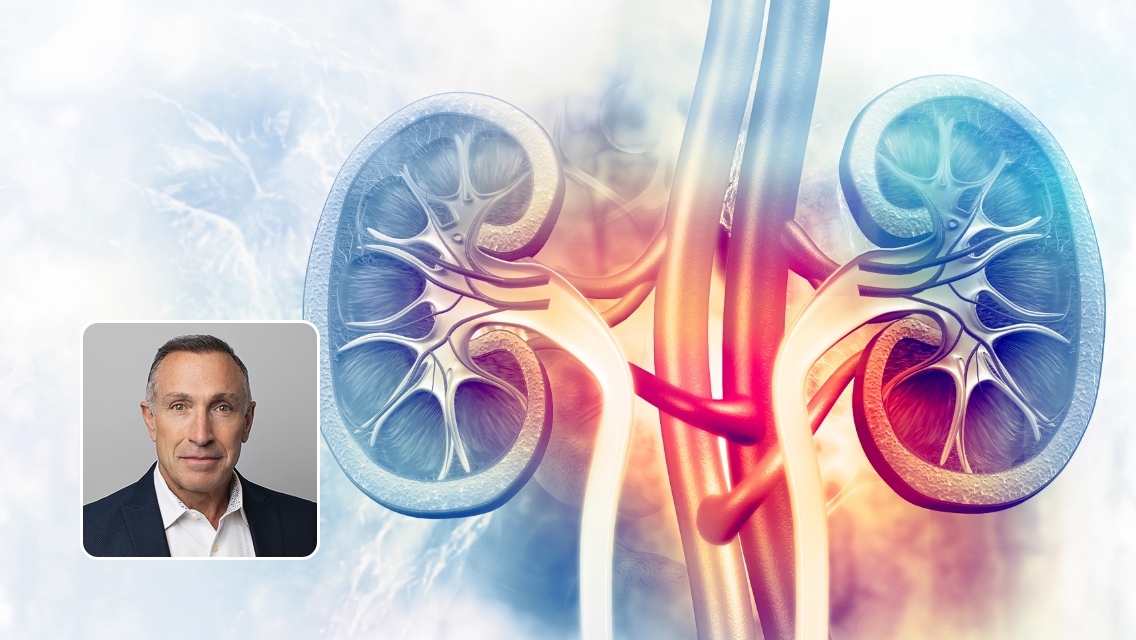


Kidney issues are on the rise, with more than 35 million people currently diagnosed with chronic kidney disease. Keeping our kidneys functioning well is critical for overall health and longevity, and a proactive, preventive approach can help us do that while identifying issues before they become serious.
In this episode, Jim LaValle, RPh, CCN, discusses why kidney health matters and how these organs do more than just filter waste. He explains what stresses our kidneys, what’s driving the rise in kidney disease, and practical strategies to support and protect kidney health.
This episode of Life Time Talks is part of our series on Performance and Longevity with MIORA.
Jim LaValle, RPh, CCN, is a clinical pharmacist, the cochair of the American Academy of Anti-Aging Medicine, the chair of the International Peptide Society, and the chief science officer for Life Time.
In this episode, LaValle discusses the important role the kidneys play in the body, as well as what can lead to kidney issues and how to take a preventive approach to protecting kidney health. His insights include the following:
- The rise in chronic kidney disease is particularly concerning because early signs often go unnoticed. Many people don’t realize there’s an issue until symptoms appear or a routine lab test reveals it.
- Regular, comprehensive bloodwork is essential for identifying abnormalities before they develop into disease. It’s important for providers to look at patterns over time and across multiple lab values.
- The kidneys play a major role in the body’s detoxification process. They help make substances more water-soluble so the body can excrete them through urine. They also regulate electrolyte balance and participate in communication between multiple body systems, including the gut, immune system, brain, nervous system, and liver.
- Kidney function and blood pressure are also related. When blood vessels tighten, the heart must pump harder to deliver blood to the kidneys; higher blood pressure can damage the kidneys. Blood pressure is a key marker to monitor for kidney health.
- Excessive oxidative stress, including that from environmental exposures, can harm kidney function.
- Factors that contribute to kidney disease include insulin resistance and diabetes, hypertension, unhealthy lipid levels, environmental exposures, poor nutrition, low antioxidant status, and chronic metabolic inflammation. Kidney dysfunction may be one visible sign of a broader metabolic problem.
- Lab values to consider looking at related to kidney function include:
- Glomerular filtration rate (GFR), which measures how well the kidneys are filtering.
- Creatinine, which is a waste byproduct used alongside GFR to assess filtration.
- Gamma-glutamyl transferase (GGT), which can be an indicator of oxidative stress.
- C-reactive protein (CRP), which is a marker of inflammation.
- LDL and other cholesterol markers, as elevated LDL can contribute to kidney damage risk.
- Glucose and insulin, as high blood sugar can also contribute to kidney damage risk.
- Bilirubin, which, depending on the level, may be protective for the kidneys but can become harmful outside the normal range.
- Albumin, which can be a sign of more significant kidney-related issues.
- Low urine pH can be an early warning sign of kidney function issues. Adequate magnesium, potassium, phytonutrient-rich vegetables, and hydration can help raise pH. These strategies can help alkalinize the urine, which can provider earlier kidney protection
- Uric acid is increasingly used as a marker of oxidative stress in the kidneys. If uric acid is too high, crystals that are often associated with gout may form, placing additional stress on the kidneys. Higher uric acid can also increase the kidney’s workload and contribute to kidney damage.
- Possible warning signs of worsening kidney function include swelling, fatigue, anemia, low blood-cell counts, fluid retention, high blood pressure, headaches, shortness of breath, reduced stamina, puffy legs, puffiness beneath the eyes, muscle cramps and spasms, and reduced skin integrity.
- Nutrition plays a big role in supporting kidney health. Antioxidants can offer protection against free radicals, and eating enough vegetables may help offset some of the acid load associated with higher protein intake.
- Exercise also contributes to better kidney function. However, when higher training volumes place demands on the body, it’s important to prioritize recovery to avoid electrolyte loss, which can further stress the kidneys.
Transcript: Filtering Health: How to Take Care of Your Kidneys (Performance & Longevity Series)
Jamie Martin
Hey Jim, how are you?
Jim LaValle
Pretty good, Jamie. How you doing?
Jamie Martin
I’m doing great. We’re back with another episode of Life Time Talks.
Jim LaValle
Well, I’m excited because the one thing I can always count on, you give me a lot of hard questions.
Jamie Martin
Well, this is another episode. We’re gonna get into it because we’ve never talked about this topic on the podcast. And again, this is part of our performance and longevity series with MIORA, but we’re getting into kidney health, which is gonna be, I know you this was another one of those topics when we were planning for this season.
You had this you mentioned that like there’s been this rise in dialysis centers around the US and in in different places around the world. I’m like, what is that about? And like, and you’re like, we have to talk about this. This is a really important part of our entire system.
So just quick grounding for everybody who’s listening, Jim, you are the chief science officer at Life Time. You also have a lot of other credentials to your name, but you’re a clinical pharmacist for 40 some years, the co-chair of the American Academy of Anti-Aging Medicine, and the chair of the International Peptide Society. So you’ve been doing you’ve been in this space for a long time. I have.
Tell us a little bit about like this rise of issues with kidney health that you’re starting to see. And like, is it recent? When did when did you start noticing that we were starting to see more issues?
Jim LaValle
You know, I think the one thing about being in this field for you know forty years now, full time over forty years, in general, all these chronic conditions we’re seeing are on the rise. The issue around kidney disease is it’s so silent. Nine out of ten people aren’t even aware when they get diagnosed.
Jamie Martin
Geez.
Jim LaValle
You got thirty-five to thirty-seven million people currently diagnosed, which called CKD, chronic kidney disease. I started seeing it more and more over the last ten years. Okay. I started to see something called the GFR or glomerular filtration rate in people just going down farther and farther at earlier and earlier ages.
And it’s only one of the factors that you look at. There’s other things that you look at. But this is an important factor, like how well are your kidneys filtering. Right. and you know, it’s once again due to a variety of issues. Right.
But it’s it is stunning that we’re not paying attention to it, that we don’t see like I would invite everybody listening. Look around, count how many dialysis centers are around your community when you’re driving around. They’re they’re going up everywhere. And
Jamie Martin
Interesting.
Jim LaValle
I think firsthand. When I really understood the full breadth of it. I mean, I had been lecturing on it. I’ve been lecturing on kidneys for fifteen years solid. Like I I was probably even at the American Academy of Anti-Aging Medicine, where we’re in front of everything, nobody’s talking about the kidneys.
Fifteen years ago I said, Hey, kidneys happen to be a pretty important organ. Right. Why don’t we start doing education on that to help people learn, right? And how do you spare the kidneys? How can you reverse the decline?
Well when my father ended up, and he was at advanced age, 90 years old. Yeah. But he was a type two diabetic, so a person with type two diabetes, he ends up needing dialysis. His dialysis bill in four months was a hundred and sixty-nine thousand dollars.
Jamie Martin
Yeah, that is a crazy number.
Jim LaValle
Right. And for me, I teach a lot about how to un reverse the the the the the wheels of kidney disease. And I’m very familiar with it. But when I saw it first hand, like what that bill was, because I don’t own a dialysis center. I don’t know what those costs are. Right. I just knew it was a big problem. I I was I just was stunned because you know what? Most of it’s prevent.
Jamie Martin
Yeah. Which is the good news, right? Like that’s the good news. And now you have to be aware in the first place.
Jim LaValle
To be aware in the problem you have that nine out of ten people don’t know that it’s happening until all of a sudden they notice symptoms. Yep. Or they get they’re on a lab test and then they say, here, you’ve got CKD, stage one, stage two, stage three, stage four. people don’t realize it. Yeah. And I I think that’s this is like one of the biggest hidden epidemics. We got a lot of epidemics right now.
Jamie Martin
We really do.
Jim LaValle
You know, we talked about now the liver. There’s an epidemic with liver health. There’s an epidemic with kidney health. There’s an epidemic with autoimmunity. All these things are kind of really hitting us hard.
And all the more reason why you need a full thought towards how am I going to live my life? Right. So I can really enjoy it. I think one of the things people think about is what am I going have to give up?
Jamie Martin
Yeah. What do I have to sacrifice? Right? Like what’s the sacrifice?
Jim LaValle
The narrative is what do you get to do in order to feel the best you can as long as you can in your life?
Jamie Martin
Yeah, what do you gain in the long term?
Jim LaValle
Exactly. And what even what are you getting now? How do I feel today? Right. Right? So anyway, I think it’s important because this is one of those primary diseases that I think A, people don’t know enough about it. Hence gotta do preventative labs. Right.
And you wanna think about providers who are looking at pre preventative labs, not just with one number in mind, but looking at the pattern of numbers that say, Hey, you know what? Your kidneys are just a little bit off here, but the things that contribute to kidney disease, they’re off big time. Maybe we oughta work on fixing this so that doesn’t become a problem.
Jamie Martin
Right. So let’s step back because I really think we wanna again, I I’m somebody who I haven’t been in a biology class in a long time, or like how does our how does our body function? Right. So h like the kidneys. We often associate them with like detoxification, filtration, but it’s they’re really essential and they’re connected again, system of systems in our body. So let’s explain like their role and why it’s so important to overall health.
Jim LaValle
Sure. So first it is detoxification. You when you detoxify, you make things more water soluble so that they can be excreted in your urine. Yeah. So when it goes through the kidneys. And if the kidneys are competent and there’s not excessive oxidative stress on the kidneys, they handle that correctly. Right. So that’s one.
Two is electrolyte balance. And as you get in situations, I’m becoming insulin resistant, what happens is the kidney starts to eliminate more magnesium and potassium and hold on to more sodium, and that starts the journey spiral downward. Got it.
The other is erythropoietin. So EPO, if if the folks listening, they’re familiar with Lance Armstrong and we remember the doping of bikers. Erythropoietin is what was given because you need to make the signal for erythropoietin in order to make really good red blood cells that are going to hold lots of oxygen. Got it. And that that’s part of what the kidney needs to do.
And the kidney is also involved in crosstalk signaling. So the gut. Immune kidney relationship is a bi-directional relationship, meaning that you’ve got the nervous system, the central nervous system is tied into the kidneys. Right. So the gut, the brain, the immune system, and the kidneys are all syncing up, saying, keep the blood vessels nice and open, don’t constrict. We got to keep the blood flow going through the kidneys.
And then you have the liver that has its job of creating the detoxification right so that you’re delivering it to kidneys and the kidney’s able to get rid of it. Because if it can’t, right, it starts to get stuck and now we start to damage our kidneys.
Jamie Martin
There’s a lot, again, interconnected. Other things I wanna make sure we’re, like it’s related to blood pressure, like acid base balance, like you explained.
Jim LaValle
Yeah, sure. So electrolytes. So when magnesium so magnesium and potassium when you lose that, your pH gets more acid.
Jamie Martin
Okay, got it.
Jim LaValle
And we’ll get into pH because that’s a super important. blood pressure is important from the standpoint of whether you’re one of the main reasons you get what’s called renal hypertension. So it’s actually kind of backwards. It’s not like, I get high blood pressure and now my kidneys are a problem. Yeah. 40% of the time, your kidneys are the problem, meaning that you get renal hypertension.
The blood flow into the kidneys is reduced. And it’s reduced typically because maybe you’re insulin resistant or you’re under a lot of stress. Your body’s making a lot of adrenaline, a lot of noradrenaline, the blood vessels get smaller, and now the heart has to pump harder to get blood into the kidneys. Okay. Right?
So the blood pressure goes up because of the vessels are tighter. Then you have the issue of other reasons why your blood pressures are going up. Yeah. And then it can affect the kidneys.
Jamie Martin
So it’s it’s a crosstalk back and forth either way by directly.
Jim LaValle
Cross talk back and forth and typically you always have the nervous system intervention which if you didn’t listen to our nervous system is a vital sign talk, you really oughta go listen to that because it’s central to everything. But I think th this is where we start to get a misunderstanding.
So when I I had to dive into kidneys really hard. Yeah. About probably fifteen years ago, my brother went into renal failure. Okay. And I went, wow. I need to learn more about this. And I immediately saw something that was amazing.
That the majority of kidney progression or damage is due to a lack of what’s called redox poise. The lack of regulation of oxidation reduction reactions, meaning you’re antioxidant deficient. You lose your defense to protect against free radicals that are moving through the kidney. Okay.
Now that could be environmental burden’s a big one on that. So cadmium, for example, gets stuck in the kidneys a lot. some pesticides can really create damage. so it’s understanding that the more oxidative stress I have, and you brought it up, pH. Right. If your pH of your urine is low. Yeah. Like a five point five. And you could do that with a urine strip. Right. So
Jamie Martin
And you, you can do those at home?
Jim LaValle
Yep easy to do at home. What that means is you’ve got an excess of hydrogen ion concentration, which is more free radicals.
Jamie Martin
So interesting.
Jim LaValle
You want the pH of your urine to be higher. At least six point five, in order to reduce that burden. And how do you do that? Well, that’s that need for magnesium, potassium, eating more vegetables. But let me tell you the like the full expression of this. Yep. So you understand why it’s so important.
So say you’re you’re going into renal failure and the doctor, the the nephrologist is saying, You’re gonna need dialysis. Okay. Do you know what they give people to extend the time? That they need dialysis, they give them a pill that says if you get on this pill, we can suspend the time. We can lengthen the time to dialysis. What do you think that pill is? You probably don’t know.
Jamie Martin
Okay.
Jim LaValle
Clothes. It’s bicarbonate. Bicarbonate. So it could be magnesium bicarbonate, sodium bicarbonate, but why are they doing that? It alkalinizes the urine.
Jamie Martin
Okay, so it’s it’s raising your levels artificially essentially.
Jim LaValle
A pH raising it. Yep. So why are we waiting until you have full blown kidney failure to make sure we alkalinize the urine? This is the most basic concepts
Jamie Martin
Yeah, okay.
Jim LaValle
This is a concept that I try yeah, when I talk to doc because I teach a lot of you know neurologists and internal medicine doctor, and I say that to them and it’s it’s this aha moment, like, you know that makes sense. Yeah.
So we want so we have to understand that the majority of people walking in. Yeah. to a dialysis center. It’s due to insulin resistance and diabetes, hypertension, and you know, bad actor lipids, hyperlipidemia. Those are the big ones. And then the other piece is exposome. I’ve been exposed to things. Yep. And so nutritional adequacy and picking up on antioxidant status. Yeah. Or do you have chronic metabolic inflammation?
Because when all of every episode we that we end up doing together, because I I absolutely love every time you invite me and we get to do these like the marathon, these marathons of life for for Life Time talk. I love it.
But it’s understanding that when we get into this system of systems talk d discussion, yeah, what it really is about is the concept of metabolic inflammation, meaning multiple organs, creating inflammatory compounds, disrupting the way your organs are supposed to function. Yep. And then depending on which one of your organs is the most vulnerable, or maybe more than one.
Historically starts to show its cards or its dysfunction and now I better start working on that. And so kidneys, you know, it I I have to tell you, let me this is like a really personal, you know, discussion for me because I watched my dad. Right. ‘Cause he lived with us, you know, for thirteen years as a post cancer, you know, survivor. Right.
And when you know, dialysis, it’s like you go to dialysis, it it clean your blood with dialysis, good. But it’s kinda hard on you. So the next day you get about six hours of feeling okay. Yeah. And then you gotta go back and do it again. And you can do it through you’re gonna do it three days a week and then you’re off on a weekend.
And then the problem is is that that’s gonna limit quality of life just from the standpoint of y you’re not gonna go anywhere for a week long trip.
Jamie Martin
You just can’t really do a whole lot in general. Well and even if you do, you’re not feeling your best anyway. ‘Cause you’re kind of getting to like sixty percent maybe or whatever it might
Jim LaValle
Exactly. So quality of life is really compromised. It’s incredible that we have dialysis to extend the lives of people. Absolutely. I fully support that incredible technology. Yeah. But we are just aren’t doing the right service to people to teach them about how are you going to keep yourself from moving down that.
I can tell you right now, people don’t even talk about you go into conventional you know, experience looking at labs. Yeah, as long as your GFR is over 60, the a lot of times nobody’s talking to you about it. Right. Whereas you look at the literature, it’s supposed to be ninety.
Jamie Martin
Okay. Right. So again, the ranges, right? Again, lab ranges, what’s normal, what’s not sick, right? Versus where you actually might feel better.
Jim LaValle
Exactly. And a lot of times this is due to dehydration. Okay. So dehydration chronically is, you know, your kidneys need to drink water. it’s a must. Yeah. You know, look, you know how I look at that? I have two little dogs at home. Yeah. They probably drink more water than I do.
Jamie Martin
For sure. They just go right.
Jim LaValle
I just watched that in general, animals innately know. Yeah. I need water. Yeah. We as humans were too we’re too busy for water.
Jamie Martin
Yeah. We can go hours upon hours without it.
Jim LaValle
Exactly.
Jamie Martin
Yeah, cheers for more water. Here we go. Here we go. Exactly. Have a sip right now.
Jim LaValle
But I think it’s something that we just totally neglect. Yeah. Urine PH, simple test you could do at home. Should be your first morning urine pH. If you have a low morning urine pH, you got a couple options. I would say get a lab test. Right.
I think, you know, our the the our providers at MIORA do a tremendous job at thoroughly going over labs, explaining what’s going on. Explain them that to you in the systems approach, where are your big metabolic roadblocks at using the metabolic code. I think that’s important.
But there’s a lot you can do with lifestyle to correct this. Yep. And and then there’s lab values that you can be looking at that are very basic lab values. Right. That you you can see. And then you can really start to determine where am I?
Jamie Martin
So let’s talk about that in just a second. I wanna get to more of those lab values. One thing I wanted to bring up too is this idea like we’ve been hearing more about uric acid. Like what’s the connection with uric acid and kidney health?
Jim LaValle
Well, there’s a couple things. Uric acid’s finally becoming a very popular marker for oxidative stress. So the higher your uric acid, even within normal range, the more oxidative stress that you’re under. And they actually, if you compare that with another marker called GGT, you know, gamma glutamyl transferase, as that’s going up, it’s showing more oxidative stress.
But uric acid has to be cleared by your kidneys. And it can clear it by your kidneys unless it starts to get too elevated and now you start making uric acid crystals. So you hear about uric acid for gout. Right. But uric acid crystals have to be filtered by your kidneys and they don’t filter those. It damages your kidneys.
So the higher the uric acid, the harder your kidneys have to work and the more damage that can occur to your kidneys. So that is a great marker to look at, not just for kidney health, but overall am I under a lot of oxidative stress?
Jamie Martin
Right. Is like those crystals I I hear a lot about kidney stones. Like that’s something that some people in my family have dealt with. Like, is that what is becomes kidney stones for people? Or what’s that?
Jim LaValle
So that’s a little bit different. Okay. Typically, if you’re under a low urine pH, low magnesium status, you’ll get calcium crystal calcium oxalate. But uric acid can’t you know, you can stimulate, you know, crystal formation and you can get stones that could be rich in uric acid. But it’s just important, like kidney stones. Another one that for most people incredibly preventable. And you know, I’ve had enough people that have come to us over the years. And then men so men say, I understand this is worse than childbirth.
Jamie Martin
And then it was like, now you know.
Jim LaValle
Now you know exactly, right? Yeah. So so yeah, it’s it’s that pH of urine, very simple. Yeah. But think about it. nephrologists give you something to correct your MPH to spare your kidneys from needing dialysis. That’s how important your MPH is. Yeah.
Looking at, well, do I have an elevated CRP? Yep. You know, low density lipoproteins, LDL cholesterol, actually damages your kidneys, right? If it’s excessively high and that’s not really talked about much. Right. The obvious of glucose and insulin because you start to glycate proteins and damage tissues. Yeah. You know, glycation is basically sticking sugar on protein. Right.
Jamie Martin
Right.
Jim LaValle
That’s damaging the tissues. And then just the act of making too much insulin creates way a a lot of adrenaline and noradrenaline, which clamps down on those kidneys. And when I get that reduced blood flow, now my kidneys are under the duress of they can’t do their job.
Jamie Martin
Yeah, their work is compromised right there. So you mentioned those markers. Let’s also talk like what about things like creatinine or bilirubin or chloride? Like are those things you’re looking at as well?
Jim LaValle
absolutely. And C peptide, that’s another one that you look at as well. Okay. So, you know, bilirubin breakdown of red blood cells, right? So if your bilirubin, it’s actually interesting. If your bilirubin is in the high normal range, it’s actually protective for your kidneys. There’s lots of papers that say a high normal bilirubin is kind of good. Yep. Going out of bounds then becomes bad. Right.
Jamie Martin
Yeah. So it’s like you it’s like a fine line right there, right?
Jim LaValle
Exactly. Now chloride. Chloride being a negative electrolyte, negatively charged ion means that typically if chloride levels are going high, we’re losing our other electrolytes, right? So magnesium, potassium, very important to be in yeah, in your tissues, but as your kidneys get compromised, you’re excreting nose, chloride goes up, chloride damages the kidneys when it gets elevated. Okay.
creatinine, byproduct of muscle and protein, right? You work out real hard, you make more creatinase. That’s what we look at. Creatinin kinase is a a muscle damage marker. Okay. So creatinine can go up. People that take creatine are going to see more creatinine in their kidneys. Now they go, Well is that bad?
Not if it’s within reason it can be like slightly elevated, but you also want to watch your filtration rate. So if your filtration rate’s really low and your creatinine’s really high, well that’s different than taking some creatine. Right. so that’s important to understand.
and then of course you know you look at GFR. Now GFR can be a little dis deceptive because if you’re really muscular and have a lot of surface area your GFR may be reported a little bit artificially low, but the reality is for the majority of people, right? I’m talking about somebody who is really big.
Jamie Martin
Yeah. Are you thinking like bodybuilder, muscular, like that?
Jim LaValle
The for the majority of people, glomellular filtration rate is critically important. So if you notice my GFR is in the sixties, that’s time to wake up. Yeah. Once it’s below sixty, that’s where you start to s really stage, you know, chronic kidney disease. Yeah.
Especially if you have any comorbidities, meaning, gee, am I insulin and glucose are off? Gee, I have high lipids, my blood pressure starts slightly you know, slightly elevated. So you have these other things, you go, this is starting to brew a storm. Right. We need to get to work. But my point is if you’re in your 60s, start looking around for where the storm’s brewing.
Jamie Martin
Yeah, where is this happening? So in addition to chronic kidney disease, are there any other like other kidney conditions that you’re seeing the rise of or things that people should be aware of?
Jim LaValle
Well, you know, I mean there is it seems like there’s more kidney cancers that are showing up. The you’re starting to s I I’m getting more kidney cysts that seem to be getting reported. I think part of that’s cause more people were doing imaging.
You know, but but but I think because more people are doing imaging. I know back, you know, when we were doing, you know, a lot of imaging at at my Ohio Institute yeah, we pick up those cysts would pick up early kidney cancers on people, which without imaging, y a lot of times you’re not gonna pick that up. And that’s where I think there is value. I know we haven’t really talked about imaging all that. Yeah, you know
Jamie Martin
We mentioned in passing.
Jim LaValle
what? I’ve set in on those types of consults where we did imaging, we did labs, we report everything, internal medicine doc did their review of everything, but you picked up a kidney, you know, cell carcinoma and nothing else was showing it. So maybe that only shows up in eight people out of ten thousand. But for those eight people gonna spare their life in many cases or at least extend it. And and so I think those are them the you know the main issues that that are going on. It’s it’s such a big looming silent epidemic. Right.
That if you’re listening, and if you notice yourself, hey, I’m I’m a little swollen, you a little swollen. Gee, my red blood cell count’s a little low. Why am I getting anemic? Right? Even mental health relates to advanced kidney disease.
And remember the gut immune kidney bidirectional influence. You could be having a I’m a little bit swollen. I’m a little bit tired. Right. Gee, my gut, you know, I’m reacting to foods, or maybe I’m feeling gassy, I’m bloated, there’s issues around my gut. Yeah. Or I’m getting sick all the time.
It it’s that thought of, okay, your system is giving you a lot of signals. Now you don’t think that they’re connected, but you don’t know whether they’re connected until you look at your body as a whole and you look at those relationships.
Jamie Martin
Yeah. You mentioned like like what might be some signs that kidney issues are happening. You mentioned maybe regular sleep being swollen. Like are there any other physical symptoms people might notice about the kidneys? But or is that really like it once you’re swollen, like you might notice like and you’re it’s happening on a regular basis, there might be something ongoing. I know it’s silent. So again it’s not you’re not really gonna . . .
Jim LaValle
Nine out of ten people that get diagnosed don’t even know or realize there’s anything wrong. So if it’s advanced, you’re gonna have fatigue, there’s gonna be anemias, like less erythropoietin, right? So with less r erythropoietin, less red blood cells, maybe platelet issues. so the you the issues of poor filtration means fluid retention.
The other sign would be, hey, is my blood pressure off? You can easily get a blood pressure. Yep. And you know, the sword signs of blood pressure issues, right? You’re getting getting headaches, feeling fatigued. oxygenation. Man, I’m winded going up these steps. My legs are puffy. Where’s my stamina? Yeah. You can start thinking about that.
And you know, in Chinese medicine, they go, you know. If you’re really puffy below the eyes, that’s kind of a a kidney signal. So a little bit different form of you know healthcare there. But I’m a big believer that Chinese are on to some things. Yep.
And and so I I think those are the key things. Look, you’re gonna notice muscle cramps, muscle spasms because you’re losing magnesium and potassium. Maybe you’re beginning to get some muscle wasting because you’ve got low protein. You’re gonna have lower albumin in some cases, and when the albumin gets lower skin integrity starts to break down. Okay.
So there’s a lot of things that can happen. but it it it’s like a quick downhill slide. Yeah. And that’s why it’s so important to catch things early and and you can completely reverse it. I know look I’ve taught this. I have clinicians that come back to me and tell me it’s worked.
We know we can get that kidney filtration number to go back into the proper direction with good changes on lifestyle, appropriate inner integrative modalities, and then proving it by retesting the labs and showing it that number has changed.
Jamie Martin
Let’s get into that a little bit. I mean, I know we can k keep going on like here’s the problem, here’s what’s happening. Is there anything else on that side of it you want to cover before we get into some of the lifestyle?
Jim LaValle
No, I think you know the exposure like the things like heavy metals are pretty important. Yeah, you gotta look at metals, you gotta look at pesticides, those are big issues. Yeah. And you can screen for those, right? but I I I think it’s just something you have to check the box on. Yeah.
Jamie Martin
Right. Make sure you’re looking at those pieces. Right. Okay. So let’s say, you know, you’re like, okay, I’ve got something going on with my kidneys. Right. I or I don’t I don’t even have anything going on and I just want to take care of them. What are some things we can be doing? I mean, we kinda go through this in every episode for each individual system, knowing it’ll have a broader effect.
Jim LaValle
So if there’s nothing wrong at all. Right. Nothing wrong at all. Yep. And you’re starting from ground zero on lifestyle. Yep. Hydrate, hydrate, hydrate. Yep. Right?
So, you know, I people say, an ounce for every pound body weight. I think that’s a little aggressive. Then people go, yeah, just drink a gallon of water a day. Well, I’m in the real world with people. Yeah. I try to get them to drink two liters a day. Yeah. Two liters of water a day. I mean, I would like you to do more. No, obviously.
The more you exercise, the more you sweat, the more you lose electrolytes due to exercise, the more you need. You’re need to take electrolytes. Yep. I’m gonna drink more water. What are the other factors? Well, maybe take some extra magnesium right away. Most of the population is low in magnesium anyway. So I think taking extra magnesium is smart.
You could do a urine pH, you easily do. You get a little hydryon, you know, urine strip. Yep. You can check it. I like getting it in.2 increments so you can get more accurate. and then watching your glucose and insulin, and that means am I picking foods responsibly?
Can you eat too much protein? Yeah, you can eat too much protein, just like you could eat too much sugar, you can eat too much fat, you can eat too much carbs, you can eat too much protein. Yep.
What I think is interesting is if you eat enough alkalinizing vegetation, if you’re eating enough vegetables that alkalinize the urine, the intake of protein it’s it’s it’s there’s a lot more flux in it and a lot more ability to take in more protein. But people doing carnivore diets or ketogenic diets they really need to be looking at the pH of their urine. I think that’s important. you know, this thought that vegetables are bad for you, it’s it’s pretty interesting.
Jamie Martin
I mean antioxidants, all the polyphenols.
Jim LaValle
I mean pesticides. Yeah, they make natural pesticides, which happen to be anthocyanidins or proanthocyanidins and other compounds that are good for us to kill the pests that are attacking them. Right. So I it’s interesting
Jamie Martin
They’re natural defense mechanisms, right?
Jim LaValle
we hear all these. So I think that that that’s really important. Yes, exercise is important. I think zone two is good. Getting that in, getting cardiovascular work in to create circulation.
Now here’s where we get into the forever I’d say, you know, conundrum. Right. The more you want to do endurance. And and I’m not against like I I have people and they run 50 mile runs. They run 100 mile runs. I want you to do what you’re passionate about. Yes. Right? Whatever is going to build your self-confidence, your integrity, what you love to do.
However, the more you do those type of even like crossfitters, alpha folks. Yep. The harder you train, the more you lose electrolytes, the more you spike your cortisol, the more your gut gets permeable, the more your kidneys get at risk. Yep. The more your liver gets at risk. So you have to recover better. Yep.
And that’s inclusive of understanding I need to take electrolytes. I’m gonna need to take more magnesium. Right. Gee, am I getting the right foods in? Am I getting enough protein in for the like the the exercise demand I have? That part’s important.
I think stress management and sleep are always important no matter what, because once again, remember the nervous system is innervating with your kidneys. Yeah. So if you’re under chronic sympathetic stress, that means that you’re going to have issues with the kidneys clamping down. And now I’m making myself prone to hypertension, which could be stress-induced.
And then, of course, the other aspect of that is if you’re not sleeping enough. You man you you don’t clear the waste. You don’t allow your body to detox to do what it’s supposed to do. And if you have apnea, it creates even a bigger issue.
Jamie Martin
I feel like in every episode we kinda get into all these things and like, there’s little tweaks and nuances with each one depending on where you’re starting here, right? Like or which system you’re starting with.
Jim LaValle
Now, if you are at the point of where you are say your GFR is starting to get low. Yeah. Now it’s more important to alkalize the urine with the electrolytes and the minerals. Yeah, really. Now it’s more important to think about taking something that might help.
Maybe your blood pressure is borderline high to go with that. Things like aged garlic extract have multiple human trials at leading you know, interventional cardiologists, you know, at leading universities like UCLA, Harbor Medical, which is the Department of Cardiology, right? that show that that helps to reduce blood pressure, improve glutathione, so improve your antioxidant status. So aged garlic, really important.
Herbs like saladago. Yeah. shadavari, which is kind of becoming a popular herb finally. we’ve been using it for quite a while, but fantastic for limiting that kidney stone formation. Right. Keeping the immune system in balance in the kidneys.
And the solid ego helps is what’s called an aquaretic. It helps the filtration rate of your kidneys. And we’ve absolutely seen people improve when utilizing those type of compounds if they’re starting to see a compromise GFR.
And then if you want to get into the peptide world, as we start to see peptides like BPC 157 come back into the market, which we’re hoping that’s going to occur, TB five hundred. Yep. and then a new one, clotho. clotho is a incredibly important compound to help in terms of kidney you know function.
And and then there was a there was a a compound called rivasca. That was studied that helped people with stage four kidney disease start to reverse their kidney disease because it improved renal blood flow, improved that the arteries, the inner lining of the arteries, the endothelium, so you got better blood flow into the kidneys. And then in addition to that, helping with that filtration process.
So there are studies now starting to show that, hey, you can improve kidney function. And I think people need to know about it.
Jamie Martin
How you I mean obviously I know with peptides if those become more available, those are usually injectable. I know there are some that are also or you can take oral. Sure. How about with some of the other the Saladego, the Chattavari? Like are those again capsules that are pretty widely available? Where do you where do people find those? And how do you know it’s a good quality as well?
Jim LaValle
Well that’s always the issue. Like I I think that good quality means third party certifications, are they making it in a C G P lab? yeah. So you don’t always know. Right. I think, you know, I know at Life Time when you go to the store it’s I mean, who scrutinizes products harder than Paul Krieger?
Jamie Martin
I’m not sure anybody does. I mean he’s so in depth with all of them. It’s so good.
Jim LaValle
Dude on that. And I’m attuned to it. I mean, I’ve obviously written a lot on on on all this and big believer in in really delivering quality extracts. Absolutely. Paul’s specialty, absolutely. He he really watches and protects the folks that can, you know, buy through Life Time.
So there’s a product on there called RenoCap Forte that that, you know, is a phenomenal kidney support product. Obviously, omega three fatty acids can play a role, helping to decrease inflammation. Yeah. greens help alkalinize the urine. So a greens drink can be also helpful. Right. So those are the kind of key things that you can easily do. Yeah. They help start to pull you out of trouble.
Jamie Martin
Nice. I wanna make sure we really hit on that like excess you talked a little bit about too much protein, also just addressing the excess sh fructose consumption can put stress on our kidneys. And I don’t wanna overlook that. I mean you’ve you’ve already said insulin resistance in those pieces, but really delving into the fructose side for a second.
Jim LaValle
Fructose absolutely triggers more and more inflammatory signaling. It actually creates something it it’s called hypoxanthin that triggers the damage. So you make more of this secondary metabolite that damages and triggers oxidative stress in your kidneys. Got it. So when you take high fructose in, you trigger a metabolite that creates damage to the kidneys through. activating a lot of the inflammatory signaling in the kidneys.
Jamie Martin
Okay, got it. And just to be clear again, we want to make sure we stress this. We’re not vilifying fruit here in this case. Fruit, there’s a lot of other bioavailable things there, but it’s a lot of like they’re the refined and like artificial things. Exactly.
Jim LaValle
Exactly. Fructose, right? It’s in a lot of stuff. And I probably wouldn’t, you know, drink three glasses of apple juice a day either.
Jamie Martin
Right. Yeah. Without again, that kind of goes with what else is in this fruit, right? It’s doesn’t like the fiber that comes with it and all these other things. Yeah.
Jim LaValle
Exactly.
Jamie Martin
We want to make sure we’re doing that. Okay, we’ve talked about protein, we’ve talked about excess fructose. What about sodium? I still hear a lot about like, there’s such thing as too much sodium and how about that in kidney health?
Jim LaValle
Yeah, so it turns out that there are people that are sodium sensitive and people that are actually sodium resistant. So some people don’t have an issue with sodium. It turns out though that a fair amount of people with high blood pressure, and remember, high blood pressure causes problems with your kidneys, end up being sodium sensitive. Okay.
And so it would be a good idea to say, well, first of all, where is my sodium? Is it elevated? Like is it a I I don’t like them above 141 in the number that you would look between 138 and 141. Yep. am I taking in too much sodium? Where is you always gotta think about your blood pressure. Where’s my blood pressure at? Where’s my kidney function at? Maybe I should try cutting down on my sodium intake.
Because you know, a lot of electrolyte drinks, depending on which one you pick, are way too high in sodium, not enough mag, not enough potassium to counterbalance that. Right. And that can be that can be a source of issues for people that are training a lot and are taking in a lot of sodium and not getting enough of those other ions like the magnesium and potassium.
So sodium sensitive and sodium resistant. So people that it has no effect, and then people that can have a tremendous effect.
Jamie Martin
Okay, right. Go so really k thinking about that kind of in relation to the kidneys also with high blood pressure. Correct. Are there everyday habits or products that that could affect your kidney risk, like taking NSAIDs or drinking alcohol? We know alcohol affects the liver, right? For instance, but are there any other things that could have a negative effect or compromise?
Jim LaValle
I mean there are multiple different drugs that have to be calculated for their dose based on your filtration rate. Okay. So is your kidney if if a drug is metabolized in the kidneys, it’s called the pharmacokinetics of the drug. Okay.
You have to alter the you literally have to go through calculation and find out the dosage that’s correct based on where your kidney function is at, because your kidneys can’t clear the drug as quick. And that means it’s circulating in you longer. Okay.
So yes, there are drugs that are issues. NSAIDs are a common one that people can can look at that are kind of over the counter. A lot of prescription meds, you have to be aware of that as well. and then and and then, you know, I I I think once again and ultra processed foods, gotta be careful. Right.
Jamie Martin
Right. Just more things going in. That’s right. Like few we want fewer chemicals going into our bodies. And that is one thing. What we eat, what we consume is something we can take more control over. Exactly. what did we miss on kidney health? I feel like we covered, we talked about exercise, we talked about all those pieces already. I mean, anything we missed?
Jim LaValle
I don’t think we missed anything. I I’m hoping that people just listen to this episode. They probably have a family member that at this point has gone through dialysis. So they understand it. Yeah. But what they probably don’t understand is how much you can do about it. Yeah.
And I think what I love about every one of our talks is that I know how passionate you are about empowering people to have maximum resilience and vitality in their life. And people have to look at those war early warning signs. Yeah. Where are the yellow lights? Right? With your chemistry.
Jamie Martin
Yep. Like how do we just get ahead and be again, we’re talking always about proactive health here. Like how do we like look ahead, right? And and be planful and try to maintain where we are if we’re in good health now. So we have that for the long term. So absolutely. All right, Jim. Another just at like so many stat fact episodes that we just keep going after here. So thank you so much for joining me as always.
Jim LaValle
I always love doing it. I can’t wait till the next one.
Jamie Martin
All right, thank you.
More like this
Talks — S13, EP17 / The Rise of Fatty Liver Disease (Performance & Longevity Series)
Metabolic dysfunction-associated steatotic liver disease (or MASLD, formally known as nonalcoholic fatty liver disease, or NAFLD) is a chronic condition that affects up to one-third of American adults. Learn why it’s on the rise and how you can help protect, support, and heal this vital organ.


We’d Love to Hear From You
Have thoughts you’d like to share or topic ideas for future episodes? Email us at lttalks@lt.life.
The information in this podcast is intended to provide broad understanding and knowledge of healthcare topics. This information is for educational purposes only and should not be considered complete and should not be used in place of advice from your physician or healthcare provider. We recommend you consult your physician or healthcare professional before beginning or altering your personal exercise, diet or supplementation program.
Life Time provides administrative, non-clinical support to MIORA as well as services and amenities related to general wellness and fitness; Life Time does not provide medical advice, diagnosis, treatment or care.
Advertisement