


A Guide to Recovery Tools
Learn why recovery is just as important as exercise, how to recognize signs of underrecovery, and which tools and techniques can support your recovery.


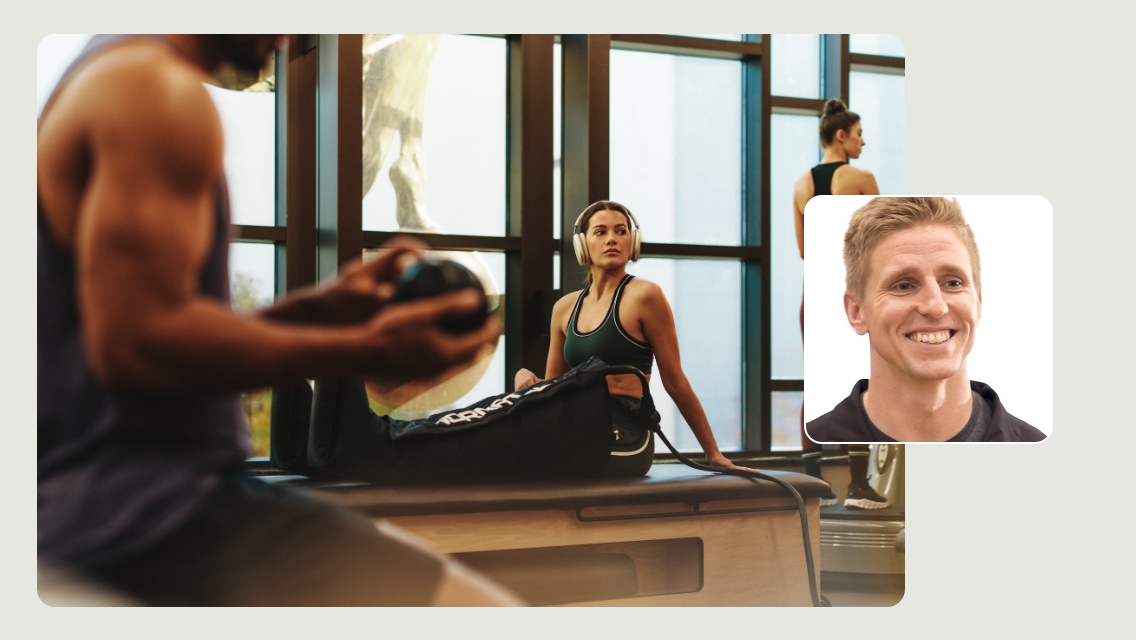

Many people believe that the harder and more often they exercise, the better their results will be. But real transformation often happens in the quiet moments between workouts.
In this episode, Danny King, Master Trainer, explains why recovery is just as important as exercise and how prioritizing it can reshape your health and fitness. He shares key signs of underrecovery and explores practical tools and techniques to support recovery, from compression boots and percussive therapy devices to hot and cold therapies.
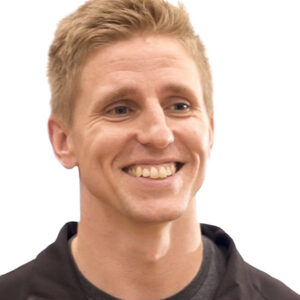
Danny King is a Master Trainer and the director of performance and recovery at Life Time.
In this episode, King speaks to the importance of recovery, as well as some of his most-recommended recovery methods. Insights include the following:
- Recovery is just as important as exercise. Fitness progress doesn’t only happen during workouts; it happens between them, during recovery, when the body repairs and adapts.
- Recovery includes a myriad of things you can do after training: rest, light movement or stretching, hydration, fueling, and the use of supportive tools.
- To maximize the time and effort you put into training, recovery needs to be part of the plan, not an afterthought.
- Common signs of underrecovery include fatigue, irritability, stiffness, soreness, brain fog, and stalled workout progress.
- Some recovery needs affect the whole body — like nervous system fatigue or poor sleep — while others are focused on specific muscles or joints.
- At Life Time, tools to support post-exercise muscle recovery include Normatec compression boots and percussive massage devices, as well as CryoLounge chairs and HydroMassage beds.
- Hot and cold therapies — think the sauna and cold plunge, either used separately or together for contrast therapy — may support recovery when used strategically.
- A few minutes of deep breathing, walking, or stretching can meaningfully support recovery and help the body bounce back after exercise.
- No recovery tool can replace the basics of good health. Quality sleep, proper nutrition, and consistent movement are still necessary factors.
- @lifetime.trainers on Instagram
- Stretching Videos On Demand in the Life Time App
- How to Use 3 Popular Recovery Tools at Life Time
- How Do I Use a Cold Plunge?
- How Long Should I Stay in the Sauna?
- How Do I Perform Contrast Therapy for Improved Recovery?
- How Percussive Therapy Can Benefit Your Health
- Do Compression Garments Work?
- Insights for a Pain-Free Life With Sanjay Gupta
Transcript: A Guide to Recovery Tools
David Freeman
Welcome back to another episode of Life Time Talks. I’m David Freeman.
Jamie Martin
And I’m Jamie Martin.
David Freeman
Today’s topic is talking about a guide to recovery when it comes to your body. Many people believe that the harder and more frequently they exercise, the better their results that they’ll get. But when it comes to the ideal of the fitness routine, rest and recovery are just as important as you exert throughout your days. In this episode, we’re talking about tools and how they can all support your recovery efforts. And who do we have as our special guest, Jamie?
Jamie Martin
Yeah, back with us again, we have our friend Danny King. He is a master trainer and the director of performance and recovery at Life Time. Hey Danny, how are you?
Danny King
I’m great. Thanks so much for having me. Super excited to talk about this today.
David Freeman
Awesome. Hey Danny, so you’ve been on the podcast before you’ve been in the industry very, very long time helping people in this space, being a director of recovery. When it comes to recovery and speaking on this podcast, huge advocates, we both are, we all are on this call, but what I want to know is why is recovery such an important part of a fitness routine?
Danny King
Yeah, I mean obviously we need to exercise, right? We wanna do that and encourage people to do it, but the time you actually get better is not when you’re exercising, it’s after you do it and when you recover. So the more you think about it, the more you focus on it, the more you optimize recovery often means the quicker you can come back from it, the more gains you’ll actually make because you’re coming through it and whether it’s I wanna be able to work out harder, see more progress, all of that happens outside of the workout. So focusing on it ultimately optimizes your results or optimizes the time you actually invest in the work.
Jamie Martin
Well, right, Danny. So to your point, like these things happen around your actual workout. It’s like, how do you see, where do you see people fitting them into their strategies? Because is it happening, you know, right after their workouts? Is it in the hours, days after? Talk to us a little bit about that piece of it.
Danny King
Absolutely, one of the great parts when you think about exercise recovery is it really starts the minute you stop your workout. Actually, you could go back and say it even maybe starts before you start in terms of your fueling strategy and those things, but, and then it carries really until your next workout. So there’s things that you can do immediately post, and obviously we’ll talk about these different tools and where can bring them in, but there’s two things you do immediately post.
There’s things you can do when you’re at home on the couch at night in the evening that can optimize without necessarily adding more time to the routine or extending the amount of time that you might spend at Life Time or somewhere else. So there’s all sorts of different times and places these things can be popped in depending on what your goals are, what time you have available, and what sort of your resources in this world are.
Jamie Martin
Awesome.
David Freeman
Yeah, and being in the industry for as long as we have, people usually associate workouts and feelings to what they’re getting out of the workout. So when it comes to recovery, it might not be as exciting, right? It might not be that that theme. So I want our listeners to take away from you. What are certain signs or symptoms that can be letting them know that they need more recovery in the routine?
Danny King
Yeah, probably the biggest sign, the absolute biggest would be looking at your workout progress. Are you maybe struggling to see forward progression in what you’re doing with your workouts? Are you coming into your next workout a little more tired or fatigued than the one before it? That’s a clear cut sign that something’s going wrong within your recovery. But then if we pull back just a little bit more, you could think of mentally, am I a little more tired or irritable?
Am I stiff and sore, especially again at an increasing level? Do I find myself another really common thing that might see ⁓ brain fog or, know, yeah, I do my hard morning workout and I’m actually maybe struggling to be productive through the day because I’ve got some brain fog or some fatigue happening. Those are all signs that the workout is putting a big impact and we’re not necessarily able to recover from one workout to the next and we might want to focus on that aspect a little bit.
Jamie Martin
I know you both see this all the time. I had an experience this past year where I was training just to do the Twin Cities 10-Miler, right? And I was waking up so sore and achy before runs and I was just not feeling great. It was hard to like get out there and do that. And I know now, like looking back, I was probably more inflamed than I should have been and kind of forcing myself through. So it’s just, it’s so funny. we, but to that point, I kind of ignored those symptoms a lot of the time. I was like, I just got to get these miles in or I got to train.
How do we break that mindset for people? Because I think had I given myself more training, I probably would have felt a lot better when race day actually came around.
Danny King
Yeah, I think it’s hard because there’s some personality to that of like, if it’s on the plan, I’m gonna do it. A lot of us have been really programmed in the no pain, no gain, just gotta work harder. One thing I do think is sometimes an important distinction here and it’s not exactly answering your question, but I do think it’s related where it helps is we can think of recovery as being large global impact on the body where maybe it’s my fault. My nervous system is fatigued. I’m tired. I’m sort of sleepy.
Where it might actually be things like my total system load, my sleep, you know, these big things. But we can also think of recovery as being a little more local and, you know, the muscle groups that I’m doing. So for instance, your running example, right? Maybe it’s that the impact on my feet, legs, knees, ankles, the, you know, inflammation swelling in those areas is taking an impact.
And maybe it isn’t that I have to entirely pull back on load or the total of what I’m doing is too much. I just have to give those tissues a little bit more love and then I can come back a little bit faster. So we’ve heard recovery and often it just, what people are hearing is take time off, sleep, don’t exercise, do something else. And it might mean that, but it also might mean just give your body a little bit more love, a little more TLC, especially in maybe a particular area and see if we can get it a little more fresh or ready for the next thing.
Jamie Martin
Yeah, that makes total sense.
David Freeman
Yeah, I mean, I just I think listeners understanding different ways that we can go about recovery. And I know we have a plethora of like tools that we actually offer within Life Time, whether that is Normatec I’m going to have you kind of go through a few of them and then kind of break down some of the benefits of each one. So what would be your go to? And then obviously we got all the offerings, but what’s your number one go to?
Danny King
Man, what’s my number one go to? You know, it’s a tie. It’s a tie, I think. And I’m going to start with actually what you already mentioned. Maybe it’s because you just said it, but Jamie just referenced running or kind of putting this pressure into the body. You mentioned Normatec. think some Normatec compression is one of my favorite things just because of how good it feels.
And there’s real proven benefit. There’s some great research on it in terms of what it’s doing to reduce soreness, to improve how quickly you come back or can reduce or pull the fatigue out of the legs. But it also just feels really good. So I do that hard run either that day or the next day, come in, spend some time, spend 15 to 30 minutes in the set of Normatec. My legs are fresher. But again, you just talked about feeling.
And there is this element of like, that was great. I really enjoyed that time. that’s honestly probably one of my favorites for people or go-to’s or especially one of my own favorites would be something Normatec compression.
David Freeman
What was it tied with? What was it? Was it was the other one that you were thinking of?
Danny King
The other one is going to be a simple one, tried and true, and that’s some type of like percussive massage gun, like a Hypervolt. That one wins for convenience. There’s a lot of things you can do for your tissues that all kind of fit in the same category. Foam rolling, massage gun, a massage that are fantastic. I think that the convenience factor of that kind of massage gun, that Hypervolt, it’s just so easy to use. It’s super comfy to do at night. They’ve gotten so quiet now that I can sit there on my couch at night, give my legs some love while I’m watching TV. And again, it really does make a difference to how my body feels.
Jamie Martin
What I love about the Norma, or not the Normatec, I do love the Normatec too, but about the percussive devices is just the different attachments that they have to do a little bit more targeted work. Do you have a favorite one of the attachments that you go to? I mean, there’s like the flat-sided one, there’s the more direct and like not pointed, but like the more rounded on the end.
Danny King
Right now, think I’ve got the flat one generally would be if people just have kind of say something a little flatter, especially I’m a good amount of running volume right now. So given like quad IT band, have some love, but I will tell you they actually have specific to normal or to hyper ice. There is a flat attachment that’s a little larger and it’s heated. You have to charge it and turn it on. So it actually warms up. And using a heated flat attachment is absolutely fantastic. It’s really cool. And I’m a big fan.
Jamie Martin
All right, so you’re talking about temperature. Let’s talk a little bit. Another tool we hear a lot about is the CryoLounge chairs. So that’s got, you know, there’s a temperature element to that. What do those do? What are they best for? How do you work it into your routine?
Danny King
So the CryoLounge chair, the way they work, you’re sitting in a, you it looks like kind of a big lounge chair, stand it out, and then they’re able to, they different zones in them, it’s able to move from hot to cold. So it uses both therapies, part of the body, hot, part cold. And hot, cold specifically, has a great impact on blood flow.
Almost all of these recovery modalities, their primary method is blood flow in some different way. It’s moving blood in and out of the tissues. When we think about, I’m gonna move back, we think about something like those compression boots, is we’re putting compression in, which is pushing blood out, blood and fluid out, and then as it relaxes, it’s letting it pull back in. So we’re just cycling them in and out. And different styles of how we change that blood flow do have a different impact. So they’re not all doing the same thing, but the mechanism is similar.
And hot cold does that same thing. When we get cold, our blood vessels constrict, our body constricts, and we want to pull temperature in towards our inside. So it helps that circulation come out. When heat comes, we bring blood back out, profuses back out and tries to help cool. So it’s sort of supercharging the cycle of blood through our body is one of the big things that it’s doing. Cold also works great from a anti-inflammatory standpoint. So it’s helping stem some inflammation.
And then one of the other things that cold does, especially in this where it’s maybe not nearly as shocking as something like a cold plunge, it’s just at a, you know, that slightly lower level, but it is cold enough to bring your body’s tissue temperature down a little bit is it helps us kind of move from this high alert, you know, I’ve just done a hard workout and my core temp is up. I’m working a little bit harder by bringing my core temp down or using that cryo lounge. can bring it down. It almost just helps calm the brain and body back down and get it out of that fight or flight, I’ve just worked really hard mode and back into that slightly more rest, digest, calming mode. So it’s doing blood flow, it’s helping inflammation a little bit and then ultimately it’s helping calm the body down from exercise.
David Freeman
Danny, that’s good. We had Dr. Sanjay Gupta on and a lot of the things that you were just speaking about, kind of like almost like a RICE method, right? And he was talking about how things have evolved now to more of the MEAT. So when would you say, okay, you should be more in that meat acronym versus rice acronym when it comes to recovery?
Danny King
Yeah, I’m fully aligned with him there in terms of generally we’re looking towards movement and most of the things we’re talking about here fit in that world. Even again, something like that percussive massage gun, the Hypervolt, a set of Normatec are fundamentally using that idea of active movement or pushing tissues as opposed to stabilizing. I think something like a cryo-lunge, where there is a heat component, there’s a, right in, you know, that ice side of it is it’s not quite as cold.
And it’s a little less specific. It is potentially having some of that anti-inflammatory effect that can be necessary, cannot be. But because it’s a little more systemic in nature, I think of it more as just simply bringing that core temp down a little bit and getting us into it. So I don’t have that same concern with something like a CryoLounge that I would about jumping into a cold plunge right around a workout or using really specific know, ice on the knee injury or that type of thing, because it just isn’t quite as specific.
Danny King
And just to follow right back up with that just for our listeners, do we have like the contrast effect within the Cryo chairs as far as if they can go heat, cold? So yeah, can you tell us a little bit about the contrast and the benefits of that?
Danny King
Yep, so bouncing back and forth, again, is really just supercharging that idea of blood flow. So it’s taken in and out. Heat has some great elements of, again, bringing blood into those tissues, pulling it to the surface, encouraging that process to go. There’s also a really fantastic relaxation effect of heat. Obviously, if you’ve ever been stiff, sore, sick, you put a heating pad on and you almost can feel that there’s a nice relaxing effect of it. And then we get that rebound or opposite effect with cold. We get that basic constriction we pull blood to the core and almost tense a little bit more. So that back and forth process can just be fantastic for the body, again, of supercharging or speeding up some of the processes that would normally happen.
Jamie Martin
Let’s talk a little bit, just for a second, because we want to keep moving into the tools, but you keep mentioning blood flow and why this is so important. And I mean, it’s really about what it’s carrying to other areas of the body, right? So let’s talk through that for just a second.
Danny King
Yeah, so the reason blood flow matters is the way that your muscles fundamentally recover is your body brings them nutrients, brings oxygen and nutrients that obviously we’re eating, we’re consuming, we’re doing this, we’re breaking down, we’re getting into that blood, and then it’s bringing them to those areas. It’s giving them that oxygen and those nutrients to repair and rebuild those muscles. And then it’s also then grabbing and taking any waste product created, all the metabolites that are happening in this whole process, all those waste product, all those free radicals, et cetera, and pulling them back out and getting rid of them.
So again, if we sit in, going back and we sit in and we don’t do anything, we’re not moving, we’re saying that’s why we’ve gotten away from the idea of rest is we don’t move, we don’t do anything, there’s very little blood flow. So there isn’t a huge amount of opportunity to bring new nutrients in, pull that waste product out. When we find and do things that encourage more.
Whether that’s, again, we use compression to do it, we use hot cold to do it, we use active recovery from the workout, right? I bring light exercise and movement in. It’s making that process happen faster. And that’s getting us more nutrients to the muscles, pulling more waste product out, going back and forth through that, thus helping us rebuild and repair faster.
Jamie Martin
Awesome, thanks for going into the science a little bit with us.
Danny King
Yeah.
Danny King
I was gonna say, we always become students of a lot of the things that we’re speaking about. And then obviously we talk about on here how experience is always the best teacher. I recently, are you familiar with MAT, like Muscle Activation Training? Okay, yeah, so when it comes to foam rolling, like their mindset around it says it kind of turns off the pain receptors rather than fixing the underlying issues. So can you explain what’s actually happening neurologically when it comes to foam rolling for our listeners?
Danny King
I can, yeah. And you know, it’s so interesting, the difficult parts is there’s so many really smart people that can have opinions that sometimes feel pretty contradictory. And so you’re sitting in this middle, and I tend to sit in a pretty boring middle place of almost everything works and matters and has a good time and has a good effect. And there is some potential, we call down regulation of the muscle activation when we’re foam rolling.
One of the mechanisms with which it works is as we’re pushing pressure into a tissue. What we’re doing is you’ve got things you’ve got called your Golgi tendon organ and your muscle spindle. There are these mechanoreceptors inside the muscles and they’re fundamentally what’s controlling the flexibility of the range of motion of that tissue. And the easiest way to think about it, this isn’t 100% correct. So if I’m being fact-checked, I’m giving a more just a population example of this.
But when your muscles hit their end range of motion, what it is is the muscle sending a signal to the brain that says, I’m not comfortable past this place. It could be because I’m afraid I’m gonna get injured, I’ve just never been here before, we’re just unsure of it. So those things, the olde tendon, the muscle spindle are fundamentally stopping you at your end range. And it’s really just your brain. So when we push pressure into these things, we’re stimulating those mechanoreceptors and often almost turning off or bypassing them, letting us go a little further past that or into some new ranges of motion or tapping into that.
And that can be good. That can also at times be bad. If I go do that and I down regulate those things and then I put a super heavy barbell on my back and drop into a very deep squat that I’ve never been, I might be setting myself up for injury, right? Because there’s a reason my brain was telling me maybe don’t go there. So we’re in, know, where does this fit to recovery? Obviously, is there some elements of using that at the right time if I’m pairing that with exercises that help activate the tissues that we’re trying to activate or layer on or do things that can be really helpful?
But I think an underrated reason that something like foam rolling works, especially as we get to less intense, maybe not pushing quite so much pressure on it, is just it’s compressing the tissue and it’s pushing across it. And what that’s doing is it’s obviously pushing blood out. The other thing it’s doing is just that there seems to be some ability to remodel. There’s this thing called your collagen matrix.
When you damage or breakdown muscle fibers, it relays this collagen matrix down. We want them to flow nicely. I’ll use my fingers as an example. When you’re laying down scar tissue or other such tissues in injury, is they start to twist and turn and get stuck together. And that idea of this light push back and forth seems to help those collagen matrixes lay down a little bit better. So even if we’re not using really intense trigger point, hard push, hit that muscle spindle, if we’re going a little bit lighter, we’re getting great blood flow, we do seem to be helping the collagen matrix, it doesn’t hurt as much, which maybe makes you wanna do it a little bit more, and does seem to have some nice potential healing and recovery benefits.
Jamie Martin
Is the collagen matrix the same as we talk a lot about fascia in our bodies? Like, how are those two, are they the same or are different?
Danny King
Very similar. I I’m going to say for the purposes of this conversation, let’s think of them in basically the exact same way. They’re all that interrelated series of tissues that connect our bodies together.
Jamie Martin
And we don’t want them to be sticky, right? Like that’s kind of like the goal is to keep them more smooth than sticky.
Danny King
More smooth and let them glider often what’s referred to there’s a Kelly [INAUDIBLE] is phenomenal guy here has really coined this phrase like sliding surfaces They should glide really nicely over each other and that’s exactly it.
Jamie Martin
Got it. Okay. Okay. So I want go back to another chair option because we have at Life Time these things that are HydroMassage lounge chairs and those essentially are moving water around your body to apply compression, right?
Danny King
Correct. It’s semi-heated, so it’s not hot, but it’s warm just from a comfort standpoint. It’s using water jets to hit kind of warmish water up and down your body. And I’m going to be really honest as I say this, the HydroMassage is maybe the most wrong I’ve ever been at lifetime. In the first time I’d heard about them, I said, yeah, I don’t know they’ll be that popular. I’m not sure people want to spend some time in it. And this is before I’d ever used one, to be fair. And then I got one. was like, OK, this actually feels pretty good.
And fast forward now, it’s one of the most popular amenities at Life Time. We get usage reports on these things. And then a lot of our locations, they’re on from open to close. So I was thinking like, really glad I gave it a bit of a chance. And the reason that I was maybe slightly dismissive is just that if I go to the benefit to massage, it’s specific, it’s targeted. There’s these things out here. You can look at a bunch of clinical research with something like Normatec and it’s there.
A HydroMassage chair maybe doesn’t have some of that. It doesn’t necessarily have this great body of research, but what I dismiss and what matters is one of the things that people often really need in life is just a little bit of relaxation. And now, again, as you look, there’s some really, really cool research, specifically in the world of athletes, on getting them to do three to five minutes of deep breathing after a workout. So no tools, no equipment, no anything.
Getting them to block their eyes and do three to five minutes of deep breathing and the impact that has on the recovery 12 to 24 hours later. And it’s incredibly impactful. Like it’s really impressive. And Hydro seems to fit in that same area. You’re in this thing, you’ve often got headphones in, it’s really relaxing, it feels great, and it can absolutely just switch that body over from that idea of fight or flight to calm, rest, digest, and just sets the tone for everything later.
And for so many of our members who are in highly stressful lives with all sorts of stuff going on, 10 to 15 minutes of that relaxation is maybe more impactful than anything else they can do to just kickstart that recovery process.
Jamie Martin
Well, and I think you just hit on something right there that is at our disposal all the time and it is our breath, right? And not to overlook that as a recovery tool that you can tap into at any time, right? I mean, we can delve into research on that. We could do the whole other episode on just that, but I think it is a really important thing. Like, hey, we can pause right now and take three deep breaths or whatever that looks like to your point.
Danny King
And it’s so simple and like so low cost and low effort and low tech that I dismiss it as well. We all do, but yeah, if you find yourself right now, if you’re listening to this and you’re stuck in traffic or you have something is pause and just focus on some long exhales, some great nasal inhales, long exhales, and you’ll find that, man, I feel much better. And it works really well.
David Freeman
One thing that I double down on a lot, Danny, is the benefits of the sauna when it comes to recovery as well. And then we also got a steam room down there too. So if you can, kind of break down the benefits of both steam room and sauna and why that is part of recovery as well.
Danny King
Yeah, absolutely fantastic. I really, if you say favorite, I probably should say sauna because I love it. Just less, you know, it’s much easier to use something like Hypervolt and find myself going there more often. General benefits of sauna and steam are pretty similar in terms of we’re looking at exposure to heat. The biggest difference is a steam room isn’t as warm. There is some benefit to dry heat in terms of because you’re sweating a little bit more whereas you’re in a steam room that obviously, there’s water on you. It’s hard to notice the amount of sweat that you’re creating, and because that humidity don’t create quite as much.
But generally, we’re bringing you into a high temp area. There’s a lot of potential. Especially what we want to do, make sure, let me step back here very quickly, is sauna, steam room is not a how much can you do area. It’s not a, you know, get to the point of fatigue or it’s moving from being recovery oriented to act to the ability, potentially pulling away from recovery, right? Dehydrating you.
So if you can’t breathe comfortably, if you can’t hang out in there, maybe we’re pushing a little too hard or a little too long. But again, that warmth is bringing blood flow to the tissues. It’s helping, especially if I get into deep breathing, it’s helping put you into a calming environment, or we can call that parasympathetic nervous system.
And there’s all sorts of potential health benefits, right? Your traditional classic dry sauna in high heat dry sauna has tons and tons of research behind it they’ve looked at for a long time. There’s obviously cultures that have been using these things forever in terms of helping with things like rest and recovery and reducing soreness as well as there’s some recent heart disease and some other areas that can really help.
But similar mechanism, the other place that a steam room can be great, you know, put eucalyptus in there right now is if there’s any, if you’re really sick, please don’t go in public and have a cough. But if you’re running into some issues with allergies or, you know, getting over that cold or those things, some of that really high humidity, heat, breathing that in and out can really help that respiratory area as well.
David Freeman
And just to follow up behind that, do remember Dr. Jim LaValle, he actually said that within the sauna, it stimulates heat shock proteins that help with cellular repair. So are you familiar with that and can you kind of break that down for us too?
Danny King
Yeah, I cannot break it down as well as Jim LaValle. He’s a very brilliant guy. There’s all these processes that are happening. You’ve got, again, heat-track proteins, which the idea of these things is obviously exposure to heat. Within that, there’s, again, the stimulation of the mitochondria can help cell repair. In a lot of ways, actually, there’s some things that Asana does that seems to, in some ways, mimic the impact of exercise. It’s bringing, it’s getting those tissues up and elevated. Seems to be increasing circulation and going through this process. It also helps with not only blood flow, but in fact, actually had an article in Experience Life of using a sauna for heat training and heat stress. And there’s a big thing now in a lot of elite, especially endurance athletics of either exercising in the heat or using passive heat like sauna or hot tub. It can help with blood volume. So it’s helping as you get hot, your body needs more blood so it actually creates more blood. And again, that whole process can just, all of those things are incredibly helpful to the body in terms of how much blood it has, how much repair is happening, where are those things going. But just all sorts of great reasons to do it.
Jamie Martin
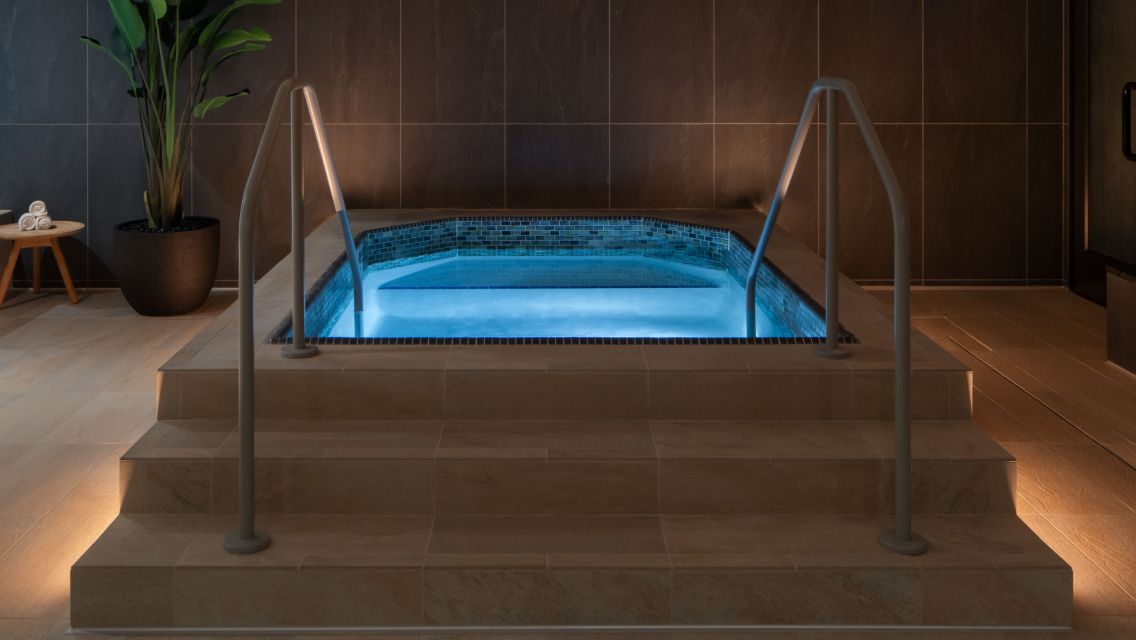
Let’s go to the other side. I mean, we’ve already talked a little bit about cold therapy, but I do think the cold plunge, which is now available in more of our clubs, is like more of that immersive experience, right? And so any additional benefits to that beyond some of the other kind of cold and contrast therapy stuff we’ve talked through already.
Danny King
Yeah, and I know there’s been a lot written, as we’ve expanded these things and it’s gotten more popular, obviously, given our members and people out there, a lot of education here. But in the context of recovery, sit this way, it’s a blunt force object. It’s intense. Going in a cold plunge is cold. And there’s a lot of great reasons to do it. There’s also some potential reasons to avoid it. And when I say that is it’s shutting off the inflammatory signals that are happening.
And that can be phenomenal, but it should also be aware of it. There’s a reason our body’s inflamed. And again, you can get into this with injury recovery if you look at just exercise though, is that inflammatory process is the healing process. And so if we’re shutting that off and we’re shutting that off too early, yes, we’re gonna be way less sore. We’re going to be less inflamed, less stiff, but we might not get all the benefits of the exercise that we wanted. These other things we’ve talked about don’t seem to have that effect because they’re just pushing blood in and out and helping the process.
Best time to use cold, generally one would be if you are any sort of competitive athlete and you need to recover and you need your body to be less stiff and sore, use it. Push it away from your workouts, especially the workouts that we’re looking at that idea of muscle recovery, so strength training predominantly, doesn’t seem to impact cardiovascular exercise quite as much, because we’re looking at different mechanisms of progress. Potentially putting it on the days that you’re biasing towards more cardiovascular exercise.
And then when your body starts to get a little bit out of whack, and out of whack could mean I’m too inflamed. So Jamie, when you were talking about training for your race, and you’re starting to get there, and maybe you’ve ignored those signals a little bit, and now the regular stuff that we’re doing might not be enough anymore, or we might need to really shut that inflammation down. That’s where our cold plunge is amazing. So we’re hitting the cold plunge, we’re using it.
And or when we’re trying to stimulate our nervous system, right? It’s putting a big shock that you get a big sympathetic spike up. We get this kind of fight or flight. We calm through it. We almost teach our body to come back down. And then we usually get a good parasympathetic rebound.
So again, if our body’s in that overstressed state. it just, it’s, was maybe a little bit long, but it’s, it’s, it’s a tool. It’s phenomenal. It can really help, but it also is just, it’s, it’s so powerful that we have to pay more attention to this one than some of the other ones that we might use.
Jamie Martin
Right. I’m just thinking about, I’m the kind of person who even getting into the lake sometimes in the summer is hard for me. So I’m like, okay, you want me to dip into how cold of water and like do it voluntarily. Give me one of those cryotherapy tanks where it’s like right now here it’s happening. So.
Danny King
The good news is, I mean, there’s some fantastic reasons why you’d bring your whole body in and you’d get full immersion and you’d do those things. If anyone just finds themselves in the place that you were, man, I am beat up from something like running, I’m doing a ton, just put your lower legs in. Put a stocking cap on if you need to, but just bring those lower legs in, get that inflammation out of there and you’ll notice a big impact.
Jamie Martin
Yep, absolutely. Okay, we talked a lot about a lot of tools. One thing that I’ve been thinking a lot about through this conversation is a lot of us are wearing devices that are telling us, like giving us information about how our bodies are responding to exercise, doing. How much weight do you put into, let’s say a device, it’s like, hey, today would be a good recovery day or hey, your HRV is low, maybe it’s a recovery day. What’s your take on that? I know that’s a whole thing.
Danny King
How much time do we have left? We might need to book another one for this and I might be making a lot of people angry. let me disclose, I’m wearing a Garmin that measures my recovery right now. I’ve worn every wearable and have been looking at and playing with this stuff. But I think that people are maybe giving too much weight to their device. There was some really cool research I can cite that looked at all sorts of different devices versus just a questionnaire.
And the questionnaire was honestly just kind of how do you feel. It was smarter than that, but it asked a group of people. And the questionnaire proved to be a better indicator of their actual performance on a day-by-day basis than any of the other things that they could test or measure. And part of the reason is the body’s complicated. It’s hard to narrow one thing down. HRV is super cool and interesting, but there’s all sorts of reasons it could spike up. There’s all sorts of reasons it could drop down to make.
Day-by-day decisions just based on that one metric is probably a little short-sighted for most people and my ultimate belief is it it changes if you’re an elite athlete who has absolutely nothing but time absolutely nothing but resource but the vast majority of people that I need are fairly time-limited and the last thing I want them doing is skipping a workout because My device is telling me that I may be it’s slightly under recovered but you can’t work out tomorrow, so you’d probably recover then, right? Or there’s these other strategies that I can use. So it can be cool, it can be something to look at, it can definitely guide you, but I wouldn’t, if you feel great and you’re ready to go, I would work out. And even if that thing’s on your low, I’d probably still work out.
Jamie Martin
Well, and I’m even just thinking, I think there’s something, right? It’s like there’s the day, like the day to day information, but then there’s patterns over time, right? So kind of noticing maybe patterns versus like, today it tells me this, I’m going to follow that to a T.
Danny King
Something like, specifically HRV is meant to be a systemic long-term measure. It’s measured best over time to see, if you’re noticing a trend where I’ve been over the last two to three months, my numbers have been trending down, we’re probably doing something that says that we need to, right? But that’s ignoring those day-to-day ups and downs of what you should do. And it can be really helpful to understand how a particular style of exercise impacts you, know, looking at, okay, if I run at a high intensity versus a low intensity and what does that do? So again, I have all these, I’ve used them. just, it isn’t, no one’s quite cracked the code yet in how to do this like simple, right? To give you the thing to just listen to. You do gotta put a little bit of time and effort in.
Jamie Martin
Yeah, but I think what’s important about it is, and this goes back to some of the, when you think about the MIORA program at Life Time, there’s the blood work and there’s the how you feel side of it. And so it’s gotta take both into account. It’s never just one thing. It’s we’re usually both and, right? Like little bit of both. Anyway.
David Freeman
An analogy I usually use y’all with the athletes that have a lot of these wearables. I bring back the car analogy just because most people have have those right and they had them for a while, especially if they’re showing up for class. And I end up saying, Hey, when does that gas light come on? Maybe you got 40 miles left in your tank, but you’re not going to go fill up right then and there. So you can actually still drive to wherever you’re going unless it’s over 40 miles, right? And just giving them that example of like you still have enough to do something or get to the location.
You’re not going to probably do that for the whole week and risk it because then that could lead to you breaking down. So when they hear that it’s like, yeah, okay, that makes sense. So when you can relate it to their everyday life, it hits them a little bit differently. So I like how you broke it down just now, Danny. And but for our listeners, there you go. If you’re you got miles left in the tank, you can still get to your location, right?
Danny King
That’s actually a great, that’s a really, really good analogy. I’m probably gonna steal it, I’ll give you credit, but I definitely need to do something. But maybe it is a warning light. I just gotta check in, I gotta do. We should, since you said it, I just do wanna throw out something that we haven’t really talked about from a recovery standpoint, but has been mentioned a little bit, is movement. Moving is almost always better than not moving, whether that’s walking, whether that’s things like stretching and mobility work.
And again, that’s another thing that people can fight about on the internet. Is it good? Is it not? I’m coming at it purely from the standpoint of let’s bring blood into muscles, gentle movement. If you’re stiff, if you’re sore, if you’re tired, I bet if you move for 10 minutes, you’ll feel wildly better. And often again, exercise can be additive. It can be hard, it can be too much, it can be all these things, but I can almost guarantee for most people if the choices don’t move and move, if you move, you’ll feel better.
Jamie Martin
Right. And just think about that stretch when you touch your toes or you just reach overhead or lean to the sides. There’s something about that that just like, there’s a deep breath within that.
David Freeman
Yeah, I was going to say, and you brought me right to is that that form of active recovery. And I know that could be very broad in a lot of ways, but that movement I normally have my routine. I’m always doing the eight thirty class Monday, Tuesday, Thursday, Friday. So, OK, we obviously got on a podcast today that would probably not make that happen. So what did I need to do? Create space, still get the movement in. And I think even when we were doing our podcasting up in Minnesota, it was just brought to our attention like, okay, we got a few seconds or a few minutes between our next one, do 10 pushups, do 10 squats, get something in and that accumulation starts to add up throughout the day. this, like to your point, some type of movement is better than no movement.
Danny King
Absolutely.
Jamie Martin
All right, Danny, did we miss anything before we get into our mic drop moment for you?
Danny King (36:00)
Let me put a quick disclaimer on this whole thing here. All the things we’ve been talking about are amazing. But if we’re talking about recovery, there’s some big things. Sleep, make sure you’re sleeping. At some point, if you’re exercising at too much volume, if you jump into running every day in two hours a day, I don’t care how much massage gun and Hypervolting cold punch you do, there’s going to be some problems. And then nutrients, food, so quality of food, what you’re doing, those things matter a lot.
The only thing is I think that sometimes those get overstated, especially by some people in the industry, because they’re also really, really hard to change. It’s hard to sleep better. It’s hard to do some of these things. Or if I’m doing those, what else can I do? So there’s all these things. But I do just want to throw out, if we’re talking about recovery, if we get into this world, there’s somebody out there who’s a little mad that I haven’t mentioned those things yet. So to check those off the list, huge impact. Make sure you’re focused on those things. But then there are all these other things that you can do to enhance that experience past that.
Jamie Martin
It just goes back to that interconnected web. These things all influence one another. So, all right, David.
David Freeman
You ready for it Danny?
Danny King
I am a little nervous, but yeah, let’s go for it.
Danny King
Okay, for 2026, the year 2026 that we’re in, think of what is coming in. If you can’t put it out there, you obviously don’t need to put it out there, but is it anything that we can get excited about when it comes to updated or new recovery tool coming in Life Time that you could talk about?
Danny King
Oh man, I don’t know if you’re teaming up right now. I’m stretching to call it a recovery tool, but my big focus for 2026, the thing I’m most excited about is our reprioritization of metabolic testing. So VO2 max threshold and where that obviously relates to is there’s a, we’re really, bringing back our Resting Metabolic Rate Assessment to understand how the body’s utilizing calories at rest.
There is a big, one of the things that’s measuring is actually how much stress is your body under at any given time, but then helping balance your workloads as you exercise. And it’s something we’ve always been passionate about. We just had a lot of hardware issues and we finally identified the right vendor to make a really big switch to get this thing back up and running. So that’s really going to dominate my first half of 2026 and is super exciting. So that’s going to be my answer.
David Freeman
Love it. Love it. Just knowing, you know, how metabolic risk and heart disease as a whole, if we can now help support in that lane. I’m excited with you. You know, I’m excited. You probably already know that. So this is a champion this and then get our people set up for success in this space is gonna be awesome. So awesome stuff.
Danny King
Danny, you know I’m excited too. I think I said, I’m like, let me be a guinea pig. I want to be there. Let me test out that.
Danny King
Now that I’m done traveling, you’ll be one of my first.
Jamie Martin
I can’t wait. Sounds great. All right, Danny, we want to make sure that our listeners and viewers can follow you if they want. Anywhere you want to point them specifically.
Danny King
The primary place I’ll point him is actually to our overall training accounts. So lifetime.trainers on Instagram, best place. I’m not awesome with social myself. So my own social, which you can @dtraining, you can absolutely find me, but it’s mostly just my dog at this point. Life Time Trainers is where often I’ll take and partner with our team to push out a lot of this great content, educational material.
Jamie Martin
Awesome. And then you you mentioned some articles that you’ve done for Experience Life and of course past issues of the podcast. We’ll make sure that we link those to this episode. Danny, thanks as always.
David Freeman
I was going to say he also, yeah I was gonna say you can also check him out on on demand he has some recovery some stretching going on.
Danny King
You’re right, are. You guys are so much better at this than I am. But yeah, they’re on our on-demand. If you need some stretch, some mobility, some foam rolling, feel free to jump in there.
Jamie Martin
All right, that’s in the Life Time app, which is free for anyone, anywhere. So, all right, Danny, thank you again for being here.
Danny King
Of course, thanks so much.
David Freeman
Appreciate you buddy.

More like this


We’d Love to Hear From You
Have thoughts you’d like to share or topic ideas for future episodes? Email us at lttalks@lt.life.
The information in this podcast is intended to provide broad understanding and knowledge of healthcare topics. This information is for educational purposes only and should not be considered complete and should not be used in place of advice from your physician or healthcare provider. We recommend you consult your physician or healthcare professional before beginning or altering your personal exercise, diet or supplementation program.
Life Time provides administrative, non-clinical support to MIORA as well as services and amenities related to general wellness and fitness; Life Time does not provide medical advice, diagnosis, treatment or care.
Advertisement