




Working Your Edge
This newer form of stretching is used by practitioners of many different systems, including proprioceptive neuromuscular facilitation (PNF), fascial stretch therapy (FST), and functional range conditioning (FRC). Its purpose is not only to increase a joint’s range of motion but to improve your ability to control and generate force throughout that entire range as well.
“Every joint has both an active and a passive range of motion,” explains fitness coach and Kinstretch instructor Beth Lewis, FRC.
To illustrate, try this: Stand, raise your right knee in front of you as high as you can, and take note of how high it goes. That’s your active range of motion — the distance you can move the joint without assistance.
Then, Lewis says, lower your knee and repeat — this time, hugging your knee close to your chest with your right arm: You’ll easily get your knee a few inches higher. That’s your passive range — the distance the joint can move when you apply force and relax into the stretch.
“There’s always a difference,” she says.
If that difference is large — that is, your joints can achieve ranges of motion that your muscles on their own can’t control — the chances of injury when you fall, jump, or lift a heavy weight increase.
“With the right training, you can close the gap between your active and passive range,” she says. This will reduce injury risk and increase your capacity for safe and powerful athletic movement.
These improvements rarely come easily or quickly, which is why experts recommend practicing targeted mobility work with a qualified professional. The drills below, however, will give you a taste and help improve the functional range in your major joints.
Lewis suggests you practice the moves before workouts as a warm-up or between workout days.
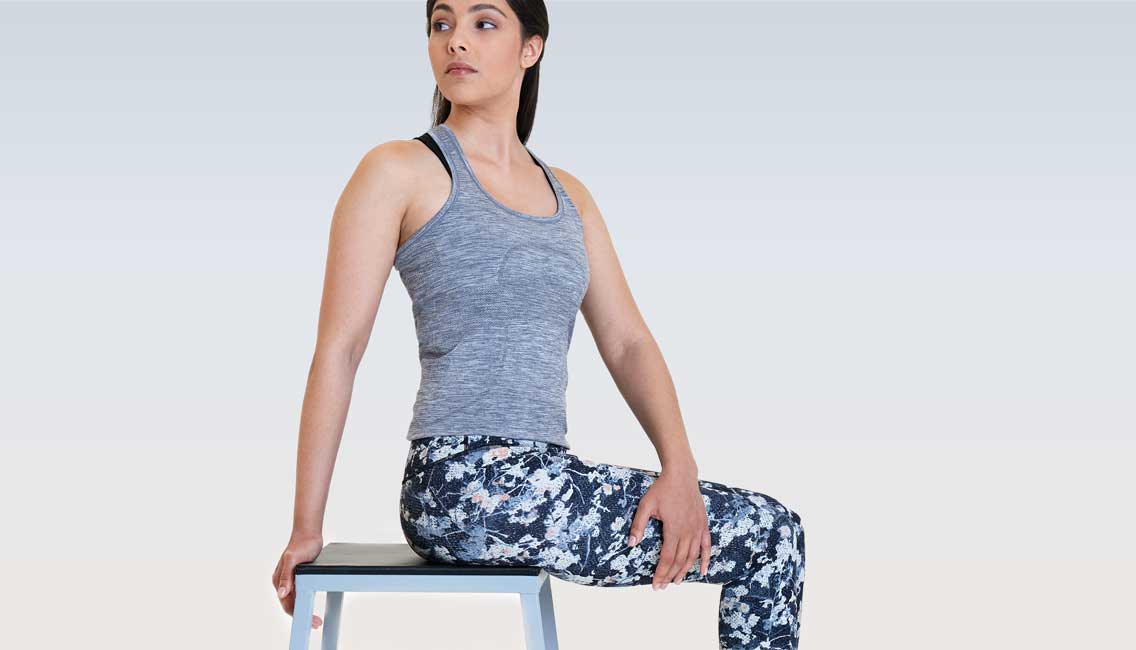
“You can do many of these moves sitting in a chair,” she says. “The key is to give your brain constant input that your joints can move that way.”
This was excerpted from “Stretch Your Fitness” which was published in the April 2021 issue of Experience Life magazine.



Comments (0)