



My father and his siblings all suffered from malfunctioning cardiovascular systems. I can’t recall a single uncle or aunt on his side of the family who didn’t suffer a heart attack at some point. Dad’s first such episode occurred in his late 40s, followed by a more serious encounter in his early 50s.
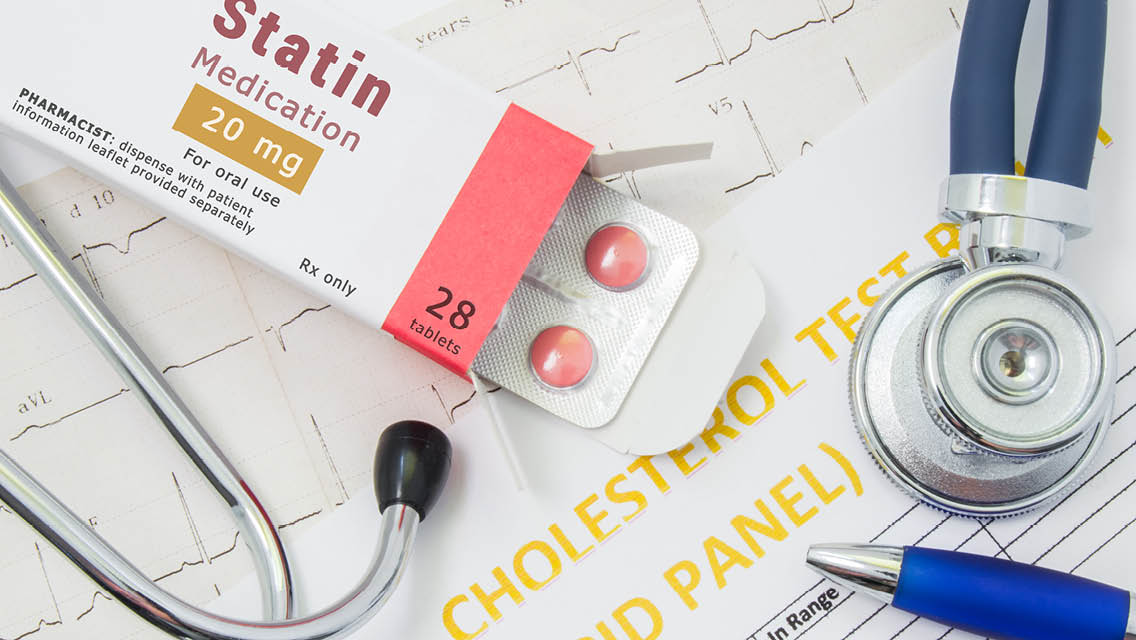
It’s a genetic glitch that has been passed down to me in the form of a physiological tendency to produce way more cholesterol — especially the arterial-blocking LDL version — than necessary. I spent the first 72 years of my life blissfully ignoring the potential ramifications of this legacy, before a hypertensive crisis persuaded me to explore treatment options. For the past three years, my doctor and I have been faithfully pursuing a pharmacological solution that would bring my LDL down below the magical 70 mg/dL threshold considered optimal for people of my age and cardiovascular temperament.
I remember how excited my doctor was when, after my first round of statins, my LDL levels dropped by 30 percent. Since then, however, they have languished on a plateau as if completely satisfied with their original performance — despite all our efforts to urge their downward progression with prescription and dosage adjustments.
So, you might imagine my response to a recent study suggesting that reining in all that “bad” cholesterol may not be quite the cardiovascular insurance policy we’ve been sold.
“[W]e wanted to understand what happens beyond the accumulation of cholesterol in artery walls, whether different fat-carrying particles can damage the blood vessels differently, and why the remaining risk of heart disease still occurs,” explains lead study author Jakub Morze, MD, PhD, a postdoctoral fellow at Chalmers University of Technology in Sweden.
Analyzing the long-term health records, blood-protein levels, and genetic profiles of more than 35,000 participants in the UK Biobank database, Morze and his team discovered two particles — triglyceride-rich lipoprotein (TRL) and lipoprotein(a) (Lp(a)) — that pose a risk of coronary artery disease (CAD), even after LDL cholesterol has been lowered to optimal levels. Unlike LDL, which is primarily blamed for the accumulation of plaque on arterial walls, these lesser-known particles seem to attract immune cells, triggering an inflammatory response that changes the structure of those walls.
And the results of this activity, Morze writes in the European Heart Journal, are not insignificant: “[O]n a per-particle basis, TRL are three- to four-fold and Lp(a) four- to five-fold more strongly associated with CAD risk than LDL.”
I’m filing this information under “Just Another Thing That Can Kill Me,” despite the somewhat surprising fact that my triglyceride levels have never risen above recommended thresholds throughout my recent embrace of lab tests and pharmacy visits.
Still, Morze’s colleague Clemens Wittenbecher, PhD, an assistant professor of precision medicine and diagnostics at Chalmers, emphasizes the continuing importance of curbing our LDL. “Lowering LDL cholesterol remains a cornerstone of prevention,” he notes. “Our findings point to biological processes that may help explain some of the risk that remains beyond LDL. The next step is to establish whether measuring or targeting these processes can improve prevention alongside existing treatments.”
I am, thankfully, equipped with far more tools for mitigating my cardiovascular dysfunction than were available to my father’s generation. Beyond the pharmaceutical remedies, I am much more cognizant of lifestyle choices that contribute to heart disease than were my chain-smoking uncles and aunts.
Dad dropped his longtime Marlboro habit after his second heart attack, discovering a sudden fondness for pipe tobacco. It seemed to fit the recumbent style of his unplanned retirement while doing no further damage — he argued — to his surgically repaired ticker. “My heart’s never been better,” he told me at one point.
That was after he’d been diagnosed with colon cancer, which killed him at 60. Yeah, I filed that away too.