



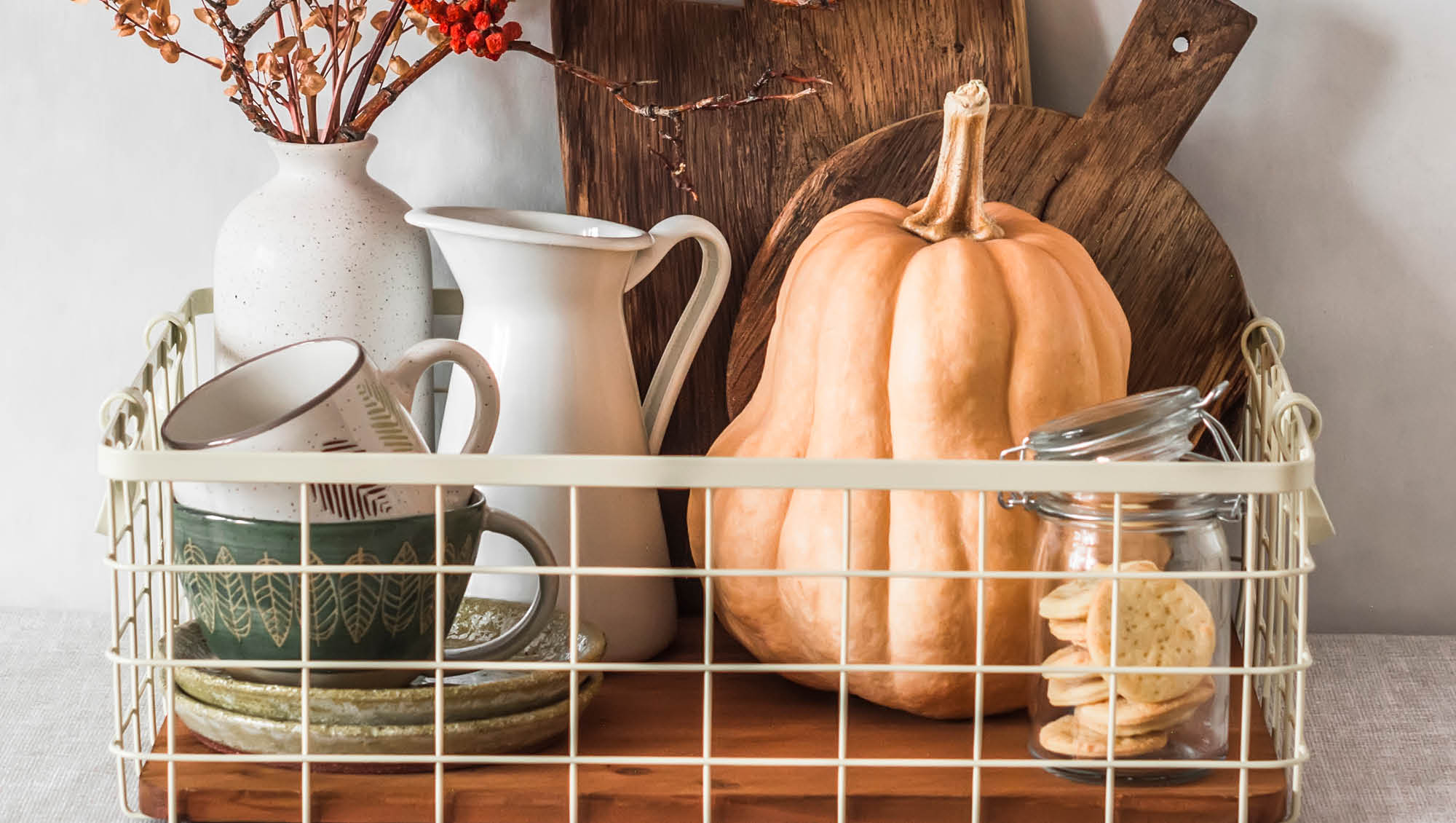
When you’re trying to stay afloat in an ever-swelling sea of to-dos, sharpening your kitchen knives or oiling your cutting boards rarely feels like a top priority. But neglected kitchen maintenance has a way of catching up with you. These tasks may not feel urgent, but putting them off can lead to greater strain and frustration down the road — and staying on top of them can make most any kitchen feel more user-friendly.
Mess or disorder in the kitchen can affect how the space feels and functions. “Clutter is an immediate stressor,” explains feng shui specialist Suzanne Roynon, author of Welcome Home: How Stuff Makes or Breaks Your Relationship. “A clear worktop streamlines thought processes and makes it easier, and therefore more enjoyable, to prepare meals.”
While it may not deliver the instant gratification of a tasty meal or fun new gadget, making time for a seasonal kitchen reset can pay big dividends all year long. With decluttered drawers and functioning tools, you’ll have the space you need to actually enjoy cooking.
Fridge and Pantry Purge
(Find expert organizational tips to help keep your space streamlined at “How to Keep Your Pantry Decluttered and Organized.”)

Tool Tune-Up
Dull knives, splintering cutting boards, and worn-out tools can make meal prep frustrating and tedious.
“Sharp knives and less clutter are the best gifts you can give yourself in a home kitchen,” says Daniel Holzman, coauthor of Food IQ: 100 Questions, Answers, and Recipes to Raise Your Cooking Smarts. “That, and more counter space.”
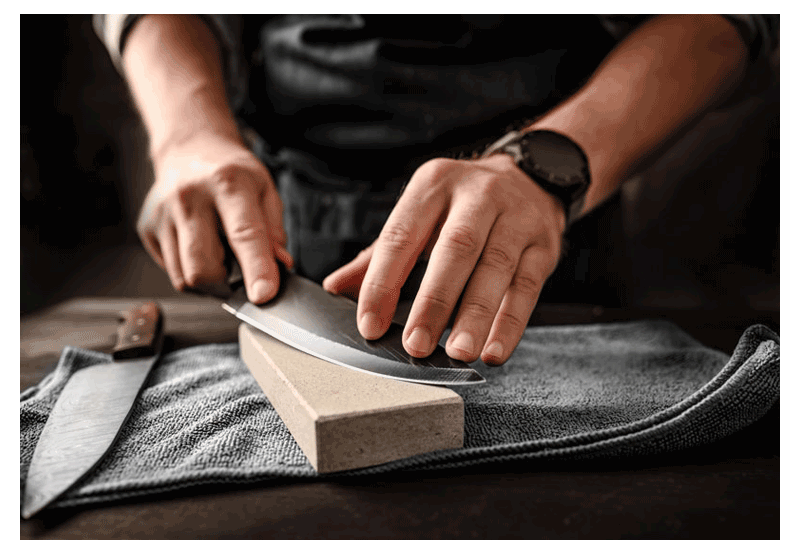
Creating more counter space isn’t easy, but knife care can be. Conversely, dull kitchen knives are harder to work with, making food prep less efficient and more dangerous.
Most home cooks will benefit from sharpening their knives once or twice a year. Many hardware and cookware stores do this for a small fee; alternatively, you can buy a handheld sharpener and a honing steel to maintain your knives at home. (Find more knife-care tips at “How to Hone Your Knives.”)
 Wooden cutting boards and utensils also require occasional care. These tools can become dry with use and may crack or split, creating crevices in the wood that are difficult to clean and can harbor bacteria.
When the surface starts to look dry or dull, apply a food-grade mineral oil — not a cooking oil, which could become rancid over time — and let it soak in overnight. Whenever water stops beading on the surface or the wood starts to look faded, that’s a good sign it’s time to give your wooden tools another spa day.
Drawer Decluttering
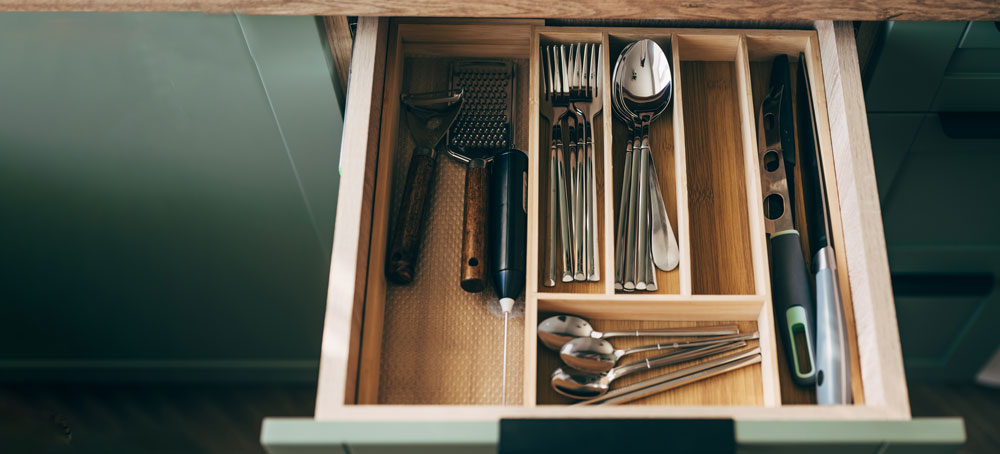
Wrestling with an overstuffed kitchen drawer is practically guaranteed to interrupt your cooking flow state. If you have to stop midrecipe to dig for a spatula or search through a cluttered utensil drawer for your citrus juicer, it’s easy to lose your momentum.
“The simplest way to deal with kitchen drawers and cupboards is to empty them one at a time,” says Roynon. “Be honest about when something was last used and whether it justifies the space it takes.”
Start by pulling everything out. Group duplicates together, then ask yourself when you last used each item. Consider donating anything you haven’t used within the last year.
If you feel uneasy about getting rid of things, Holzman recommends a trial run. “If you’re stuck on your stuff, grab a box and put a bunch of duplicates in storage. Ease into it. I promise you only need one of each thing.”
Drawer dividers and labels can keep you organized over time. The goal isn’t minimalism for its own sake but a kitchen that functions efficiently and makes you feel more capable.
Appliance Audit
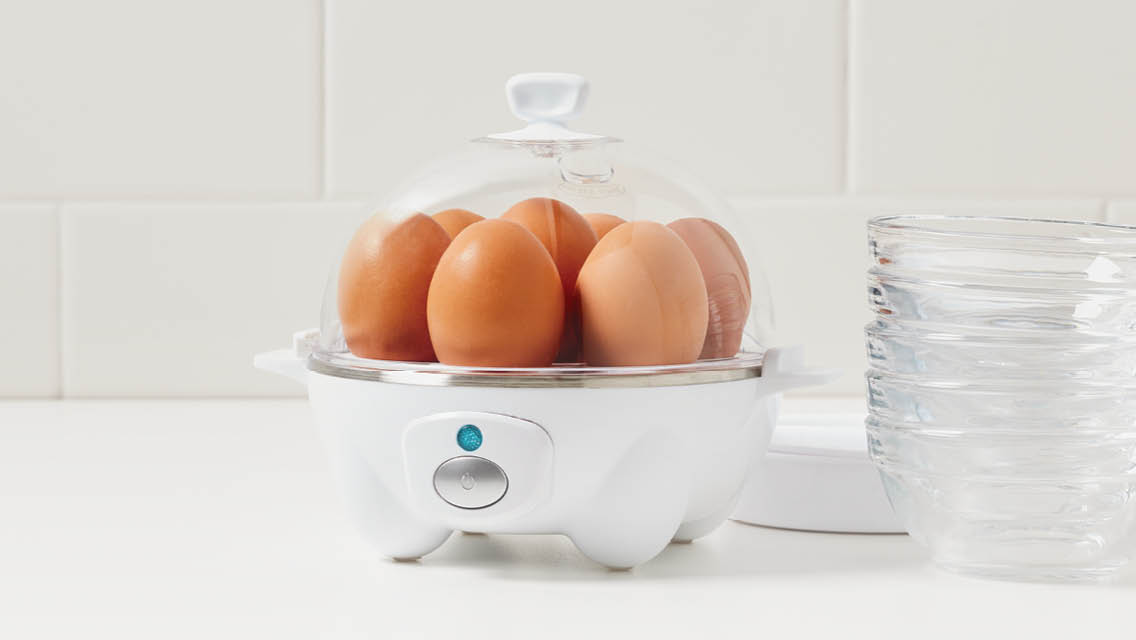
Kitchen appliances are often neglected. After purchasing and setting them up, perhaps you assume they’ll work flawlessly for years to come. Unfortunately, that’s not always the case.
For example, your dishwasher cleans your dishes — but it also needs cleaning. Food debris can clog filters and make the machine run less efficiently. Each month, run a cleaning cycle with a dishwasher cleaner or vinegar (if manufacturer-approved) and check the filter.
Refrigerators can also benefit from a deep cleaning once or twice a year. The coils, which are usually located behind or beneath the unit, often collect dust. Over time, that dust can act as insulation, so your fridge has to use more electricity to stay cool. Vacuum the coils to improve your refrigerator’s efficiency and reduce strain on the compressor. This is also a great time to wipe down door seals to prevent mold growth and help ensure an airtight seal.
Changing the water filters in refrigerators and faucet systems as recommended helps ensure safer drinking water. Additionally, cleaning the sink and garbage disposal (including deodorizing and flushing debris with water) can help prevent odor and grime buildup.
Safety Scan
 Maintaining your kitchen also requires routine safety checks. Plan to check your smoke and carbon monoxide detectors regularly, and replace batteries as needed. Confirm that your fire extinguisher is accessible and within its expiration date.
Inspect electrical cords for fraying, and make sure all power outlets near sinks and appliances are properly protected on a ground fault circuit interrupter. GFCI protection prevents electric shock, and it’s especially important to have in moisture-prone environments like kitchens.




Comments (0)