



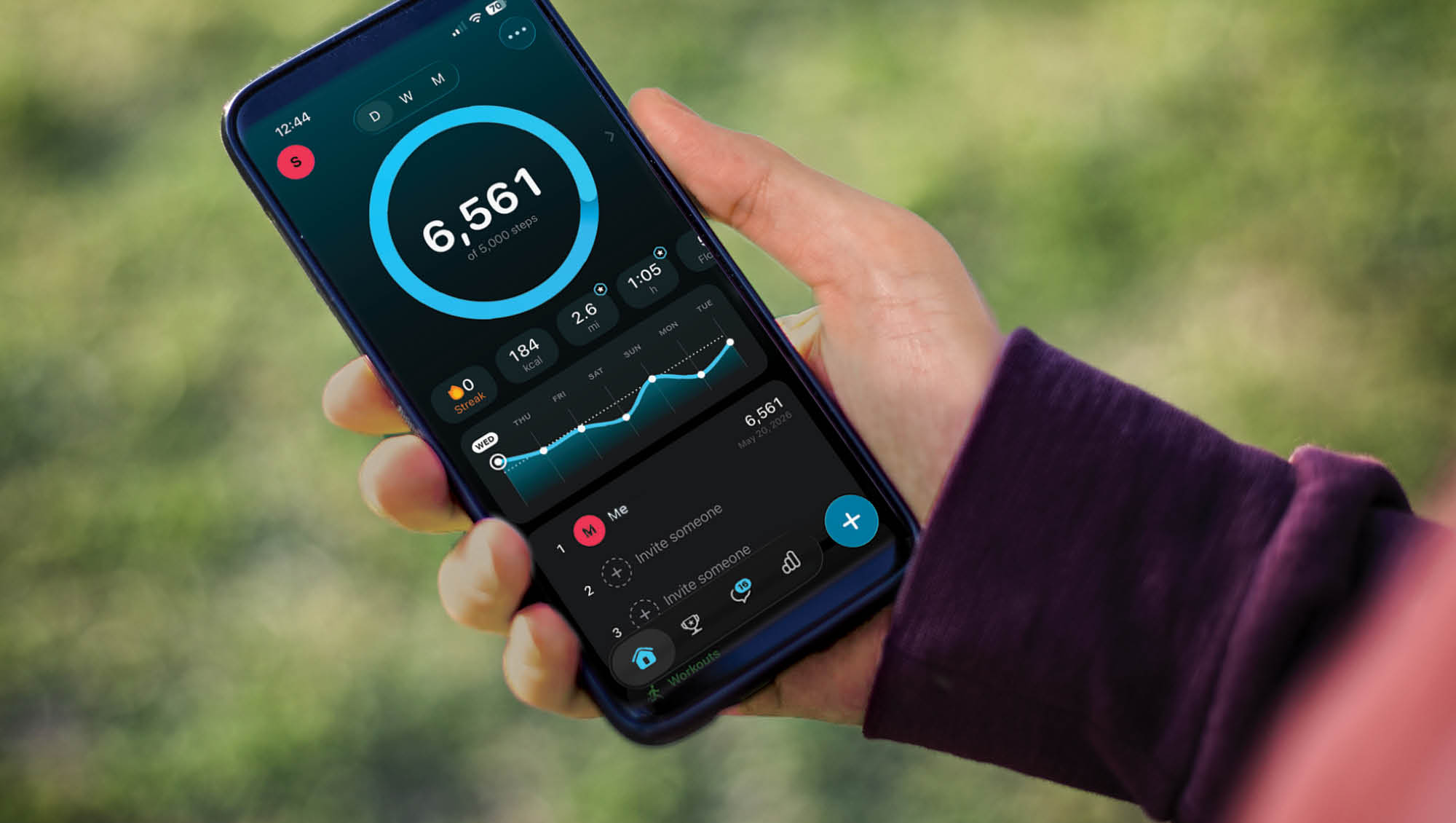
If you’re trying to walk 10,000 steps per day, you’re chasing a target that began as a successful marketing gimmick. While the concept has crossed global borders and shaped wellness culture for decades, the benchmark isn’t a science-based prescription. It grew out of a clever 1960s ad campaign around the time of the Tokyo Olympics for a Japanese pedometer, manpo-kei, or “10,000-step meter.”
Ten thousand steps is not an evidence-based target. In fact, you might need only half that number of daily steps to reap the many benefits of walking.
A meta-analysis published in 2025 found that benefits, such as a 36 percent lower mortality risk, begin at 4,000 steps versus 2,000 steps. The research also found a 37 percent reduction in cancer mortality at 7,000 steps, compared with 2,000 steps.
Pushing past 7,000 steps isn’t dangerous — especially if it’s tied to an activity you genuinely enjoy and can engage in sustainably — but it doesn’t offer a meaningful increase in health benefits.
Whether your target step count is 4,000, 7,000, 10,000, or beyond, rest assured that you’re doing something good for your body. Studies consistently find that regular walking improves cardiovascular health, helps manage weight, and reduces depression. (Learn more about the benefits of walking at “The Powerful Health Benefits of Walking.”)
Everyone can gain from moving more, but the older you get, the more important it is. “As you age, walking is critical for balance, maintaining muscle mass in the legs, stability, and confidence,” says Micaela Garcia-Baab, a trainer based in Austin, Texas.
Spread Out Your Movement
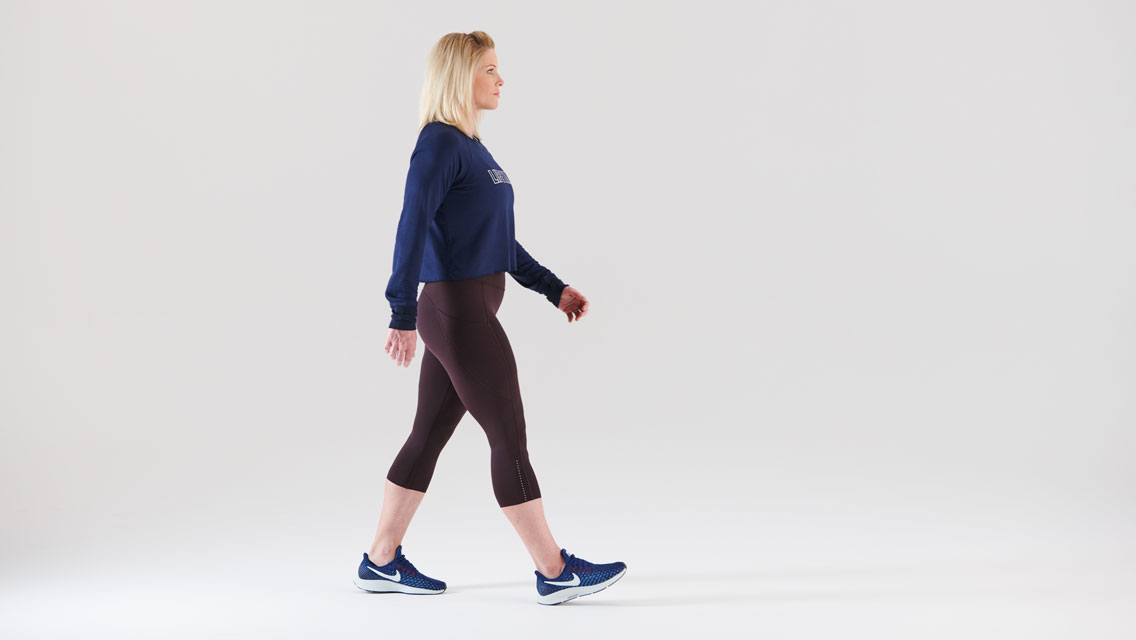
In practice, 7,000 steps averages to around 100 steps per minute for 70 minutes of walking at a brisk pace. But you don’t have to get all your steps at once.
“Our bodies are meant to move and change positions regularly,” says Danny King, master trainer and director of performance and recovery at Life Time. “All of that totally cliché advice — take the stairs, walk up and down every aisle at the grocery store, park farther away in the parking lot — works. You can also set an alarm on your phone or watch to remind you to get up and move.”
Life Time fitness and performance specialist Jeff Rosga, NASM-CPT, CES, PES, agrees that focusing on daily-movement anchors is an effective strategy for creating or changing daily behaviors.
“I like to look at it as stacking steps with life by doing things like incorporating postmeal walks or taking a walking work meeting,” he says.
If you prefer to incorporate your step goal into your workout routine, up the ante by adding a weighted vest, suggests Garcia-Baab.
Or consider mixing up your route by adding an incline, walking backward, or throwing in some body-weight interval training. (For a 30-minute walking workout, visit “How to Do a 30-Minute Walking Workout.”)
Track Progress Over Time
One way to avoid getting consumed by fitness-tracker data — or demoralized if you don’t hit a daily step goal — is to look at long-term trends. Rosga advises treating your step count like a retirement fund: Daily changes are normal, but reviewing the trend over weeks or months might reveal steady progress.
“If I look at a period of weeks or the last three or six months, I might see that I am getting in more steps a month, and then I can divide it by the number of days to see daily averages,” he says.
Looking at step-count trends can relieve the pressure on the days when you might be less active because of weather, an illness, or a busier day at work or school. Compare a day like that with one in which you did laundry or yard work, and you can see how daily movement adds up — and may even make day-to-day tasks more enjoyable.
Whether you’re aiming for 4,000 steps to start or 7,000 to maximize gains, the key is to be consistent and spread your activity throughout the day to create an achievable, low-stress goal.
This article originally appeared as “Your Daily Step Goal” in the September/October 2026 issue of Experience Life.








Comments (0)