



If you’re in the stage of perimenopause or menopause, you’ve probably noticed some changes to your skin. Perhaps it feels drier than it used to, or maybe the texture or appearance is different. Skin changes are common during these transitional periods, though it’s not often discussed.
“Hormones influence nearly every aspect of our health, including the skin, and some of the most noticeable hormonal changes can occur during the seasons of perimenopause and menopause,” says Karen Kaufman, MD, medical director for MIORA at Life Time and functional medicine physician at Kaufman Health and Hormone Center in Louisville, Colo. “As estrogen levels begin to fluctuate and decline, women may experience increased skin dryness, loss of firmness, thinning skin, heightened sensitivity, and changes in texture that can affect both appearance and comfort.”
Joee Nelson, a master esthetician at LifeSpa at Life Time in Eden Prairie, Minn., works with many clients who are navigating these changes and helps them find personalized solutions to support their skin.
“At first, noticing skin changes during perimenopause and menopause can feel overwhelming, especially with everything else your body is experiencing,” Nelson says. “The key is understanding what’s happening and knowing there are effective ways to keep your skin looking and feeling its best.”
Ahead, Kaufman and Nelson explain how perimenopause and menopause affect the skin and share expert strategies to help support a healthy, resilient complexion through these stages.
What happens to the skin during perimenopause?
Perimenopause begins when a woman’s ovaries begin to produce less estrogen and progesterone, the two key hormones that regulate menstruation and fertility. It’s common for this reduction in estrogen to also lead to changes in the skin.
“Estrogen plays a major role in keeping skin healthy, hydrated, and resilient because it helps stimulate the fibroblasts in our skin, which are the cells responsible for producing collagen, elastin, and hyaluronic acid — all of which help skin look and feel healthy,” Nelson explains. “When this hormone decreases, common skin concerns women experience can include increased dryness and dehydration, more visible fine lines and wrinkles, thinner and more fragile skin, skin sensitivity, redness, slower wound healing, age spots, and dullness.”
Kaufman notes that although the loss of volume and firmness occurs with natural aging, it can become more visible during this time period. “With perimenopause and also menopause, you may start to see more loss of volume in the cheeks and jawline in particular, and the neck may also appear less firm.”
What happens to the skin during menopause?
The phase of menopause is official when a woman no longer menstruates for one full year. At this time, as hormonal changes continue to escalate, skin issues often intensify and can continue to worsen.
“During menopause, estrogen production is significantly down, which means collagen production also decreases notably, since estrogen maintains collagen production,” says Kaufman. “The first few years after menopause create a substantial percentage of collagen loss because this is when estrogen is at its lowest levels, and sometimes completely gone.”
Research shows that women can lose up to 30 percent of their body’s collagen during the first five years after menopause, with much of that loss occurring in the face. After that, collagen continues to decline by approximately 2 percent each year, according to Nelson. This significant reduction in collagen is one of the primary reasons many women notice an increase in fine lines, wrinkles, and skin laxity following menopause.
“I often hear women say it’s as if their skin has changed overnight because of these rapid differences,” Kaufman says. “Additionally, the loss of fat pads in our face can lead to skin drooping and shifting over time due to gravity and structural changes underneath the skin that occur with aging. The cheeks are especially affected because the structure relies on underlying support from bone and collagen, both of which can weaken and change with age.”
Hormonal fluctuations can also bring about chin and jawline breakouts, uneven skin tone, age spots, and skin dullness. Women may also experience easy bruising or thinning skin.
“The skin thins with age due to a decline in collagen and elastin, which gives the skin typical thickness and resiliency,” Kaufman explains. “Bruising can be associated with this thinner skin because, similarly, less collagen means there is less support from connective tissue, making vessel walls easier to rupture from minor pressure.”
8 Skincare Tips for Perimenopause and Menopause
Changes in your skin during perimenopause and menopause can influence not only how your skin looks, but also how you feel about yourself. Taking a more informed approach to skincare during these transitions can support both your complexion and your mental health.
“Skincare becomes an important form of self-care during perimenopause and menopause,” Nelson says. “Supporting your skin can help restore comfort, improve appearance, and give you a sense of confidence and control during a time when so much is changing.”
Nelson and Kaufman offer the following tips.
1. Start with a solid skincare routine.
Even if you’ve never had a skincare routine before, perimenopause and menopause offer an opportunity to begin investing in your skin health.
“Rather than accepting dryness, dullness, loss of firmness, or accelerated aging as something you must live with, think of this stage as an opportunity to give your skin the support it needs to continue to look healthy,” says Nelson. “I like to say it’s a great time to plug in and recharge the skin.”
For the morning, Nelson recommends:
- Step 1: Cleanse with a gentle cleanser.
- Step 2: Apply a hydrating serum. Nelson prefers iS Clinical Super Serum Advance+ to help defend the skin against free radicals while brightening and supporting collagen production.
- Step 3: Apply a cooling serum to help calm down any sensitivity and inflammation on the skin. Nelson likes iS Clinical Hydra-Cool Serum.
- Step 4: Moisturize with an intensive moisturizer like iS Clinical Youth Intensive Créme to help with dryness.
- Step 5: Finish with SPF to help prevent collagen breakdown while protecting the skin from the sun. Nelson prefers iS Clinical Extreme Protect SPF 30.
In the evening, Nelson recommends:
- Step 1: Cleanse with a gentle cleanser.
- Step 2: Every few nights (or as recommended by your esthetician), apply a retinol to help accelerate cell turnover, improve skin texture, stimulate collagen, and reduce the appearance of fine lines and wrinkles. Nelson prefers iS Clinical Retinol + Emulsion 0.3.
- Step 3: Apply a pea-size amount of eye cream around the eye bone to help reduce puffiness, plump fine lines and wrinkles, and potentially improve dark circles. Nelson likes to use iS Clinical Youth Eye Complex.
- Step 4: Moisturize with an intensive moisturizer like iS Clinical Youth Intensive Créme to help with dryness.
2. Consider a vitamin C serum that contains L-ascorbic acid or THD.
Using a vitamin C serum that contains L-ascorbic acid or THD (tetrahexyldecyl ascorbate) as a first step after your cleanser in the morning can help protect against free radical and environmental damage, as well as support collagen production, Nelson explains. “It can also help brighten the complexion, improve the appearance of dark spots, and boost skin radiance. My personal favorite option is the iS Clinical Super Serum Advance+.”
3. Explore growth factor and peptide treatments.
When used in skincare products and skin treatments, peptides can act as messengers that encourage the skin to produce more collagen and elastin. “Growth factors are proteins that can also help support skin renewal and repair,” says Nelson.
Nelson frequently recommends SkinMedica TNS Advanced+ Serum, which features a proprietary blend of growth factors. “These growth factors help signal skin cells to behave more like younger, healthier cells and support collagen and elastin production to improve the appearance of fine lines, wrinkles, skin texture, and overall firmness,” she explains.
Peptide treatments support collagen and elastin production, while also strengthening the skin’s natural foundation. Nelson often recommends Revision Skincare DEJ Daily Boosting Serum, which combines multiple peptides and includes prebiotic and microbiome-supporting ingredients to help maintain a healthy skin barrier.
4. Consider booking regular facials.
A facial appointment with an esthetician can leave your skin feeling refreshed and revived.
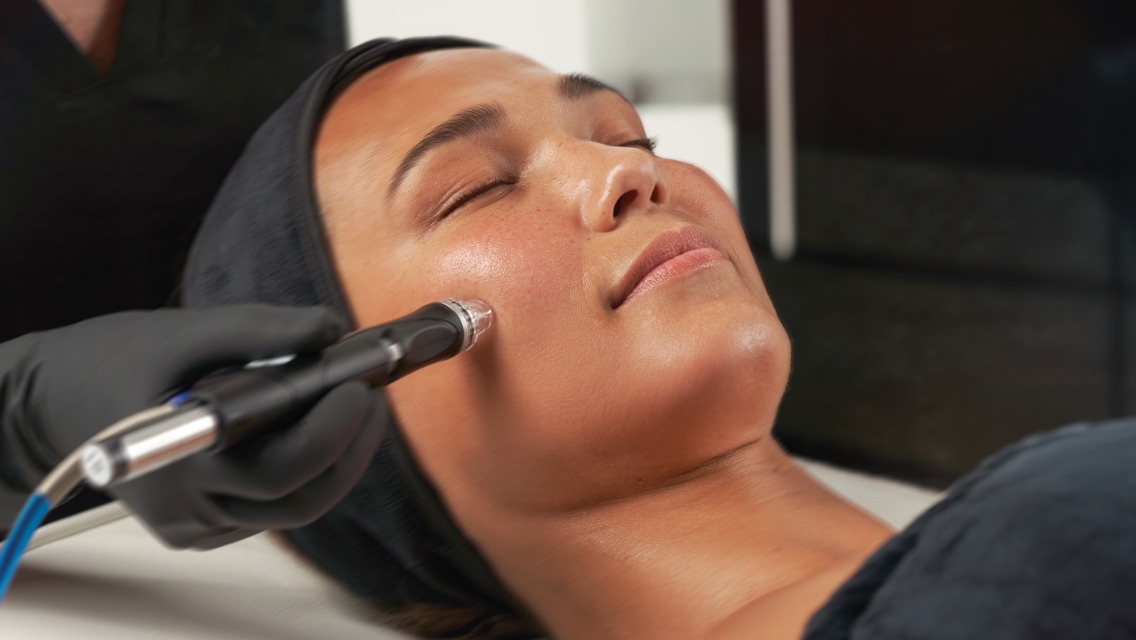
“I love a good 60-minute facial that is more geared toward maturing skin,” Nelson says. “Your esthetician can customize treatments to address your specific concerns. You also can’t go wrong with a Hydrafacial, as it can help hydrate the skin while also exfoliating and treating specific concerns with customizable booster serums.”
5. Prioritize products with hyaluronic acid.
Hyaluronic acid attracts and holds water in the skin, helping it appear plumper, smoother, and more hydrated. “Some of my favorite products with this ingredient include Eminence Strawberry Rhubarb Hyaluronic Serum, iS Clinical Hydra-Cool Serum, and Revision Hydrating Serum,” says Nelson.
6. Don’t skip moisturizer and SPF.
These are two of the most important steps according to skincare experts.
“A quality-formulated moisturizer can help restore hydration, strengthen the skin barrier as it begins to weaken, reduce sensitivity, and even give a plumping appearance,” Nelson says. “My recommendations include Revision DEJ Face Cream, Skin Medica Dermal Repair Cream, iS Clinical Youth Intensive Créme, and Eminence Monoi Age Corrective Night Cream.
“Additionally, a broad-spectrum sunscreen helps protect the skin from UV damage, which accelerates collagen breakdown and premature aging,” she continues. “Wearing SPF 30 or higher every day is one of the simplest ways to help maintain healthier, more youthful-looking skin.
7. Consider topical estrogen.
Kaufman notes there is compelling evidence that topical, low-dosage estrogen applied to the skin can improve wrinkles, texture, and dryness. “If used in a very low concentration, this is an option even if a woman is using systemic estrogen replacement therapy,” says Kaufman. “This would be recommended and prescribed by a medical provider or dermatologist.”
8. Seek professional guidance.
Both Kaufman and Nelson recommend meeting with a skincare expert who can offer advice specific to your skin concerns. A dermatologist or esthetician can help formulate a plan to help you treat or even counteract the skin changes you’re experiencing because of perimenopause and menopause.