



For years, protein has dominated the nutrition conversation. Protein-packed products are everywhere, from enriched lattes to fortified snack foods. No matter how much you’re getting, the thinking seems to be, more protein must be better.
In my nutrition practice, my top concern is fiber. It doesn’t get as much buzz as protein — and maybe that’s why most people still aren’t getting nearly enough.
“Fiber, to me, is an unsung hero,” says functional dietitian Kellie Blake, RDN, LD, IFNCP, co-owner of NutriSense Nutrition Consulting. “People don’t pay a lot of attention to it, but it’s so vital to the gut microbiome and maintaining a healthy gastrointestinal tract.”
It’s important to know that fiber isn’t just one thing. There are three types:
- Soluble fiber is found in foods like beans and oats and helps control cholesterol and blood sugar.
- Insoluble fiber is in whole grains and seeds; it supports bowel regularity.
- Fermentable fiber from foods like garlic and asparagus feeds beneficial gut bacteria.
(Insoluble fiber, soluble fiber, and prebiotic fiber are all essential to our health and well-being. Learn more at “The 3 Types of Dietary Fiber You Need.”)
Guidelines recommend about 25 to 38 grams of fiber per day depending on age, sex, and overall calorie intake, but don’t try to reach that goal overnight. Start by determining where you are now.
“Most people have no idea how much fiber they’re actually getting,” Blake says. “We have to figure that out first before we start adding things.”
Once you’ve determined your baseline, gradually increase fiber intake by incorporating a range of foods. Make these small changes consistently to help get you there. (See “Simple Tips to Add More Fiber-Rich Foods to Your Diet” for more.)
How to Eat More Fiber
(1)
Choose Whole Foods
In a food environment with so many fiber-fortified breads, cereals, and prebiotic sodas, it’s easy to assume you’re getting enough. Some of these products pack 15 grams of fiber or more per serving, yet this number doesn’t tell the whole story. “You might be meeting your target, but what are you missing?” Blake asks.
She frames it this way: You’re not just feeding yourself; you’re feeding the bacteria that live inside you. Whole foods provide you with a range of vitamins, minerals, and polyphenols that your microbiome needs to function properly. You can’t get that from a keto tortilla.
(2)
Increase Gradually
Just as you wouldn’t go from being a couch potato to a gym rat overnight, don’t jump from taking 5 grams to 20 grams of daily fiber: This can lead to gas, bloating, and discomfort. That’s why you want to add more fiber to your diet slowly, explains digestive-health dietitian Renee Euler, MS, RD, owner of Nutrition Redefined.
“We want to increase slowly to allow those gut bacteria to shift,” Euler says. “If we increase too quickly, we can get a lot of uncomfortable symptoms.” She refers to this gradual process as “fiber training.”
Blake concurs. “If you’re eating 10 grams per day now, you don’t want to jump to 35 tomorrow,” she says. “Start with an additional 2 to 3 grams a day for seven days, and then add on 2 or 3 more grams a day for another seven days, and increase your hydration along with it.”
(3)
Drink More Water
Fiber and hydration work together, and increasing one without the other can create problems.
“Without adequate hydration, fiber can become thick and sluggish and lead to bloating and discomfort,” Blake says. This may even cause someone to determine that they can’t tolerate a particular food when, in reality, they just need more water.
This is especially true for patients taking supplements, Euler explains. “Without enough fluid, fiber supplements can turn to concrete in the bowel.”
A good rule of thumb is to drink at least half your body weight in ounces of water as a daily baseline. As you add more fiber, increase your water intake.
(4)
Go for Variety
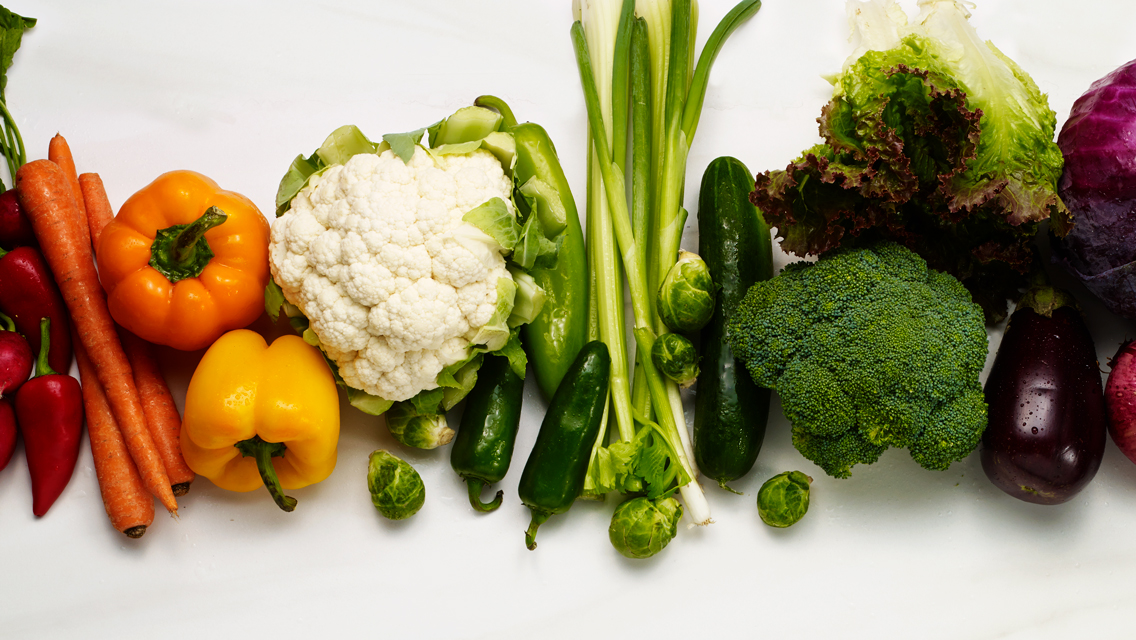
Most whole foods contain a mix of fiber types, but rather than tracking specific types in your diet, Euler and Blake recommend consistently eating a wide variety of plant foods.
Euler sees one specific imbalance regularly: people relying on large salads with lots of roughage, or insoluble fiber, while avoiding what they think are “bad” carbohydrates.
“Some patients are eating a lot of fiber, but they’re not balancing soluble fiber with insoluble fiber, and that can lead to GI symptoms,” she says. “Don’t be afraid of carbohydrates, because that’s where you’re going to get more soluble fiber to balance all the roughage.” She suggests adding potatoes, beans, apples, or pears to your salad for more soluble fiber.
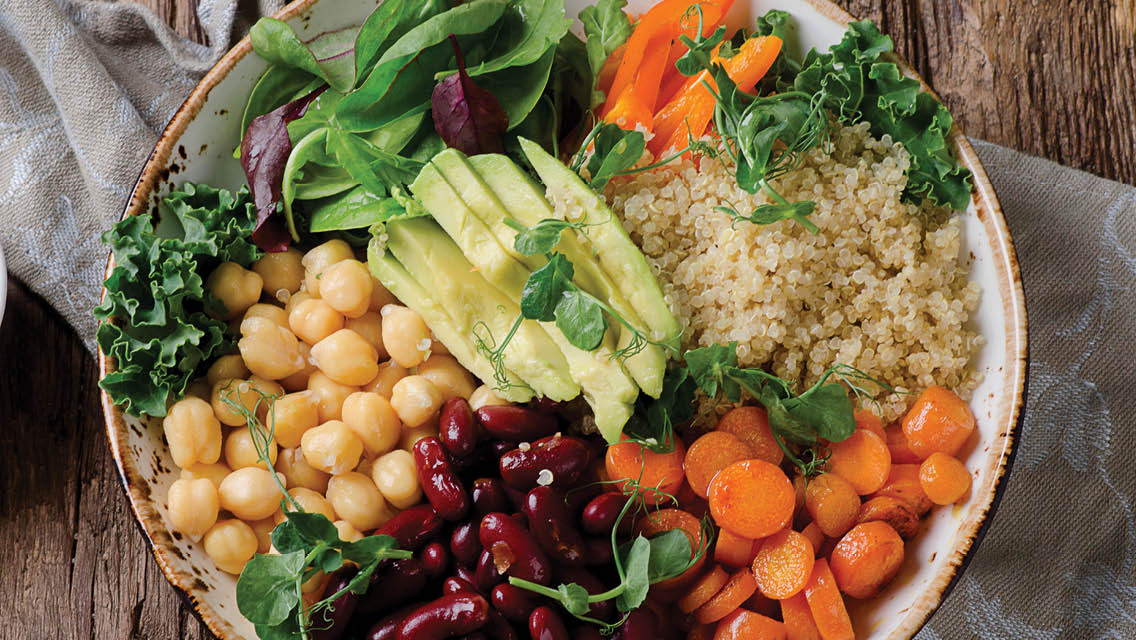
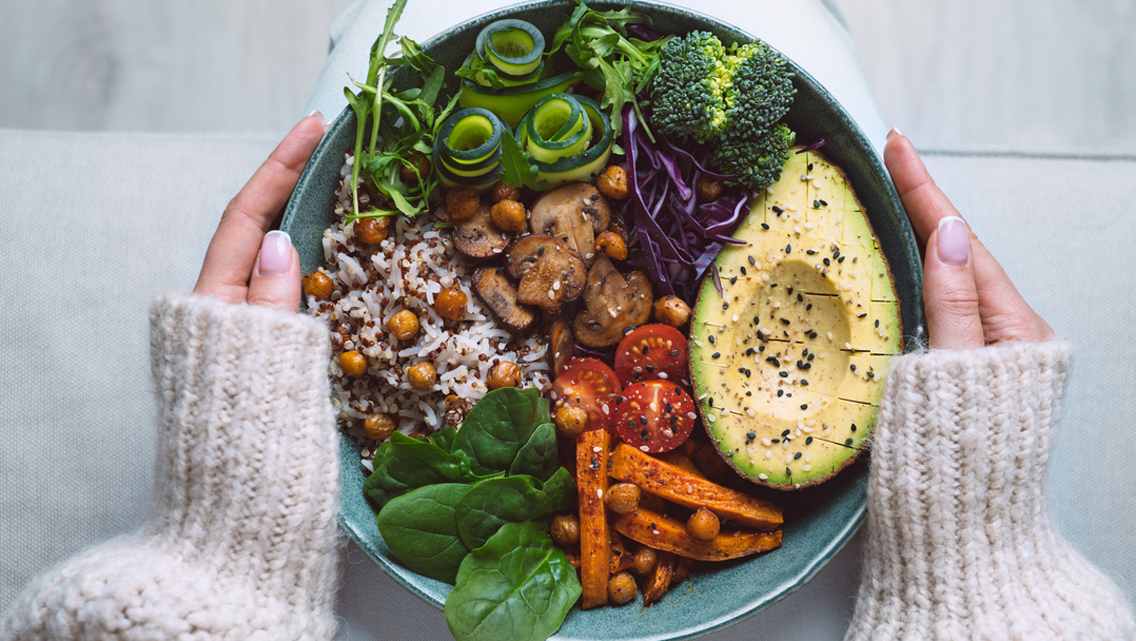
Rather than repeating the same foods daily, rotate different fruits and vegetables throughout the week. Swap in whole grains like farro, quinoa, or amaranth, and keep a variety of legumes on hand, including chickpeas, lentils, and black beans. Seeds add diversity too — chia, flax, hemp, pumpkin, and sunflower all contribute different types of fiber and micronutrients.
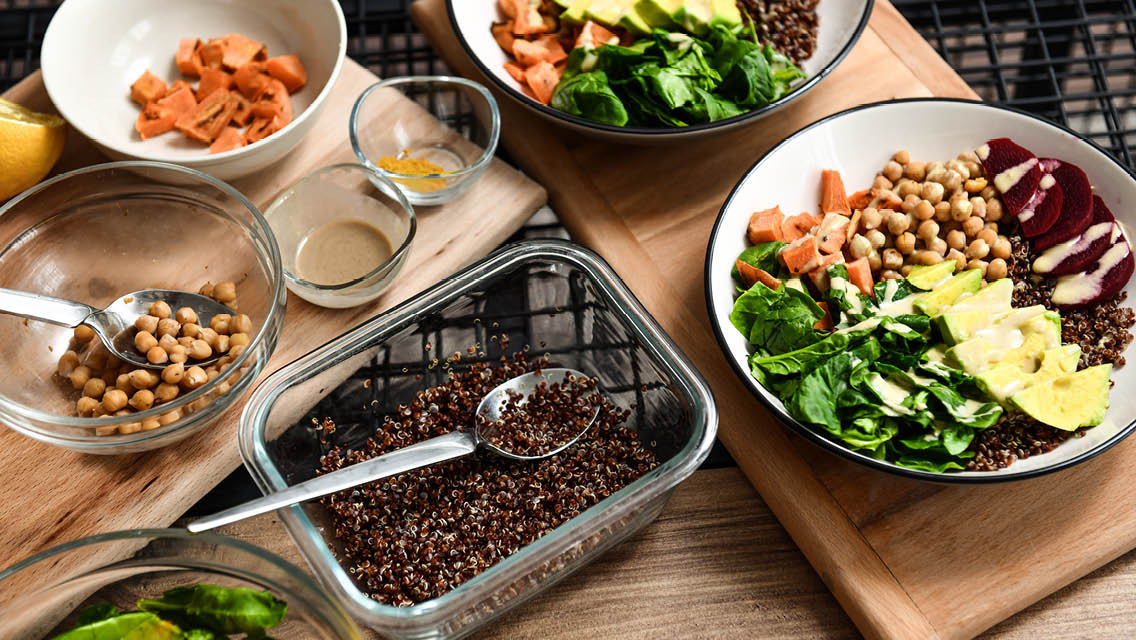
Blake’s go-to meal is a quinoa bowl with chickpeas and green peas topped with barbecue chicken — an easy way to combine grains, legumes, vegetables, and protein in one dish.
Euler often opts for beans over animal protein. In one of her favorite recipes, she sautés two cans of white beans with garlic and onion, cherry tomatoes, spinach, and Parmesan cheese. “I will take any recipe that calls for a pound of chicken, and I will substitute two cans of chickpeas,” she explains. “Especially for one-pot meals: Drain, rinse, and we’re putting that in instead.” (Try it for yourself with this one-pot “Sweet Potato and Chickpea Curry Soup.”)
(5)
Listen to Your Body
Not everyone tolerates a fiber increase the same way. Euler sees a lot of her patients’ irritable bowel symptoms worsen when they incorporate certain fiber-rich whole foods. These foods typically fall into the category of FODMAPs, or fermentable carbohydrates, which can lead to gas, bloating, and irregular bowel movements. Common FODMAP triggers include apples and pears, watermelon, stone fruits, artichokes, asparagus, garlic, and onions.
“In those cases, it’s not just about adding more whole foods or fiber,” Euler says. “It’s about finding the right types and amounts that the person can tolerate.”
With her patients, she focuses on finding the right portions, introducing these foods gradually, and even using a fiber supplement to improve stool quality without worsening symptoms. If you have IBS or other gastrointestinal concerns, it’s especially important to gradually increase portion sizes of fiber-rich foods.
Your Fiber-ful Day
| BREAKFAST | LUNCH | DINNER |
|---|---|---|
Loaded Yogurt Bowl
|
Build-Your-Own Snack Board
|
Quinoa and Lentil Bowl
|
| Fiber: 3 grams from berries, 4 grams from ground chia, 3 grams from mixed nuts | Fiber: 4 grams from hummus, 3 grams from veggies, 3 grams from crackers, 3 grams from fruit | Fiber: 3 grams from quinoa, 5 grams from lentils, 3 grams from vegetables |
This article originally appeared as “Focus on Fiber” in the November/December 2026 issue of Experience Life.


Comments (0)