


What Your Blood Pressure Is Trying to Tell You (Performance & Longevity Series)
Blood pressure is one of the most important indicators of long-term health. Learn why it deserves more attention and how monitoring your numbers beyond your annual doctor’s visit can help you make smarter health choices.



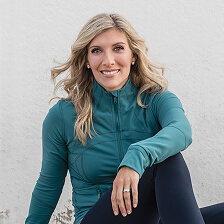

Blood pressure is one of the most important indicators of long-term health, yet most people only get it checked once a year at the doctor’s office. That’s not enough. Hypertension is called the “silent killer” because it often doesn’t signal a problem until damage is already done.
In this episode, Jim LaValle, RPh, CCN, explains why blood pressure deserves more attention, as well as what your blood pressure numbers actually mean. He covers the key factors that drive the numbers up, and shares the lifestyle factors that can support healthy blood-pressure levels.
This episode of Life Time Talks is part of our series on Performance and Longevity with MIORA.
Jim LaValle, RPh, CCN, is a clinical pharmacist, the cochair of the American Academy of Anti-Aging Medicine, the chair of the International Peptide Society, and the chief science officer for Life Time.
In this episode, LaValle explains what your blood pressure can tell you about your health, and why it’s important to measure more often than at your regular doctor’s visits. His insights include the following:
- Blood pressure can fluctuate for many reasons, including the time of day it’s taken, stress levels, physical activity, sleep, caffeine intake, body position, and recovery status.
- For many people, blood pressure rises in a medical setting because they feel nervous or stressed, so the doctor’s office reading may be higher than a person’s typical reading. This supports monitoring blood pressure regularly at home.
- Hypertension is called the “silent killer” because it often produces no obvious symptoms, and a person may have significantly elevated blood pressure while still feeling normal. The absence of symptoms does not mean the absence of risk.
- Hypertension differs from other health problems like high cholesterol, insulin resistance, and hyperlipidemia that damage your health over time. High blood pressure can cause gradual damage but can also contribute to an acute event more quickly.
- Blood pressure measures the force of blood against the artery walls. Every blood-pressure reading contains two numbers. The higher number is systolic blood pressure, the pressure in the arteries when the heart contracts. The second number is diastolic blood pressure, which is the pressure in the arteries between heartbeats.
- Arterial condition affects the pressure required to move blood through them. More flexible, pliable arteries are generally considered healthier, while less flexible arteries create more resistance. Cholesterol, diabetes, inflammation, and other conditions may contribute to arterial changes, and as the arteries become obstructed or less flexible, blood pressure may rise.
- Blood-pressure cuffs are now relatively affordable, and home monitoring can show what your blood pressure is like under normal conditions. Checking it once or twice a month may help establish a personal baseline. People with known hypertension may need to monitor more often.
- Morning and evening readings can tell you how your blood pressure responds to the rhythm of your day. Hormonal and nervous-system activity are higher after waking, so blood pressure may be somewhat higher in the morning. At night, the body should gradually shift toward a calmer state, so the blood pressure dips slightly.
- A blood-pressure measurement typically includes heart rate. Looking at both can provide a broader picture of cardiovascular and nervous-system status.
- Blood pressure that is too low may contribute to dizziness, fainting, difficulty tolerating standing, and orthostatic symptoms. Readings between approximately 120 and 129 systolic with a diastolic value below 90 are seen as elevated or prehypertensive. Readings around 130 to 139 systolic and approximately 90 to 99 diastolic can be described as a form of hypertension. Readings around 140 or higher may indicate more advanced hypertension.
- Lifestyle strategies can help with high blood pressure, but medication may still be necessary for some people. Treatment should be individualized and discussed with a healthcare professional.
Transcript: What Your Blood Pressure Is Trying to Tell You (Performance & Longevity Series)
Jamie Martin
Welcome back to Life Time Talks. I’m Jamie Martin, and this is our series on performance and longevity with MIORA. I’m back with Jim LaValle, our chief science officer at Life Time.
Jim is also a clinical pharmacist, the co-chair of the American Academy of Anti-Aging Medicine, also known as A4M, and the chair of the International Peptide Society. Hey, Jim, how’s it going?
Jim LaValle
Great. Good to be together.
Jamie Martin
All right, we’re talking about blood pressure today and what it’s trying to tell us, because it’s a pretty important vital sign for our health, right?
Jim LaValle
It’s one of the core biosigns of our health, exactly. And you don’t know it if you don’t take it. Let’s put it that way.
Jamie Martin
Right. One of the things we talked about is that it’s not something many of us are tracking on a regular basis. We go to the doctor, often once a year, and it’s one of the first things they measure. But again, that’s only once a year.
So what opportunities do we have to watch it a little more closely, both as a possible indicator of different health issues and as a marker for knowing what’s happening in our bodies?
Jim LaValle
First, I think it’s poorly understood how important it is. Second, a lot of people get white coat syndrome when they go in to see their doctor.
Jamie Martin
Mm.
Jim LaValle
So I don’t always think they get a good read. And I think there’s a lack of understanding about what it actually means. Where’s my risk? There’s a reason hypertension is called the silent killer.
So I have a quiz for you. You know I always have a quiz.
Jamie Martin
I feel like I fail these all the time.
Jim LaValle
Well, this one you’re going to pass. I hope. Okay: What’s the first sign of a heart attack 50 percent of the time?
Jamie Martin
Shortness of breath.
Jim LaValle
Okay, we’re going to have to work at this a little more.
Jamie Martin
I think of arm pain, and with women, like —
Jim LaValle
You’re getting really good. It’s death.
Jamie Martin
Well, that’s depressing.
Jim LaValle
I know. But hypertension is the silent killer because we don’t realize how important it is. Fifty percent of the time, the first sign is that you die.
Jamie Martin
It’s an extreme cardiac event.
Jim LaValle
Yeah. And blood pressure is one of the easiest things for us to look at.
I know we’ve done other episodes on hyperlipidemia, otherwise known as high cholesterol. We’ve done episodes on insulin resistance. We’ve done all these other episodes on things that slowly take you down. Over years, they whittle away at you, and then you don’t have a great quality of life. High blood pressure takes you out quick.
Jamie Martin
So what can we do about that now to be aware and proactive?
Jim LaValle
That’s exactly right.
Jamie Martin
Let’s go back to what you said at the very beginning. What exactly is blood pressure measuring? And why does it need to be treated as a vital sign for health, performance, and longevity?
Jim LaValle
You have a systolic and a diastolic blood pressure. Systolic is the higher number. It’s the pressure in your artery when your heart is beating. Diastolic is the in-between beat, when that vessel rests. What’s the blood pressure then?
Jamie Martin
Got it.
Jim LaValle
So the more pliable and flexible your arteries are, the better their health. That helps a lot.
At the same time, you could plaque your arteries. We’ve talked about cholesterol, diabetes, all those things. In general, when those events start to occur, your blood pressure goes up.
Here’s the other thing about blood pressure: It’s good to take it morning and night. You don’t have to do this every day. Maybe do it once or twice a month. You can get blood pressure cuffs so reasonably now.
Now, at Life Time, we’ve got a lot of people who are very healthy. We have a lot of people with big arms.
Jamie Martin
Yeah.
Jim LaValle
If you’re a guy listening and you have a really big, muscular arm, make sure you get a large-size cuff.
Jamie Martin
That’s a little —
Jim LaValle
A little primer, a little tip. If you’re going to your doctor to get it done, or to the local pharmacy that has the device you shove your arm in, that’s a different story.
But I really encourage people to know their numbers morning and night. Why is that important?
Jamie Martin
Well, because your body is doing different things at different times, right?
Jim LaValle
Right. Your body is under more stress in the morning, so your blood pressure should be higher. At night, your body should be calming down, and your blood pressure should drop a little. Then you’re what’s called a dipper.
Jamie Martin
Yeah.
Jim LaValle
And blood pressure is so cool because you can learn a lot from simple things. I can take my blood pressure seated, then stand up and take it again right away. If it doesn’t go up enough, or if it drops a little, that’s telling you something about how your nervous system is responding to changing position, because your heart has to accommodate for that positional change.
You hear about people with orthostatic hypotension. They get up and they get dizzy. They’re not getting enough blood pressure variation from sitting to standing.
So blood pressure is really a core sign. If I had to tell people one thing they should do, it’s this. And when you take your blood pressure, you also get your heart rate.
Jamie Martin
Right. You get a combo.
Jim LaValle
With heart rate and blood pressure, I can tell a lot about where somebody is with their health.
Jamie Martin
I love that. So let’s talk about what’s considered high blood pressure. Where do we want to be? We’ve talked in other episodes about normal versus optimal ranges. This is a little different, but there are ranges where you want to be when it comes to blood pressure.
Jim LaValle
Basically, think of less than 120/80 as ideal. Obviously, you could go too low, and that’s when you’d be more prone to something like POTS or orthostatic hypotension. But basically, 120/80 is good.
If you go from 120 up to 129 over 89, that’s kind of pre-hypertension. It’s not quite categorized as hypertensive. When you get to 130 to 139 over 90 to 99, that’s a category of hypertension. Then if you go above 139, say to 149, you’re hypertensive, like stage 2. And then you can have uncontrolled hypertension, where your systolic blood pressure is over 160 and your diastolic is over 100.
So you want to ask, “Where am I?” And then start to take action on it.
I think a lot of people, even when they know they have high blood pressure, actually don’t medicate. And most of the time, it’s for one big reason: They don’t give the medication time. I think there are a lot of things you can do before meds, and I know we’re going to talk about that —
Jamie Martin
Yeah, we’ll get there.
Jim LaValle
— but if you are on medication, a lot of times you’ll feel tired initially. You’re going from a very sympathetic, adrenaline-driven, tight-vessel state to one where things have calmed down, and you have to give your body time to adjust. A lot of times people don’t want to wait that long, and they end up not staying on the meds.
But especially for people who have high blood pressure, you need to lower it.
Jamie Martin
Yeah, absolutely. Let’s get into that, because there are two main types of high blood pressure: primary hypertension and secondary hypertension. Can you speak to each of those?
Jim LaValle
Yeah. With primary, there’s no known cause. Secondary is more like: Do I have an adrenal tumor? Do I have a thyroid disorder? Do I have kidney disease, liver disease, diabetes? Do I have a condition that’s causing my blood vessels to get stiff?
Versus: “Hey, you don’t have any of those conditions, but your blood pressure’s going up.” That’s more lifestyle oriented, typically. Sleep apnea would be another condition that could cause hypertension.
So primary and secondary basically come down to an unknown cause versus having a disease. Now, the “unknown” cause really does have known causes.
Jamie Martin
Okay. We say it’s unknown, but there’s usually something going on.
Jim LaValle
Exactly.
Jamie Martin
And I’m guessing we’re going to get into all of that. Let’s talk about undiagnosed hypertension. How common is that? I keep hearing how common it is for more people under the age of 40 to have hypertension, or high blood pressure.
Jim LaValle
Depending on which studies you look at, it’s around 30 to 33 percent in the 18-to-39 age group. It’s more common in young males than females, more like two to one, so the blended data lands around 30 to 33 percent.
And I can tell you right now, not a lot of 18-year-olds are getting their blood pressure measured.
Jamie Martin
Yeah, no.
Jim LaValle
There are a lot of 22-year-olds running around who feel great. “Hey, I feel great. By the way, give me another Monster. Let me get another couple hundred milligrams of caffeine in my belly.”
And I’m not against a little bit of caffeine. I think it’s great. I love coffee, a little pre-workout. But what’s happened is that now a lot of people are having three or four of those drinks a day, or more.
Jamie Martin
Right. I was talking off camera this morning with our makeup artist and hairstylist about a certain drink, and I had no idea it had that much caffeine in it. You could drive by a middle school any day of the week, and kids are carrying cans of these highly caffeinated drinks. You’re like, “Wait a second. Middle school? High school?”
Jim LaValle
A hundred milligrams.
Jamie Martin
It’s a ton of caffeine.
Jim LaValle
And a lot of caffeine is going to lead to hypertension.
Jamie Martin
Right.
Jim LaValle
I think we’re a caffeinated nation. We have caffeine in gum.
Jamie Martin
Well, that’s true.
Jim LaValle
You can take straight caffeine pills. And did you see the caffeine powder they dispense now? If you go to a Starbucks, they’ve got a little caffeine dispenser.
Jamie Martin
No, I have not seen this.
Jim LaValle
That’s because they don’t have one. But if they did, I’d bet that dispenser would be empty. They’d have to refill it every hour.
Jamie Martin
Well, I would guess so. That’s why I believed you. I’m also the most gullible person in the world.
Jim LaValle
Well, not to be joking, but there is a big convenience store chain — I won’t name who it is — where you can buy your coffee and add shots of caffeine. They call it something like an espresso shot, but every one of them is an extra 80 milligrams of caffeine.
So it is happening. And that’s why I think we’re a caffeinated nation. No wonder we can’t sleep. And no wonder our blood pressures are high.
Jamie Martin
So when you said it’s more like 30 to 33 percent —
Jim LaValle
That’s ages 18 to 39, and that’s going to go up. For people over the age of 55, my gosh, you’ve got 50 percent. It’s a big number once people get into their 50s.
Jamie Martin
That’s significant. We talked a little about what’s considered good blood pressure, but how much does blood pressure fluctuate in a day? You said the morning should be a little higher with a dip in the evening. What’s a normal fluctuation day to day? Or does it depend on your circumstances?
Jim LaValle
There are circumstances that will make it go up. If you’re under a lot of stress and your blood pressure is already getting trained to go up too much, stress can really push it up.
Does your blood pressure fluctuate with training? It may. Obviously, we exercise in order to lower our blood pressure.
Jamie Martin
Long term, yeah.
Jim LaValle
But if you’re doing very stressful exercise for extended periods without appropriate recovery, you’re going to have a sympathetic-dominant nervous system. That means you’re making more and more adrenaline, and your blood vessels are going to get stiffer. Any situation where you’re putting yourself under more and more sympathetic stress is going to drive hypertension.
But will the average person have big swings?
Jamie Martin
No. You shouldn’t have that much of a swing day to day.
I think about wearables, too. We talked about using a blood pressure cuff regularly, and some wearables might have the ability to monitor blood pressure. It’s not as common as HRV or heart rate, right?
Jim LaValle
I don’t know of any wearables that do anything accurate related to blood pressure. They may be using some algorithm analytics to try to be predictive. But you need a cuff. Some people use a wrist cuff now. I still like the one that goes around the arm.
But wearables are another window. Say your blood pressure is normal, but you’re wearing wearables — and lots of people are — and you notice your HRV is going down, your heart rate is going up, and you’re starting to get headaches. Maybe you ought to get your blood pressure checked. That’s how I’d look at it.
Jamie Martin
Right. You can use it to help inform you.
Jim LaValle
I think they’re really important to inform. I like them, as long as people don’t get scared. Don’t get scared. Think of it as being proactive and finding out about who you are and the things you need to do.
Jamie Martin
Absolutely. Let’s talk about the causes of high blood pressure. We talk all the time about how genetics, lifestyle, gut health, and so on can influence many aspects of our health. Is that also true for high blood pressure?
Jim LaValle
Yeah. There’s some familial hypertension out there, but I haven’t seen it a ton.
First, let’s cover what we do to ourselves. We’re really stressed out, and we’re not getting enough sleep. Maybe we have apnea. But I keep going back to that stress piece. You have to measure it. Where’s your cortisol? You have to understand where you are.
So stress is a big player. Low magnesium status is a big player. Fish oils are a big player. So there are some clear nutrients that are important.
Jamie Martin
Right.
Jim LaValle
And that relates to diet. That totally relates to diet.
Jamie Martin
That comes back to one of those lifestyle factors we’re constantly talking about.
Jim LaValle
Exactly. And if I think about what else is happening, I think of environmental burden.
We know heavy metal toxicity, for example lead, has been associated with hypertension and peripheral vascular disease. You might think, “How am I going to get lead?” Well, if you’re old enough, like me, you used to read a newspaper, and all that ink on your fingers was lead. We grew up with leaded gasoline. We still have planes that use lead. And all the lead that’s ever been used is still around —
Jamie Martin
It’s still in our system.
Jim LaValle
— it’s in our body, it’s in the aquifer. It’s there, and we end up collecting it. So I think environmental burden is big. It plays a role.
Then there are the disease states I mentioned: an adrenal tumor, thyroid issues, kidney disease, liver disease, diabetes. All those conditions will do that.
But the big one I see all the time is people being stressed out. Then there’s the gut–immune situation. If you’re triggering inflammatory compounds, you’re inflaming your blood vessels. The endothelium thickens, and the blood vessels aren’t as pliable. So there’s a gut–immune–heart connection.
And then there’s a gut–immune–brain–heart connection. The gut can be sending signals to the brain to be under stress and sympathetic dominant. Your vagus nerve — that whole vagal network running through us — gets dysfunctional because of the stress response. Now the vessels are tight, and the blood pressure goes up.
Jamie Martin
A lot of interconnection. Always.
You mentioned low magnesium and fish oils. A lot of people hear about sodium intake and blood pressure. Is that still true? Is salt —
Jim LaValle
There are people who are salt sensitive and people who are called salt resistant. But a pretty good percentage of people who are hypertensive end up having some sodium sensitivity. I think it’s between 40 and 50 percent.
Jamie Martin
Wow. Okay, that’s pretty significant.
Jim LaValle
When you’re salt resistant, it doesn’t matter. You’ll hear people say, “My blood pressure’s fine, and I eat salt like crazy.” That’s because they’re salt resistant.
Then there are the people who are salt sensitive, and they should watch it if they have hypertension. Look, it’s so simple. Take your blood pressure. If you’re at 135/90, start being honest and looking at things: What’s my stress like? Do I load up on salt? How am I training? What are my foods like? Am I getting Zone 2 in? Do I need magnesium? You can start really simple.
But salt is real. It’s a real issue. There are people who are sodium sensitive, and it raises their blood pressure. When they bring their salt intake down, their blood pressure goes down.
Jamie Martin
We often talk about SNPs. Is there a sodium SNP?
Jim LaValle
I haven’t memorized all the genes yet.
Jamie Martin
Jim, you know all these things!
Jim LaValle
I love it. But I’m pretty sure there’s a gene for sodium sensitivity.
Jamie Martin
Okay. I wanted to check on that one.
Jim LaValle
And there are other genes that relate to blood pressure, too. You’ve got the PON1 gene, and you’ve got genes related to cardiometabolic health that would correlate. So there is a genetic predisposition that you could trigger.
Jamie Martin
Does that go back to what we’ve discussed in other episodes, like APOE? APOE4, APOE3?
Jim LaValle
You’re more prone to heart disease with that, because once again, anything that triggers inflammation is going to create pressure on your arteries. That means your heart has to pump even harder to get blood through those vessels.
Jamie Martin
That makes sense. We know blood pressure is connected to heart disease and stroke. One that’s really important for people to know about is cognitive decline. And it’s connected to overall mortality. As you noted earlier, it’s the silent killer —
Jim LaValle
The number one killer.
Jamie Martin
How much of that risk is actually preventable?
Jim LaValle
I think a lot of it is preventable. It’s hard, because so many things affect our blood vessels.
You mentioned stroke. There are TIAs, transient ischemic attacks, little ischemic events where we have a small infarct. And of course, when you have high blood pressure, you’re not getting enough blood to your brain, so your brain isn’t getting enough oxygen. That creates a problem as well.
So I think a lot of things are preventable. But we’re swimming upstream a little, because sometimes we don’t have a choice. Sometimes you’re a single parent working two jobs. That’s very high stress, and you’re not getting enough sleep. Maybe one of your children has special needs, and you’re caring for that child.
There are a lot of situations. You’re going through a divorce. Whatever it is, life happens. And then you have to deal with traffic every day. You’re getting inundated with emails and texts. Somebody says something that upsets you.
You have to realize that those little bumps are your body’s interpretation of fight or flight. And sustained sympathetic fight or flight leads to more cardiovascular disease and lower life expectancy.
When we teach on the cardiopulmonary-neurovascular connection — that triad of the heart, the blood vessels, and what’s happening with your vascular network due to the nerves, like the vagus nerve — we focus on the nervous system balance we talked about in our nervous system episode. That’s critical to managing blood pressure.
Jamie Martin
It’s so interesting. We’re living in this modern world where so many of the pressures and things causing us stress didn’t exist 300 years ago. We’re kind of like guinea pigs in many ways, with everything at our fingertips causing those little spikes repeatedly throughout the day.
I think it’s important to stress that you don’t have to try to change everything. If you’re that single parent with a child who has a learning disability, or whatever it might be, what’s one thing you can do to create some space for yourself and start to manage it better?
Jim LaValle
I know I probably sound like a broken record, but I think one of the easiest is box breathing. It’s one of the easiest things you can do to reset your nervous system.
Do box breathing for three or four minutes, three times a day. Even the busiest person has that time. You reset your nervous system from sympathetic to parasympathetic, and parasympathetic helps balance things.
Your sympathetic tone — fight or flight — is supposed to be sporadic. Most of the time, you’re supposed to be calmer. So the more you notice yourself getting upset, the more you want to think, “Hey, let me do a few minutes of breathing to neutralize this.” I think that’s probably the biggest thing you can do related to blood pressure.
There are even devices you can wear that measure your heart rate and guide you through a breathing method. It’s actually an FDA-approved device. If you go through that exercise every day, eight weeks later, your blood pressure is down.
Jamie Martin
So again, it’s about turning to that free resource we carry with us all the time: our breath.
Jim LaValle
Yeah, because we have to breathe. Or we breathe shallow. But we want to breathe deep. I think that’s the biggest one for blood pressure.
The other one: Even if all you can do is walk, walk. You always hear, “I don’t have time for exercise.” Everybody has time to exercise, and once you start doing it, you love it.
I think getting Zone 2 cardio in as part of your exercise plan is important. If you love taking classes, great. But Zone 2 helps reestablish where you’re at with your nervous system. That’s really good.
And try to get a good night’s sleep.
Jamie Martin
Right.
Jim LaValle
I think a lot of us struggle to get a good night’s sleep, and getting that down is good.
None of that requires anything except you doing it. And if the stress is bad enough, or you’re going through difficult times, seek counseling. Help yourself out. Look for resources that can help you through your situation.
Jamie Martin
Absolutely.
Jim LaValle
Then, in my opinion, the next step is magnesium. It’s critically important.
Jamie Martin
So if you’re going to take some nutrients —
Jim LaValle
If you’re going to take nutrients, I love magnesium. I love fish oils.
Probably the most studied nutrient for blood pressure, with data behind it, is Kyolic aged garlic extract. You’ve got Matt Budoff, president of the Interventional Cardiology Society, doing five different trials on it. You’ve got the University of Florida and a bunch of different universities that have done studies on it.
Jamie Martin
Yeah.
Jim LaValle
They’ve published a double-blind, randomized, placebo-controlled crossover trial — the toughest kind of trial for proving that something works. And aged garlic extract, or Kyolic, works.
You don’t have to worry about smelling like garlic, either. People hear “garlic” and go, “Oh, I don’t want to smell like garlic.” When they age it, it takes away the volatile compounds.
Jamie Martin
More of that sulfuric smell?
Jim LaValle
Right. None of that “stinking rose” effect, as they call it. So I think that’s important.
If you want to go past that and you know you need to manage your stress, theanine has great studies showing it helps lower blood pressure. Suntheanine, or theanine, is great. If you’re feeling anxious and nervous, it helps dampen that.
If you know your cortisol is high, Relora — R-E-L-O-R-A, a magnolia and phellodendron extract — lowers that.
And there are other things you could think about. Polyphenols work really well for remodeling the endothelium and reducing inflammation. For women, pomegranate can help reduce small vessel disease, because women tend to get different patterns of cardiovascular disease than men. The studies on pomegranate are really quite good for that.
Then you can get into more advanced tactics, like some sort of chelation to get rid of the metals that might be causing the situation.
Jamie Martin
Right. You can go deeper into testing to understand whether you might have an issue there.
I was going to ask about adaptogens. You often think of adaptogens, like ashwagandha, as helping modulate the stress response in your body. Has there been any research on adaptogens and blood pressure?
Jim LaValle
That’s a great question, because I love adaptogens. If you don’t have blood pressure problems but you have a stressful life, you should be on adaptogens.
Jamie Martin
If you don’t have blood pressure issues — let’s stress that piece.
Jim LaValle
If you’re already having blood pressure issues, I would make sure I’m taking my magnesium and my aged garlic extract, and I’d add an adaptogen as well, because that’s going to help with modulation.
Why have adaptogens been used culturally across every civilization since the beginning of recorded medical history? Because they made you more resilient in your health. They balanced your HPA axis so you maintain what’s called allostasis. Your brain is telling the rest of your body what to do correctly.
When you break that, you hit allostatic load, and now all the signals are different. Adaptogens prevent you from flipping that circuit breaker.
So I love ashwagandha. I love schisandra. I love rhodiola. The reason I like rhodiola so much is that it works on what’s called the peripheral beta-adrenergic nervous system. It helps reduce that stimulatory effect out in the periphery.
Jamie Martin
Got it.
Jim LaValle
So I really like rhodiola as an adaptogen for that reason. It’s kind of specific for that. There are so many. Adaptogens are one of my favorites.
Jamie Martin
Well, you’re into botanicals, the plant-based side of things.
Jim LaValle
I’ve never met a botanical I didn’t like.
But in general, we’re just trained a certain way here. We wait until we break, and our adaptogens are Xanax and Prozac in this country. We wait until we push our nervous system to the point where it breaks — allostatic load — and now you need medication.
Jamie Martin
So again, let’s be proactive and try to be preventive up front.
Jim LaValle
I think it’s one of the most important things you can do.
Jamie Martin
Okay. Blood pressure: We all get it measured on a regular basis, and we could be measuring it more. Is there anything we missed or that you want to make sure we cover? We covered sodium. We’ve talked a little about insulin and glucose and those pieces. Did we miss anything?
Jim LaValle
No, I thought we did a really good job of explaining blood pressure. My final comment would be this: If you’re listening and you haven’t checked your blood pressure in a while, please go do it. Hypertension is the silent killer, and checking your blood pressure is the easiest thing to do.
Jamie Martin
So pay attention.
Jim LaValle
Pay attention. Make it part of your ritual: “I’m going to do that once a month.”
Jamie Martin
Right. With all the devices we have these days, you could set a reminder. That’s actually something I need to do, because I was told to do this. If I put a reminder on my phone, like, “Hey, take your blood pressure when you wake up,” I’m more likely to do it. So use the tools at our fingertips that can prompt us and give us cues.
Jim LaValle
Absolutely. Make it easy.
Jamie Martin
Jim, I always appreciate our time together, so thank you.
There’s more to come from MIORA at Miora.lifetime.life. You can also read more from MIORA and some of our experts there at ExperienceLife.com, and keep listening to this podcast, especially this Performance and Longevity series. I think that’s it for this one. Thank you so much, Jim.
Jim LaValle
Great being here, as always. I always love our topics.
Jamie Martin
Me too. Thank you.
More like this


Talks — S13, EP21 / Why the Nervous System Is a Vital Sign (Performance & Longevity Series)
We track metrics like heart rate, blood pressure, and respiration — but what if we saw the nervous system as one of the biggest indicators of our health status? The nervous system influences how we perform, recover, handle stress, and function, yet many of us are operating in chronic fight-or-flight mode without realizing it. This affects not only how we feel day to day, but also our long-term health and disease risk.

We’d Love to Hear From You
Have thoughts you’d like to share or topic ideas for future episodes? Email us at lttalks@lt.life.
The information in this podcast is intended to provide broad understanding and knowledge of healthcare topics. This information is for educational purposes only and should not be considered complete and should not be used in place of advice from your physician or healthcare provider. We recommend you consult your physician or healthcare professional before beginning or altering your personal exercise, diet or supplementation program.
Life Time provides administrative, non-clinical support to MIORA as well as services and amenities related to general wellness and fitness; Life Time does not provide medical advice, diagnosis, treatment or care.
Advertisement