

Visualize, Compete, Repeat: A Conversation With Olympian Carrie Tollefson
Learn how to build an athlete mindset and why that self-belief isn’t reserved for the elite or professionals.


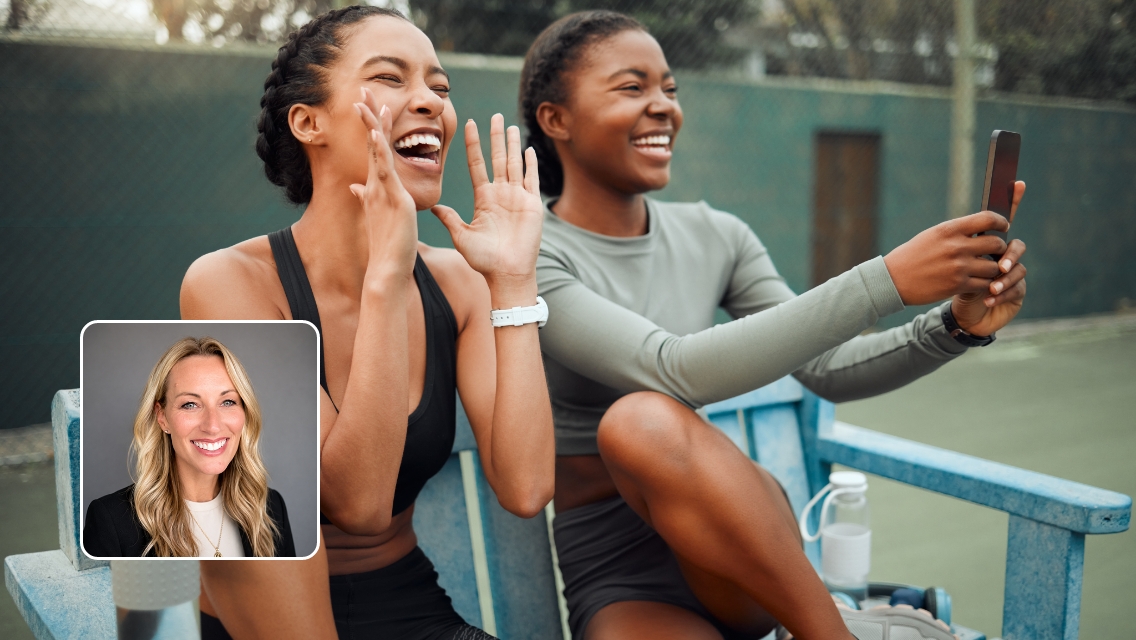
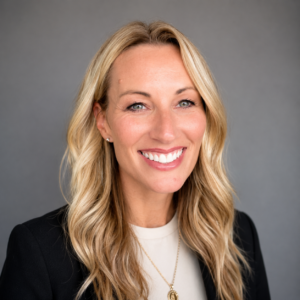
What does it take to think like an Olympian, even if you never toe a starting line? In this episode, Olympic middle-distance runner Carrie Tollefson talks about building an athlete mindset and why self-belief isn’t reserved for the elite or professionals. She also shares her take on why it’s important to reinvent yourself — day after day, year after year, chapter after chapter — and the importance of saying “yes” to opportunities that push your limits.
Plus, Tollefson discusses how women’s voices, presence, and allyship in sport strengthen the game for everyone.
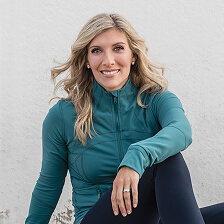
Carrie Tollefson is a former Olympian, elite middle-distance runner, and acclaimed broadcaster. A 13-time state champion in high school, she went on to become a five-time NCAA champion at Villanova and the first athlete in NCAA history to win both the 3K and 5K titles. Carrie later became a three-time national champion and represented Team USA in the 1500 meters at the 2004 Olympic Games in Athens.
Today, Carrie brings her passion for sport and healthy living to her work as a broadcaster, podcast host, speaker, coach, and advocate. She has covered many of the world’s top races for ESPN, NBC, and USATF.TV.
In this episode, Tollefson speaks about building an athlete’s mindset both in and out of sport, as well as the advances she’s seen for women in sport and why she’s passionate about them. Her insights include the following:
- Tollefson’s family tree shows how women’s sports have changed. Her mother never had the chance to play sports. Tollefson became a five-time NCAA champion and Olympian. Now, Tollefson’s daughter plays freely while Tollefson’s mom keeps the stat book. In three generations, the question changed from “Can she play?” to “What does she want to try next?”
- Reinventing yourself isn’t optional — it’s a skill. Tollefson’s advises treating reinvention as a practice, not a one-time event. “Reinvent yourself daily, monthly, yearly,” she says.
- Tollefson’s signature message, “Get after it,” means chasing greatness while still enjoying the ride. The philosophy is about finding what makes you tick and testing what you’re made of. It’s competitive, but it isn’t joyless.
- The athlete mindset is available to everyone. A hungry, competitive approach to life’s challenges and opportunities is something anyone can cultivate, whether they ever played an organized sport. It’s a way of showing up.
- Tollefson is a proponent of visualization. She encourages picturing the task ahead and imagining success, while also rehearsing the “scary scenarios,” so you can mentally practice how you’ll adapt if things go sideways.
- Self-belief takes practice, and Tollefson believes it’s OK to brag about yourself — even if you’re doing it privately. Speaking your ambitions out loud helps make them real and reminds you that believing in yourself isn’t arrogance; it’s fuel.
- Allyship shows up in real, specific actions. Lifting others up is something you do, not just something you say.
- Tollefson encourages saying “yes” to opportunities even if they may scare you. When an intimidating opportunity comes up, lean in instead of talking yourself out of it.
Transcript: Visualize, Compete, Repeat: A Conversation With Olympian Carrie Tollefson
David Freeman
Welcome back to another episode of Life Time Talks. I’m David Freeman.
Jamie Martin
And I’m Jamie Martin.
David Freeman
And today we’re going to be talking about leveling the playing field. So women’s voices and allyship matter on the track at work and in life. In this conversation, we’re exploring how empowering others, practicing gratitude, and staying present can change not only your routine, but also the environment for everyone around you.
So whether you want to level up the playing field, strengthen resilience, or spark positive change, this episode offers practical evidence backed advice you can use right now to create lasting impact in your own life and community. And we got a special guest today, don’t we?
Jamie Martin
Yeah, we’re super excited. We have Carrie Tollefson with us. She is a former Olympian elite middle distance runner and acclaimed broadcaster from here in Minnesota, a thirteen time state champion in high school. She went on to become a five-time NCAA champion at Villanova and the first athlete in NCAA history to win both the 3K and 5K titles. She later became a three-time national champion and represented Team USA in the 1500 meters at the 2004 Olympic Games in Athens. Today Carrie brings her passion for sport and healthy living to work.
As a broadcaster, podcast host, speaker, coach, and advocate, she’s covered many of the world’s top races for ESPN, NBC, and USATF.tv, including the Boston, Chicago, Berlin, and Tokyo Marathons. Whew. Based in Minnesota with her husband and her three children, Carrie continues to inspire others through public speaking, training camps, and her signature message, get after it. Hi, Carrie.
Carrie Tollefson
How are you? I’m doing really well. Thanks. I’m excited to be here.
Jamie Martin
We’re so glad to have you all. All right, we’re gonna jump right in because we know that you kind of come, you have a deeply personal perspective on the evolution of women in sports. You know, you talk about your daughter, the joy of watching her participate, but then you have this other side where like your mom never had the opportunity to compete in sports. So how has this generational kind of shift shaped your dedication to leveling the playing field for women?
Carrie Tollefson
Well, I was the youngest of three girls. I had two older sisters that were really heavily involved in music and in sports. And our mom and dad, my dad played college football. You know, my mom never had that opportunity. And the entire time we grew up, we really didn’t know that. You know, we didn’t know that my mom didn’t have the same opportunity. I mean, she still is the grandma that is taking stats in the in the stand. She has her own stat book. but my dad would always say, Mom knew the plays better than I did. You know, just like things like that.
And so for me growing up through being the youngest of three girls and having this role model of a mom that I just didn’t think really liked sports as much as we did to play them, but she liked watching. And then to see my sisters grow older and watch them be parents and then becoming one, I really have just learned so much about sport and how important it is for all of us, men and women, or however you identify. It’s it’s so important. But now especially as a parent watching my kids grow up. So it’s been a real joy and also a real eye opening experience to hear how my mom didn’t have the same opportunities.
Jamie Martin
It’s interesting you say that I remember several years ago I was sitting just at a family event with my husband’s grandmother, who at the time was I think like 89 years old or something like that. And I was telling her how I had gone out running and she was like, I I think I would have been a runner if there was that opportunity years ago.
You know, and I was like, it it again, it kind of wakes you up like I didn’t even really think about you didn’t have the same chances as I have had or that my girls will have. And it it’s true. It’s like there really has been this growth opportunity for women in sport, and where do we go from here? Which is exciting to think about.
Carrie Tollefson
And even David, like watching your daughter play football now. I mean, it’s just really changing. And I I I love it so much that these girls, I mean, I used to pretend I was Michael Jordan on the basketball court. Yeah. And, you know, like that was who I looked up to. And I even went to the Olympic Training Center for camps and there were six, five and and higher girl camps for the basketball players coming up.
And so nowadays we can be the WNBA, we can be soccer players, we can be track athletes, we can do it all and be, you know, looking up to the women that we want to look up to. It’s fun to still pretend we’re Michael Jordan. Yeah. But I want to be Caitlin Clark or whatever else.
Jamie Martin
Yes, absolutely.
David Freeman
mean to your point, like seeing is believing in in a lot of ways, even using in the the comparison as far as my my daughter was seeing her big brother and she saw the reaction from the crowd. She was like, I want to go do that. I wanna be, you know, game winning touchdowns, like so she saw something and she believed something from what it is that she saw.
So I gotta go to like the coaching piece. When it comes to it, while growing while growing up, it was a whole bunch, it was a plethora of different coaches and usually male-dominated coaches within this space. We have seen a shift as more female coaches coming into the space. Can you talk about the value of what that looks like for a female athlete when you have somebody that probably can be able to connect on a different level being a female, coaching a female? Because there’s certain things that obviously as a male that’s not going to be able to tap into from a coaching perspective.
Carrie Tollefson
Well, ironically, when I went to Villanova, Villanova was one school that had a female coach. And she was a professional athlete at the time. So, you know, it was so cool to be able to go out there. I had our head coach was a male and he was an Olympian. So, you know, we had this opportunity of learning from him as well and like learning that whole side of professional sports. But then having our coach go to USA track and field, she won the five thousand the year I was being recruited. And that was a big pull for me.
And now we are seeing more females in the NCAAs. We’re seeing athletes kind of try to be that next person that’s gonna be the next female coach. And so I really see a shift that way, David. And I think it’s really, really cool. But I also love having male coaches. You know, it was there was something different. The conversations could be different if you wanted it, but also I feel like I was lucky enough with the coaches that I had. I had open communication with both of them. Yeah. So.
But yes, you do have different conversations, I think. Maybe a little bit more you can go down that personal conversation a little bit more in depth with a female coach when you are female. Just they understand it a little bit more. Yeah.
David Freeman
I was gonna say the value of contrast within that space. So I I I know that for a fact too. Just being able to see even the the youth as far as my kids, they had both female male coaches and they compliment each other well. it almost goes back. I mean, I I don’t know if I draw this parallel, but this almost like parenting in a sense too. Like you you have these two different voices and these voices wanna get you to this finish line. So contrast I do think holds a lot of value within this space as well.
Carrie Tollefson
For sure. I my female coach at Villanova was probably less emotional than my male coach. So sometimes we took like the more sentimental things to my male coach. And but you would see it in my female coach when she really was proud of you. That’s when there was so much emotion. And she almost drew back when she was confused with the result. But we knew that we always she was she had our backs no matter what. And I was really, really blessed to have both male and female coaches like I did at Villanova.
Jamie Martin
Right. Right. So let’s talk a little bit about you have this phrase, get after it. We mentioned it’s at the top of the episode. It’s kind of your signature. How do you balance like the pursuit of that? Like get after it, go out there. But also with you know, we talk all the time here about like rest and recovery and like taking time to really do the self-care. How do you balance that in your life these days?
Carrie Tollefson
I don’t know, I’m pretty intense. Tough. It is tough. And we were just chatting before about how busy life is as parents. And you know, I try to remind myself to get after it no matter what, but also to be happy with a day that we can all go and take a nap or relax and and recover a little bit.
But yeah, I think that for me, get after it just means finding things that make you tick in life. You know, finding even an activity on that one day that gets you excited, whether that’s working, you know, I’m getting ready for a big meet in LA this weekend where I’m doing commentary and I wanna get after it and find more stories to tell of these athletes. And then I’m yet telling my kids to go out and get after in their choir concert or in their baseball game.
And so that phrase for me just means go out there and, you know, knock them dead, but also have some fun with life and and see what you’re made of. So I do wanna, you know, reiterate we do have to take time for ourselves. And so for me, my little me time is a twenty minute run. Actually, Michelle, your wife and I have talked a lot about the twenty minute run because she went on my podcast and it was a five K run. I took her on she’s a sprinter.
David Freeman
Yeah. definitely Lord.
Carrie Tollefson
We went on this five K run and I mic’d we mic’d each other up right and we were out there chatting and she was like, I don’t know if I’ve ever run five K. But that twenty minutes for me, I still can get a five K in twenty minutes. And that is that is my way of making sure I kind of reset.
Jamie Martin
Yep. I love that. And just knowing like what works for you. Yeah. And it doesn’t have to be literal rest necessarily, but what’s rejuvenating, what helps you restore.
Carrie Tollefson
What helps me get back home to find that area that I wanna be able to find that tick in life and that excitement in life?
Jamie Martin
Yeah.
David Freeman
For sure. A huge area of opportunity that I see is the transition from being athlete to what’s next. Because a lot of individuals see their identity within their sport. And this is what they’ve been doing the majority of their life.
You’ve done a great job as far as transitioning from that professional athlete and once an Olympian, always an Olympian, right? Yeah. But then getting into now as far as being a coach, being a business person and broadcaster. So how have all these different experiences shaped you in that journey? And then what words of advice would you give those individuals who might be struggling in that transition?
Carrie Tollefson
I mean, reinventing yourself is something that I think we have to do no matter what we’re we’re doing in life, whether you’re an athlete or a doctor or whatever, like I think that just kept keeps you hungry and excited about doing well in your profession and your relationships, whatever. But I think for me it has been sort of a struggle. I’m still in this running industry, very much so. And so there’s times where, you know, I wonder what is next for me. And it doesn’t mean that I have to leave that old self and just totally go a different route.
So I think finding new things to keep this passion. You know, a lot of people think, Do you ever get sick of being known as a runner? And I don’t think I do. Yeah. I mean, this is that that life has given me so much. And it also gives me so much as a person. I I constantly am fueling off the fact of how to persevere like I did as an athlete. And I want to persevere in business as a parent, as a wife, all of those things. So you know, I think reinventing yourself is the b the word that comes to mind when you ask me that and
And again, I think that if you’re an athlete listening to this, like you you don’t just need to be a 400 meter runner. Like, how are you gonna be the best 400 meter runner? What can you do differently in training to be the best 400 meter runner? Reinvent yourself daily, monthly, yearly, whatever it is.
I always think of PRs, right? Personal records are personal best. And it’s hard to set those when you get to a certain point. It’s hard to get new PBs. But every year you wanna chase that. And every meet you wanna chase that. So I think that’s what I learned as an athlete is how to chase greatness. And I hope to continue to do that as I get old and slow.
Jamie Martin
Do you have any personal records or things that you’re like focused on right now?
Carrie Tollefson
I mean, it is that is one of the hardest things about being a sort of retired is that you daily are s like you see how slow you’re getting. So no, I think of different different maybe races that I’d like to do, you know, maybe trying like a high rocks or doing something different. But right now in the space that I’m in, there is nothing really going on that I’m setting huge goals for athletically.
Once these kids get a little older, then Mama might get in the gym a little more, maybe do some kind of some kind of competition. We’ll see.
Jamie Martin
We discovered before we went on air that all our kids are in very similar age ranges. So this phase of life is like, Okay, yep. Who are we chauffeuring today? That’s how I feel. It’s my second job.
Carrie Tollefson
think I should bring like a bike to the baseball tournament or like start some kind of weightlifting thing at the the you know baseball tournaments they are all day long and I am sitting. Yeah. And I need to start doing some squats during yeah you know inning changes and things like that.
Jamie Martin
with David, he would come to these you know, we sit a lot on podcast recording days, but David’s like always out walking as much as he can. He’s like getting his steps in and in any way that he can. He’s such a good role model for for that.
David Freeman
Stop. I’ll take it though. Yeah. I mean, gotta get it in. You’re like, stop. Gotta get after it, right? Stop. Yeah, give it to me.
going back to the nostalgic vibe of what those PRs yielded and that high that you got from that accomplishment. I I I think that, or I feel, I know that that is something that we we do still strongly connect to. the thing that I would say going back to the transition that that kind of stood out is the reinventing of yourself, understanding that a lot of the skills, the discipline. You got so many reps at this as an athlete and how to take those skills and now translate it into this new reinvent itself of you. So just being able to navigate that.
And granted that still, regardless if if it’s the fastest you were when you were a runner versus the current runner, you’re still a runner. Yeah. And you can speak from that experience. And so many individuals wanna know how to unlock that, how to get after it. So being able to champion your story, being able to champion the experiences that you went through, people are just open ears because they want to be able to tap into that.
And I everybody can’t say they’re an Olympian, right? Or a national champion. So being able to share those stories, people are like leaning in, tell me more, right? So yeah, to your point, reinventing yourself, but also championing the story of what it is that yielded you to become that. And now taking those soft skills or all those things that you learned over those years to now apply it to your new self.
Carrie Tollefson
You know, I think there’s something that a lot of people don’t use and that’s confidence in ourselves. And I I tell a lot of kids when I go and speak at, you know, the college level, high school level, like it’s okay to brag about yourself to yourself. And it can be privately when you’re brushing your teeth. It can be with your mom or dad or whoever you live with. It could be with a coach. but for me, I think that sometimes we have to lift ourselves up. Yep.
We are so hard on ourselves. And I think that is something that I have done in life. You know, I do a lot of public speaking. So when I’m in the car, I talk out loud. Yeah.
Jamie Martin
Been there, yeah.
Carrie Tollefson
And I’m I’m looking at myself in the mirror when I’m trying to curl my hair, which it doesn’t always go that well. But you know, I think that sometimes that’s what being an athlete has taught me. You can you have to be confident when you’re an athlete. Sure. You have to believe that you are going to be the best on that day or on the days leading up to that day.
And when you want to become an Olympian, when you want to try to set American records, you won’t always finish first. You won’t al I never set an American record. And every day I had it on my wall, my husband made a plaque for me. Every day I left for a run, I saw that American record. But I had the confidence to go for it. And I feel like there’s a lot of people in life that don’t have the confidence to go for it. And believe me, I’m scared about the next chapter because this running thing has always been my safe haven, even though it’s been hard.
But I do think that that’s this the sport has given me the confidence. It’s taught me how to be confident in trying other things. So I think that’s really what it is all about for me. And I hope that people understand whether you’re an athlete or not. I think we’re all athletes, but whether you really see yourself as that, we still need to believe in ourselves and have that confidence to brag to ourselves, to brag about ourselves. So.
Yeah. And bragging may be a a strong word, but I think it’s okay to do that sometimes. We only have one life. Right. We gotta be proud of things that we do in life.
Jamie Martin
Absolutely. Well, and then such a major theme in your work is helping people find their voice, which you need to have confidence to do. Right. So I mean, I think I would love to delve into that a little bit because there’s a lot of people who are hesitant to do just that, like to get out there to say the thing or to talk about what they’re doing. But how do we have like what do you recommend to build that confidence for people and help them find their own voice?
Carrie Tollefson
I think that’s movement for me. I think that that’s where I find confidence because I’m proud of the movement. Like I said, 20 minute runs for me. Yeah. It doesn’t have to be a 5K. I still have that natural ability to get through 5K in 20 minutes. A lot of people don’t. but if I don’t move my body, if I don’t feel yeah, good about myself, but also good physically, then I don’t have much for confidence. I can really tell when I start to get a little blue or a little down, it’s usually because I haven’t really put some time into taking care of me. Right.
And, you know, life is so busy and I really don’t have much more time than 20 to 40 minutes sometimes a day or five days a week. so I think that’s something. And, you know, being out here in this health and wellness space that you all are at, I mean, I think we all believe in that. And it just doesn’t have to be that you have to do 60 minutes a day or 90 minutes a day. I think there’s certain times in life where you just got to meet yourself where you’re at.
Yeah. And that has really given me the I think the grace to allow. I mean, I used to run a hundred miles a week and then I would lift. And I Life Time was so good to me that let me go in and lift whenever I wanted. I would get treatment. I had I had it made. I don’t have that anymore. But I still believe I can get there one day. I’m just in this this time where life is busy and it maybe is taking, you know, this second shelf sort of type thing. It just looks different.
Jamie Martin
We’ve we talked about this in so many different episodes. Like what I’m doing at 40 is different than what I was doing at 20. And that’s okay. Like it’s like letting go of the expectation that that’s the way it’s supposed to be and having confidence in the way I’m doing things now. And how can I embrace that and grow with that, grow from here versus trying to
Carrie Tollefson
Maintaining sometimes is okay in life. Even as much as I want people to get after it all the time. Yeah. You might be getting after it in other ways than the physical fitness. Absolutely. So I’m trying to maintain for a little bit here and then I’m I’m gonna get ready to put some more time in once these kids get a little older.
Jamie Martin
Right. Yeah. Just a little bit more.
David Freeman
At start of the podcast, we talked about allyship. When it comes to allyship in your space, when it comes to broadcasting, when it comes to coaching, so on and so forth, why is that so valuable?
Carrie Tollefson
I mean, I am not one to totally, you know, talk about being a female and having to always kind of claw my way into things. But I really did in this space, in the space that I’m in now. As an athlete, I think Michelle would say the same thing. You know, there’s equal prize money. Maybe what goes on behind the scenes with contracts is different. You know, there might still be some discrepancy there. But when you look at our sport, we pretty much have the same. That’s public knowledge, right?
But there wasn’t there weren’t always female voices in our sport on TV. And that’s really where I got into it. And I’m telling you, it has been really cool to see how many allies I’ve I’ve had in the booth on the mic. How many men have said, Yes, we need a female voice. Yes, we need someone that knows what it’s like to run while pregnant. We need to have some because we have a lot of athletes that are doing that now.
When I was running, there weren’t a lot of athletes. If you had a child that was kind of done, you’re done. Mm hmm. Now we’re seeing Allison Felix come back. We’re seeing people come back. Maybe Michelle and I should get back.
Jamie Martin
Hey. Twenty twenty eight is just around the corner. Yeah.
Carrie Tollefson
I’m not but I think that that has been a huge game changer for me. You know, I work with John Anderson from ESPN a lot and it’s been really cool to watch how he has really pushed me in different ways. Paul Swangaard. I mean, there’s so many people I could name and I’m you know, I I feel bad not naming all of them, but I feel like they are the ones that say, Nope, we’re not doing an all male cast. There are fifty percent girls, g girls or women in this meet versus men, we need to have that.
So in terms of of allyship, I feel like we’ve nailed it. We have some really good people fighting for us. And I’m excited for Ruby, my daughter, and other women that want to get in this space because I think that we’re we’re we’re closing that door of just having males be the only voice of sports. We see it across the board in sports. So I’m pumped. I’m excited for it.
And I’m thankful that I was willing enough to say when I was second at my first USA TF cross country meet, I said to Tony Revis who was interviewing me, I said, Tony, I want your job one day and within two months he called me up and said, get let’s get you on the mic. Even though I was racing full time. Right. He wouldn’t help me make it work. And we need people like that for for both sides.
Jamie Martin
Love about that so much is it really is like being your own best advocate, right? Like you put it out there, you said it, like this is what I’m going after. And then you had people who heard you. But then it’s like you still have to kind of put yourself out there that willingness to share.
I mean, if you followed any of Mel Robbin’s work, she’s like, there’s the five second rule, and this this whole idea of like, if you think it, try and say it within the first five seconds. But most of the time we talk ourselves out of it. Right. We say, like, why shouldn’t I say this thing? We give ourselves all the reason. It’s like, what’s it gonna hurt if I put this out there? What could be possible if I put this out there? And that can apply in many areas of life, but I think when it comes to using our voices, how do we stop holding ourselves back and put ourselves like just say what we want?
Carrie Tollefson
Well, and she’s a runner. She likes to run. So maybe she should tape record herself. Is that even a thing anymore? But you know. On your phone.
Jamie Martin
Yeah.
Carrie Tollefson
Take your phone. Record herself after races because that is when everything comes out. Like the best conversations, like you start dreaming so big because that adrenaline rush. And so maybe the five second rule should be actually five seconds after your race. Yeah.
Jamie Martin
Absolutely. But like put it out there.
Carrie Tollefson
Yeah. Put it in the
Jamie Martin
okay, so we you mentioned having like kind of the American record on your wall. so often people are getting caught up in like the metrics of things and like looking ahead to that next goal. How does being in the moment help you manage stress versus like always thinking about the numbers and the next thing?
Carrie Tollefson
It’s so hard. I actually tell everybody that. You know, it I mean, I’ve been helping to coach a little bit at my daughter’s team. And if they don’t celebrate those those good days, if they don’t kind of look into what happened on those rough days, you don’t really grow from it. So I do try to say for twenty four hours, let’s either s really celebrate this win or celebrate this really good day, or let’s kind of dig into what happened and even celebrate that you made it through. Right. or even if there’s a DNF, like let’s figure out what happened and then we’ll move on.
So I do really believe in living in the moment, but I also believe that we don’t celebrate the highs very much in life. You know, we’re kind we are all perfectionists in our own way and we’re hard on ourselves. So I do try to remind myself to kind of live it up when things go really well. And again, like brag to yourself maybe or brag to that mirror.
but I I want you to look at the glasses half full rather than half empty. That’s just life is way too short to constantly be, you know, kind of thinking about what if, where should I be, what should I be doing? Live in the moment, like you said, just for a little bit and then get back and get after it. Yep.
David Freeman
We talked about power of pause before on on the podcast. So like can you go back to a moment where you were either running or in broadcasting that you had this moment that you were able just to pause and be like, Wow, I’m doing this.
Carrie Tollefson
You know, I turned down doing the broadcast for the Tokyo Olympics because it was during the pandemic and my kids were really little and I was gonna be away for I think six weeks. They wanted there. And I thought that was the moment that I kind of shot myself in the foot. You know, I was like, no, they’re not gonna ask me back. And they did. They asked me back for Paris. And I went over there and it was four weeks away, so it was a little bit less. Four weeks away, and we still had little kids. My husband just powered through. He’s amazing.
but I think there was a moment over there where I had I was it was so busy. I worked so many hours, but I had a moment where I was like, whoa, I I said yes to this. I lived this. I was on the track. I did this. I didn’t win a gold, but I still got to run on it on this track or on a track like that in Athens. And then I was also doing what I always wanted to do with being on air. Yeah. And I actually took time to say yes to me. Which I think was this aha moment.
You know, not a lot of people have the opportunity to do that and also to separate themselves from their family. It’s a big ask for so many people. But I did it and I made it through. And my family did too. And they were so proud of me and excited for me.
So I think that moment right there was kind of I took a moment when I was over there and said, Good job. You did this and and you went for something scary. Even everyone around me knew I was so scared to leave for four weeks and to take this opportunity and everyone was cheering me on, but I needed to cheer myself on. And it was about halfway through that trip where I was like, Let’s go, lady, you can do it.
Jamie Martin
We got this. How did you set yourself up for success with that from a mindset? I mean, you talk about your husband being a great support, but like how like what supports did you put in place to feel like I can I can leave and feel really good about this in the long run? Well
Carrie Tollefson
Well, I mean, I think just being vocal about it with my friends. They were asking Charlie if he needed help. My parents have always been right there to help me and anyone in our lives, to be honest. But, you know, I think even for Charlie, I mean, find yourself a partner that is as passionate about their own work as they are about your own. And he has always been that that guy.
I was on air with NBC ten days after having our our second baby. And out at the Olympic trials and I was on the back of a motorcycle. I mean, if you could just visualize all of that.
Jamie Martin
Yeah, like a
Carrie Tollefson
Post baby on the back of a motorcycle, announcing, you know, for three and a half hours it was a marathon. So I didn’t get to stop and use a restroom, all these fun things. Yep. but he was the first one to be like, You can do this. Like, you know, get after it, lady. Like, why wouldn’t you not be? So I think that has been a really, really good blessing for me in my life to have someone like that.
Jamie Martin
Yeah, our communities matter.
David Freeman
That’s what I was about to go into, like support system. We talked about allyship and I I feel like that’s a form of support, but when it comes to a more intimate connection, support system, husband, wife, kids, parents, whatever it may be, let’s let’s break that down, whether that’s leading up to your Olympic year or now post going into broadcasting, how how valuable it is to have a support system.
Carrie Tollefson
It’s huge. I mean, I started with it, you know, from day one. My my parents were all in with us and there was nothing us kids couldn’t do. you know, we always joke. My dad would be the guy that would talk strategy. My mom would just tell us that we were the prettiest ones out there. But at this thing, you know, that’s what every mom thinks, right? We c I mean I had big buck teeth and big 1989 moulbangs when I started running. My my feet were bigger than, you know, anything on my body. It was not a pretty sub.
But she would just, come on, Carrie, you’re the prettiest one out there. You can do it. And she kept it light. And but forever, like they had they’re still around and they’re still telling us girls that we can do anything we put our minds to. They tell our husbands that, our kids. And I think that is it starts at home. Yeah. Absolutely. you know, there’s been a lot of different changes in my life, but that’s been the constant. And so
For me as a parent now and even just as a human being, you have to find those people. Yeah. And it’s unfortunate if you feel like you can’t find those people in your lives, because I think then we just need to keep searching. But yeah, my coaches, my, you know, people in my church, like I just feel like I I kind of hang on to people.
I mean, my brother in law is a Ford dealer. I’m never gonna buy another car, even though they’re super expensive. At times I’m like, he is a Ford dealer. I’m gonna buy a Ford. Yeah. And forever I was, you know, with a company that on that provided all my gear and even if I work for other companies, they still have my heart. Yeah.
You know, I think if if someone believes in you and you believe in them back, that’s really where the relationship starts. So I feel like it started at home for me and then it just kind of blossomed from there.
David Freeman
Reciprocity of life right there. I like that. Yeah.
Jamie Martin
Absolutely. How do you connect with people outside of sport? What are your favorite ways to connect with others beyond the sport space?
Carrie Tollefson
Yeah. I mean I first and foremost I think about exercise. Yeah. You know going and doing that kind of thing. But I mean I love I I am I I I’m a Christian, so I love going to church and like having fun there. I had a dance party last year for women that went from six to nine PM and we had over two hundred women come and dance.
So if I could go dance but we donated to to cancer and like we just if we could just have fun in life, that’s that’s all about what I wanna do in life. You know, I just wanna go and eat good food, dance, work my body and you know, just be around positive people.
Jamie Martin
I love that. We need more of that in the world. More of
Carrie Tollefson
Or dance parties where we can rat or bang.
Jamie Martin
Really funny you say that ’cause I actually a group of women at Life Time sent out a text chain recently and like, Hey, there’s this dance party, but it’s from six to nine PM and it’s early and we’re let’s all go. And I’m like, Yeah, but we can be home and in bed by ten. I’m like, that’s yes, let’s go and do this together. Yep. Connect with one another, have a
Carrie Tollefson
That’s what we did and it was amazing. Maybe Life Time needs to do one. We have plenty of spaces. I’ll help you do I’ll help you plant.
Jamie Martin
Putting it out there. Yeah, exactly. There go.
David Freeman
So we we hit on a lot of things that touched on like obviously allyship. We talked about support system, we talked about like getting through hard times. When it comes to the time of doubt, right? Which I know sometimes creeps in, even though on the outside everybody’s perceiving everything to be, you know, all rainbow and sunshine.
When it comes to doubt, Coach Kerry comes out now. How do you now navigate through that? Even when when you were doing it as an high level athlete. Current, like how do you navigate through doubt? ‘Cause I know it still creeps in. I’m I mean, I just think that’s the reality of being human. Yeah. but yeah, help us navigate through that. It’s
Carrie Tollefson
Tough. That is the hardest thing. I think, no matter if you’re talking about yourself or others. And I think for me, there’s been this aspect of of an athlete is to train your brain and to visualize. And I’ve used that through life. And I think that has helped me get over doubt.
when I visualize as an athlete, you know, I’d break down my race. I was a fifteen hundred meter runner and a five K runner. And so I would have word cues that got me through each lap or each K. I had different ways to train my brain.
And I try to relay that to athletes, but also then to just when I’m speaking in a corporate world or whatever, you know, trying to tell people that the power of positivity is so amazing. And if we can if we can train our brains to kind of negate the neg negative, right? Like we gotta get over that. Yeah, maybe we can listen to it and acknowledge it at times, but we have to figure out how to go positive.
And so that’s something that I’ve used. Visualization works for all areas of life, whether you’re an actress or an actor or whatever you’re doing, being able to stand on a stage, being able to present something, be able to tackle a hard task. If you can’t tell yourself you can do it, then it’s not going to go very well. So I think that’s the the big thing that I’ve tried to use as a coach, but also just through life is just training my brain to think more positively.
David Freeman
I feel the first part, as the athlete or as the business person, now mentally you have the reps and you know how to now go about it because of the experience there. Now let’s navigate the same. You said coach, but now let’s go into family when it comes to the girl, like when coaching them, because obviously now you’re trying to get that message across to them, but they still have to believe it. So how do you bring it out of the girls?
Carrie Tollefson
That’s really what I do is I visualize with them, teach them how to visualize. And I think again, I you don’t just have to be somebody that’s getting ready to run a track race, right? It’s anything in life. And so what we do, and we just talked about this because we’re getting into championship season for colleges and all over the place, right? They’re getting ready for conferences and things like that. If you can take some time to see yourself performing, to see yourself doing well, to work through those those tough spots. Yeah.
If you can give yourself positive word cues when you start to get nervous or you start to think, it’s not going well. No, we’re you know, re-engage, whatever the word is, believe strong, something, all of those things you have to lean on. And that was it’s an easy analogy as an athlete, but you can use it in any area of life.
And so that’s what we work on is 10 days out from a big event, usually is kind of my timeline. And I take 10 minutes a day to work through it, whether it’s visualizing the race course. And again, I’m gonna go back to being an athlete, but either it’s visualizing the race course or visualizing the task at hand.
I spoke at I I did a commencement speech last year. I gave a commencement speech. And so for 10 days before it, I re I would reread it and I would visualize, what happens if someone if something goes wrong in the crowd and I have to be able to move on the fly. Yep. Like I would visualize those maybe moments that would scare me or make me nervous and figure out how to get back on track.
Yeah. And so we do that. And I think that that’s been a really powerful thing to be able to share with people at all different levels in any area of life. Yeah.
Jamie Martin
Absolutely. It’s it’s one of those things where if you can visualize it, if you can see it and you can prepare. I love the whole like the maybe scenarios that you talked about. Like how do we then work through those and prep like to your point, like the get to the next place so you can move through any challenges that come your way and get present. Yeah.
Carrie Tollefson
Think it’s the athlete mind. Yeah.
And, you know, I’ve done leadership conferences where I’ve had to kind of teach about having an athlete mind. And really we all have that. Yeah. I I coach a group of moms actually. And there’s a lot of women that have never done athletics. And they come and they’re like, I’m not an athlete. But once they figure out and I preach it enough to them, they get that athlete mindset and then they get real hungry to see what they’re made of. Yeah.
And that is just I one of the most powerful things that I’ve been able to do as an entrepreneur or whatever you want to call me, like to be able to see someone get fired up and to get competitive in life, that’s really cool. So
Jamie Martin
So see where it comes out for.
Carrie Tollefson
you don’t have to be an athlete or live that even that athlete lifestyle to have an athlete mindset. Absolutely.
Jamie Martin
Absolutely. Absolutely. Okay. So you have another, you often encourage people to be the change. if a listener wants to create positive ripple effects like in their family or in their communities, what’s a practical like first step you would suggest for them?
Carrie Tollefson
man. I mean, again, just I you’d think I spend all kinds of time looking in the mirror. I don’t even do that. But I do think there’s a lot that happens when you can verbalize something out loud. And sometimes for me, a lot of times it happens in the mirror. Yeah. So I think that’s the first step. Just kind of saying out loud what that goal is. Yeah. What your ambition is to get something done.
And I think that that has carried me through life for up to this point. And I’m getting pretty old. so I mean young at heart, but the age is getting up there. But yeah, I think that’s been a big thing is just visualizing it, writing it down. Yep. verbally saying it out loud. Yeah. That’s the way to start. And then from there, then speak it into the universe kind of and go out there and see what what you can make happen. Yeah.
David Freeman
Was currently on your mirror or on the wall?
Carrie Tollefson
There’s so many things like, you know, you I talked about that dance party last year. I would just love to continue to have things like that that give back to a space like cancer research, but also brings even talking about the moms that said they weren’t athletes, there were so many people in that room that never danced in front of someone else because they were scared. Yeah.
And to see that just joy come out of them, I’m like I need to do more of this in life. I need to find more fun and bring it to people that are scared of letting loose. ‘Cause I mean, I maybe it’s just the age that we all are at that we just aren’t don’t care anymore. You know.
Jamie Martin
Less self conscious, like more like like I just wanted to be live. Yeah.
Carrie Tollefson
So I don’t know. I mean, maybe maybe I am talking as if everything is peachy keen. There’s a lot in life that’s heavy and hard. Yeah, yeah. And we all go through that, but I just I I continue to wanna be happy and and be excited about tomorrow and not be so worried about today that I don’t wanna get up the next morning. Right. You know?
David Freeman
What about you? What do you got on your wall? Or a mirror?
Jamie Martin
right now? Yeah.
Carrie Tollefson
Ha ha.
Jamie Martin
my gosh, give me a second. Yep.
Carrie Tollefson
Hard about it.
Jamie Martin
Yeah. Like what do I have what do I want to c create in the world? I think it’s more about this patience for one another. Understanding and patience for one another. I want more of that in the world because I just feel like we’re living through really challenging times right now.
And how do I show up in those ways for other people? And hopefully that will encourage more of that, that ripple effect of more of that. So like the patience, the understanding, wanting to understand each other better. Right? And be patient within the challenges that we might confront within it. Yeah.
Carrie Tollefson
Even like when we’re on the roads driving, right? Yeah. I mean, I just don’t understand if like if we were all really happy, we would be like, for sure, go on ahead, you know? I
David Freeman
Sign languages.
Carrie Tollefson
know. Right. Yes.
Jamie Martin
Yeah.
Carrie Tollefson
And so that to me, sometimes after someone does get af get mad at me or whatever, like today when I was merging and I didn’t do it right. but I wondered what was going on. Cause I really didn’t do anything wrong. So I’m like, something was going on in that car that wasn’t me.
Jamie Martin
Yeah, it’s not about you, but it’s also like but we’re all like you said earlier, human. Yes. So how do we show up for each other in those ways?
Carrie Tollefson
Be patient with people that are having a day. Yeah.
Jamie Martin
Yeah. And it’s like with my kids, the patience and understanding and trying to like understand where they’re coming from.
Carrie Tollefson
And meal planning, like
Jamie Martin
I have a video I will share with you both afterwards about meal play. That’s a whole other thing.
Carrie Tollefson
That’s what gets me crabby. Is trying to satisfy everyone in the house. Yes. But you know, it’s all good.
David Freeman
It is. There it is.
Jamie Martin
How about you? What’s on your?
David Freeman
love is all you need. I mean it’s right it’s right there on the wall. And it’s multiple times. This is a it’s a painting, but it’s just like love is all you need. Love is all you need. And one of says all you need is love, but you have to actually keep reading it to get to that one. yeah. So yeah, love is all you need.
Carrie Tollefson
And you guys
David Freeman
By definition, biblically, right? Like love is good. So like if if you really unpack that is all you need and it’ll carry you along.
Carrie Tollefson
So fun, patience, and love. There it is. We got it. I know. We’ve got this.
Jamie Martin
Look at it we’re covered.
my goodness. Okay. wanna wrap up kind of coming back to where we started with women and sports and all of those pieces. You know, you’ve had a front row seat to the running world now for decades. what is the most exciting change that you’re seeing when it comes to how women are approaching training and to how they’re approaching sports?
Carrie Tollefson
I mean, right now, first and foremost, what came to mind was just watching how we are seeing mothers in the world of sport. You know, they don’t have to stop being an athlete or pursuing their goals when they do become a mom. And I think what’s really cool is companies are really getting behind that and understanding that this is just the way of life, right? And somebody doesn’t kind of they’re not devalued when you have children. We need to have children in order to make this world go round.
So I really love that. I love that we’re seeing more females on camera and hearing their voices. I love that we are seeing more sports being offered for females. But I also really love seeing that we have everyone pulling together to really kind of see that happen. I mean there’s still we still have some ladders to climb, but I really feel like we’re in a good spot and I’m excited about it.
You know, there I guess you guys are now getting to know me and I really do look at life as a glasses half full rather than half empty. But I I do understand there’s still ways that we can work. But it’s really exciting to see where we’ve come since I’ve been an athlete in in this world of sports. So I’m proud of it. And I’m I think that the people that are behind it, they don’t probably get enough credit. And I I wanna say thank you to those that are fighting for all of us to have equal opportunity.
Jamie Martin
Absolutely. Can we jump in for a second? I know I just mentioned twenty twenty eight is around the corner LA. Do you have any idea what your role is in that yet? But you’re kind of like it’s coming.
Carrie Tollefson
I mean, we all know media, right? They’re kind of last minute a lot of times. And actually my daughter will be going to college and I keep thinking, Will I have to, you know, decide to go to the Olympics in LA or go and help her move into the dorm room? Yeah. If she decides to go to college. So, you know, all of those things come into play. But it’ll be so fun to be in LA and to be on the mic.
Jamie Martin
starting to feel the enthusiasm around it. You it’s like, how do you get tickets to this thing? And how do you like see real
Carrie Tollefson
Save up
Jamie Martin
Right, like, yeah. But I think it’s a really exciting time to see some of these sports, you know, come back h to LA and like do this. So
Carrie Tollefson
Yeah, it’s gonna be really exciting and and they always talk about how hard it is for a city to really get everything together. And once it all comes together, that’s kind of the whole evolution too of life. It’s like watching it all happen and make history. And so yeah, it’s gonna be fun.
Jamie Martin
Exciting, it’ll be here in no time.
Carrie Tollefson
I know.
David Freeman
It’s mic drop moment time. Are you ready? Yeah. Okay. So it’s gonna take a little bit of visualization going on here. And I’m gonna tap into your broadcasting persona. The way it works, I want you to go into broadcast mode of your last lap at Olympic trials to qualify for the Olympics. And you’re broadcasting on yourself. Yep, your last lap. You ready? All
Carrie Tollefson
Myself, okay. I’m ready.
David Freeman
Right. Three, two, one.
Carrie Tollefson
She’s been in the lead the entire race. Her coach told her not to lead. She’s wondering what she’s doing, but all she can see is USA across her chest. She gets 200 meters in and she has someone come up on her shoulder. She’s got to hold her off. 100 meters to go. The girl goes around her. Carrie fights back with 75 meters to go. She is waving her hands in the air. Visually. Well, I mean, I’m thinking about doing that. I did. Waving her hands in there.
She’s pumped, she’s excited, she’s got fifty meters to go. She starts to pull ahead and with twenty five meters she knows it. She’s gonna make that team. She cracks the tape and she’s on to Athens.
David Freeman
Awesome.
Jamie Martin
I love it. I love that. You went into that so.
Carrie Tollefson
Well, like I got well, I I love watching that race ’cause it totally changed my life. you know, I’m tattooed now. I got my tattoo last year. there you go. And it’s it’s forever something that I’m I’ll be proud of.
Jamie Martin
that’s amazing. That is amazing. Well, Carrie, thank you so much for joining us. Thanks for being a big fan of Life Time and supporting what we’re doing. if people want to learn more about you, you’re at ctollyrun.com. You’re also on Instagram at Carrie underscore Tollifson. Anywhere else we should point them? You have your podcast as well.
Carrie Tollefson
Yep. So I have my C Tolly Run podcast and you know, just if you are watching New York, Chicago, Boston, any of those races, usually I’m on it or any of the track events. So yeah. And just around the corner and if you ever need me, just send me a DM and I’ll get back to you.
Jamie Martin
Yeah. Some thanks, Carrie.
Carrie Tollefson
Thank you.
More like this
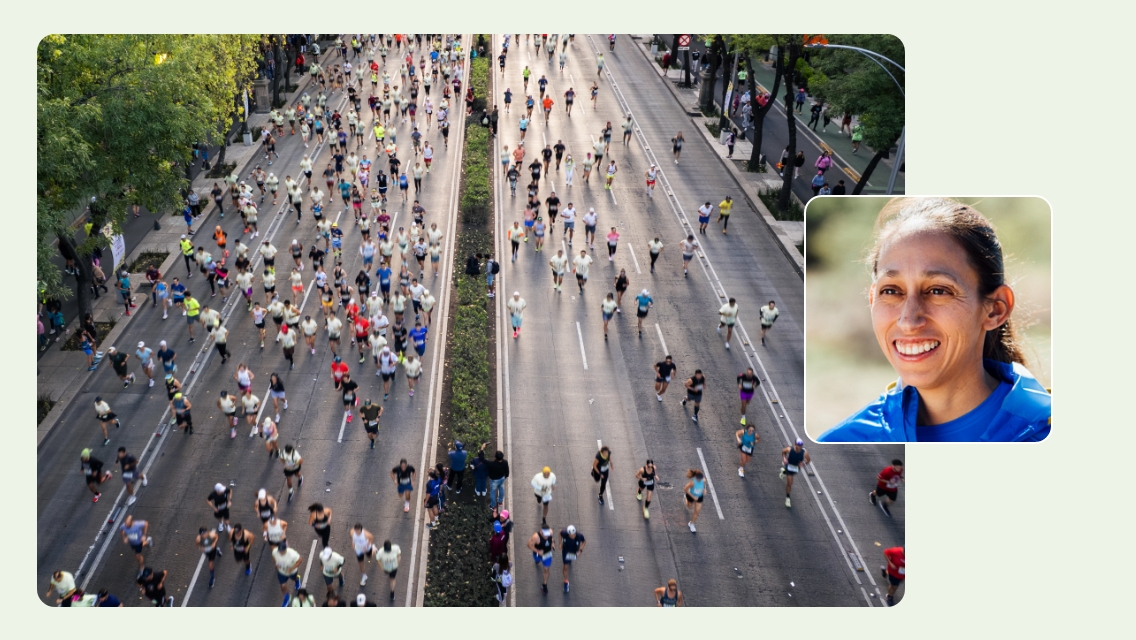
Talks — S12, EP30 / Boston Marathon Winner and Olympian Des Linden on Discipline, Resilience, and the Road to Greatness
Linden offers valuable insights into the mental and physical aspects of running, including offering strategies for balancing training, overcoming setbacks, and adapting to challenges.
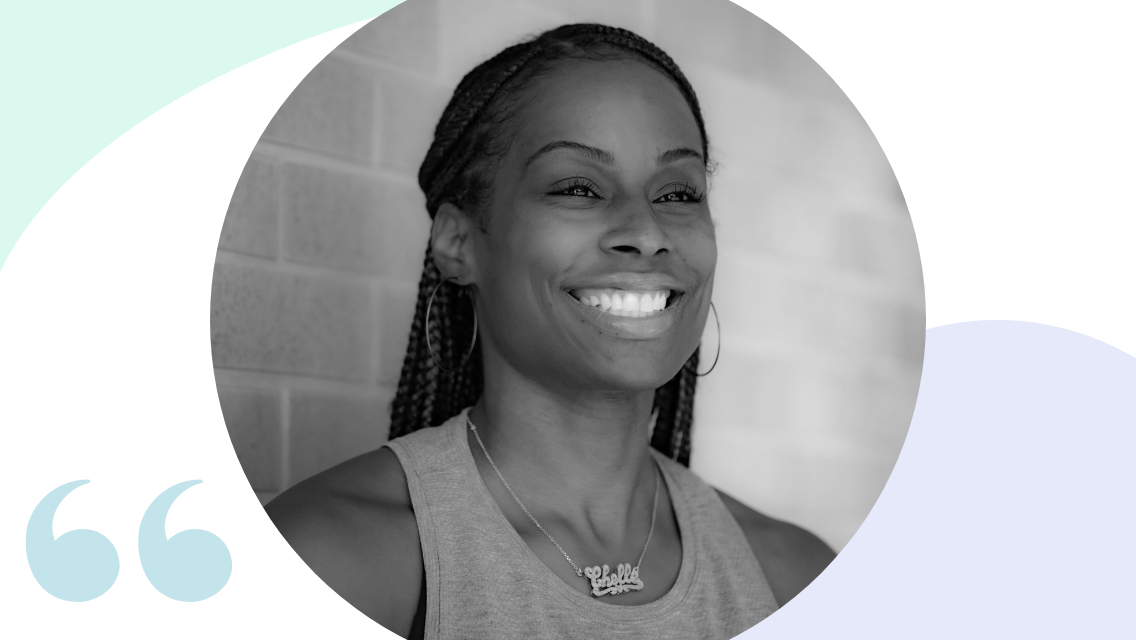
Talks — S2, EP13 / Uncommon Courage
In this episode, Olympian Mechelle Lewis Freeman shares her story of drive and commitment as she trained for the Olympics — and how she applies those same characteristics to the work she does today. She also offers advice we can all follow around owning our own path, staying true to our core beliefs, overcoming setbacks, and having the uncommon courage to go after what we want.

We’d Love to Hear From You
Have thoughts you’d like to share or topic ideas for future episodes? Email us at lttalks@lt.life.
The information in this podcast is intended to provide broad understanding and knowledge of healthcare topics. This information is for educational purposes only and should not be considered complete and should not be used in place of advice from your physician or healthcare provider. We recommend you consult your physician or healthcare professional before beginning or altering your personal exercise, diet or supplementation program.
Life Time provides administrative, non-clinical support to MIORA as well as services and amenities related to general wellness and fitness; Life Time does not provide medical advice, diagnosis, treatment or care.
Advertisement