


The Evolving Peptide Revolution (Performance & Longevity Series)
Learn more about the current state of the peptide revolution, including the important differences between research peptides and for-human-use peptides, how FDA oversight is shifting, and how to spot credible information, prioritize safety, and make informed choices.


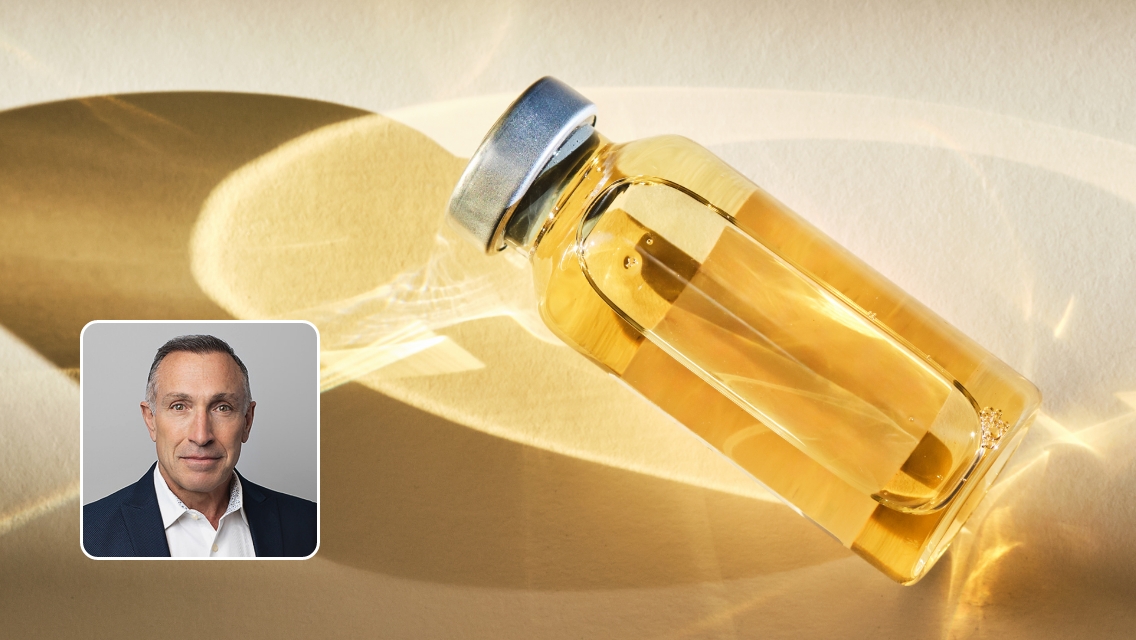


Peptides continue to gain popularity for their potential preventive and proactive health benefits. Yet as the buzz grows, so does the confusion. Emerging research touts their ability to treat injuries, optimize health, and rejuvenate the body; at the same time, questionable gray-market options and misinformation have become more prevalent.
In this episode, Jim LaValle, RPh, CCN, explores the evolution of the peptide revolution. He breaks down the key differences between research peptides and for-human-use peptides, explains how FDA oversight is shifting, and shares tips for spotting credible information, prioritizing safety, and making informed choices.
This episode of Life Time Talks is part of our series on Performance and Longevity with MIORA.
Jim LaValle, RPh, CCN, is a clinical pharmacist, the cochair of the American Academy of Anti-Aging Medicine, the chair of the International Peptide Society, and the chief science officer for Life Time.
In this episode, LaValle explores the current state of peptide interest, use, research, and standards. He also offers guidance on making informed decisions about peptides for your health if you’re considering them. His insights include the following:
- LaValle refers to peptides as the latest tool in a toolkit that can help people maintain health or work through a metabolic roadblock. These small chains of amino acids are signaling molecules that can change how the body functions.
- Although peptides have been around for over 100 years (insulin was the first peptide on the market as a drug), social media has made peptides a major discussion point. The conversation tends to swing between two extremes: opposing them or going overboard. It’s important to find a middle ground or balance.
- GLP-1s have driven much of the public interest in peptides.
- Research-use-only peptides present one of the most significant issues because there are no formal standards for how they’re formulated. They can come from any source, so variability is huge, which is why experts urge steering clear of them.
- Human-use peptides require formal quality control and safety processes.
- Following guidance about peptides from non-professionals on social media is strongly discouraged. It’s important to know where the product comes from and whether it is suitable for human use. It’s also critical to have oversight from a healthcare professional.
- The FDA is changing how it handles certain peptides. FDA approval does not mean perfection; it means the FDA approved them despite known side effects.
- Current FDA standards are mostly focused on disease treatment. There’s a gap in prevention, proactive care, and early intervention, which is where peptides could make a difference. More research on peptides could help close this gap.
- Peptides are not a universal fix. They should be used as a personalized tool based on your unique physiology and lab results, with provider oversight.
- It’s important to get information on peptides from trusted sources. Aim to understand what the peptide does, its potential side effects, and dosing ranges. Peptides are much more powerful than everyday supplements and should only be used under the guidance of a medical provider.
- Understanding the Connection Between Peptides, Healing, and Aging
- Peptides for Longevity with Jim LaValle, RPh, CCN
- Peptides, Stem Cells, Exosomes, and More: A Look at Advanced Therapy Options With Jim LaValle, RPh, CCN
- Peptide Handbook: A Professional’s Guide to Peptide Therapeutics by Jim LaValle
- MIORA at Life Time
- MIORA-related content at Experience Life
Transcript: The Evolving Peptide Revolution (Performance & Longevity Series)
Jamie Martin
Welcome to Life Time Talks and our series on performance and longevity. I’m Jamie Martin and I’m here with my colleague and friend, Jim LaValle. He’s a clinical pharmacist, the co-chair of the American Academy of Anti-Aging Medicine, the chair of the International Peptide Society, and the chief science officer at Life Time. Hey Jim. How are you doing?
Jim LaValle
I’m good. I’m excited for this episode because we’re doing a deep dive into peptides and their evolution. And man, there is so much going on in this space right now.
Jamie Martin
There’s so much conversation. They’re gaining popularity, but that’s also creating a ton of confusion. And so our goal today is really to kind of just set the stage of like, what are peptides? What do we need to be aware of about them? What’s coming with them and go from there? Right. So, okay, just when I say the word peptides, where does your head go?
Jim LaValle
I get nervous. No, we’ve been well, no, we’ve been at, you know, I’ve been obviously doing education on peptides for about fifteen years now and training healthcare professionals on how do you responsibly use them in their practices and then also educating people and the public, you know, writing books on it, all that good stuff. So when I think of peptides, I think of the latest tool in our toolkit to help people maintain health. Okay. That’s my first thought.
Jamie Martin
It’s another tool.
Jim LaValle
That’s another tool, an important one that a lot of times accelerates your ability to get through kind of a metabolic roadblock that you have. So what I found over these last 15 years is man, I can really help people to get results quicker and maybe even better than what I could do previously. So I see the value in them. And man, is it a shifting landscape.
Jamie Martin
Okay, so yes, I mean we’re gonna get into all of that. So let’s just start. What are they usually referring to? Like when you say peptides, right, what are they and how has the understanding about them changed in recent years?
Jim LaValle
Well, peptide is pretty simple. It’s a small chain of amino acids that is shorter than a protein. And now what’s starting to happen is we’re categorizing those peptides is that hey, if it’s more than this many amino acids together and it’s in the medication side, it could be a biologic, somewhat arbitrary, you know, what’s going on. But in general, it’s small chain of amino acids, as little as three amino acids or two amino acids that are bonded together correctly, they can send a signal to change the way your body is functioning. I find that it’s amazing for me.
And they’re not new, right? I mean they’ve been around. So peptides, when you hear that term, they’ve been around in medicine a hundred years, insulin being the first peptide that was in the market as a drug. And then now of course it’s exploded, mushroomed, whatever term you wanna make it, you cannot, I don’t think you can look at social media without something about peptides being discussed. And it’s everything from docs that are saying, my god, you’re unproven, you’re risky, you’re gonna die, to take all of them all the time, right?
Jamie Martin
And there has to be a middle ground, right?
Jim LaValle
Yeah.
Jamie Martin
Yeah. Well, I think you know, we’ve seen a lot of media coverage on this. It’s a major topic. Like what are some of the things that people need to be aware of about peptides right now in the current landscape that we’re living in?
Jim LaValle
Yeah, I think the biggest one is the, you know, research use only peptides. And I’m not gonna say that there probably are labs that are doing research use only correctly. Right. You just can’t figure out who that is because they’re not held to a standard to make a product what I call pharmaceutically elegant and for human use.
Yeah. And so that’s the first step is that people are buying things online because they saw some affiliate that talked about it. Oop, did I say affiliate? Right. They saw someone on social media and they, I’ve gotta try this, I’ve gotta try this. The biggest problem I had is anything you inject. So in the drug world. Right.
And look, I, you know, I’m a clinical pharmacist. I believe in modern drug therapy, it saves people’s lives. I believe in natural products whenever possible. Yeah. So I lean forward into nature, but realize that there’s times when you need drug therapy. Right. So whenever you inject something, you take a needle and you prick it in your body, that’s considered a dangerous drug. It doesn’t matter if it’s B twelve, B six, Vitamin C, which are nutrients. Yes. But once you inject, that’s considered a dangerous drug.
So one of the big warnings I have is that, you know, there’s something called immunogenicity that happens when you inject a drug. Meaning it could be a vitamin, where your immune system, because you’ve penetrated the skin, you’ve injected it into tissues, your immune system could all of a sudden go, that doesn’t belong there. Yeah. I’m gonna go attack it. Much less likely if it was taken orally, maybe put on topically, maybe even in the case of peptides for the skin where they do micro needling to a certain extent.
But I think that’s where people don’t understand that you’re buying something to inject into your body that says on the bottle for research use only. Yeah. And then understanding what does that mean? Well, it means it doesn’t have to have the same what I would call SOP, standard operating procedures, to ensure the safety of the end product so that it is suitable for humans and limits the risk.
Jamie Martin
Right. Well, and you’re kind of getting into that question because that was the next thing. It’s like what is truly the difference between research peptides and for human use? Like what are the standards, if there are any that they’re held to? Sure. So yeah, so dive into that a little bit more deeply if you can.
Jim LaValle
Well, so there’s a lot of differences. Yeah. One is sourcing. Okay. So if you’re using something for human use, there are FDA approved labs that make peptides that you’re allowed to purchase from, and you have to prove that you purchase them from these green labeled or green lit, some people call it green lit, green labeled GMP facilities. So I’ve got the raw material that should be good that I can rely on.
I will say that there’s even a little bit of cracking out when I was at the FDA testifying back in gosh, when all this started with category two about a year and a half ago, I went to the committee. And there’s not good oversight on necessarily that piece. Got it. So then that’s where there could be a crack in the armor to get it to the pharmacies who are under very rigid, very rigid compliance. Right.
So the first thing is a research use only peptide. You can get it from any kind of sources. A lot of times people, my gosh, it’s from China. There are green labeled Chinese manufacturers. There’s, you know, there are drug manufacturers in China that we get material from. Right. If it’s made right, check the boxes that it’s, you know, is what it says it is. There’s no adulterants. Yeah. Right? Okay.
But then there’s an operating procedure you have to do. You have to like validate every step of what you’re doing with that peptide. Okay. And then there’s certain filters that are required in order to make sure that you’re getting out, you know, endotoxin, for example, which is one of the things that can be found. If you know, in that recent article that was published, they talked about endotoxin. Yep. Or forever chemicals like trifluoroacetate, which is used in manufacturing. So you have to go through all these quality control steps in testing and sterility in order to say this is for human use. Got it. That’s a lot more expensive.
Jamie Martin
Yep. So it comes at a cost.
Jim LaValle
It comes at a cost. You know, I know in some cases it could cost a hundred thousand dollars just to figure out how you’re gonna make that batch. That’s not the case with research use only peptides. There’s no formalized requirement for them to make something that is safe for human use. I’m not saying there’s research labs that don’t follow those procedures, but there’s no guidance on that. And therefore, there becomes this incredible variability in it. Yeah.
So, you know, I know we talked about this before. The recent article that was published in the New Yorker that showed like 66% of the research use only compounds that were tested either were adulterated. Right. They didn’t have what they said was in them, or it wasn’t in the concentration that was stated on the bottle, or it had other chemicals in it like trifluoroacetate or endotoxin. And that’s why I know a lot of people go, well, this is safe.
Because of my position with both the International Peptide Society and at the American Academy of Anti-Aging Medicine as being a co-chair and they reach out or chair in the instance of IPS, I hear it from docs and healthcare providers. They go, Yeah, one of my patients bought it online. Gee, they’re at the ER or gee, this problem happened. What do you think I can do? And a lot of times I have to say to them, Well, do you have a vial to find out what triggered the crisis.
Jamie Martin
Do you have actually the product?
Jim LaValle
You really don’t know. And so a lot of times I have to say, you know, look, manage their symptoms like you would if you were treating a normal, you know, crisis patient because you don’t know what was in that vial to begin with. Right.
In contrast, when I went to the PCAT committee, pharmacy compounding committee meeting with the FDA a year and a half ago, we collected over a million prescriptions from nine compounding pharmacies and we didn’t have one significant adverse event reported. A significant adverse event. I’m not talking about, it got a little red or maybe I developed a rash. Those happen. I mean I’m, you know, that happens. But a significant event wasn’t reported.
And I think, you know, what the FDA’s counter to that was, and I thought it was legitimate. So this is what it was legitimate. They said, you know what? Why don’t your industry start to create something called real world evidence? And so it doesn’t have to be a clinical trial in order to present it to the FDA. Right. To be able to but you have to collect what’s the compound you’re using, what’s the strength? Is it for human use? Gender? Age, ethnicity, what did you use it for? And then what was my outcome?
Jamie Martin
Yeah. So you’ve got all of these different kind of factors that are considered as you’re going along.
Jim LaValle
Yeah, and you collect that and get a body of evidence. And now you can come back and say, wow, even though, say for example, BPC one fifty seven, everybody I think you just say BPC, everybody already knows it’s one fifty seven, right? It’s so common. Even though there’s not a large body of evidence in the literature for humans, there’s very slight for humans, there’s all these docs that have all this clinical evidence that people repair quicker, they heal faster. I mean surgeons, people that are really smart.
Jamie Martin
Yeah, who are working with it’s with like with joint health, right? Like remind me what BPC one five seven is again. Yeah.
Jim LaValle
So body protection compound one five seven, it’s a peptide that is made in your gut actually to help the mucosal barrier, but it also helps with stimulating nitric oxide, helping with collagen synthesis. Yep. As well as helping to modulate inflammatory signaling. So great for the gut. I mean, there’s some literature that says, it stimulates growth hormone. Not really, all it does is make growth hormone receptors more active. Like it awakens them. Well, anything that takes inflammation out of your body’s gonna make your growth hormone come back. Right. So I mean you better be careful with that water you’re drinking.
So I think that’s the big piece that people need to understand is that if you’re not a healthcare professional and you’re listening to someone on social media who’s not a healthcare professional. That might not be who you wanna listen to in terms of what you’re injecting in your body. Right. And you should know where you’re getting it from and you should have oversight. Yeah. Because there are things that happen.
And I’m a huge, obviously I wouldn’t chair the Peptide Society. I wouldn’t have written two books on it, now my third coming out, if I wasn’t a huge believer. Right. Huge believer in the benefit. But it really should be guided benefit for those injectables. What I’m most interested in as we come up with new delivery methods, you know, whether it’s a pill or a topical nasal, how is that going to change kind of the policy and terrain? Injectables for me are easy. They’re all dangerous drugs. Okay.
Jamie Martin
So that’s kind of got its lane, right?
Jim LaValle
It’s got where it’s at. Right. Okay. But I think as we move into orals, topicals, those type of things, cosmoceuticals. Yeah. I think there should be some policy change. And I’m hoping that we start to come to some conclusion for people so that if they’re effective in that dosage, yeah, that they’re able to have access to some of the peptides.
Jamie Martin
Right. So let’s talk about that because we are hearing more about some of the oversight that is happening at the FDA. There are different things going on there in terms of I think it’s twelve peptides that are being considered for. I’m gonna let you chime in on this because I’m not exactly sure how to phrase it.
Jim LaValle
Well, so there’s really no more like they’re kind of abolishing the categories. Okay. So they’re basically have nineteen peptides that are considered to be brought back that were taken and put into category two. Not safe for compounding. Peptides got removed from category two and now there’s kind of this elimination of categories, either they can be added to the guidance for compounding
Jamie Martin
Okay.
Jim LaValle
or not. You can or you can’t. Okay. And then the other piece that the FDA is doing that recently you probably have seen is, you know, compounding pharmacies that are making things for mass production called 503B pharmacies, versus a 503A pharmacy, which is patient-specific. Got it. Right? Or unique needs.
GLP ones, which are you know, obviously the majority of people now are interested in peptides because that is really what sparked the interest, right? Eighteen percent of the US population has at least tried it at this point. Twelve percent are thought to be on them. So I mean that grew, that doubled over about a year and a half.
Jamie Martin
I would say that’s a significant growth.
Jim LaValle
Unbelievable, right? But so the FDA has said, well, you know, I know compounding, and I’m gonna give you two sides of this because this is really important for people to understand because it’s in the front of everybody’s mind. There’s hey, Lily and Novo, they did all the studies to create that GLP one drug. Right. They paid all that money to do it. Now, there are people that can’t tolerate the doses that they gave out and therefore compounding in a 503A allowed you to customize the dose.
If you’re a healthcare provider and you don’t want to give that big dose where people absolutely lose their appetite, get nauseous, maybe change how their bowels are working, maybe they get gastric distress and GERD, right? They wanted the ability to say, I want to customize the dose to fit my patient. Well, we do that with medications all the time. Right. I didn’t see
Jamie Martin
Like your weight, your all these different factors about you as an individual.
Jim LaValle
Okay. So I didn’t see a problem with that. And so then 503B started to mass produce because there was a shortage. Right. And so when there was a shortage, there was no negative information coming out in the marketplace about compounding pharmacies. Right. As soon as the shortage was over, there was all this criticism of compounding pharmacies. So either compounding pharmacies for human use were good enough. Yeah. To help people overcome that drug shortage so they got the drugs that they needed, or they shouldn’t have been allowed to make them at all.
Jamie Martin
It’s like one extreme or the other.
Jim LaValle
So it’s, and so the fear that people were having over compounded pharmacy for human use, I kind of make that argument of, wait a second. They were good enough when there was a shortage and the drug companies needed
Jamie Martin
Needed them to help.
Jim LaValle
them. Right. So I, you know, it’s kind of one of those situations where I really like that ability to do individuation of dose. Different compounding pharmacies add different things to their particular peptide in order to maybe reduce nausea or yeah. So there’s that advantage.
But now the regulation is really starting to step in and go, well wait a second, are these, you know, are these approved drugs? In many cases, no. They were drugs that got researched and didn’t finish. Right. Now
Jamie Martin
Meaning in that case, just to be clear, they’re not FDA approved.
Jim LaValle
Not FDA approved as a drug. They are allowed under guidance to be compounded and prescribed.
Jamie Martin
So I think that’s important for people ’cause often you think about all the drugs I’m taking. I’ve assumed in many cases that they’re FDA approved, but that’s where it’s important for people to understand there is some differentiation in this. And
Jim LaValle
And I’m gonna say that just ’cause it’s approved doesn’t mean that it’s great. It just means it’s approved because there’s side effects to drug therapy. Yep. So I think there’s a good reason to have better structure around peptides. Okay. A really good reason for safety. Yep. I think that because peptides are small chains of amino acids and our body already makes them. They may be safer.
Jamie Martin
Maybe less of a risk than some of these other
Jim LaValle
Exactly. So do we have another category? Is you know, how does that play out? I mean, people probably much smarter than I in policy and FDA drug law are gonna have to figure that out. I think here’s where it really comes down to. If you really wanna know what I learned. Yes, I do.
When I went to the committee, first of all, I actually I don’t think the FDA is like, you know, a foreign enemy within kind of thing. Like there’s people that are there that have that attitude of, it’s you know, it’s horrible. Is it true that they’re aligned with pharmacy or pharma, big pharma? Yeah, to a certain extent, absolutely. So let’s not, you know, I’m not gonna say, it’s all, you know, a yellow brick road.
Jamie Martin
Call a spade a spade, right? Like this is the reality.
Jim LaValle
Yeah, it’s the reality. They got a lot of pharma funding in order to do a lot of stuff at FDA. Okay, good. Not a lot of funding from dietary supplement companies because they don’t make that kind of money. Mm-hmm. And that’s straightforward. Right.
So here’s what I learned though that I thought was important. When we were up talking about a peptide that we wanted them to get out of category two, they were looking at it from, and this is the FDA’s job, right? Is does it heal or cure or help manage a existing disease? All right. So when you look at why the majority of people are using peptides and where we’re falling short in regulatory status, is we have nothing on wellness.
Jamie Martin
Yeah, we’re treating disease. We’re treating disease. We’re not promoting wellness in the stats right now.
Jim LaValle
So what’s happening is well, we don’t have any real standards here. We don’t even have standards when people have chronic environmental burden like lead toxicity. There’s not even a standard. So it’s like we’re arguing about two different need sets. The need set on this side is about how am I going to participate in my performance, health, and aging? Yeah. And as well, how am I going to help lower my risks. And then there’s, okay, I have a disease. I have a condition. I need to know if this drug works for it. And then it can be approved as a drug.
And I think that’s where the chasm we need to figure out. That’s where the when it all comes down to it, that’s the gap. That’s the chasm. That’s the bridge that needs to be built to show value in both. And I will say that if you start looking at social media now, one of the reasons I’ve been such a proponent on you have to do lab tests that are accepted is that there’s a responsibility if you’re a healthcare provider to go, I need to go through a procedure protocol, measure labs that are accepted. Yes, all these other labs that are out there in the kind of biohacking world are cool. Some have more validation than others. Right.
But I think there has to be this agreement of we need more structure around wellness. And that’s where the peptides are right in the middle of it. It’s such a dynamic topic. And you know, I talked to the law firms that are at the FDA and are at the Department of Health and Human Services trying to get guidance on hey, what’s happening? What’s gonna go on. And I think there’s gonna be some, I think it’s gonna be more gradual than everybody wants. Mm-hmm. I think there has to be some sort of guidance that says, Hey, this is how we can use these things.
Jamie Martin
Well, and I think it really gets into something that we talk a lot about at Life Time is this idea of proactive health, right? Being very like we’re trying to promote wellness. Ideally stay well, increase your health span and your lifespan for as long as possible. Right. Versus like this idea of so much of what’s happening in the space of medicine and healthcare is reactive. Right. And we’re treating acute, but like how do we deal with chronic or avoid chronic for the long term?
Jim LaValle
Or even how can we help apply those wellness things that we know work to take that person that’s chronic and move back to being well. Yeah. And you know, and medication’s getting more and more expensive. If you look at, you know, a compound called Repatha, for example, which is the latest cholesterol lowering medication, really effective at what it’s doing, but thousands of dollars a month. So, you know, all of the biologics, they’re it’s very expensive to be on this side of the plate, like being on the illness side, very, very expensive. Right.
Why not put more attention over on the side of how do we prevent, how do we teach? Let’s get some physical education back and health education back in our schools. Let’s get the awareness. And I think we’re getting there, but you know, look, we have to be realistic about the deficit. Fifty percent of the US population is either insulin resistant or have diabetes. Right. Heart disease is still our number one killer for all the attention put to heart disease. Still our number one killer. Cancer’s on the rise, autoimmunity’s on the rise.
You just have to understand that if we don’t work more over on this wellness side, this not just prevention but proactive care, like hey, these readings are getting out. And if you are allowed to use BPC, maybe BPC would help heal your gut and get you over that injury that you just had that’s gonna take you out of working for six months and now you’re back in three or four months. Right. Right. I think those are the kind of things that they’re big topics. You know, Jamie, I know you’re a big thinker on healthcare and where it’s all moving. And I think this is one of the most controversial and explosive in terms of how we’re gonna do them, what we’re gonna do.
Jamie Martin
Yeah, it’s just so interesting to be covering health and wellness for as long as we have at Life Time and with experienced life and to see kind of just where things have been moving. If you would have asked me five years ago, like peptides, GLP ones, I’d have like, that’s gimmicky, that’s hypey, that’s a quick fix. But the more and more we learn about like again, you’ve you said it at the very top, a tool in your toolkit. This isn’t the all or nothing solution. And that’s never ever gonna be the case.
But if it’s one thing that can move you in the direction of improved health based on your unique physiology, based on your lab results, and you’re doing it in conjunction with a provider, which you stress every single time we speak, it really is like, why not think about that as an individual, again, just again as another tool. It’s a tool like fitness. It’s a tool like your nutrition choices. Yeah.
Jim LaValle
And some people may need to be on a GLP one the rest of their life because they’re a person with diabetes. Right. Granted, taking that tool and applying it to someone who’s on their way to becoming a person with diabetes, someone who’s insulin resistant and obese, and being able to use that tool to reshape them back into being well. You’re reshaping their physiology. Yeah. That I think that’s a different conversation. Same medication. Right. Different conversation. Yep. Right.
Jamie Martin
You have to customize it for each person. That’s right. Okay. So what right now we keep hearing about these pop-ups of more of these research peptide labs and all of this coming out. So what should people, if they are considering using peptides or want to ask more questions, obviously work with a healthcare provider, what should they be looking for and paying attention to?
Jim LaValle
The first thing is read up on it a little bit. I mean, I’ll do a shameless plug for the peptide handbook that I wrote, but I had a couple of my doc buddies that, you know, provided some information on protocols and all that kind of stuff. I think that you know, get something, read something that’s not I would say an advertorial. Right. Right? It’s not there to say you buy it. There’s nothing about that book that says you buy it. You should buy something. It’s here’s the peptide, here’s what it does, here are the potential side effects, here’s the dosing ranges that a provider should be using.
I think you need to read a little bit because it’s not like taking vitamin C. Think about this: A peptide that’s only three amino acids long, and you’re only giving 250 to 500 micrograms. Right. Very tiny. And you inject it and it has a global signal in your body. That to me, that’s powerful. Yeah. So peptides in small molecules, it’s not like, hey, I’m going to take pomegranate. I’m a woman. I’m 55. I read about a 40% pungicide pomegranate for heart health. I’m gonna take pomegranate.
Jamie Martin
Yep. I’m gonna eat pomegranate. I’m gonna drink this pomegranate.
Jim LaValle
Yeah, I got my, I’m doing all that. I’m gonna get pomegranate cream, whatever.
Jamie Martin
Also.
Jim LaValle
Different. It’s different because these are very powerful. So the first thing is and I’m not recommending this, but people are out there that are doing it, right? How verified can you make what you bought? And I have a big concern. Like I think people should only do for human use under a provider’s care. I know I’ve said it fifteen times and I’ll probably say it another third. I’m not gonna
Jamie Martin
Yeah.
Jim LaValle
stop. But there are people out there buying research use peptides. Don’t go on bargain basement pricing. That usually is the first thing that’s gonna tell you they’re using, you know, cheaper standards and maybe materials in order to get it. You can read up on that, you know, what they do. We do a certificate of assay. Well, they can be fudged. Right. Are you assaying it in the lab and you know, what validations are you using?
So once again, but be careful. How do you feel? You know, are you noticing, gee, I’ve got a rash? Are you noticing, wow, I, you know, got a little bit of short of breath. Gee, why am I tired? Yeah. So those are things that you have to be very aware of. I just I have a hard time with you know what’s called, you know, RUO right, RUO
Jamie Martin
I don’t know what is that? I don’t even know what that is.
Jim LaValle
Wait I’m teaching Jamie a new term here we
Jamie Martin
I love it. This is why I love these packs.
Jim LaValle
go okay research use only RUO
Jamie Martin
Are you
Jim LaValle
there you go they’re called RUO labs and so if you knew them personally
Jamie Martin
Right.
Jim LaValle
and if you knew that they had a clinical pharmacologist making them and you knew they were doing everything? Wow, that’s a unicorn. Right. It’s a unicorn. It’s hard. So you know, I think there’s less risk with orals. Some of the orals aren’t gonna do what happens with an injectable because once a peptide gets above seven amino acids, the digestive proteases in the stomach will start to break that peptide down. Whereas the smaller peptides actually can survive the stomach. Got it.
So that’s just you know, there’s a lot to it. So I would really encourage people to seek out healthcare professionals to help them guide their peptides. And you know, and by the way, talk to your congressmen, talk to your senators, make a loud noise. If you’re a big believer in peptides. Let’s all work together to make them safe for everybody and have them safely in the FDA’s, you know, policies where you’re allowed to make them. Right. So you know, don’t complain.
Jamie Martin
Yeah.
Jim LaValle
You know, let’s be good citizens. I am, I do not like legal proceedings. I’m just gonna tell you one of my weaknesses. I do not like going in front of the FDA and testifying. I mean, I absolutely terrified. Yeah, I’m fine. Fine
Jamie Martin
No.
Jim LaValle
in front of big crowds and doing education and all that stuff, but as a citizen, I had a, I just had to go do it. Yeah. And I think everybody needs to think about that and write in to your congressman, write into your senators, take, get, you know, take up that torch so that we can have that toolkit. We need it. We deserve it. And we have, you know, personal sanctity over our body where if it’s there, we can get to use it, great. But do it to where it’s safe.
Jamie Martin
What did we miss? I mean, we talk about, I guess I actually know where I want to go because you went on a trip recently and I wanna talk about where peptides are going. So you talked about there’s some different types of peptides that we want to get into or that may be coming down the road. You mentioned like plant peptides or what’d you say, fish polypeptides. I’m like, okay, so what does that mean? I mean, right now, one, what are the sources of most of the peptides right now? Right. Is there a way to explain that? And where is it going?
Jim LaValle
So most of the peptides right now are synthesized in a lab. Like if you’re hearing about everything that the, you know, the social media groups or maybe a provider you’re going to, they’re synthesized. Okay, got it. Plants make small molecules and peptides, right? Just like our human body does. Right. And you can extract those peptides or stem cells too. They plant stem cells. Yeah. And those have signaling capacity in our body as well, depending on how they’re processed.
So yeah, I went on a tour. It wasn’t really a tour. It was a lab expedition, I guess, to learn about what’s going on in Europe with research. So we started in the Swiss Alps, went up on this mountain that has been basically curated by botanists. Wow. A family responsible for this mountain where they wildcraft these herbs. And we went up and we picked the buds, which are the, where, you know, when a plant is budding, that’s when all the steroids and stem cells and everything is going. It’s its most active phase.
It’s called gemotherapy. Gemotherapy is plant bud macerates. And so there are plant peptides that I think we’re gonna see have more and more roles to play in health. Right. Maybe not as potent as, I have this injury, I’m going to inject something like an orthopod or a physician would do. But there are, I think, another tool in a toolkit where we’re using these concentrated natural molecules. Remember I said I always like nature first. Right. And those concentrated molecules, whether it’s from plant or animal, right, can now give us that signal to help us move along. So we took those buds, went down into a lab, you know, we did extractions, and then we went into.
So that was in the Swiss Alps. And we went into southern Italy and there was a huge farm that was all based on wildcrafting and going out. And this was, you know, one of the researchers there was University of Rome published, you know, did work at Hopkins. I mean, this wasn’t, you know, somebody, you know, hey, I’ve got a bathtub here. We’re gonna put a bunch of herbs in it and, you know, make something. It was very high science looking at particle size, looking at the molecules.
And I think it’s gonna be the next evolution. The other one, the fish polypeptides, I mean, Stanford researchers did that work where they looked at taking enzymes and putting it on the refuse of the salmon industry. Like, you know, you get salmon fillets out of Norway, but what do you do with the rest of this stuff? They figured out different ways to treat that to create peptides. And then one of the peptides actually won Nutri Ingredient of the Year Award in Europe 2025 because two human trials.
GLP one, GLP two activity, myostatin inhibition, which means you’re gonna maintain mass, you’re not gonna lose mass, and it also showed less inflammatory signaling in the gut. All in addition to balancing your iron and ferritin. So I think everybody’s worried about peptides or, you know, they’re gonna go away, I’m not gonna have the right. I think there’s a lot of innovation going on.
Okay. And I think that the world is bright for us who endeavor to help people live their best life possible. Yeah. Right? Yeah. To really get that project, project you, right? Right. You’re the project. I think there’s gonna be plenty of compounds that we’re gonna be able to use that’ll allow people to maximize their health span so it meets their lifespan and they can fully enjoy their life.
Jamie Martin
So interesting. Okay, we could probably talk on this topic and just keep going and going. Did I miss anything else that you want to make sure to cover on the topic of peptides?
Jim LaValle
I just want to reiterate for all the noise in social media, if you are truly interested in saving peptides and keeping the rights for us to use them. Write into your congressman and Senate. Get proactive. Yeah. Because, you know, when I watch some social media and there’s people dancing around with a needle in their hand, like, well, I do this, it’s great. Look how nice. Okay. That kind of diminishes the value of, you know, what it actually is. These are, this is science.
Jamie Martin
Yeah. Well, and the potential to help people, help more people ideally move towards health. Right. And that’s where I mean when you look at the statistics about, you said the thing about the diabetes, fifty percent of us are either insulin resistant or have diabetes. These are numbers that are pretty scary to see. And it’s like, do we want to keep going in that direction or try to reverse that in the other way? So it’s like, what can we do to optimize health or improve? I think it’s not even optimize, it’s like start improving health for more people to begin with.
Jim LaValle
Let’s get in there before they can even get optimized, right? Because I love optimization. Yeah. So yeah, no, I think that’s it. It’s like, you know, I think this was, yes, we could talk about this. There’s probably eight other categories you could dive deep into related to peptides, but I think we hit the most important aspects. I hope people get a lot of value out of it. And maybe at least they pause a little bit and be more responsible about, you know, what am I doing?
Jamie Martin
Right. And I just wanna reemphasize the point you made, like about educating yourself. I think one of the things we really wanna help people with is get educated, ask questions so you can feel empowered to make a choice that’s right for you. So.
Jim LaValle
Look, all of our providers at MIORA only get educated on for human use and get peptides that are made by compounding pharmacies for human use. And I think that’s what responsible providers should be doing.
Jamie Martin
Okay. Well, we’re gonna keep covering this topic. We’ll probably be back again with more deep dives and maybe some of the specific ones we start to hear more of them down the road. But in the meantime, people can learn more about MIORA at Miora.lifetime.life. There’s our whole podcast series at experiencelife.lifetime.life. You can search for that. And I think that’s it. Thank you, Jim. We got it. We got through it.
Jim LaValle
We did it.
Jamie Martin
Thank you.
Jim LaValle
Yeah, it’s great.
More like this

Talks — S12, EP23 / Peptides, Stem Cells, Exosomes, and More: A Look at Advanced Therapy Options (Performance & Longevity Series)
Learn about advanced regenerative therapies like peptides, stem cells, exosomes, and plasmapheresis, and gain a deeper understanding of their potential for improving and enhancing health in the future.

We’d Love to Hear From You
Have thoughts you’d like to share or topic ideas for future episodes? Email us at lttalks@lt.life.
The information in this podcast is intended to provide broad understanding and knowledge of healthcare topics. This information is for educational purposes only and should not be considered complete and should not be used in place of advice from your physician or healthcare provider. We recommend you consult your physician or healthcare professional before beginning or altering your personal exercise, diet or supplementation program.
Life Time provides administrative, non-clinical support to MIORA as well as services and amenities related to general wellness and fitness; Life Time does not provide medical advice, diagnosis, treatment or care.
Advertisement