


Stronger, Taller, More Connected: The Case for Reformer Training
Learn how the reformer is being used in new, creative ways in different class formats and the wide-ranging benefits it offers exercisers.


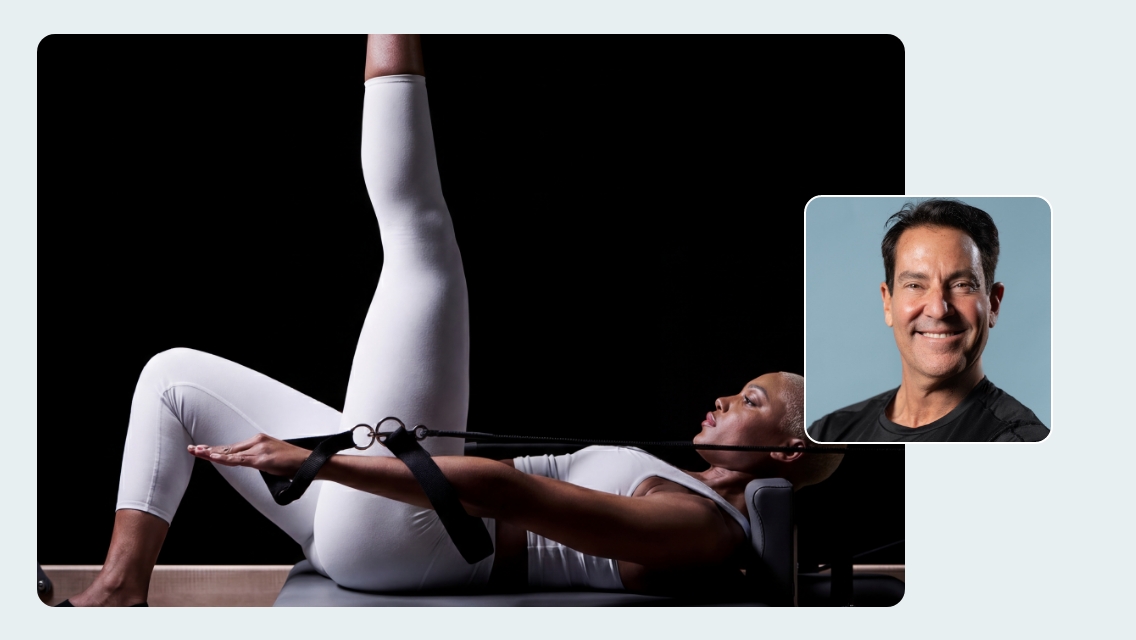
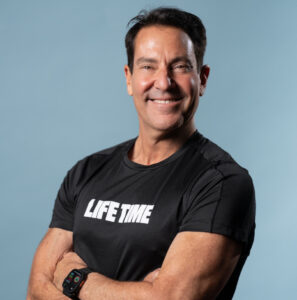
What makes the reformer so transformative? And why is it showing up everywhere from Pilates studios to strength floors? In this episode, Rob Glick, senior director of programming and innovation at Life Time and creator of CTR (Core Tone Reform), explains how the reformer is being used in new, creative ways and the wide-ranging benefits it offers exercisers.
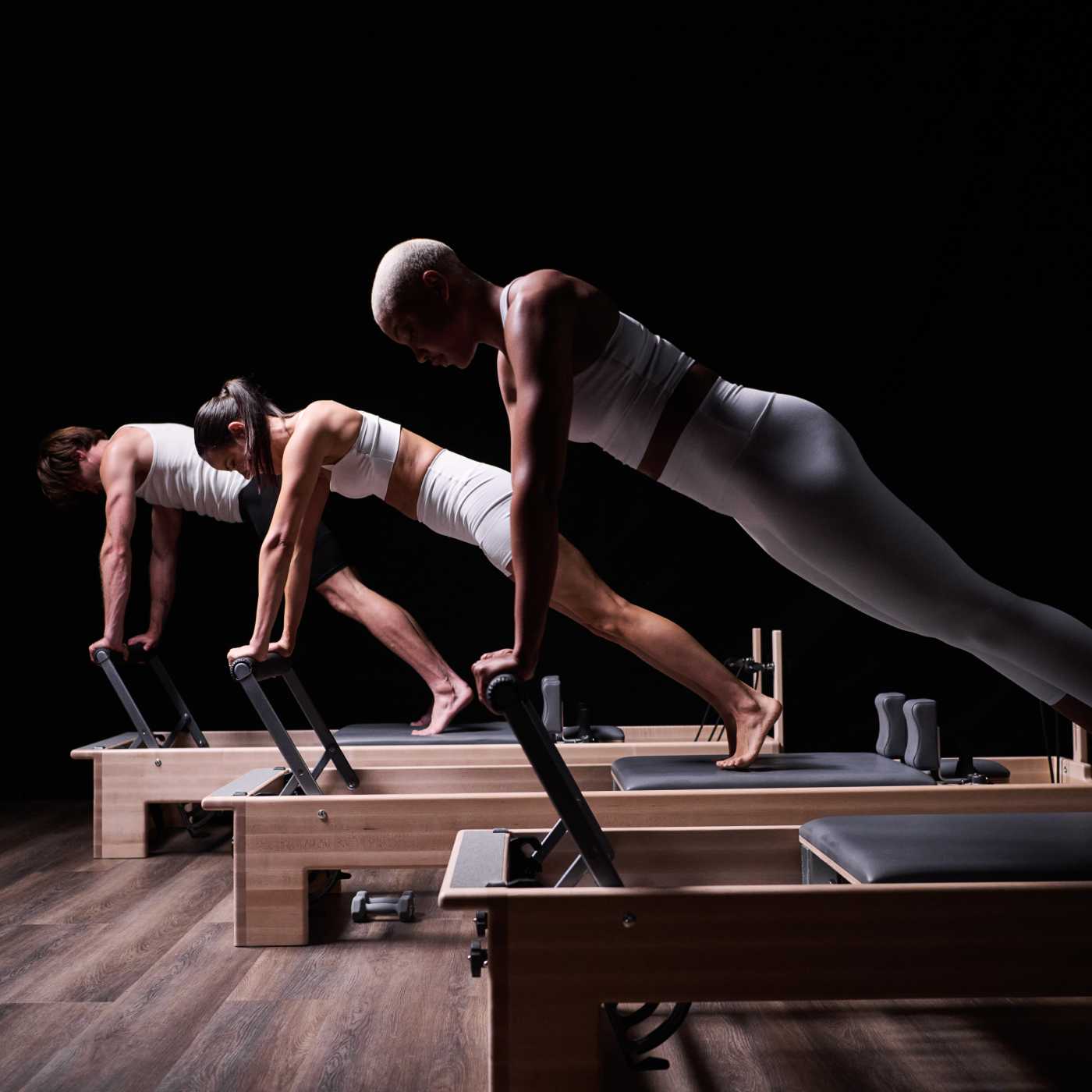
He also shares what to know about CTR, Life Time’s athletic reformer workout: a low-impact, high-intensity, total-body experience that pairs music-driven energy with intentional movement to activate deep stabilizing muscles, move the spine in every direction, and strengthen the mind-body connection.
Rob Glick is the senior director of programming and innovation at Life Time. He’s the creator of one of Life Time’s newest class formats, CTR, which stands for “Core Tone Reform,” and has created or co-created several other Life Time class favorites, including SHRED, SOL, EDG, and more.
In this episode, Glick speaks to the benefits of reformer-based workouts, as well as what to know about the CTR class format specifically. His insights include the following:
- The reformer wakes up the deep core. The moment you step onto the reformer’s moving platform, your body has to stabilize, requiring deep, intrinsic muscles to fire up.
- CTR complements heavy lifting. By training deep stabilizers as you do in CTR, you learn to hold proper spinal position, and then can carry that control into bigger lifts.
- On the reformer, you don’t have to intellectualize your movement — you just do it. This naturally strengthens your mind-body connection and sharpens your awareness of how your body moves through space.
- CTR delivers a high-intensity workout with low impact. You can shake, sweat, and feel genuinely challenged without pounding your joints.
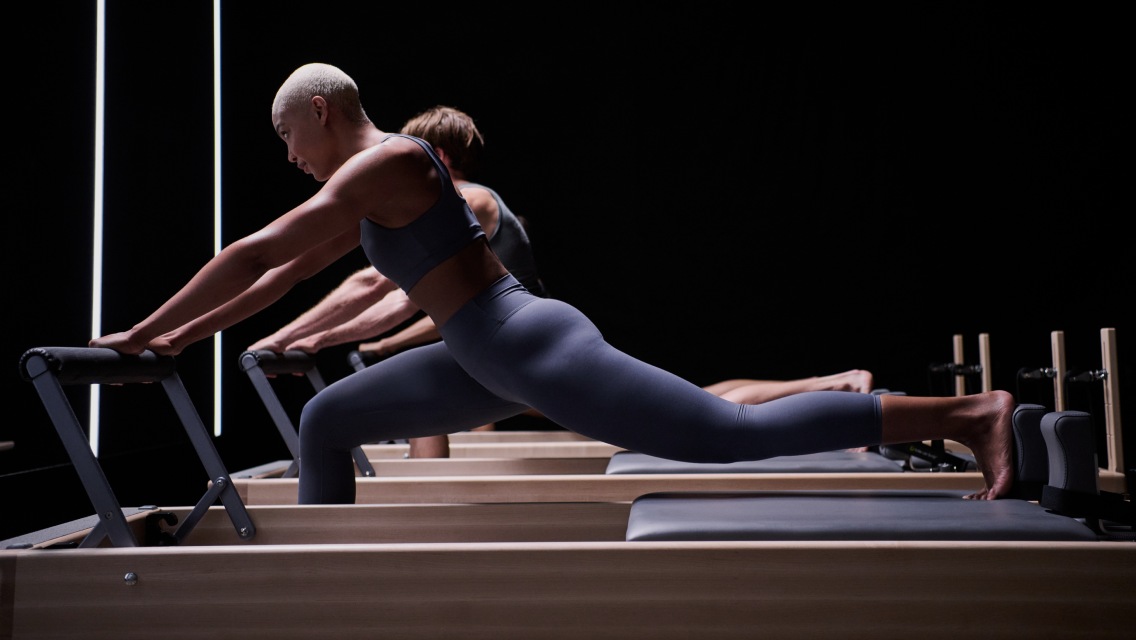
- The programming of CTR follows an intentional flow. Class starts with deep core activation and breathwork, then moves through a circle-like sequence that takes the spine through all six directions. The goal is a total-body workout every time.
- With a spring, resistance increases at the end range of motion, and the eccentric phase gives you an assisted stretch. That improves both strength and mobility at once, helping you feel longer and more decompressed afterward.
- Because modern life often keeps us in a flexed position, the extension work on the reformer opens you up. Many people stand taller, have improved posture, and feel lengthened following class.
- CTR is a class that’s designed to work for everyone, and how often you do it depends on your goals. It brings together core work, total-body training, and a fun, music-driven experience that keeps people coming back.
- Glick encourages giving CTR a try three times. The different spring options, body positions, and quick transitions can feel like a foreign language at first, but by your third class, it usually starts to click.
Transcript: Stronger, Taller, More Connected: The Case for Reformer Training
David Freeman
Welcome back to another episode of Life Time Talks. I’m David Freeman.
Jamie Martin
And I’m Jamie Martin.
David Freeman
And today we’re going to be talking about the power of the reformer. As you all know, the reformer is most well known as a staple in Pilates class, and many of our exercisers out there have experienced the machine’s transformative benefits. Now the reformer is being used in some new creative ways in different class formats, including a new one at Life Time that we’ll be talking about today.
We’ll be discussing the actual advantages of incorporating this type of movement into your routine on a regular basis. Who do we have as a special guest today, Jamie?
Jamie Martin
Yeah, we’re super excited to have Rob Glick with us. Rob is the Senior Director of Programming and Innovation at Life Time. He’s the creator of Life Time’s new class format, CTR, which stands for Core Tone Reform. And he’s also created or co-created a number of other Life Time class favorites, including SHRED, SOL, EDG, and more. With decades of experience in group fitness, small group training, and instructor development, Rob is known for blending community turnkey programs that help instructors shine.
Athletic performance and intentional coaching that creates accessible high energy class experiences. His work focuses on helping people find the class or program they love so they can move better, more often, and in smart and fulfilling ways. Rob, you have been with Life Time for a long time. How are you?
Rob Glick
So good, it’s so great to be with you both.
David Freeman
Well, it’s awesome, awesome. This isn’t your first time being on the podcast. So welcome back for sure. And like what Jamie alluded to, you’ve been in the industry for such a long time and you’ve seen so many different great things come and pass, and the innovation of your mindset and all the different great products that you help bring to life through Life Time. Let’s start from the basics: the reformer itself. It’s a piece of equipment that is the staple within CTR. So how would you break down this piece of equipment if someone has never used it before?
Rob Glick
Yeah, great question. You know, the wonderful thing about using the reformer is it instantaneously demands that you activate deep core. So I almost like, you know, you’re Jamie, are you in Minnesota? I think you’re in Minnesota, right? So imagine how your body responds when you know it’s an icy day outside. Black ice, potentially. You hear that on the news, you’re like, okay, I’m gonna become more rigid in how I step and walk out to my car because I’m concerned.
So all those deep stabilizers throughout your entire body just are activated. Well, that’s the neat thing that happens automatically when you get onto the reformer. You’ve got this moving platform underneath you. So from the ground up, you have to stabilize and activate all those little intrinsic muscles that we just sometimes forget about or we muscle past and muscle through.
Jamie Martin
Right. Well, so often when we think of like building strength, we think about lifting really heavy weights. Just before we started recording, we were talking about barbells, dumbbells, kettlebells with David in a side conversation. And you’re doing that in a CTR class. I mean, let’s talk about, you know, when you’re doing some of more of those intrinsic movements, how it’s building strength and the different ways that on the reformer, you know, you’re using your body in some unexpected ways. There’s some real benefits. Yeah.
Rob Glick
You know, it’s such a complementary activity to all of the things that we offer at Life Time, whether it’s Alpha Strength or, you know, heavy lifting. Because often what I’ll hear from people is they’ll start doing CTR and they’ll go, you know, I don’t know why, but when I did heavy deadlifts, my back used to bother me and it’s not bothering me anymore. And that’s the magic that we want to hear because ultimately what happens is people can just muscle through these heavy, heavy lifts without having those deep integral stabilizers work.
So when you think about the core working properly, it works as a deep stabilizer to hydraulically amplify, hydraulically if that’s a word, amplify all of your core musculature. So imagine like a hydraulic, imagine the distance between your vertebra. And when your core is working in its proper function, depending on the activity, but let’s say stabilization in this moment, it’s going to create the most intervertebral disc space possible for that activity.
So when they’re working right, you know, you go to do your deadlift and you have this big hip hinge, you want to maintain that beautiful spinal posture. You get on this reformer, even though the load’s not heavy, you’re learning how to do that. Then you go to your deadlift, and you’re like, okay, I already understand. My body already understands how to activate all the core properly, deep core, you know, your multifidus, your transverse, your pelvic floor, your diaphragm to hold you in proper position while you do that hip hinge. You know. So that just happens naturally. And because you’re working in this way and it’s improving your precision, your control, your alignment, it helps in all the other activities you do.
Jamie Martin
Yeah. Well, and one of the things you’re alluding to right now is like that awareness that you have. It’s kind of this idea of mindful movement, mind-body connection. And I know that’s one of the benefits we talk about. It’s like understanding your body in space and how we move it. So I mean, I’d love to hear you speak to that for a moment. I think that’s really important here.
Rob Glick
You know, the proprioceptive and kinesthetic awareness that we might talk about as fitness professionals, right? What I love about putting people on the reformer is we don’t have to intellectualize it. We can simplify it, say just do the movement and it happens. Because it has to happen or you’ll lose your balance. It has to happen because you notice, you’re like, my gosh. And so then you just automatically figure it out.
And then the neat thing about CTR is you figure it out in a really fun way. You’ve got great music playing, you’ve got great coaching, you’ve got this wonderful flow and fusion. And meanwhile, all these things are happening inside that, like I said, we don’t even have to talk about. That’s the magic of being on the reformer.
David Freeman
Yeah. Rob, I had the blessing to be able to be in your presence two times taking CTR from the creator himself. And what you just said stands out to me because you were making a little bit of the contrast of coming from the reformer and then going to a lift, a big lift like the deadlift. The thing that stood out to me is the stabilization principle. And it starts at a foundation of understanding stabilizers.
One of the things that I experience within the class is when you start to slow down, a lot of those intricacies of those little muscles start to fire off. It starts to really, really humble you in a way of understanding I normally do not train these little muscles, these little stabilizers. I’m using a lot of this momentum and explosive power. Therefore, I’m not really connecting all the pieces that I could be doing. This class really starts to expose that, or I would say elevate that. So can you break it down, because a lot of individuals who are listening, when we talk about this transformative mindset mentally, but how it also starts to bring awareness to mind and body connection.
Rob Glick
Yeah. I love first that you use that transformative, like the reformer is transformative. And you know, it’s almost like those situations that you don’t know how much benefit you’ve had from your fitness program, like we’re talking about black ice. You go and you do your workout on your reformer and you step on something that’s slippery and all of the muscles work properly. So you catch yourself. You don’t lose your balance and you just keep on going and you’re like, okay.
You can’t go, my gosh, I can attribute that to my training. I can attribute that to CTR. I can attribute that to working out on my reformer because you’re just going on with the rest of your day. But you can’t. And it’s what you’re talking about, David, right now is like we’re getting after these little stabilizing muscles that we can often just blow past. You get on the reformer, you slow down, you have this time under tension. This deeper mind-body connection.
And through that connectivity, you become more aware of where there’s it’s almost like a highlighter pen. You’re like, ooh, I didn’t notice that. And all of a sudden that’s being highlighted on my body. And that strength that enhances all of your movement quality just comes together.
Jamie Martin
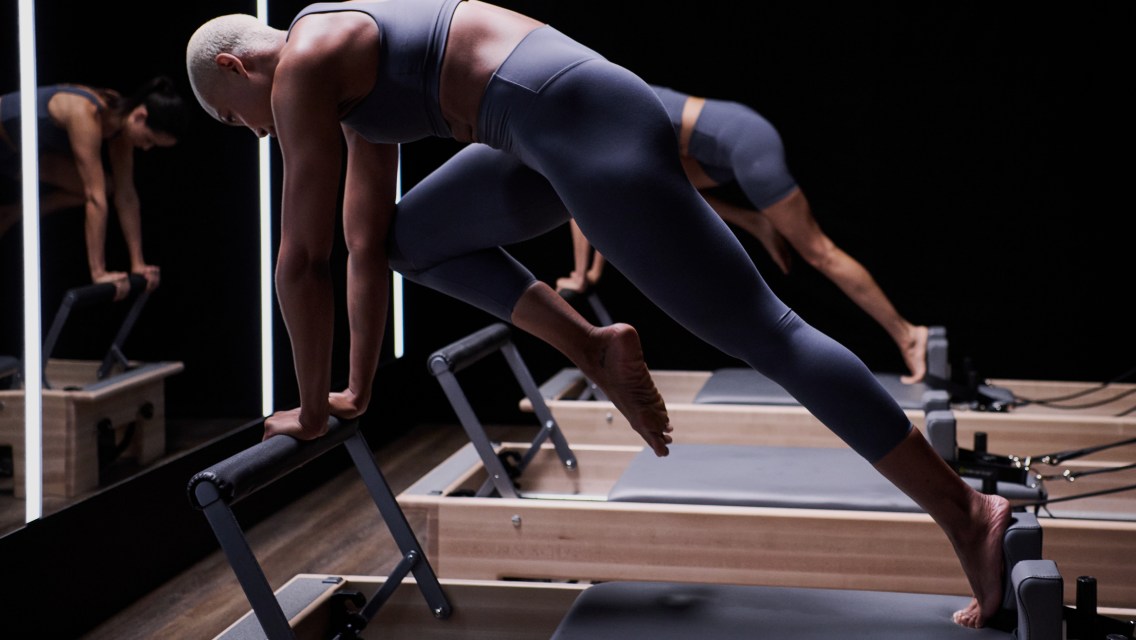
So I was in a CTR class yesterday. And one of the things that I absolutely loved about it, I was at the Highland Park in St. Paul, Minnesota location. We just started offering it in recent weeks. And what I loved about it is like you’re using this reformer in such creative ways. We were laying down at one point, we were sitting up, we were kneeling, we were standing, we moved in a full circle facing every part of the room. And it was just one of these really interesting experiences.
And I think I want to talk about how you programmed it because I think it’s really smart. I mean, there’s different bars or different tools that you’ll use with it. So tell us a little bit about how and why you program. ‘Cause I know in my class yesterday she’s like, on Monday, Wednesday, Fridays we kind of use this. On Tuesdays, Thursdays, we’re doing this other thing. What’s the thinking there?
Rob Glick
There’s a lot of thinking behind it. And again, for our members and anybody who takes a CTR, I just want them to have a great time. I want them to have joy of movement and like almost this pleasure. I hate to say it this way, but I’m going to: pleasure and the pain of the trembling, like the neurological system that we don’t even talk about enough. But you’re shaking, you’re trembling. Some of my favorite things that people say when they leave is I was shaking so much the reformer started to shake, or I didn’t know I could shake that much. And again, it’s all of these deep little muscles that just haven’t had the highlight, haven’t had the focus coming together with your nervous system, with your muscular system, with that connection, getting stronger.
So to the programming, we start off with deep core activation. You know, a good prep phase of any class prepares you for the thing to come. This is all about CTR center core, core out. Okay. And we can say the core of every joint. And we don’t talk about joint health enough, but the core of your ankle, the core of your knee, the core of your pelvis, the core of what we all think of as core, basically from that gluteal fold to your skull, you know, all of those being connected and prepped.
So we prepare the body just through some core activation, and we get there through breath work because you can’t not use deep core and breathe powerfully. You know, even sitting right here, if I ask you to imagine that you’re gonna blow birthday candles out on a cake that’s 20 feet in front of you, you have to get down in your deep core to get enough force to do that. So we warm up the deep core, we get the glutes active. So that kind of connects the chain, gets the link all set, and then we get into our core series one. You know, really get into our core work.
And then we just go from there almost like a beautiful dance, a beautiful like a mandala, a circle, whatever, like gets you connect with and we just do everything we can. Seamless transitions, control of the carriage the entire time, and then intentional intensity. How can we build on having you become a more powerful human through what we’re doing on the reformer? And we do it in this circle fashion. One, because it’s all muscular endurance. Like there’s these things and that’s what almost frustrates me and I’m sure the two of you too on podcasting: does Pilates or reformer training make you stronger? Is it strength training? And it’s the wrong question. Is it cardiovascular? Do you need to do cardio? It’s yes, you need to do cardio. Yes, you need to strength train. And yes, you need to do this kind of work because this kind of work enhances all of that other work.
So then we go, okay, let’s just finish this whole circle. We make sure we move the spine in all directions. Yes, we focus on core stabilization. Lateral flexion, axial extension, trunk flexion, trunk extension. We need to do more extension for our posture, for our body. We always think all this flexion, we’re flexed humans in our life now. So all this beautiful extension work that you can do on the reformer. And so again, move the spine in all six directions, maintain a lot of stability, that mind-body connection.
You know, we’ll have you do a chest fly facing sideways. You can call it seated if that’s more comfortable. High kneeling, if that’s more comfortable, the farther you go away from the surface, the more deep core. Yes, it’s a beautiful like trunk rotation. You get this wonderful transverse plane motion, but also the connection to what’s happening in your pelvic floor and in your pelvis to be able to rotate from the ribcage up right into a chest fly. Now can you stabilize, have no lateral flexion, and do this adductor of your humor so do this chest fly? The chest fly is almost secondary.
Don’t tell anybody it’s a secret. Shh, right? It’s really not about the chest fly. It’s about moving this lever and not having your body lean and being aware. Now, right into that with intentional lateral flexion. We’re right there. So we just take where you are and get as much as we can. Because, you know, people are blessing us with 45 minutes of their life. We don’t want to waste a second of it. So we just move in this beautiful flow and get the entire body, total body every time. And spine in all directions and have a super healthy, super fun experience. People honestly are so addicted to it because it’s fun and it works.
Jamie Martin
Absolutely.
Rob Glick
And it’s hard, right? Did you find it hard, Jamie? How was your experience?
Jamie Martin
Yeah. I mean, this was my second time. My first one I did in New York a few months ago. And it was so funny. Cause I mean, one of the things, I know one of our questions is like, this is cause like we call our reformer based workouts often low impact. But I found myself, to your point, shaking, sweating, but also feeling really empowered in my body, you know, like and even like those subtle, like doing the, you know, you said the arm thing where you’re moving, you know, that chest fly. The cueing is so important in there and I was like, oh, it’s about moving from my waist. And it just, I felt it all for the rest of yesterday in a really good way. So I loved it. I love the class. I’m already signed up for next week. So we’re ready to go.
Rob Glick
That’s amazing. David, what about you?
David Freeman
Yeah, I mean, within the experience, you already know firsthand, I gave you feedback real time. I think what, or I know what Jamie just said that stood out is the cueing. And the cueing comes from the coaching. And when you think of the naming convention, like I mean, if someone says, you know, why Alpha? You know, Alpha, the name itself can come off as like the dominance or ego, right? But the reality is the coaches teaching these athletes about ownership, showing up with intent, controlling yourself under pressure and like mastering the basics so you can lead with self first. So when it comes to CTR, one, let’s go ahead and break down what the acronym means, but what is it that the coaches should be bringing to life for the listeners to be like, ooh, I want that.
Rob Glick
Yeah, yeah. So back to CTR. One, if you look at it from a distance, like if it wasn’t a license plate by itself, you’d go center, right? Which is what this class is all about. Working from inside out, working from the center. Then C stands for core, but also control. Then the T for tone, that whole connection to, you know, not toning per se, but yeah, toning, but also the tone, the real deep connection to intentional intensity. And then enhance the reformer, enhance the experience, and then, like you said, David, be transformational on and off the piece of equipment in your life for all the things that you want to do. So that’s what it stands for.
It should always feel like an intense athletic workout on the reformer. We use the music to set tempo. There’s a lot of time under tension, but we use all tempos because we want to hit all muscle fiber types. Plus, we want to prepare the body for, you know, that slip, like we keep talking about, happens quick. It’s reflexive. We want you to be reflexively strong, but we also want you to be deeply strong with that long time under tension and learn control. So we start slow, then we add a variety of tempos.
Then when you’re in that experience, it’s not an easy class to teach. People get fooled by the experience. But you’ve got to keep people moving together. You got to keep them safe on the reformer. You’ve got to pre-cue, get them into the position, get them out of the position, not waste any time, have it be high energy, dynamic, and all of those things. So from an instructor standpoint, there’s a lot going on. It’s like, you know, literally a full performance. And from the participant, it should be just seamless, clean, and feel good. And like you said, Jamie, in the moment you’re trembling like a wet poodle or chihuahua or whatever. And after that, you just feel longer, you feel taller, you feel stronger, more connected and ready to take on the day.
Jamie Martin
Well, I will say one of the things that I noticed almost immediately after taking any type of class like this on a reformer is like that postural part of it. Like I feel like I stand up taller for the rest of the day, which to your point, like we’re so often in this like flexed mode in our modern world, but it does feel like it just opens you up and you feel lengthened throughout the day, right? Like it just feels so good to move in my body afterwards. I think it’s that mobility piece that I know we haven’t talked in detail about yet, but it does, like with all these other types of movements we have, it creates this space for mobility to move our bodies more freely. At least that’s how I’ve felt after the classes I’ve taken.
Rob Glick
No, you’re spot on because we don’t, and all types of training, you know, again, I often say I’m agnostic when it comes to training. I just care people train or move, you know. And find the thing that moves you to move. Find the thing that inspires you to get off your couch and get outside or get into Life Time or any place and get active. That’s what we’re all about. How do I get people? And that’s why I’ve done all these programs in my career. It’s all about helping people find the thing that they get just lit up about getting up and going and doing. And they pen it first thing in their calendar.
So as it comes to CTR specifically, or training on a reformer, or using springs as a load, think of what’s happening. You’re strengthening the hardest part of the strength curve is at the end range of motion, right? Different than like a plate with a barbell or something like that. It’s at 90 degrees. So, you know, if I’m doing a bicep curl hypothetically, here is where that force is maybe greatest, greatest at gravity plus whatever load I have, right? Now I’ve got the spring. As the spring gets more tension, it creates more resistance or assistance, depending on how I’m using it. So now I move to that same bicep curl: harder, harder, harder, harder, harder, harder, hardest. At the end point of range of motion.
Now, as I go through the eccentric phase, it’s stretching me. I control that, I get stretched at the far end point of my range of motion. And it’s an assisted stretch. So it’s assisting through the true definition of mobility, my flexibility and strength interrelated. And that’s why it does that. You know, you’re getting this almost decompression in so many movement patterns, elongation, and the strength curve is in many movements hardest at the end point of range of motion instead of the middle or in a different part of that range. All wonderful, right?
All of these kinds of training are great. Where do I need it? You know, if I’m on the front line, let’s say, you know, we’re gonna have the Super Bowl later on, right? I’m here and I gotta push somebody. I need my strength here for my legs, for my core, then and range through that force, right? So it’s, you know, again, just a wonderful way to have a different strength curve. And to your point, improve mobility, dynamic flexibility by the nature of how we’re training.
Jamie Martin
Mm-hmm.
Rob Glick
Yeah.
David Freeman
Rob, let’s throw it at you. Okay. We got seven days within the week. When it comes to CTR being planted into someone’s routine, their exercise routine, I want to know what should be that split. And I know it’s not a one size fits all. This person does four days a week, but I want to know what would you say, how it fits within the exercise routine. And then is there anyone that it probably is going to be a little bit more biased for versus not?
Rob Glick
Yeah, you know, so I’m gonna start with the back half of your question. It is truly for everybody. And the people, you know, it’s like I remember back in my early yoga days, you know, you had like these shirts and it feels so silly, right? But you know, real men do yoga, right? Like it’s so silly, right? And it’s the same thing here. It’s like just understanding how this enhances the quality of your life and the missing links, right? We all say we’re only as strong as our weakest link, and we’re only as strong as the weakest link in our kinetic chain, right? And so this is all that deep kinetic chain control.
So it depends on what my focus is. So let’s say my focus is strength training and prepping for some kind of outdoor athletic event, call it a Hyrox, call it whatever you want, right? Call it LT Games, whatever I’m preparing for. Maybe it fits two days a week in my calendar, you know? It’s something that helps reinforce deep stabilization at all of my joints and working from the core out to enhance all of those experiences and decrease injury risk and improve performance.
Let’s say I’m dealing with any kind of compression injuries, right? Spinal compression, joint compression, then this might be the way you train for a while. Maybe you’re doing this five days a week because it’s the healthiest, low intensity, but still getting some great muscular endurance training. So it’s the right thing for you right now. So I would say again, it depends on your goals, your limitations, what you’re training for, anywhere from a complement to what you’re doing to the primary thing that you’re doing, especially as it relates to lower intensity, I’m sorry, lower impact.
Still maintaining intensity. So low impact, high intensity. And you know, again, if you’re an athlete that’s doing tons of plyometrics, tons of impact, you do need that thing where can I then come one or two days a week? You know, maybe it’s in the pool, doing pool training, maybe it’s on a reformer where you can still maintain the intensity that you need in your week, but not the impact.
Jamie Martin
So we alluded at the top of the episode, Rob, that reformer-based workouts are a growing trend. You know, like why do you think we have seen this grow so much in the past couple of years? It just feels like everywhere you look, there’s a reformer something or another. Like, what is that about? Why all of a sudden? Even though it’s probably not all of a sudden, really. Yeah.
Rob Glick
You know, I think one, social media, right? Like I think again, people connect to what they’re seeing. But that highlights like what I love that’s happening in the podcast world, if you will, in the influencer world, is in my career, people have never understood the importance of strength training like they do right now. In the earlier days of my career, especially women would be like, I don’t want to strength train. I don’t want to get big. I don’t hear that anymore. And that’s the magic of what you two are doing and what’s happening out there in the podcast world. And people are getting educated and understanding that there is no question you have to strength train. It’s not a choice. It’s a requirement to longevity. Everybody’s so connected to longevity. It is your fountain of youth, a big part of it, right? Doesn’t mean you shouldn’t be doing your cardiovascular training.
So back to why is this so popular? It’s all of the things people want. It’s that great core work. And I mean, you cannot ignore by the end of class, you know, you feel like you have trained your core like never before. You know, just like never. You’re like, my gosh, I didn’t even realize that I had those muscles, and I feel them in a way that I never imagined. And everything else, right? Like inner thighs, outer thighs. It’s all just comes together. And you feel the intensity of it in the moment. And then afterward you feel great. And so you see the results.
And it’s so funny because people always want to go, well, are you gonna get results? Because you can’t measure on your watch that you burnt a lot of calories. But because of this training and integration of what you do, you’ll see your body shift. And a perfect example is my son Tyler. He happens to be 13 now. What he likes to be on his birthday, my crazy son, he likes to do a Hyrox event, but you can’t. He’s not old enough. So we do it inside of Life Time. All right. So I’ve been doing that with him for the last couple of years. And the only thing that’s really changed in my life is CTR. Like I’m doing CTR all the time.
Plus, I still get in a, I did a fight conditioning class yesterday. I get into Alpha Con and Alpha and Hybrid and GTX whenever I can. I do a ton of yoga. You know, yoga is my love language as well. The only new thing was CTR. And I never performed better. Got a year older, not getting any younger either. Got a year older, performed much better this year in Hyrox because of CTR. I know it. Because like that internal strength that I had going in. So I think that’s why it’s so popular. People just do it and they love it, afterward they feel amazing.
Jamie Martin
Yep.
David Freeman
Well Rob, we hit on a good amount of things as it relates to CTR and the launching of CTR within Life Time, exclusively at Life Time. Is there anything we missed before we get into the mic drop moment with you?
Rob Glick
You know, I just think that people understanding that if, to your question earlier, if they’ve seen on social media all these different types of people doing workouts on a reformer and they might think it’s not for them, they’ve gotta go try it. They’ve gotta experience it and they’ve gotta do it three times. Cause at first it’s like a foreign language and people are going, add the red spring and the blue spring, and you’re going like, was that the polka dot spring or the like, and which one’s the red and which one’s the blue? And I forget which one’s harder. And is it supposed to make it harder, easier? Like, you know, all this stuff going on. And it’s quick in CTR, right?
Then you start to speak the spring language. It takes about three times. Then there’s so much nuance. Where do I position my body on the reformer? Do I go higher, lower? Do I sit down? Do I, you know, all those different things. So after about the third time, you start to feel like, okay, I’m at home in this class. Now you can dig in deeper. So I’d say give it three times and then decide how you want to integrate it into your training regime. Because you will love it. Yeah, you will love it after three times.
David Freeman
Love that. Three times. Good things coming three. Three times is a charm, they say, right? That’s that. All right. You spent decades shaping items within the fitness industry. And now you are leading the way of CTR and its Pilates inspired class. I would ask the question: what did you have to unlearn to be able to create something like this that’s so new?
Rob Glick
Thank you for asking that question. I think the best lesson that I’ve learned through my career is I know nothing. And I approach everything like I know nothing, you know, and never, you know, just, I know right now it’s trendy to say, but just that real growth mindset, like just going into things and going, how can I really approach this without thinking I know? And what can I learn? And that’s really like how I look at all these experiences. Like CTR is going to continue to evolve. We’re just getting started because every day we approach it with how can we make this better? And that’s all of the things that I try to do.
And so for me it’s just about that. It’s like, you know, when I look back when I first started in the fitness industry, there’s so many things that we do now and we know are critical for the human body that used to have a big, like my first fitness test that I took, and I have my degree in exercise science, and it didn’t make sense. And you’re like trying to make sense of it. They’re like, don’t hip hinge unsupported. Don’t squat below 90 degrees of knee bend. And you’re, hmm. Okay, like that’s what I have to say to answer the test and get a right answer. But why?
And that’s what it’s always been. But why? And now, of course, like we realize how silly those things were and how limiting those beliefs were. So that’s what I’ll say to you today. I’ll say, like, anything that I tell you today, it’s only from what I know till now, but it will change tomorrow. And always approaching it like that, like, hey, I’m just sharing with you the best information that I know on this day. But it’s gonna change. And how it changes will change how we train the body and how we nourish our body and how we train our mind. And you just have to stay open to that, never thinking you know, because I don’t know.
David Freeman
You have to know something because you’ve reinvented in a sense, it’s still Rob, but you’ve evolved. And from that experience, that is something. So you know something through experience. I like the approach as far as I approach it as if I know nothing. So you’re open to learning still, if I’m hearing you correct. Is that what you’re saying?
Rob Glick
Yeah, just totally open and approaching it like that. Like stand like a blank slate, you know, and like just start to fill it in and then see where we can take it and how we can inspire more people to just love this thing. Like literally we launched at one of our clubs in Vernon Hills, it’s in Illinois, three weeks ago. They have fifty-five sold out classes. To be able to have that kind of impact.
All I think about is how many lives are positively impacted by the experience? How many instructors can do more of what they love to do and connect with more lives? And then how many of our members can have this experience and approach their day happier, healthier, feeling good. And so that’s, you know, that’s my quest, right? Like how can I figure out new ways to get more people involved and engaged in a healthy and active lifestyle.
David Freeman
That’s awesome. Yeah.
Jamie Martin
That too. It’s amazing. I was just gonna say, like, there’s this whole idea out there of like sometimes we have to reparent ourselves and like unlearn things that we learned as kids. And I think what you’re saying is like this relearning and this willingness to relearn over and over and over again, just as new ideas and innovations happen. And I think that’s really inspiring to say like there’s never an endpoint because we can continue to learn and grow from there. So.
Rob Glick
You know, people are unfortunately intimidated by AI, hypothetically, right? And I always say, like, you know, it’s the same thing every, you know, I’m sure that the horse and buggy creators were really intimidated by the car and the wheel, right? Like we can’t be in that fear mindset. We have to be in this mindset of like abundance and moving forward always. And so for me, I’m going, how can we, especially like, there is no artificial intelligence that’s gonna make like the amount of inspiration David creates every time he goes and touches people’s legs.
You know, now that artificial intelligence can help us quickly distill information to do what we do better. But nobody’s replacing you, Jamie. Nobody’s replacing David, nobody’s replacing me because we bring that information to life. It’s just helping us get the information faster. And that’s what I love. And so it’s kind of like, don’t be afraid, don’t be stuck.
So many people will say to me, you know, like Warrior Sculpt’s not yoga. I’m like, okay. You know, reformer training is not strength training. Okay. Like, okay. Like, so what? Like, what is it? Warrior Sculpt is wonderful training. It’s wonderful mobility and muscular endurance training and inspires people. Like, let’s focus on what it is and what it can be for people. That’s where I feel like we get to go with all of this stuff.
Jamie Martin
Well, and you said it earlier, what moves you to move? So if that thing gets you to move and it gets you to help work on like that health span within your lifespan and you can have more joy, intentional joy. I mean, I think that’s the beauty of so many of the classes you’ve created. It’s like, yes, there’s intensity. There’s that intentional intensity you talked about. There’s also intentional joy because you want people to keep coming back. You want them to do something they love. So I think that’s the beauty of CTR and so many of the other formats. It’s why you see growing communities and people that keep showing up over and over again.
Rob Glick
Yeah, I mean, I believe the last word you said. We are in the community business, right? Like, I think the pandemic was a good hit in the head for all of us. That, like, people, we thrive as a community. We do our best work as a community and as a collective. And so us bringing people together, and that’s the one thing that, when you said about programming and CTR, I’m really also trying to do intentionally. There’s so much underneath the cover that it would take us so long to talk about, that I don’t want the participant to actually have to look under the cover to experience this.
But it would be so easy to walk into a room, lie down on a reformer, and be in a group of people working out individually. But the reason why we work together to music is it’s a collective force. So yes, I’m using the music to set tempo. Yes, I’m using the music for enhancing energy. And because it’s the best legal performance enhancement drug that exists today, right? But also to cultivate community.
When we’re all moving together, I don’t know your name, but I feel this energetic bond between us. And that’s happening as well, intentionally, very intentional, to bring people together so that when they leave, they just feel more connected, you know, and treat each other nicer. I hope.
Jamie Martin
Yep. Well, and that’s a great way to end it because we all need a little bit more of that in this day and age. So, well, Rob, we could talk to you all day about this and so many of the other amazing things you’ve created at Life Time. But if people want to learn more about CTR, we have lots of information on it at experiencelife.lifetime.life on the Life Time website as well. And if you want to follow Rob, he’s on Instagram. He’s at robglick1. Anywhere else we should point them, Rob, so they can connect with you?
Rob Glick
Yeah, just DM me on Instagram, connect with me through there. That’s perfect. And I’d love to be in touch with you. I wanna hear about your classes, your experiences, what you love, what opportunities you think we have so we can be better.
Jamie Martin
Awesome. Thank you so much, Rob. Thanks for being with us.
Rob Glick
Appreciate you. David, Jamie, thank you so much.
More like this


We’d Love to Hear From You
Have thoughts you’d like to share or topic ideas for future episodes? Email us at lttalks@lt.life.
The information in this podcast is intended to provide broad understanding and knowledge of healthcare topics. This information is for educational purposes only and should not be considered complete and should not be used in place of advice from your physician or healthcare provider. We recommend you consult your physician or healthcare professional before beginning or altering your personal exercise, diet or supplementation program.
Life Time provides administrative, non-clinical support to MIORA as well as services and amenities related to general wellness and fitness; Life Time does not provide medical advice, diagnosis, treatment or care.
Advertisement