


On Strength, Cardio, and Becoming a Well-Rounded Athlete: All About HYBRID XT at Life Time With Juan Herrera-Perla
Why combine strength and cardio into one workout? Learn how hybrid training builds real-world capacity, why this approach is resonating with so many people right now, and how Life Time’s newest class format, HYBRID XT, brings it all together.



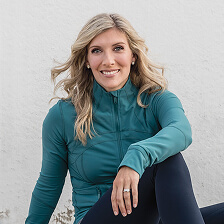


Why combine strength and cardio into one workout? In this episode, hybrid athlete Juan Herrera-Perla is breaking down the thinking behind one of Life Time’s newest class formats, HYBRID XT. He shares how hybrid training builds real-world capacity and why this way of moving is clicking for so many people right now.
Juan Herrera-Perla is a HYBRID XT brand specialist at Life Time and a coach and instructor based at Life Time Plano in Texas. He is a competitive hybrid athlete.
In this episode, Herrera-Perla breaks down what to know about HYBRID XT, a new signature group training format at Life Time that fuses strength and cardio into one demanding session. His insights include the following:
- Instead of focusing on a single discipline, hybrid training builds strength, endurance, power, conditioning, and mental toughness at once. As Herrera-Perla puts it: “It really means refusing to just be one-dimensional.” It helps you build capacity that holds up in the real world.
- HYBRID XT doesn’t replace any of the other signature group training formats offered at Life Time — it rounds them out. Alpha focuses on strength and conditioning; GTX splits the work between cardio and strength; Ultra Fit emphasizes sprinting. HYBRID XT ties those threads together, creating a format that trains all systems.
- You can leverage the other signature formats to improve in areas that need focus. For example, if strength is a gap for you, add in Alpha classes along with HYBRID XT. If cardiovascular endurance is holding you back, layer in GTX or Ultra Fit. It’s a simple way to build a complete workout portfolio.
- The weekly HYBRID XT schedule is built with purpose:
- Monday, Wednesday, and Friday: zone 2 and zone 3 work for sustained, repeatable output.
- Tuesday and Thursday: zone 4 threshold training, edging on all-out effort.
- Saturday: zone 4 “game day” with long, challenging workouts.
- Sunday: precision movement, breaking down mechanics.
- “Compromised running” tests your control under fatigue. After a strength block like wall balls or reverse lunges, for example, can you drop back into your run and hold the same momentum while managing your heart rate? “Compromised strength” flips the challenge: Can you execute clean strength movements immediately after an intense cardio effort? Both concepts train you to perform, and this is how hybrid athletes separate themselves.
- High performance isn’t defined only by what happens in your workouts. An athlete’s focus deserves an even split across training, nutrition, and recovery. If you neglect one-third or two-thirds, the other one or two can’t carry you to your goals.
- Everyone hits a wall mentally or physically, but you don’t want to grind through it mindlessly. Aim to find the root cause — whether that’s your breathing, your movement quality, or mental overload — then adjust and address it so you can keep training with quality. Herrera-Perla and his coaches treat scaling as a tool, not a setback.
- The hard days are the point. When things are challenging and when things get tough, that’s when you unveil the person you’re becoming.
Transcript: On Strength, Cardio, and Becoming a Well-Rounded Athlete: All About HYBRID XT at Life Time With Juan Herrera-Perla
Jamie Martin
Welcome to Life Time Talks. I’m Jamie Martin.
David Freeman
And I’m David Freeman.
Jamie Martin
And in this episode, we are talking about what it looks like to combine strength and cardio into one workout. We’re breaking down the thinking behind one of Life Time’s newest class formats, Hybrid XT, and we’ll be talking about how hybrid training builds real-world capacity and why this type of movement is clicking for so many people right now.
David, I know you’re taking some of these classes, right?
David Freeman
Yes, yes. I’m not only taking some of the classes. I had the opportunity to witness the creator of this class over the past three years, and I’m super excited to welcome in our guest, Juan Herrera-Perla. We’ve been practicing all this morning. I wanted to make sure I got it right. So I was in class saying, “Hey, let’s practice it a few times.”
But Juan is the creator of HYBRID XT. He’s a brand specialist at Life Time. He’s a coach, and he’s based out of Life Time in Plano as well as Frisco. He’s traveling all over the US and Canada to get people up to date with this hybrid style of training. He’s a hybrid athlete himself. He competes in it. He’s done so many different competitions.
So it’s a blessing and honor to be able to have you on today, Juan.
Juan Herrera-Perla
No, guys, I appreciate it. Jamie, David, I appreciate you guys. And David, well done on that. I mean, I would have gone in expecting a mistake, and if I didn’t know who you were, I could have sworn you were someone from Puerto Rico or the Dominican Republic.
David Freeman
Hey, I was practicing on the treadmill while kind of somewhat out of breath. So I figured if I can do it under fatigue while I have my breath under control, it should be easy. So it worked all out, huh?
Jamie Martin
That’s awesome. Well, Juan, we’re excited to have you.
Okay, before we jump into the first question, I do have a question for you. What’s the most recent competition you’ve done? What’s something that you’ve been doing or working toward yourself?
Juan Herrera-Perla
Not to go too much into detail into the future, I do have some competitions in store right now that I don’t really like to speak about. But when it comes to my past, at least, more recently we went to Sweden to compete in HYROX Worlds.
I had two races that I competed in. I did one with one of my partners. He and I raced in Men’s Doubles Pro. And then my significant other, my girlfriend Vanessa, and I raced mixed doubles.
Then, slightly into the future, in November I have a special guest that I’ll be racing with. He’s actually on this podcast right now — David himself.
David Freeman
Yeah.
Jamie Martin
I didn’t know you guys were doing a race together, an event together. That’s exciting.
David Freeman
Yeah, we figure the best of both worlds — a little bit of hybrid action, a little bit of alpha — coming together, letting people know how we can coexist and have fun in this space.
And that kind of goes into what I want to ask. For our listeners to be able to understand hybrid, we hear this word a lot. We hear it so much. And by definition, we just talked about the best of both worlds.
But when it comes to HYBRID XT and the vision, the creation of what you have done when putting this together, what is HYBRID XT to you, and what do you want the listeners to know it as?
Juan Herrera-Perla
It’s a very good question, David. One thing that I like to think about or mention a lot is that hybrid fitness, so to speak, is becoming very popular. Everybody’s talking about hybrid this, hybrid that.
I think it’s funny because I think it’s a layer on top of what cross-training is. I think it just sounds sexier. Hybrid just sounds sexier. It’s a sexier name, and it’s catching everyone’s attention.
And it really just means refusing to be one-dimensional.
Truthfully, I think a lot of these members within Life Time and outside of Life Time are just runners, chest lifters, maybe just a CrossFit athlete or a strength athlete. And now everyone just wants to, quote unquote, not necessarily master everything, but be really good at multiple things.
So within HYBRID XT, you have strength, endurance, power, conditioning, and mental toughness all at the same time. So I think it meshes well. It does really well when it comes to what our members or the market is asking for, and the program caters to that market, so to speak.
So it’s more than just one-dimensional. You see a little bit of everything within HYBRID XT.
Jamie Martin
Yeah, that makes sense. I mean, speaking of its growing popularity, we’ve seen a lot of this. It kind of started with CrossFit. We’ve seen it evolve over the years, and it’s just been building momentum.
Why do you think right now is the right time for Life Time to have a more formal class like HYBRID XT? Why is now the time to be launching this?
Juan Herrera-Perla
Wow, many reasons. I think it’s the demand that we’re seeing. We aren’t seeing members asking, “How much can I bench?” or “How much weight can I lose?” or “How fast can I…” They’re asking, “How can I be better overall as an athlete?”
And we’re hearing it more and more. Of course, the more you speak, the more we listen, the more we hear, and we see what’s popular and what our members are asking for and what their needs are.
Within Life Time, we see these athletes already. We see athletes, whether they’re in our classes or just on the fitness floor, doing functional movements that are in competitions — whether that’s a sled push or multiple deadlifts into a SkiErg, into a row. You see our athletes within Life Time already doing it.
I just think it’s the missing piece to our pie. It’s our missing piece to the ecosystem, if you will.
Alpha is a phenomenal program when it comes to strength. GTX is a great program when it comes to a mesh of 50-50. Even Alpha Conditioning, your bootcamp-style class, and UltraFit, the sprint class with core stabilization.
Now, when you put everything all together, I don’t want to say you’re taking the best of these programs and putting them together, because that’s not what it is. But when you put HYBRID XT in place, it’s for those athletes that are doing these exercises or movements on the fitness floor, or athletes in our programs already ready for something more competitive within our walls or outside of our four walls.
David Freeman
Yeah, I like how you framed it up. I almost want to look at each program, if you will, as having its own identity and then understanding what the strengths are from each one of those programs.
So if you look at the Alpha program or you look at GTX or if you look at Ultra Fit, almost to give our listeners a little bit of a visual, think of fruits, right? And everybody has maybe the fruit that they’re drawn to, whether it’s a banana, pineapple, orange, whatever it may be.
But at the end of the day, you need more than just one fruit because each one of them has some type of benefit.
And within the way you describe that, I do want our listeners to understand the benefits of what you would get within hybrid, and then also how the other formats help complement it. So it’s not a one-size-fits-all, as you kind of just put it, but how we can lean into the strong formats.
And then for those who want to get into competitions, who want to have the mindset around being competitive and understand the standards of movement, then that’s where you want to enter into hybrid.
So can you walk us down that path a little bit, Juan, so people understand the value of each fruit that I just described?
Juan Herrera-Perla
Yeah, absolutely. I think you mentioned everything but my favorite fruit, which is okay, David. You threw in pineapple, apple, or you said banana — delicious fruit.
I think HYBRID XT, if you will, you could think of it as like a mango. And now you’re just like, “What is a mango besides it being a tropical fruit?” Well, it’s packed with a lot of vitamin C, which helps boost your immunity, your skin health — beautiful skin, you get a good glow when you sweat — and then overall great wellness.
And that’s how I like to think of HYBRID XT, truthfully.
When you think of Alpha, your banana, right? Your potassium is what’s needed. It’s great. Your strength is 100% there. And I think that’s where the fitness world leads to as overall well-being and health. The older we get, the more we need to lift to be healthier.
When you think of GTX or your cardio-based classes like UltraFit, it’s good for your heart, overall well-being, and your cardiovascular system.
And then when you think of HYBRID XT, if you will, what I mentioned when it comes to your mango, it’s meshing it all together. All those classes, I don’t want to say they compete against each other because they complement themselves really, really well.
If an athlete comes to HYBRID XT and they’re looking for a lot of strength, my first recommendation will be to build a schedule plan of, “Hey, this is how many classes you need to take when it comes to Alpha Strength,” whether it’s one or two times a week.
If an athlete’s missing a little bit of the running and they have their strength nailed down, I’m going to recommend a little bit more of GTX and/or Ultra Fit. Get their cardiovascular system up. Get them running.
When it comes to HYBRID XT, now that you have all those components, as a coach I will help you develop what is your compromised running, what is your compromised strength — so a little bit of both put together into that one section, into that one segment, if you will.
Jamie Martin
I’m going to just ask a question to somebody who doesn’t know what you necessarily mean by compromised strength or cardio. Let’s define that so people know exactly what we mean. I’m assuming it means that you’re doing some work, and so it becomes a little bit more challenging over time.
Juan Herrera-Perla
Yeah, just to put it simply, it’s just fatigue. And I don’t really like using that word fatigue because it has a very negative connotation. But if you really use it correctly, it’s this:
When you run a certain amount of time or a certain amount of distance, then you go into a component in your competition, whether it’s a wall ball or reverse lunge. Now can you go back into the run still keeping that same momentum? That’s your compromised running.
But also, at the same time, keeping track of your heart rate, making sure you don’t overexert yourself, making sure you don’t overhurt yourself when it comes to that.
And then when it comes to the compromised strength piece, you do all that strength — all that pushups, overhead press, deadlifts — and you’re going into whether it’s a row or a ski, that cardio portion. Now when you come back, what happens? What do you feel? What’s going on with the strength? And that’s your compromised strength portion.
So something under fatigue, if you will. You’re training that muscle fiber or that cardiovascular system.
Jamie Martin
Under that fatigue a little bit. Okay. Thank you, because I think that’s a really important thing for people to understand and what that looks like.
So with that in mind, walk us through what an actual HYBRID XT class is like and what somebody could expect if they were to come to your class. I’m a first-timer coming to HYBRID XT. What can I expect to happen in that hour or so that I’m with you?
Juan Herrera-Perla
When someone walks into our classrooms, just like any other class, I think personally when it comes to GTX or Alpha Strength, the music is going. I mean, you have some good music, whether it’s Michael Jackson —
David Freeman
Yeah, you know it. You already know it.
Juan Herrera-Perla
— Bad Bunny, whatever it is, whatever the vibe is or the ambiance of the coach, it’s good music.
From there, the structure will be a good warm-up, an extended warm-up to get athletes ready to go for class. And then it depends on the certain day, whether it’s Monday, Wednesday, Friday, which will be a zone two, zone three day. Our focus is zone training or sustainability, sustained output. You will see some strength in there built with some zone two, zone three cardio base.
You have your Tuesdays, Thursdays, and Saturdays, which will be a little bit more of your zone four days. Tuesdays and Thursdays, you’ll be able to see more threshold training. And I think threshold is a great word there because everyone thinks it’s all-out effort. Everyone thinks it’s go, go, go. But it’s really just flirting with that all-out effort. It’s slightly below that all-out.
And you’re going to see leaderboard workouts where you’re able to compete against not just yourself and your members within class, but also across the nation as well. Those country clubs that have HYBRID XT, you’re able to compete within those as well.
So those days you’re going to see a little bit more of getting your heart rate up, intensity up, zone four intensity. And then your Saturdays, you’re going to see more of like your game day where you’re going to be all-out effort. You’re going to be working on long workouts, challenging workouts. That’s what you’ll see mainly on the week.
And then you have your Sunday, which is our precision movement day, where we’re going to be able to break down certain movements. Whether it’s a deadlift, you’re going to be able to break down the proper mechanics of a deadlift. Whether it’s rowing, what are strokes per minute, all those little details. It all depends on the day, if you will.
Jamie Martin
And how does recovery fit in with all of that? Because I know that’s a huge thing we’re talking about at Life Time all the time. Where are we fitting in recovery? How is that incorporated?
Juan Herrera-Perla
Yeah, no, that’s a very good question. Very important.
I think when you think of high-performing athletes, they say training needs to be 33%, and then you have your nutrition needs to be 33%. That recovery, that rest, is that final piece. That 33.3% is what that recovery is.
And when it comes to HYBRID XT, something that we recommend our athletes is making sure you spend the majority of your time in zone two and not going above that throughout the week, and making sure you take a day or two of rest. I mean, that’s important. You pick and choose the day that works best for you, but making sure that you’re recovering.
And what that recovery looks like is you’re taking a yoga class. You’re going into our dynamic stretch team. What I mentioned earlier — a missing piece to our ecosystem — now you insert that going into our other programs as well.
Jamie Martin
Mm-hmm. Awesome. Thank you.
David Freeman
Jamie, just because you’re saying you’re new to it, we definitely want you to get into some HYBRID XT ASAP. All right, that’s going to be step one.
I want to talk about intensity, all right? And the reason why I want to talk about intensity is because it’s so subjective in so many different ways.
Juan kind of already touched on it, how we have certain days out of the week — the Mondays, Wednesdays, and Fridays — that’s focused on that zone two, three, Sunday as well. And you got Tuesday, Thursday, Saturdays as threshold training.
And for some of our listeners, what they’re doing is probably like, “What are you talking about there?” And more so, we’ve heard zone training before on this podcast. We talk about energy systems, and the reality is making this training objective.
And yes, prior to hybrid, we talked about energy systems too. The thing that kind of stands out, in my opinion, within this format is you have longer bouts to be able to live in these energy systems. In the other ones, it can be disrupted. And what I mean by disrupted, you can come out of that high and then bring it back down low.
In this one, if it’s press play and go for 30 minutes and you now have how the picture is going to be painted, this is the game changer when it comes to this program.
And the reason why I like this is because now when you go into competition mode, this is where I’m going to come to you, Juan, as a coach. The element that usually allows people to get to the next level is knowing how to break through when they usually want to break down.
And what I mean by that is they’re going to this place that’s uncomfortable. And being that they know they can easily stop in that moment because nobody’s looking usually, this is the coaching component that really, really starts to elevate the game because you’re preparing them for, again, the unknown — whether it’s the cramp in their leg, whether it’s their heart rate being in a place that they haven’t seen before, the adrenaline running through their veins when the atmosphere is loud and the music’s going.
So I got to ask the question: intensity now happens within the class. You see the word that you probably don’t like to use, failure, on the cusp of somebody’s face — of wanting to stop or no longer wanting to go. How do you coach them in their mindset in that moment?
Juan Herrera-Perla
Yeah. And yes, Jamie, I think you should absolutely take HYBRID XT because I think a pet peeve — not to be so negative — but a pet peeve is when someone goes into class and they walk out of there on a zone two, zone three day saying, “That was the hardest class. That was the hardest class I ever took.”
And I’m just like, oof, didn’t want to hear that.
It may have been, and then you start unfolding like an onion, you start peeling the layers off to see what made it so hard — whether it’s their fitness, whether it’s their strength. And it shouldn’t be that way. It shouldn’t be the hardest class.
I hear it all the time, and it’s because I think the way they’ve been training, the way athletes have been training themselves, now we’re focusing on this is not just a random workout. This is now a training plan.
And there will be moments where, yes, what David was saying, they start facing these dark moments within class. Depending on what day it is, it doesn’t really matter. But they start going. Maybe they’re breathing too hard, or maybe they’re going too fast, or they’re losing movement quality.
I think first, as a coach, David, it’s important to identify what it is that they are struggling with the most — whether it’s the movement quality, whether it’s the mental overwhelming part of it all, the actual fatigue of it all, or maybe even just being out of breath because they’re not breathing properly.
So that’s the first thing I distinguish when it comes to an athlete. I’m going to approach them and not say, “Hey, I need you to slow down.” That’s not the first thing that I’m going to say.
I’m going to sit there, have them stop only because I want to have a conversation with them and say, “Hey, what’s going on? What are you feeling? What is it that you need?”
And then that’s when I start distinguishing and start activating what my brain starts thinking of. “Hey, let’s go ahead and get rid of this wall ball and just work on regular goblet squats. Hey, let’s bring it down to a nice little walk.”
Because zone two is not just necessarily a jog or a run. It’s based off what your heart is feeling that day. Maybe you went out the night before. Maybe you stayed up late with the baby the night before. Your zone two is going to look completely different than someone who got eight hours of sleep, has been drinking their body weight in ounces of water.
All those things matter when they show up to class. So that’s what I’m distinguishing first as a coach, and that’s the conversation that I’m having with somebody. It’s not about, “Hey, suck it up. Go push harder.”
No, there’s more to it than just the reason why they’re tired or whatever it is.
Jamie Martin
Well, I love that it’s kind of meeting these people where they are in any given moment because how I show up on Monday might be different than Wednesday, depending again on what my circumstances were leading into each of those days, right?
So being able to have that conversation and be able to adapt what you’re having them do — I mean, even just to your point of like, okay, do a goblet squat instead of the wall balls, whatever that looks like. You’re meeting somebody where they are in any given moment. Doesn’t mean they’re not going to do that move on Friday when they come back, but it’s like, know the circumstances.
Right. And that’s amazing as a coach, that you’re taking the time to do that with different people.
Juan Herrera-Perla
I agree.
David Freeman
All right. So something is coming. It already has been done a few times — LT Games. Obviously, this type of format is preparing you for numerous competitions, LT Games being one of them.
Understanding hybrid competitions that are going on, let us know when it comes to HYBRID XT and understanding how it competes in a space that allows everybody to now go into the competitive mode — whatever that competition may be, whether it’s a Spartan race, a mud run, a 5K if they even want to — but just understanding how this program fits within that space to help prepare somebody to compete.
Juan Herrera-Perla
I think you need to go back to your fundamentals and your basics when it comes to wanting to compete, whatever competition it is.
And I think the show, if you will, are these competitions. LT Games is the show, the lights, the camera, the action, all that stuff. But ultimately, what matters the most is going to be what you do prior to these competitions, and it’s the training.
And in HYBRID XT, you’re not just going to train to get ready for any of these competitions, but you’re going to train your mental strength, your mental resiliency, your physical strength. How strong can you get? And overall, you will get strong within this program.
How fast can you learn to put these components together so that you can add up all these movements and take it on into a competition?
One thing that I like to tell my clients all the time is it’s funny because they’re always like, “Hey, you know, I am just trying to podium in a competition. I’m just trying to get into the podium.”
And then I have the majority of my folks who are just wanting to feel good about themselves, wanting to just be able to move alongside someone that competes like that. And I think that matters a lot too.
Maybe someone in class doesn’t want to compete. Maybe they don’t care to compete. But you bet your bottom dollar that this program will get you better overall — overall health, overall wellness.
I think Alpha is a great example of training for life. We don’t use that slogan, we don’t use that line necessarily for HYBRID XT because it is a competitive class to get you ready for competitions. But overall, yes, it’s also true within HYBRID XT as well.
Jamie Martin
Well, to that point, you talked a little bit about functional movements and functional things that you can do. I mean, I know we talk a lot too on this podcast about longevity and wanting our health span to be more closely aligned with our lifespan, right?
So I want to be able to do the things that I aspire to do for as long as possible. And how does this class prepare people for that? To your point, I think it’s teaching me how to lift overhead, right? Or whatever that is, or to squat down and grab something and be able to move it without hurting my back.
We all want to be able to move as well as we can for as long as we can. And this can help train us not just for competition, but for life, to your point.
Juan Herrera-Perla
Yeah, we don’t necessarily train athletes or members to become better at working out. I think we train our athletes to become better, and we look at the bigger picture for life as a whole.
Let’s get these competitions out of the way. At the end of the day, if something were to happen to me or somebody close to me, and I have someone who rivals me and we compete all the time, they will put the competition setting aside and come and talk to me as a person and be like, “Hey, what’s going on with your life?” or “You’re going through a dark time right now — what’s going on?” or “Hey, congratulations on this. Great job on this.”
I think ultimately, when you bring it back together, we’re building a community. We’re building lifelong friends, family, connections that go beyond that competition setting. And I think it’s beautiful.
And I get to enjoy this moment because in November, when I race with David, there will be moments — and I will make sure there will be moments — where David is in one of his darkest moments when it comes to competing.
And when it comes to that, how am I going to just grab his hand and say, “Hey, we’re in this together. You’re not alone. We’re going to push through it, and we’re going to finish and cross that finish line together.” And it’s going to be the greatest feeling ever.
It also goes within class setting as well. Maybe, Jamie, you are trying to compete and podium, and I’m in class and I’m like, “I don’t really care about that. I just want to work out.”
But ultimately, the community that’s built will be, hey, I train alongside Jamie. Guess what I’m going to do whenever she races LT Games? I’m going to go and support her.
And not only that, but if she does really well and she podiums or whatever your goals are, I was a reason she got there because I trained next to her to make her successful. And then that’s how you become friends.
I mean, it’s the most beautiful thing I’ve seen when it comes to HYBRID XT. People just show up on the weekend and go out and compete, and you have friends from class missing class to go support you. It’s awesome.
Jamie Martin
That’s awesome. Well, I mean, we know that community is such a core element of what we do at Life Time, whether it’s in HYBRID XT or elsewhere, right? People with similar goals and values related to their health and well-being — this brings them together in a very active way.
But I love hearing about going out to support one another, competition or not. How do we just be there for our people in this place in their life?
Juan Herrera-Perla
Yeah, absolutely.
David Freeman
Okay, got it. All right, let’s finish them off. Who is HYBRID XT for?
Juan Herrera-Perla
Absolutely everyone. I think I answered that question earlier without being prepared, I guess, with this question.
Why? Anyone and everyone.
Like I’ve mentioned before to you guys, I have athletes who have been on podiums in competitions, whether it’s a DEKA, whether it’s — I’m still working on LT Games, actually. I’m hoping I have athletes ready for that coming up in October in Frisco. Or any competition. I’ve had athletes podium in them.
And everyone says, “Yo, you have athletes that can be elite athletes. You’ve been training these athletes to be top level, and that’s probably your pride and joy.”
It’s not.
My pride and joy is someone who’s scared of coming into class because they see me as a coach and they’re like, “Yo, you’re a scary coach.” Hey, come in. Let me grab your hand. Trust me, these next 12 weeks, you’re going to sign up for a competition and you’re going to finish the competition.
And then when they finish, when they get to the finish line and they finish, my joy — this is my real pride and joy — is when they come to me, they give me a hug, they’re in tears saying, “You believed in me. I believed in myself.”
I think that’s for everyone. HYBRID XT is for everyone if they’re willing to challenge themselves as humans. And I think as humans, that’s our biggest thing, is challenging ourselves to be our better version.
Jamie Martin
Yeah, I mean, I think it’s one of those things where people might initially hear this and say, “That sounds like just another hard workout,” right?
But what’s one thing that you would want them to understand about HYBRID XT if that was their initial mindset around it? How would you break down that or shift their mindset around what that is?
Juan Herrera-Perla
I think the wording would be going back to the purpose of HYBRID XT, which is zone training. Understanding that you’re already doing these zone trainings without even knowing, whether it’s our GTX classes, whether you’re on your own doing a jog before you go into your strength portion — you’re already doing the things.
It’s just being able to understand that now we’re going to be in these zones, zone two, zone three, for a little bit longer time. Programming-wise, it’s programmed to get you ready for something outside.
But at the same time, it’s also programmed to be a well-rounded athlete or person when you walk out of our four walls.
So I think being able to educate our members, helping them understand that they’re already doing these zone trainings on their own — now come and do it with some good Bad Bunny music on and a coach helping you a little bit more.
Jamie Martin
Yeah, I think the strategic part of it, right, is the way it’s programmed over the course of the 12 weeks. It’s strategic in helping you move to that next phase, right? The progressive part of it.
Juan Herrera-Perla
Yes. You said it best. I mean, it looks like you’ve been taking HYBRID XT classes just now by the way you explained it.
Jamie Martin
I wish. Okay, so what’s funny though is you were in Minnesota not too long ago and I was signed up for your class, and then I had a meeting get scheduled over it. So I have tried to get there, and now I just need to find a club close to me that has it. So I will get there. Or when this episode runs, I’m going.
Juan Herrera-Perla
Yeah, slowly but surely.
David Freeman
There we go. There we go.
All right. Juan, is there anything that we might have missed that you want our listeners to know about HYBRID XT before we get into our mic drop moment?
Juan Herrera-Perla
I think we covered everything. We’ve said everything we needed to know.
Understand that ultimately HYBRID XT sounds intimidating. It is very scary looking at it from the outside in. But being able to trust, number one, the programming — you don’t want to be one-dimensional as an athlete. You want to be talented in many different things.
It’s like putting it into your keychain, putting it into a clip on your side hip of: I’m great at strength lifting. I’m great at cardio. I’m great at overall mixed modalities.
And that’s what people love to say. People love to master things, if you will. I think that’s what this program will get you going for.
Jamie Martin
I love that.
Okay, I have one more question before your mic drop moment. I’m just hearing you talk about the coaching element here, Juan. If you could pick three words to describe your coaching style, what would they be?
Juan Herrera-Perla
David, fact-check me here. See if you’re taking some classes, see if this is being truthful or not.
Three elements as a coach: energetic…
David Freeman
This is you, right? You’re describing yourself, right?
Jamie Martin
Yeah.
Juan Herrera-Perla
You think I’m going to describe—
David Freeman
I want to make sure. I want to make sure you’re not saying a HYBRID coach. We’re talking about Juan as a HYBRID coach. You, Juan.
Juan Herrera-Perla
Yeah, yeah, yeah. Energetic, educational, and I think spicy. Spicy.
Jamie Martin
Ooh, I like it.
Juan Herrera-Perla
Spicy.
Jamie Martin
Love it. Thanks.
David Freeman
Energetic, educational, spicy. All right. I got two mic drop questions. I don’t think we’ve ever done that before, have we, Jamie?
Jamie Martin
I mean, by accident, never intentionally. It just happens sometimes.
David Freeman
This is intentional.
First one, Juan. If you could go back to El Salvador and talk to a younger Juan, what would you tell him about where the journey was going to take him?
Juan Herrera-Perla
Mira, loco, qué locura, man. No, I’m just kidding, I’m just kidding. I have to talk to little me in Spanish to understand.
Man, you’re about to get me in tears, man.
Be resilient. Push all the way through. Through all adversity, through all your challenges, through all the mountains you’re going to be climbing, if you trust in your work and in the skills that God has given you, and bring it out into fruition to everybody else, and pour into everybody else, you’ll be all right, man. You’ll be good. You’re taken care of.
David Freeman
I like it.
Okay. What did growing up in El Salvador give you that you still carry into every workout and every person you coach today?
Jamie Martin
These are tough ones, David.
Juan Herrera-Perla
Yeah, very tough ones. David knows this a lot about me. I was very young when I first moved here, you know, six years old.
I think what I still carry — and what my parents, more specifically my mom, my dad brought a lot of this into my life, but what my mom did the most was always say: don’t ever be afraid to show who you are as an athlete and what you bring to the table.
And it’s funny because Vanessa says this to me all the time: you’re always more than enough. Bring who you are. Bring your authentic self. Everyone will love you for who you are.
So when it comes to an athlete, give it everything you have. You don’t have anything to lose. You don’t have anything to be ashamed of. You don’t have anything to look back on and say, “Hey, you did it.” Be proud of yourself. Look how far you’ve come.
I was going on a long walk with her and she asked me, “What are you most proud of? What’s the one thing that you’re proud of the most?” And she goes, “I think I know what it is.”
And I asked her and I said, “What is it?” She said, “You became a professional soccer player.”
And I said, “I think so, but I don’t think that’s also true.” I think I wanted more out of myself because as a kid, you say, “I just want to be on the bench. I just want to be a professional athlete, be next to all the professional athletes and all the lights.
Well, I got there. I was on the bench. And guess what I said when I was on the bench? I want to play. I want to be part of the 11. I want to be a starting player. I want to be a star player.
And then when I got there, well, guess what happened? You want more. That’s what I’m saying. You want more.
And I think what I’m proud of myself for, overall, as a human — yeah, I know you asked as an athlete, but as a human — is fighting through no matter how hard things got.
You know, Jamie, I will say David and I had some tough conversations when it came to HYBRID XT at the beginning where, I’ll be honest and I’ll be real here, I almost said to him, “I don’t know if this is for me. I don’t know if I want to keep pushing through. I don’t know if this is going to happen.”
And one thing that David said — and I hate that he’s here listening to this because you know — he always said, “Hold on tight. Fight through this darkness. Fight through this storm. Push hard. Nothing easy in life is worth it.”
When things are challenging, when things get tough, that’s who you as a true person become. It shows you who you really are.
And we wouldn’t be having this conversation, truthfully, if it wasn’t for someone like a mentor like David who pushes me through to keep going all the way.
So I appreciate you, David. And if you don’t hear that ever, David, if you don’t hear it enough, grateful for you. I know we have a lot of time where we enjoy — we do a lot of trips together and we go out there and educate the field a lot — and we do have a lot of time where we have fun together, but ultimately I appreciate you more than you know, David.
David Freeman
Appreciate you, man. Appreciate you.
Jamie Martin
Awesome. Well, on that note, we want to make sure that people can get more inspiration from you, just like that, Juan. They can follow you on Instagram at Body by Juancho — that’s J-U-A-N-C-H-O, Body by Juancho.
And then obviously there’s HYBRID XT on all of the class schedules in the Life Time app. So check at your club or the clubs near you to see if you have a class near you with that.
And then LT Games is where you can learn about Life Time’s hybrid fitness competition.
Anywhere else, Juan, that you’d want to point people?
Juan Herrera-Perla
I think that’s the main — you mentioned everything. HYBRID XT and LT Games for sure.
David Freeman
Yeah, Jamie, yeah. I want to make sure, just because I know everybody’s going to want to go try HYBRID XT. So it’s not at every location.
So to Jamie’s point, check on your Life Time app. It’s in select locations right now. Juan is working super hard to get all around the US and Canada to get it in more locations.
So if you don’t see it yet, just know that it potentially may be coming to your market. And the more we learn, the more we understand, the better we can make this product and this brand. So just be on the lookout if you don’t see it on your schedules.
Jamie Martin
We’ll make sure to link to all of this in the show notes so that people can find what they’re looking for.
But Juan, it’s always great to see you. Great to have you back on. This is your second time on the podcast. Thanks for joining us.
Juan Herrera-Perla
Jamie, I appreciate you. Thank you so much. David Freezy, I appreciate you.
David Freeman
Appreciate you, brother.
More like this



We’d Love to Hear From You
Have thoughts you’d like to share or topic ideas for future episodes? Email us at lttalks@lt.life.
The information in this podcast is intended to provide broad understanding and knowledge of healthcare topics. This information is for educational purposes only and should not be considered complete and should not be used in place of advice from your physician or healthcare provider. We recommend you consult your physician or healthcare professional before beginning or altering your personal exercise, diet or supplementation program.
Life Time provides administrative, non-clinical support to MIORA as well as services and amenities related to general wellness and fitness; Life Time does not provide medical advice, diagnosis, treatment or care.
Advertisement