


On Deepening Human Connection With Yvette Erasmus
How we communicate with one another can affect our health and well-being in unexpected ways, for better or worse. Learn how awareness supports emotional regulation, why prioritizing connection over control leads to healthier relationships, and how self-acceptance, boundaries, and “I” statements can bring out the best in those connections.



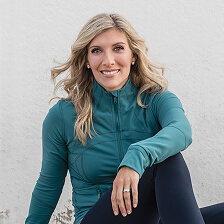


How we communicate with one another can affect our health and well-being in unexpected ways, for better or for worse. In this episode, clinical psychologist Yvette Erasmus joins us to explore emotional and relational health and how we can have more authentic, heart-centered conversations at a time when true listening and speaking feel increasingly rare.
She shares how awareness supports emotional regulation, why prioritizing connection over control leads to healthier relationships, and how self-acceptance, boundaries, and “I” statements can bring out the best in those connections.
Yvette Erasmus is a clinical psychologist and founder of the School of Human Connection. She is the host of the podcast Conversations From the Heart, where she works live with callers to explore real-life relationship challenges with depth, compassion, and clarity. Her work integrates psychology, nervous system awareness, and nonviolent communication to support deeper self-understanding and more meaningful human connection.
In this episode, Erasmus explores how we can better connect with ourselves and build stronger relationships that support personal well-being. Her insights include the following:
- Better connection starts with emotional awareness. Stronger relationships begin with noticing and understanding what’s happening inside your body and with your emotions in real time.
- Emotions are not just mental — they’re physical too. Emotions are biological events in the body and need to be felt, processed, and released, not ignored or suppressed.
- Control weakens trust; connection strengthens it. When people feel stressed, they often try to control others. This may create short-term compliance but can damage long-term trust and closeness.
- Slowing down is a powerful relational skill. Pausing before reacting — whether that’s simply taking a breath or going for a walk — can help people respond more intentionally than reactively.
- Feelings point to unmet needs. Emotions are signals. Rather than judging feelings, ask what need is underneath them. Is it showing you need rest, safety, support, or connection, for example?
- Vulnerability creates more honest conversations. Using “I” statements and speaking from personal experience helps reduce defensiveness and makes it easier to have meaningful, constructive conversations.
- Self-acceptance is essential for growth. Emotional health is not about being perfect. Letting go of self-judgment allows people to become more honest, resilient, and open in relationships.
- Healthy boundaries support connection. Boundaries can be framed not as walls, but as something more like a cell membrane — flexible enough to allow connection while still protecting emotional well-being.
- Human connection is a practice, not a personality trait. Communication, emotional regulation, and relational health are skills that can be strengthened over time with awareness and repetition.
Transcript: On Deepening Human Connection With Yvette Erasmus
Jamie Martin
Welcome to Life Time Talks. I’m Jamie Martin.
David Freeman
I’m David Freeman.
Jamie Martin
In this episode, we are talking about deepening human connection and how we communicate. How we communicate with one another affects our health and well-being in really unexpected ways, both positively and negatively.
In this episode, we’re focusing on emotional and relational health and how people can have more authentic, heart-centered conversations, which, in these times that we’re living through, can feel increasingly rare. And with that, David.
David Freeman
Yes, and we have a special guest, Miss Yvette Erasmus. She is a clinical psychologist and founder of the School of Human Connection. She’s a host of the podcast, Conversations from the Heart, where she explores real-life relationship challenges with depth, compassion, and clarity.
Her work integrates psychology, nervous system awareness, and nonviolent communication to support deeper self-understanding and more meaningful human connection. Welcome, Yvette.
Yvette Erasmus
Thank you. Hi. How are you? It’s so nice to be here with you both.
Jamie Martin
We’re thrilled to have you. And we want to just kind of dig in right away, starting with how you got into this space.
I mean, you grew up in South Africa, kind of living between cultures and navigating differing ideologies, I should say, with your parents. How did your upbringing kind of shape your interests in this space, in connection and human connection?
Yvette Erasmus
Yeah, that’s a great question. You know, growing up in South Africa, I grew up in between a lot of racial, ideological, religious, and cultural divides.
Even in my own family, my father was a diplomat who worked for the government, and my mother was a social activist who actively protested the government. So dinner table conversations were fiery. They were not on the same side. Of course, they did get divorced, which we could have predicted.
But the way that that affected me is that I saw how fragmented societies become when we don’t know how to live with one another through difference. And I began to get very curious about power dynamics, about human relationships, about equity, about what it really takes for us to live in peace with one another.
How do we connect through difference? And why do we get so scared of one another?
And so I really began doing a lot of study on fragmentation, the fragmentation interiorly, how we fragment ourselves, how that then shows up in the world around us, and then what it might take. What is the healing and the skill-building and the capacity-building that we need to live differently?
David Freeman
When it comes to the foundation of what you just said as far as the dynamics between mother and father, at the very foundation of that, and now what your work is heavily within, how much of that do you feel like played an integral role in what it is that you’re doing today?
Yvette Erasmus
Very much. Very, very much.
I mean, the world that I grew up in, and that I think we still exist in, felt very, very violent to me. And I would often wonder about this problem of violence. What are the roots of violence? Why have we become such a violent people on the planet?
And then I was inspired by people like Gandhi, Mother Teresa, Dr. Martin Luther King, and Nelson Mandela. I really took a lot of inspiration from leaders before me who were showing us a different way to be together, a different way of being in relationship.
And, you know, I love my father, I love my mother. I don’t agree with everything that they may believe or that they may stand for. My father was pretty physically abusive.
And I think it set in me a… and I still love them both, right? And so I think the dilemma that I was always trying to solve is: What does it mean to really love one another? And what does it mean to create peace and safety as we love one another?
There are so many versions of love that become codependent or passive or enabling of things that do real harm. And so it was this lifelong quest of, how do I stay connected with you in a healthy way while really having healthy boundaries about the things that I’m no longer willing to enable or that I don’t want to spend my life energy getting more of?
How do we break these cycles that so many of us have inherited?
David Freeman
Just from an emotional regulation standpoint, I just go there. I mean, we spoke back off set as far as you having a daughter, and we talked about our kids and whatnot. Even when we think of them with emotional regulation and understanding what it is that they’re going through, which you just kind of broke down, through experience, obviously through the reps, you get better at something.
So for our listeners, knowing that this is a huge part of health and wellness, when it comes to your regulation of your emotions and how that relates to your everyday life, can you kind of unpack how important it is that you have to be mentally for the physical to come out on top?
Yvette Erasmus
I love this question. So I’m going to begin with the fact that I don’t think that we do people enough justice in helping them feel, metabolize, process, and release emotional energy.
And I think that we… let me gather my thoughts, because I have so much to say on this. Emotions are biological events in your body. Okay?
When we grow up in cultures that teach us to suppress our emotions, we end up using a lot of psychological energy to constantly be suppressing. And when we go through this process of containing and suppressing — don’t feel this, you’re not allowed, don’t cry — we’re fragmenting on the inside.
What’s happening is we’re being taught to be disconnected from aspects of our own experience. So then we don’t have certain data available to us, and we need our feelings for our well-being.
At a very simple level, we feel hungry because it’s our body’s way of letting us know we need fuel. We all need fuel. Now, the way that we might fuel ourselves can look really different from culture to culture. That’s the strategy.
Whether you prefer pizza or an apple or some curry or whatever it is, your strategies can be different, but we all need fuel. And our feelings are designed to tell us about the things that we’re needing to survive and thrive.
And when we begin splitting off from that, we don’t get access to that information, and it creates tremendous stress in the body. And then what happens is it builds up. We’ve got this pressure that builds up and builds up, and then we give ourselves license to act out.
And so then what happens is we are allowed to act out certain feelings when we’re desperate, like anger or frustration or contempt. And then the way that we’re showing up in that space is also not regulated and not wise and not relational.
Because by the time I’ve suppressed everything for so long, which is like, I don’t matter, I don’t matter, I need to perform in a particular way for everybody else, I get to a limit and now I act it out. And then I don’t care about any of you — it’s only me that I’m caring about.
So when we’re talking about emotional regulation, we’re talking about working with our nervous systems in a way that we feel what we’re feeling in a healthy dosage. We’re not waiting for it to go too big, and we’re not making it go too low.
So that we have access to the information: I’m hungry, I could eat something. I’m thirsty, I can drink something. I’m lonely, let me go hang out with somebody. I’m bored, let me go find novelty.
We begin working with our systems in a way that gives us access to a lot more awareness, consciousness, capacity, connectedness, and well-being. We’re not walking on eggshells, suppressing all our feelings.
Jamie Martin
There’s an awareness, right? What’s happening within our bodies.
It reminds me, as you’re speaking about this, we talk a lot in Experience Life about releasing the stress cycle, right? You said feel, process, release. You think about our ancestors way back when — they see the lion in the desert, they have to run away from it, right?
So often we’re just kind of sitting with stress and with emotions that are not being processed. So to your point, when it builds up, what happens, right?
Yvette Erasmus
Absolutely.
David Freeman
You said something that stood out — a lot of things that stood out — from a male’s perspective, and on the outside looking in as a female, for so long it has been like, don’t you cry or don’t you show that emotion that’s resembling something soft or that’s not man-like.
So if you’ve been conditioned in that way for so long, maybe to your point, the suppression is the suppression of that, and then one day it just explodes.
And it makes me think, as a father now, what gets me to that bullying point? Is it because the kids simply are not listening and I’m saying the same thing over and over, even though I’m saying it with a calm voice or what they would call gentle parenting? And then when it’s the fifth time I’ve said it, now I explode.
So was that more of me not knowing how to regulate the emotion? Or is that now, since you’re not listening to me in this tone, this gets your attention and now you’re moving?
So can you kind of break that part down?
Yvette Erasmus
Absolutely. Beautiful example.
The quickest answer to that question is: you’re enacting strategies that you’ve been taught by your culture. So you’re under stress, drawing on what you’ve seen other people do.
When we’re stressed out, we’re going to go for default behavior. Because once our nervous system jacks up and we go into some kind of fight or flight, we’re not seeing a broader range of new options. We’re actually reenacting the options we’re familiar with.
So you’re going to end up doing what was done to you or what you’ve seen other people do.
The other thing is, when your nervous system gets jacked up and you’re in fight or flight, you’re feeling the stress. The other thing you’re going to do in that state is you’re going to want to get control over things. That’s your central intention in that moment: I need to exert control.
When we do that, it often comes at the cost of connection.
And so the example with the kids is such a great one. I think I’m giving a directive. I’m asking for something. And when we say they’re not listening, what we mean is they’re not complying with my directive. They’re not doing what I want them to do.
And in my default state, and I’m not thinking consciously, I don’t have new skills and capacities, I think: the problem is I’m not saying it loudly enough. So if I speak more loudly or more forcefully or with more aggression, I’ll finally wake them up.
Now what you do — you do wake them up. It’s effective, because what happens is you frighten them. So what you’re drawing on is, I’m going to frighten my kids into paying attention to me because their nervous systems are going to register crisis. And so then what they do is they comply because they’re scared.
Now let’s put that on rinse and repeat for a family culture. And what we’re going to pay a price in is trust, connection, wisdom, learning, growth.
So we go for the quick fix, and there are times where that quick fix is necessary. So if a kid is running off a curb and going into a street, we’re not going to connect with them. We’re going to grab them. We’re going to use the protective use of force and we’re going to intervene.
So there are times where we need that control. But if that’s the only tool we have and we aren’t managing our own regulation — we’re just letting ourselves get that stress out — we don’t have enough self-connection ourselves to realize or track: I can feel myself getting worked up right now. I can see that what I’m really wanting is some cooperation.
I wonder what’s going on in this moment. What is so compelling to them over there right now that I’m so uncompelling? How do I join them and communicate with them and hold this differently so that we can all move forward together, but not because we’re afraid of each other — because we like and trust each other, and we respect each other?
David Freeman
That’s good.
Yvette Erasmus
I love that. Yeah.
David Freeman
The tools behind it, because the listeners now — like me being one of them — as far as, okay, here’s some easy tools. If you’ve been in this cycle for so long, it’s not going to happen overnight that you now are able to just regulate like so.
So can you give some easy-access tools, if available, as far as how we can start getting better reps at this? Can you feel your emotions getting there? Is it go take a walk? Like, what are some ways to go about it?
Yvette Erasmus
Yep. I often call this emotional strength training, right? And I love this thing of reps. It is absolutely a form of relational and emotional strength training.
And the very first one is absolute radical self-acceptance. You’ve got to give yourself full forgiveness and full permission to be the messy, imperfect human you are. Because the thing that’s going to make this process really challenging is self-judgment.
So the first thing that I would tell everybody is: you are just as messed up as me. We are all messed up in this way together. We have inherited a lot of stress and generational trauma. We have been shaped by so many systems that we’re embedded in.
And so we show up in this moment, a symptom. And what I want to do is just love up the symptom that I have become and realize that I can become conscious. I can become aware of how I’m enacting things.
And I can take a little step back and say, what things do I want to bring forward because they really work for me, and what things do I want to transform and change?
And the way to transform and change something is to first love it, name it, recognize it, and understand that it is ineffective. It is an ineffective strategy for me to get the thing I’m actually wanting. And that’s the reason I let go of it.
Not because it’s bad, not from moral superiority, not because I’m trying to live into some template of healthy, but because I can see how this way of being isn’t meeting my needs or my family’s needs or my kids’ needs.
So that’s the first thing: radical self-acceptance and willingness to work with what is.
And then it begins with your ability to be self-connected. Because the first trauma is the ways that we have been fragmented and disconnected from ourselves.
Jamie Martin
Which I think is so critical. You actually talk a lot about how do we be in relationship with others if we’re not connected to the self? And that’s part of, at the core, what you’re talking about in your podcast too.
So what does that look like? You’ve mentioned fragmentation a few times. So how do we know that, see, or understand that fragmentation within ourselves?
Yvette Erasmus
You know it all the time. It’s every time you have an inner conflict.
How many times have you thought, I want this, but I want this? I really should do this, but I really don’t want to do this? Every single time your head and heart, or different aspects of you, are pulling in different directions, it’s evidence of some fragmentation.
And so when we notice that, we go, look, there it is. I have an inner conflict.
And then what we do is start observing what’s going on inside of me. I’m going to track my sensations. I’m going to track my feelings. I’m going to be willing to know how this is feeling.
And a lot of people have been taught that your feelings are inconvenient, make them go away, high-maintenance, too needy. We’ve got to bring back a literacy of emotions. We’ve got to get away from mad, sad, glad, bad — and then variations, right?
So if I can track, wow, I can feel some tingling happening in me and my adrenaline is going. I can feel my stress response beginning to activate. I see what’s going on in me.
Now I have connection with myself. And then I recognize that my feelings are always telling me about a need that I have. Is this about meaning, purpose, safety, belonging, inclusion, connection, empathy, space, rest? What am I needing?
And then once my system has told me, hey, you’re exhausted, you’re needing rest, then the first act of self-violence is saying, great, let’s go rest. Let’s go meet the need.
David Freeman
Identity is so strong within what it is that you’re saying, like the self-acceptance, the radical self-acceptance. I usually give the analogy of just looking in the mirror, understanding who’s in that mirror, and once you are able to connect with that individual in the mirror, that mirror now becomes a window.
Meaning that you can now help impact and affect positively those individuals that are out there in the world.
I go back to how to get there. It’s so tough in a lot of ways. And I don’t want to call it imposter syndrome because you are who you are and the fulfillment of where you’re at in certain spaces versus others.
So what you’re saying is, if it is generational trauma or the residue from what has happened for so many years, when you’re back in that space, you might feel like that little kid again. But when you’re in your element of, we’re on a podcast or we’re helping challenge people in health and fitness, we feel like we’re in our lane and we get the words of affirmation and you’re celebrated in so many ways.
So I also think the environments that you’re in have a huge, huge role in how you can help elevate what it is that we’re talking about.
Yvette Erasmus
One hundred percent. One hundred percent.
And so when you’re in that environment and that younger self-state comes online, I can feel myself — ooh, I suddenly feel younger and less confident and less secure. The knowledge of, I’m feeling more insecure right now, I need a little reassurance, then I can tend to myself, right?
I can reparent that little girl in me or the little boy in you and say, hey, I’m here with you now. I know this was scary once.
It’s a very different way of working with ourselves than, shh, sit, be quiet. There’s no time for you right now. That kind of suppression is going to take energy and it’s going to increase stress.
Whereas an acknowledgment, a willingness to name, see, be in relationship, and feel will keep all of the systems running. And your body has an intuitive wisdom. It knows how to process our experiences.
And we can give it what they call in psychology a corrective emotional experience, where you take an old experience and you meet it in a new way, and then that actually helps it metabolize and transform so that I can get more into the present moment and live less from the past.
Jamie Martin
Right. It’s interesting you say that. As you’re speaking about that, I’m thinking about how you talk about kind of going backwards or going the other direction from where we want to progress and develop.
I think about sometimes, in relationship with my parents, for instance, I’ll sometimes feel like I’m reverting back to my eighteen-year-old self. Totally. And so I’m aware of it now. And it’s one of those things like, okay, I’m aware of it. But now as a forty-some-year-old woman, what does that look like now?
How do I — it’s like coaching yourself through it a little bit — be like, I don’t need to embrace those old habits and those old ways of communicating necessarily. But there’s still that level of that little girl, that eighteen-year-old, who’s still like, I don’t want to disappoint anybody.
Yvette Erasmus
You know, like, you don’t disappoint me.
Jamie Martin
Yes. Yeah.
David Freeman
I think that comes with the healing, right? What you just said, the acceptance, and having that conversation so you can kind of put it to bed. Not to say it never happened, but you can finally lay it to rest.
And that awareness, to your point, is so key.
Another thing that stands out from this, when we talk about real dynamic connection, human connection, it can sometimes be this perfect stranger that might not know you intimately that can say exactly what it is that you need to hear. I call it that divine connection, if you will.
So they might not have been around you for years and years and years, but you have this conversation and it’s this way of you just now feeling so connected to what it is that they’re saying. And it comes out of nowhere. What it is that they’re saying is just so on point to get you over whatever hump that you might be facing.
And then I go back to the other end of the spectrum where you now have individuals that know you inside and out, that have known you the majority of your life. And whatever their words may say, we sometimes allow that to affect the identity that we were talking about.
The words hurt so bad because of how much they are connected to you.
So I just went on two opposite ends of the spectrum. When you sometimes can have a person who may not know you intimately, but yet they have the words that can get you past whatever adversity you may be going through — and then the power of someone who does know you, because of the intimate connection that they have with you, and their words obviously can create the trauma and damage that we were talking about.
So kind of walking between those two. Because I know sometimes we say that if we’ve known each other for so long, there’s so much more behind that. And yes, but then it could be a perfect stranger that can come along and be that light for you as well.
Yvette Erasmus
One hundred percent. Yeah. Yeah. Yeah.
Jamie Martin
There’s so many pieces to this. I mean, we talk a lot about how we communicate, but also how we listen. And I want to make sure we delve into that too, because I know so often we show up to conversations and our immediate reaction is, I need to fix this or I need to do something about it.
But I think, as we’ve talked and we’ve covered in the magazine many times, it’s so important that we show up and be present with people. How do we do that in a time when our reaction is to fix or potentially to defend ourselves within the space?
Like, how do we actually be an active, engaged listener?
Yvette Erasmus
Yeah. I’m going to thread a couple of things.
I want to go back to what you were saying about identity for a moment. In order to have the capacity to do what I’m about to tell you when I answer your question well, one of the pieces of healing work that we do is increasing our sense of identity.
And what I mean by that is, as we become more capable, more mature, more adult, we have an increase in capacities: my capacity to be willing to be uncomfortable without being reactive, my capacity to be more aware, my capacity to feel a feeling without letting the feeling control me and without suppressing the feeling. These are capacities we develop.
And as we develop more and more capacities, our sense of identity expands.
And part of that is learning that I am not good and I am not bad. This is one of the stages we’ll go through, right? Sometimes I can be selfish and sometimes I can be selfless. Sometimes I will get approval from the people around me. Sometimes I’m going to get disapproval from the people around me. Sometimes the disapproval is a good thing. Sometimes the approval is actually a bad thing, depending on what they’re approving of.
And so we begin, in the identity development piece, to remember that you are everything.
You will have a place to act from and speak from that is more integrated, where you have all aspects of the human experience available to you. I can be violent and I can be nonviolent, right? But I’m not going to vilify any of these ways of being.
So that’s one piece. Like you were talking about family, where they sort of see aspects of you. If that still hooks, a way to work with that is to be like, whatever they’re accusing me of that’s hooking me, what would happen if I just said yes, I can be that sometimes?
It actually frees up the power struggle and it gets my energy and empowerment back to me when I don’t have anything that I have to defend anymore.
So that’s the one piece: there’s nothing to defend. Because I’m willing to look at everything. And to have enough self-esteem for somebody to say, “Yvette, you’re so narcissistic,” and for me to say, “Tell me more. Where and when was I that?”
As opposed to, no, I need you to see me in a particular way. Or, “I can’t believe you’re so racist.” Tell me more. Where did I do that?
Then I’m going to learn. I’m always going to be learning and growing, and there’s nothing left to defend.
So when I can live from that place, I’m listening differently.
I’m listening for what you’re trying to tell me, not what your cultural conditioning has taught you how to ask.
So let me give you an example. You might be saying, “I can’t believe you’re so disrespectful.” Okay. So you’re leading with a judgment. You’re trying to tell me something about me that you don’t like.
If my identity is all tied up with “I’m a respectful person,” then I’m going to get defensive. And you’re going to be seeing something that I’m doing that you don’t like, that you’re wanting to fix. And so you’re coming at me with your judgments, your constructive feedback.
Jamie Martin
Yes.
Yvette Erasmus
And so when you say, “Yvette, you’re so disrespectful,” it’s not very often that I see people in my office saying, “Thank you for letting me know that.” That is what I recommend we learn how to do, but most people don’t do that. So we learn to hear what you mean.
If I am hearing you say, “You’re so disrespectful,” I’m going to be asking for an example. I want to know what I did or didn’t do, or what I said or didn’t say. I must have done something. So I’m going to ask for the example.
I’m also going to be tuning in: I wonder if you’re feeling a little wary and guarded. I’m going to start caring about what you might be feeling and making a guess. And then, what is it that you’re needing? Consideration, inclusion, trust that I care about you as much as I care about me, trust that I’m holding your schedule and my schedule equally.
If I’m listening for those things, looking for a concrete example, caring about how you feel, and caring about what you might be needing, our conversation is going to go very differently. Very differently. Because my attention and focus is on what would help, not on what is wrong.
Jamie Martin
Right. Well, everything I’m hearing you say there has curiosity within it. There’s a willingness to learn and understand rather than, again, being reactive right away.
So how do I bring that curiosity to this and be willing to maybe hear additional hard things, and continue to show up for it and be open to it?
Yvette Erasmus
Now, when you say “hard things,” I want to say something, because I want to go back to reps.
When I go to the weight room and I look at what some people are lifting, I think, That’s a really hard weight. That is a really heavy weight. That’s a hard thing for me. And there are other people working in that gym who are doing it with one arm, and it is not a hard thing for them.
So relationally and psychologically, I get good at feeling my feelings, at knowing who I am, at being open. I understand that I am here like all other humans, and I get things right and I get things wrong. And I get out of a performance frame. I no longer have to perform my goodness for you. I can actually just be a real human being with you.
Those reps are: What are you feeling? What are you needing? What happened? What will help? We take those questions on repeat, and we train our attention away from what is wrong. What is wrong with you? What is wrong with me? What do we need to fix in you? What do we need to fix in me? We’re not broken.
Jamie Martin
Yeah.
Yvette Erasmus
We’re not broken. We want to be finding out what’s happening, what we’re feeling, what we’re caring about, what matters about this, and what would help. And we change the game completely when we do that.
Jamie Martin
I’m thinking about some of the advice we’ve heard over the years about having those conversations. Keep it focused on “I,” like, “I’m hearing this being said,” instead of “you,” which can feel accusatory or create additional defensiveness. What’s your take on that?
Yvette Erasmus
Yeah. I mean, I think if we’re going to talk about the kinds of reps that we’re going to do relationally now…
Jamie Martin
Yeah.
Yvette Erasmus
One of the reps is that I get so self-connected, and I have a language to be able to tell you about me.
“When I see you walking in the door at 8:30 p.m., I’m feeling some stress and some irritation. I really needed some consideration tonight, and I’m wondering what got in the way of being here when we agreed on seven.”
What got in the way? So… I lost my train of thought. You just asked me…
Jamie Martin
Coming from the “I” versus the “you”…
Yvette Erasmus
Yes, yes, thank you.
Jamie Martin
…like, “I’m feeling this way about a circumstance.”
Yvette Erasmus
Yeah. So this is a skill: being able to tell you, and show you, what’s happening in me. I want to reveal to you the impact that something is having on me without accusing you of anything and without making you wrong, because I know I don’t have all the information yet.
If what I want is for you to care about the fact that I was sitting here waiting, the best way to get you to care is to lead with my vulnerability and with the truth of what’s happening in me. That works better than coming at you with a critique or with what you’ve already done wrong, which takes our conversation in a completely different direction.
So one skill is revealing me. It’s being willing to be seen for the fact that I’m hurt, that I’m upset, that I’m irritated. And that, of course, takes self-acceptance. I’ve got to be willing to be okay with those things being true.
The second skill is being curious about you and empathically listening to what is going on with you. In every moment that I’m feeling stressed out, it’s first slowing down to gather all the information. I haven’t yet asked, “What is getting in the way of showing up at the agreed-upon time? Tell me what it’s like for you.” And then I invite you to reveal who you are to me.
Now we’re connecting. Now we’re in a relationship. Now we’re not in a change project where you’re wrong and broken and need to be fixed, and I give you lots of constructive feedback on how you need to be different before I can love you. Or where I think I have to change all these things about me before you can love me.
We’re actually just working with ourselves and each other as we are. And that’s fertilizer for growth and learning and connection and regulation of the nervous system.
David Freeman
Yeah, that was good. Let’s talk about the way society has structured male and female roles. When those needs or expectations aren’t being met, that’s where I see a lot of conflict happen. Thoughts there?
Yvette Erasmus
Yeah. We could go lots of directions on this one. I’ll go wherever you want to go, but let’s stay practical and relational for a moment.
There’s a broader conversation about gender roles, cultural conditioning, power structures like patriarchy, and the harm that can come from them. We could go there if you like. But for now, let’s have a benign version.
Let’s say you have a socialized man and woman in the roles that you’re describing, and they’re trying to negotiate a disagreement or a little bit of a power struggle. The way we would do that, without getting into some of the bigger subjects, is to ask: What is it that you’re feeling and needing right now? What is it that I’m feeling and needing right now? What is your preferred way of fixing this? What is my preferred way of fixing this?
And then we begin to collaboratively co-create a path forward that actually cares for and meets both of our needs.
If we both love the gender roles, we’ve agreed to them, and they’re working well for us, then we’re going to have that conversation in that context. Maybe it sounds like, “No, I like it when you lead. I’m actually annoyed because I really just wanted to sit back and follow.” Great. The tools work for any cultural conditioning.
If you like the gender roles and I don’t, then we also have tools for talking about how those roles are or aren’t meeting the human needs at play.
For example, say you believe you get to make all the final decisions. I’m your partner, and I want to say, “Listen, I love following you, but I want to be an equal decision-maker.”
What we’re both doing is questioning a role we’ve inherited. We’re examining how well this role, this belief, is working in our relationship. Which pieces feel like an up-level to our identity, and which pieces feel like a loss?
And we come up with a path forward that works for the two of us in our relationship, that we both feel good about, and that meets our needs.
David Freeman
And just for our listeners, that conditioning breaks down once you’ve heard it framed this way. You can say, “Hey, let’s have a conversation about it,” and unpack it so you’re now aware. Again, it goes back to awareness versus assumption.
That’s where I feel like things drop. A lot of those conversations aren’t happening. It’s just assumed. So it’s powerful that you said, “Hey, let’s have a conversation about it,” because that can unpack a lot of great things. I like that you broke it down like that.
Yvette Erasmus
Yeah. If we want to do something differently from what we’re discovering our default is, we need to slow down. The thing you can do quickly is the thing you’ve always done. When you want to start getting creative or conscious or transformative or healing, that is a completely different pacing.
I can’t learn about weight training and go into the gym and suddenly bench-press 300 pounds because I understand how to do it. I need to put in the time to build the muscle. I haven’t, but I’m getting there, right?
It’s the same thing with conversational skills, emotional skills, and emotional regulation skills. It’s the moment I take a deep breath and go, “I’m super triggered. Let me tend to myself before I continue the conversation.”
It’s being able to say, “Give me five minutes. Let me just take a walk. I can feel that I’m about to say what I’ve always said, and I’m trying to do it differently. Give me five minutes.”
Jamie Martin
It’s the practice.
Yvette Erasmus
It’s the practice.
David Freeman
I love the parallels in how you compare this to working out. We talk all the time in strength training about tempo training. You slow it down, you get so much more muscle recruitment, and that’s where real change happens. It’s no different.
Yvette Erasmus
I see.
David Freeman
Same thing. When we talk about the reps or the working out, there are a lot of parallels.
Jamie Martin
Well, and it’s different for each of us how we approach it, too. I think that gets into an idea you’ve talked about: emotional literacy and needs literacy, and knowing what we need. We often ignore what our bodies are telling us.
So why is that so important? And first, what is emotional literacy, and what does it look like to understand it in ourselves?
Yvette Erasmus
Okay. Emotional literacy is being able to give a name to an interior experience. And before I can name that experience, I need to feel it.
Think about the kinds of school systems most of us were raised in. Doesn’t Ken Robinson have a really fabulous TED Talk about how you’re basically treated as just a head? Your body is just there to walk your head around.
When you go into school, it’s: Sit still, don’t move, sit quietly, be quiet. You get trained not to be aware. The only thing anyone cares about is what’s happening up here, so our attention goes up here.
So one of the steps is bringing our awareness all the way back down and realizing that wisdom lives in your entire body. Then we can start using that information and data.
There’s research showing that when we have a chaotic interior state and we can name the emotion, like “That’s sadness,” the whole nervous system recognizes that it has been named and begins to re-regulate. It’s one of the steps to re-regulating.
So when you’re working with young children, saying something like, “You’re mad right now, and you’re sad, and you’re really feeling hurt” helps them begin to map out their interior world. Then they know what’s happening inside them.
It’s the same as when I began weight training and somebody said, “Now we’re going to work on your triceps.” I’m like, “Where are those? I can’t feel them.” They say, “You’re using your shoulders.” And I say, “I can’t feel the difference.”
Emotions are the same. You begin tuning into the different imprints, and then you know what you’re feeling, and then you can regulate. You can also recognize those states in other people. This helps the nervous system regulate, and it gives us the capacity to be choiceful.
The biggest thing that gets in the way here is self-judgment or judgment of others.
Jamie Martin
Yeah, not defaulting to those states, right?
Yvette Erasmus
That’s right. Because the moment we begin judging, we’re creating a fragment. We’re saying, “This is not okay. You are not okay. I am not okay.”
Jamie Martin
We need that ability. I think it’s empathy, but with mirroring. Once you’re aware of your own state, you can start to see it in others and show up for that.
But you also don’t want to take it on yourself, because that can be difficult. If somebody is in a tough place or feeling a certain way, how do I be there for them without taking that on myself?
That came up in one of your podcast episodes recently: “I can’t absorb everything you’re going through, but I can still be there for you and show up for you with guardrails for myself,” right?
Yvette Erasmus
Yeah. Let’s go all the way back to attachment literature for a moment, with infants.
With an infant, the first language we speak is the language of the body. Touch is our natural language. And an infant often regulates through the gaze of the primary caregiver, through being seen.
Resonant gaze is part of what helps a little body begin to regulate. What we find is that the right hemisphere of the baby and the right hemisphere of the primary caregiver come into resonance through the gaze. This is how the baby begins to develop an interior sense of self, safety, and trust.
Some of us were raised at a time when parents were taught to let their children cry it out. If you were one of the babies left to cry it out, you may actually have quite a bit of nonverbal attachment trauma that doesn’t have a narrative to it.
Jamie Martin
Interesting.
Yvette Erasmus
You might find yourself experiencing a lot of anxiety and reactivity because you didn’t get the neurological wiring you needed.
So we learn how to be with one another in distressed states. I gaze, I regulate, and I manage my own nervous system while you’re in distress, so you can co-regulate with mine. Then we can both bring each other down.
We can begin building some of what some of us didn’t get, depending on how we were raised. That’s the power of empathy.
Jamie Martin
You need that. It plays a really important role in our relational health.
Yvette Erasmus
Yes. And then I think you were bringing up the boundaries piece.
Jamie Martin
Yes, which I think is so important to talk about, because if we take on too much of other people’s experiences, we’re sacrificing ourselves to a degree, right?
Yvette Erasmus
Yes. Some of that comes from having parents who needed you to merge with them in order for you to feel safe. If there’s been too much merging, it’s hard to maintain a sense of self. I wanted to acknowledge that, because I did hear you say it. It’s about learning where I begin and end.
We want our boundaries to be like cell walls: permeable enough to let the good things in and out, but able to close to keep the toxins out. It’s exactly the same.
Jamie Martin
Makes sense.
Yvette Erasmus
Yeah.
David Freeman
We’ve talked a lot about family dynamics and relationships. You just mentioned boundaries, which made me think about the workplace.
In a performance-driven culture, there’s often a lot of work, late hours, and late nights. But what if someone still doesn’t feel seen or heard? This goes back to communication skills again. I know it varies, and we could go down a rabbit hole here.
But think about that one person. They know their worth, their identity, and their strengths, yet they still don’t feel seen or valued for their work.
For those listeners, and I know we’ve got a lot of them out there, as they continue to stay the course, what advice or tools would you give them?
Yvette Erasmus
Talk to a supervisor. Here’s some language to help with that:
“I’ve been working here for [X amount of time]. I know we have a performance review coming up, and I’m not entirely sure if some of the things I’m doing are being seen. Can we have a little chat? I’d love to share some of what I’m doing and find out if I’m on track. Can you tell me what you’re seeing me do? Can you tell me what I’m doing well?”
Ask for what you want. We want to get out of victim consciousness. We get very trapped in victim-perpetrator consciousness, and when we’re not aware of it, we just recreate it.
Some people enjoy feeling that others are doing things to them and there’s nothing they can do about it, so I’ll leave them alone. But if you want out of that, ask for what you want: “I’d like some feedback. I’d like to know what you’re seeing me do.”
Jamie Martin
Be your own best advocate, right? We have to be our own best advocates.
I want to steer us in another direction. I know you’ve done a lot of work in nonviolent communication, and it’s a real focus of your work. I think it’s important to talk about what that is and revisit it.
You mentioned Martin Luther King at the beginning of this conversation, and I know so much of his work was rooted in this. How do you bring nonviolent communication into spaces today and into your work with people?
Yvette Erasmus
Nonviolent communication was created by Dr. Marshall Rosenberg, and he developed a whole philosophy around it. His definition of violence is any time we get somebody else to do something based on fear of punishment or consequence, or the promise of reward.
David Freeman
Or the promise of reward?
Yvette Erasmus
That is his definition of violence. I was teaching high school when I came across this, and I thought, But that’s all I do all day long. What else is there?
Jamie Martin
What’s this thing?
Yvette Erasmus
What are you talking about? I have a master’s degree in how to do that, and now you’re telling me it’s violent? Wow. Interesting.
It was a big paradigm shift for me, because it got me asking, Well, what else is there?
The philosophy of nonviolent communication is that we want people to do things because doing them meets their needs. We don’t want people acting out of fear of punishment or because they’re externally driven by approval-seeking. That just creates slavery of a different kind, where you’re an object to be used by a system.
That was one of my big realizations. If I want to start breaking out, and if I truly want to transform the system, I need to look at how I’ve internalized it in my psychology, often without realizing how it’s operating in me.
That’s where nonviolent communication helps us develop what Marshall called a needs consciousness. What would it be like if our systems, our world, our mental health systems, or our school systems focused on meeting people’s needs instead of creating profit, control, or power-hoarding?
What if we began seeing through that game and tending to needs? Then we could change our strategies to align with my needs, your needs, and our needs.
That’s the essence of nonviolent communication and its philosophy. Marshall also developed a whole set of communication tools that I draw on all the time to build healthier, more cooperative, collaborative, creative, and conscious human relationships.
Jamie Martin
How we connect with each other.
Yvette Erasmus
How we connect with each other. We prioritize care and connection over control, fixing, judging, moral superiority, and power struggles.
Jamie Martin
Absolutely.
Yvette Erasmus
Yeah.
David Freeman
So how would you frame it, then? You got me on the reward piece. If your needs are being met and you’re able to operate in your most optimized state, would you say that yields the reward of coming into your own?
Yvette Erasmus
Yeah, the reward is… think about the last time you did something for somebody that they weren’t expecting. You thought of something, and from your own desire to contribute to their well-being, you did it for them. They were delighted and surprised because they weren’t expecting it. How does that feel?
Jamie Martin
It feels good. You feel that positive reaction in your body, right? It’s intrinsic.
Yvette Erasmus
Yeah. That’s the reward. It’s an intrinsic reward. What you’re going for is the enjoyment of your power to make things better for yourself and other people. To serve and…
David Freeman
Elevate.
Yvette Erasmus
Yes.
Jamie Martin
Who says that all the time? This guy right here says it all the time.
Yvette Erasmus
Yes, yes. And we start detaching from the ways extrinsic motivators control us.
Extrinsic motivators are powerful and necessary for things people don’t intrinsically enjoy doing. Say you need somebody to put caps on toothpaste tubes. We have machines for that now, but it’s a boring task. You need an extrinsic motivator to get someone to do something so unmotivating.
But when we start giving people extrinsic motivators for things that should be, and are, intrinsically motivating, we actually create a lot of dysfunction.
Jamie Martin
We’re getting to the end of our time, so I want to make sure we get to a couple of things.
We all know that some relationships can feel draining. What’s one simple, evidence-informed step someone can take when they’re in a dynamic where their energy feels depleted rather than lifted?
Yvette Erasmus
The very first thing is to slow down and self-connect. I want to understand the draining of energy. Is it because I need to set a boundary? Am I giving more than my system wants to give? Am I saying yes, yes, yes when I want to say no, no, no?
The draining could point to a form of self-abandonment. I might be abandoning what I need in order to make everybody else happy, and I’m finding that exhausting. That’s one possibility.
Another possibility is that it’s draining because it’s not aligned with what I need right now. It doesn’t fit what I’m meant to be doing, given whatever is going on for me.
So if I can connect with myself, I can notice that I’m feeling drained. I can connect to what I’m needing. Then, in that moment, I can make a shift. I can ask for something that might shift the dynamic.
Jamie Martin
What does that look like?
Yvette Erasmus
Let me think of a good example, something I would find particularly draining. Well, I have a friend who often tells very long stories. So sometimes it looks like saying, “Can I pause you for a second? I’m losing track.”
There’s that draining feeling of glazing over, where you’re like, I don’t even exist anymore. I’m just a sounding board. That calls for interrupting. It’s about learning to say, “Hey, I notice myself zoning out. I really want to stay connected to you, and I just don’t have it in me right now.”
Jamie Martin
I love the honesty in that. It feels like radical honesty with the people you’re connected with, and that feels more real to all of us, right? It’s like saying, “I’m being really honest with you about where I am right now.”
David Freeman
It’s the difference between being nice and being kind. If you have a piece of food right here and I keep talking to you without saying anything, I’m being nice. But if I’m kind, I’m going to say, “Hey, you’ve got some food right there.” So I think being radically honest in that space is awesome.
Yvette Erasmus
This is about giving ourselves permission not to suffer more than we need to. It’s also about giving ourselves permission to say the challenging thing with a lot of openheartedness.
We can trust that we can handle it if the other person gets hurt feelings or takes it a certain way. I can stay in connection with you, and we can work through it. It’s about really learning those skills.
Jamie Martin
Well, that goes back to something you said earlier about leading with vulnerability, staying open, and then being curious. Together, those things can create deeper connection.
That’s ultimately what we all want. We’re all craving connection and more time with one another, especially in such a disconnected world, with our devices and all those things. So when we’re really with people, how do we really connect?
Yvette Erasmus
Yeah. And the more of that quality of connection we have in our lives, the better our health outcomes.
David Freeman
All right, Yvette, we hit on a lot of things. Is there anything we missed that you want to leave our listeners with before we get into our mic drop?
Yvette Erasmus
I really want to put in a plug for becoming more loving toward ourselves and other people, and figuring out how to put that kind of love into action.
That means radical boundaries, radical honesty, and a big, big open heart, where you show up as a safe person. You’re not coming from a place of superiority. You’re coming as another messy human on the planet wanting to have relationships.
We’re here to play, to enjoy each other, and to serve each other. That’s really what so much of this is about. For me, everything else is a distraction.
David Freeman
Awesome. Okay, are you ready for your mic drop? So, your daughter is now 23, yes?
Yvette Erasmus
Yep.
David Freeman
What would you say is the biggest lesson she taught you while you were raising her?
Yvette Erasmus
The biggest lesson I learned from my daughter, or the biggest awareness, is that I’m much more judgmental than I think I am. And she will point it out to me instantly.
She has given me a mirror, a very, very real mirror, for where I’m aligning and connecting and where I’m imposing. She’s been a really great litmus test.
She has also taught me how to back off when she needs me to back off. How to rephrase something when she needs it rephrased. How to set a boundary and tolerate her anger, her moodiness, and her hating me. All of those things. She’s been my spiritual practice, really.
David Freeman
That’s awesome.
Jamie Martin
We loved this conversation. Thank you for coming on with us, Yvette.
We want to make sure our listeners and viewers know where to find you. You’re at YvetteErasmus.com, where you can find your podcast. You’re on YouTube at Dr. Yvette Erasmus. And make sure people are tuning in to your podcast, Conversations from the Heart.
You also have, and I’m going back to my notes here, the School of Human Connection. Tell us about the Wednesday morning call where people can join in. I want to hear about that real quick.
Yvette Erasmus
Every Wednesday morning at 10 a.m. Central Time, people join a live call. You can get the Zoom link on my website.
People put their questions in the chat. It can be any relationship question: parenting, workplace, couples, or your relationship with yourself. I spend an hour going through as many questions as I can, for free, and help people with whatever they’re struggling with.
So you’re welcome to tune in, bring a question, or just listen. You can also hear it on the podcast.
Jamie Martin
We’ll make sure to link to that in our show notes. Yvette, thank you so much for joining us.
Yvette Erasmus
Thank you so much for having me.
More like this

Talks — S3, EP6 / Opening Up to Vulnerability
The ability to be vulnerable — and show up as our real, authentic selves — is central to our well-being. Barbara Powell, MA, MindCoach with Life Time Mind, dives into the power of this raw emotion and debunks the myths surrounding it, including how it’s connected to our other emotions and why it’s OK if it doesn’t feel entirely comfortable to us.



We’d Love to Hear From You
Have thoughts you’d like to share or topic ideas for future episodes? Email us at lttalks@lt.life.
The information in this podcast is intended to provide broad understanding and knowledge of healthcare topics. This information is for educational purposes only and should not be considered complete and should not be used in place of advice from your physician or healthcare provider. We recommend you consult your physician or healthcare professional before beginning or altering your personal exercise, diet or supplementation program.
Life Time provides administrative, non-clinical support to MIORA as well as services and amenities related to general wellness and fitness; Life Time does not provide medical advice, diagnosis, treatment or care.
Advertisement